


Wedge Wire Screen Panels
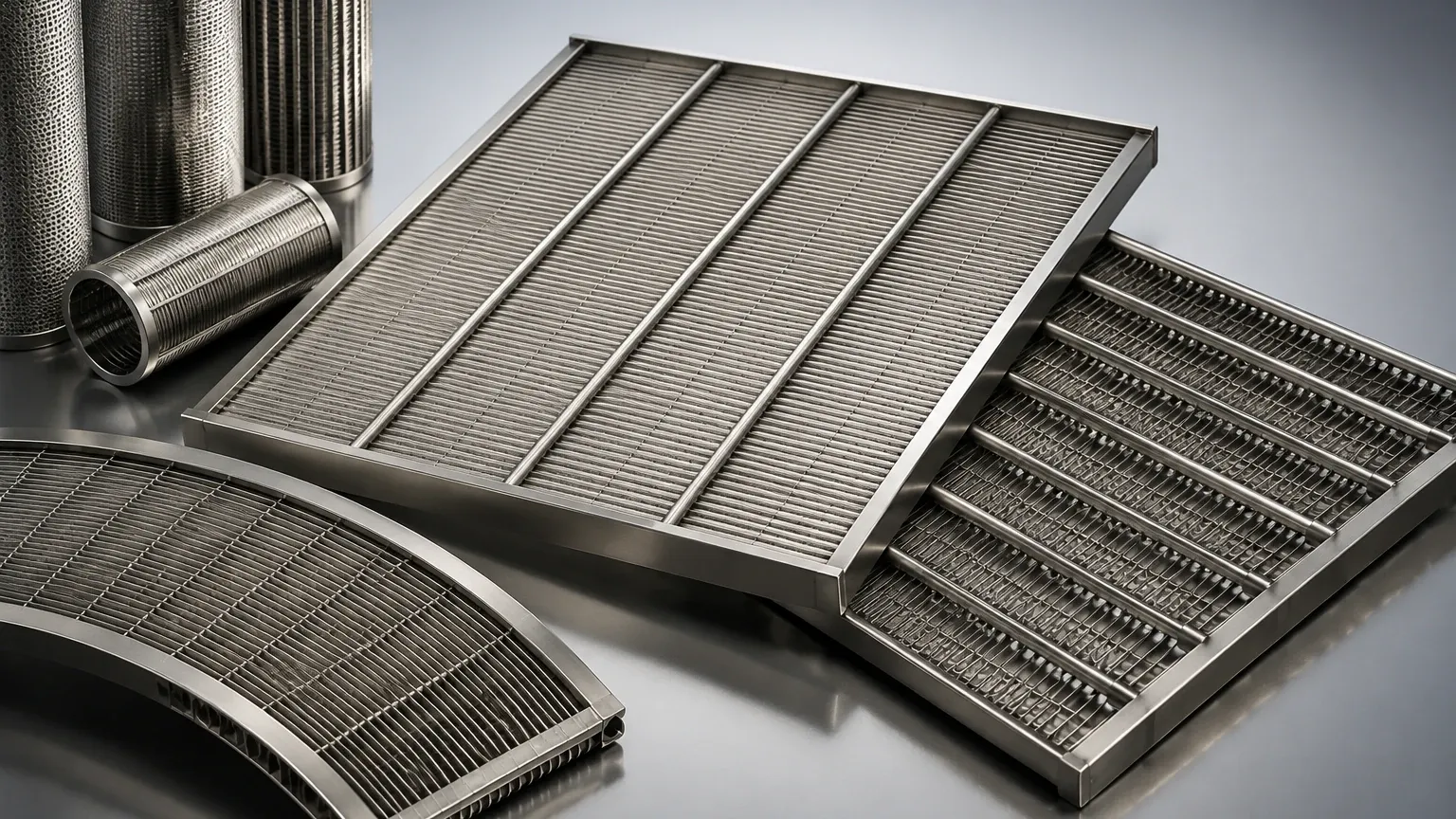
In industrial filtration and separation processes, the efficiency of a system often depends on the structural integrity and precision of the screening media. Wedge wire screen panels are specialized metal components engineered to provide high-performance filtration, dewatering, and sizing across a broad spectrum of demanding environments. Unlike traditional woven wire mesh or perforated plates, these panels are constructed from V-shaped profile wires resistance-welded onto support rods, creating a robust, non-clogging surface that is essential for continuous industrial operations.
For engineers and procurement teams, selecting the correct Wedge Wire Screens involves understanding the technical nuances of wire profiles, slot accuracy, and material properties. This guide examines the engineering principles, application-specific considerations, and selection criteria necessary to optimize filtration performance and extend the service life of screen panels.
Understanding the Engineering of Wedge Wire Screen Panels
The fundamental advantage of wedge wire screen panels lies in their unique geometric construction. The surface wire, which has a triangular or wedge-shaped cross-section, is positioned so that the narrowest part of the "V" faces the incoming flow. This configuration creates a slot that widens inwardly.
The Non-Clogging Mechanism
From a technical perspective, this design addresses the common issue of "blinding" or clogging. In standard square-mesh filters, particles that are slightly larger than the aperture can become wedged within the opening, eventually blocking the flow. In a wedge wire panel, any particle that passes through the initial narrow opening at the surface will easily clear the wider gap below it. This ensures that the screen remains functional even when processing materials with a high concentration of near-size particles.
Structural Integrity and Welding
Industrial panels are manufactured through a precision resistance-welding process. Each intersection of the profile wire and the perpendicular support rod is welded, resulting in a single, rigid structure. This high-frequency welding ensures that slot widths remain consistent even under significant mechanical stress or vibration, which is critical for maintaining filtration accuracy in high-pressure or heavy-load applications.
Key Technical Advantages in Industrial Applications
When evaluating filtration media, engineers must weigh the trade-offs between initial cost, maintenance requirements, and throughput. Wedge wire screen panels offer several distinct advantages that make them the preferred choice for heavy-duty industrial sectors.
1. High Open Area and Flow Rates: Because the support rods are located behind the profile wires, the active screening surface remains unobstructed. This allows for a higher percentage of open area compared to perforated plates of similar strength, leading to increased flow rates and reduced pressure drops across the system.
2. Mechanical Strength: The welded construction provides inherent structural stability. These panels can withstand high differential pressures and heavy static or dynamic loads, making them suitable for use in vibrating screens, centrifuge baskets, and heavy-duty floor drains.
3. Precision Slot Control: Modern manufacturing techniques allow for slot openings as small as 20 microns with extremely tight tolerances. This level of precision is vital for applications requiring exact particle size distribution, such as catalyst recovery or fine chemical processing.
4. Ease of Cleaning: The smooth surface of the profile wires facilitates easy cleaning, whether through mechanical scraping, backwashing, or ultrasonic methods. This reduces downtime in processes where frequent cleaning is required, such as in the food and beverage industry.
Material Selection for Corrosive and High-Temperature Environments
The longevity of a wedge wire panel is heavily influenced by the material from which it is fabricated. Since these components are often exposed to abrasive slurries, corrosive chemicals, or extreme temperatures, selecting the appropriate stainless steel grade is a critical engineering decision.
Stainless Steel 304
This is the standard grade for most general industrial applications. It offers good corrosion resistance and mechanical properties at a cost-effective price point. It is widely used in architectural applications, water treatment, and standard food processing environments.
Stainless Steel 316L
For environments involving chlorides, acids, or high-salinity water, SS 316L is the preferred choice. The addition of molybdenum enhances its resistance to pitting and crevice corrosion. In pharmaceutical and high-purity chemical processing, 316L is often mandated to ensure product purity and prevent metallic contamination.
Specialized Alloys
In extreme cases, such as highly acidic mining processes or high-temperature petrochemical reactors, specialized alloys like Duplex stainless steels or Monel may be required. These materials provide superior yield strength and resistance to stress corrosion cracking, ensuring the panels do not fail prematurely under harsh operational conditions.
Customization Parameters: Slot Sizes and Support Structures
One of the primary reasons engineers specify wedge wire screen panels is the ability to customize every aspect of the design to suit a specific machine or process. A "one-size-fits-all" approach is rarely effective in industrial filtration.
Wire Profile and Slot Opening
The choice of profile wire (e.g., 12S, 22S, 32S) determines both the filtration fineness and the wear life of the screen. A larger wire profile provides more "wear meat," extending the time before the slot width increases due to abrasion. Conversely, a finer wire profile maximizes the open area for higher flow rates. The slot opening must be calculated based on the minimum particle size to be retained and the allowable percentage of solids in the filtrate.
Support Rod Configuration
Support rods provide the backbone of the panel. They can be round, rectangular, or even wedge-shaped themselves. The spacing between support rods (the "pitch") is a critical factor in determining the panel's load-bearing capacity. For vibrating applications, closer support rod spacing is necessary to prevent fatigue failure of the profile wires.
Framing and Reinforcement
Panels are often supplied with custom framing, such as flat bars, angles, or flange attachments, to facilitate easy installation into existing equipment. For high-pressure applications, additional reinforcement ribs can be welded to the underside of the panel to prevent bowing or deformation.
Performance Evaluation: Flow Rates and Load Capacity
Before finalizing a specification, it is essential to perform technical calculations to ensure the panel will meet the operational demands of the site. Two primary metrics are flow velocity and static/dynamic load capacity.
Calculating Open Area
The percentage of open area is calculated using the formula:
`Open Area % = (Slot Width / (Slot Width + Wire Width)) * 100`
This figure directly impacts the face velocity of the fluid. If the velocity is too high, it may cause particle impingement or premature wear on the wire edges. Engineers should aim for a velocity that balances throughput with the physical limits of the material.
Load-Bearing Requirements
In dewatering or sizing applications, the panel may need to support several tons of material. The deflection of the panel under load must be minimized to maintain slot integrity. Using finite element analysis (FEA) or standard engineering load tables, designers can determine the necessary support rod dimensions and spacing to ensure the panel remains rigid under maximum load conditions.
Installation and Maintenance for Long-Term Reliability
Even the highest quality wedge wire screen panels require proper installation and maintenance to achieve their intended service life. Improper mounting is a frequent cause of premature failure in industrial settings.
Installation Best Practices
Panels must be securely fastened to prevent movement, especially in vibrating equipment. Any gaps between the panel and the machine frame can lead to "bypass," where unfiltered material escapes the process. Using appropriate gaskets and tensioning systems is essential for maintaining a leak-proof seal.
Monitoring and Replacement Cycles
Regular inspection of the slot widths is necessary, particularly in abrasive applications. Once the slots have worn beyond a certain tolerance, the efficiency of the separation process will decline. Establishing a replacement cycle based on historical wear data helps prevent unexpected downtime. Because wedge wire is highly durable, many panels can be cleaned and reused for several years, providing a lower total cost of ownership compared to disposable filter media.
Cleaning Protocols
For applications in the food and beverage or pharmaceutical sectors, Clean-in-Place (CIP) compatibility is a major consideration. The smooth, all-welded construction of wedge wire panels eliminates the crevices where bacteria can grow, making them highly compatible with standard industrial cleaning agents and high-pressure washdowns.
Conclusion
Wedge wire screen panels represent a critical investment in industrial process efficiency. By combining the non-clogging characteristics of the V-shaped wire with the structural strength of a welded assembly, these panels provide a reliable solution for complex separation challenges. Whether the application involves dewatering minerals, filtering food products, or protecting downstream equipment in a chemical plant, the technical specifications—material grade, wire profile, and slot precision—must be carefully aligned with the operational environment.
For technical professionals seeking to optimize their filtration systems, working with a manufacturer that understands these engineering boundaries is essential. Detailed consultation on material compatibility and load requirements can prevent costly failures and ensure that the filtration system performs at peak efficiency throughout its lifecycle. To explore specific configurations and technical data for your application, you can Review product options and application support to determine the optimal solution for your industrial requirements.
