


Wedge Wire Screen Pipe
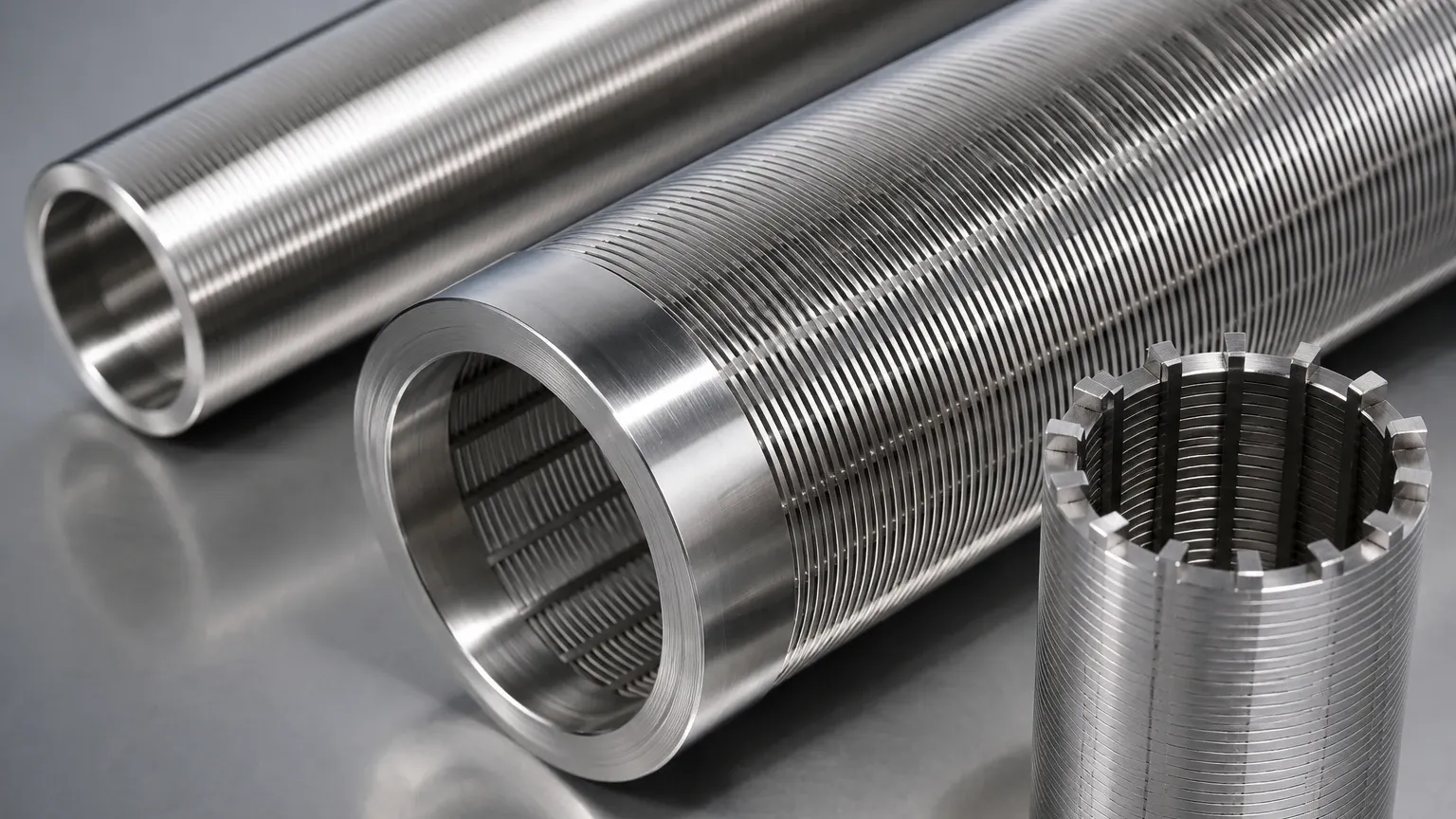
In industrial filtration and separation processes, the structural integrity and efficiency of the filter medium are paramount. The wedge wire screen pipe, a cylindrical configuration of profile wire technology, has become a standard component for demanding applications requiring high mechanical strength, precise filtration accuracy, and long-term durability. Unlike traditional woven wire mesh or perforated metal, these pipes utilize a continuous slot design that significantly reduces the risk of clogging while maximizing flow rates.
For engineers and procurement teams, selecting the appropriate Wedge Wire Screens involves understanding the interplay between material science, hydraulic performance, and mechanical design. This guide examines the technical specifications, manufacturing principles, and application-specific considerations of wedge wire screen pipes to support informed decision-making in industrial environments.
Engineering Principles of Wedge Wire Technology
The fundamental advantage of a wedge wire screen pipe lies in its unique V-shaped profile wire. During the manufacturing process, this wire is resistance-welded onto support rods at every intersection, creating a robust, one-piece structure.
Non-Clogging Geometry
The "wedge" or V-shaped profile is oriented so that the narrowest part of the slot is at the outer surface (in outside-to-inside flow configurations). As particles pass through the initial opening, the distance between the wires widens. This design creates a two-point contact system; if a particle is small enough to enter the slot, it will pass through without becoming wedged or trapped. This feature is critical for maintaining consistent flow and reducing downtime associated with manual cleaning.
Precision Slot Control
Slot widths in wedge wire screen pipes can be controlled with extreme precision, often down to 20 microns. This level of accuracy is essential for applications such as catalyst bed support or sand control in water wells, where the media being retained has a specific particle size distribution (PSD). Unlike flexible mesh, the rigid nature of the profile wire ensures that slot openings remain constant even under high differential pressure.
Structural Components and Manufacturing
A wedge wire screen pipe consists of two primary components: the surface profile wire and the internal support rods. The combination of these elements determines the pipe's ability to withstand external collapse pressure and internal burst pressure.
Surface Profiles and Support Rods
The surface wire defines the filtration characteristics, while the support rods provide the structural framework. Support rods can be round, D-shaped, or even wedge-shaped themselves, depending on the required strength-to-weight ratio. In high-pressure hydraulic systems or deep-well applications, the frequency and thickness of the support rods are increased to prevent deformation.
Welding and Construction Methods
Most industrial-grade wedge wire pipes are produced using advanced resistance welding. This process ensures a high-strength bond without the need for filler metals, which maintains the chemical purity of the stainless steel. There are two main construction types:
1. Radial (Circumferential): The profile wire is wrapped around the support rods. This is the most common configuration for well screens and intake pipes.
2. Axial (Longitudinal): The profile wires run parallel to the axis of the pipe, with support rods forming the circumference. This is often used in internal reactor components where flow must be directed along the length of the pipe.
Key Performance Factors and Selection Criteria
When specifying a wedge wire screen pipe for an industrial project, several technical variables must be evaluated to ensure the component meets the application's operational lifespan and performance targets.
Open Area and Flow Capacity
The "Open Area" is the ratio of the total slot area to the total surface area of the pipe. A higher open area results in lower entrance velocities and reduced pressure drop across the filter. This is particularly important in water intake systems where low velocity is required to prevent the impingement of aquatic life. Engineers must balance the need for a high open area with the requirement for mechanical strength, as wider slots or thinner wires reduce the overall structural integrity.
Material Selection and Corrosion Resistance
Stainless steel is the primary material for wedge wire screen pipes due to its mechanical properties and resistance to oxidation. Common grades include:
* Grade 304: Suitable for general industrial use and standard water treatment.
* Grade 316L: Preferred for chemical processing and marine environments due to its superior resistance to pitting and chloride-induced stress corrosion cracking.
* Duplex and Super Duplex: Utilized in highly aggressive environments, such as offshore oil and gas or concentrated brine filtration, where high tensile strength and extreme corrosion resistance are required.
Mechanical Strength: Collapse and Burst Pressure
In deep-water wells or high-pressure chemical reactors, the wedge wire screen pipe must resist the external pressure exerted by the surrounding environment. The collapse strength is calculated based on the wire dimensions, rod spacing, and material yield strength. For heavy-duty applications, Kaifil provides reinforced designs that incorporate internal or external cages to enhance the pipe's resistance to mechanical failure.
Industrial Applications for Wedge Wire Screen Pipes
The versatility of the wedge wire screen pipe makes it a critical component across diverse sectors, from municipal water management to complex petrochemical refining.
Water Well and Intake Systems
In groundwater extraction, wedge wire screen pipes serve as the primary interface between the aquifer and the pump. The continuous slot design allows for efficient development of the well, as it facilitates the removal of fine silts during the initial cleaning phase. In surface water intake systems, these pipes protect downstream pumps and turbines from debris while maintaining low approach velocities.
Chemical and Petrochemical Processing
Reactor internals, such as hub and header laterals, frequently utilize wedge wire pipes to retain catalyst beds. The ability of the screen to withstand high temperatures and corrosive chemicals while providing a uniform flow distribution is essential for maximizing chemical reaction efficiency. They are also used in resin traps to prevent the loss of expensive ion-exchange resins in the event of a primary filter failure.
Food and Beverage Filtration
In the food industry, hygiene and cleanability are paramount. The smooth surface of the wedge wire screen pipe prevents the accumulation of organic matter, reducing the risk of bacterial growth. These pipes are commonly found in mash tuns for brewing, juice extraction systems, and dairy processing equipment where solids must be separated from liquids with minimal product loss.
Customization and OEM Considerations
Industrial filtration requirements are rarely "one size fits all." Customization is often necessary to integrate the wedge wire screen pipe into existing infrastructure or to meet specific hydraulic profiles.
Fittings and End Connections
To ensure a leak-proof installation, wedge wire pipes can be manufactured with a variety of end treatments. These include threaded NPT or BSP fittings, standard flanges (ANSI, DIN, or JIS), weld rings, or custom-machined couplings. Proper integration of these fittings is vital for maintaining the structural continuity of the filtration system.
Flow Direction Options
Depending on the system design, flow can be configured as:
* FOTI (Flow Out-To-In): The most common direction, where solids are retained on the outer surface.
* FITO (Flow In-To-Out): Used in certain pressurized systems or where the pipe acts as a distribution manifold.
Kaifil works closely with engineering teams to determine the optimal flow direction and wire orientation to maximize the efficiency of the specific process.
Maintenance and Operational Longevity
The total cost of ownership (TCO) for a wedge wire screen pipe is often lower than that of cheaper alternatives due to its extended service life and ease of maintenance.
Cleaning and Backwashing
Because the V-shaped slots widen inward, wedge wire screens are exceptionally responsive to backwashing. When the differential pressure reaches a predetermined limit, a reverse flow of liquid or air can effectively dislodge accumulated solids from the surface. This automated cleaning capability reduces the need for manual intervention and chemical cleaning cycles.
Durability in Abrasive Environments
In applications involving abrasive media, such as mining or pulp and paper processing, the thickness of the profile wire can be increased to provide a "wear allowance." This ensures that even as the surface of the wire is slowly eroded by abrasive particles, the slot width and structural integrity remain within acceptable limits for a longer duration.
Conclusion
The wedge wire screen pipe represents a sophisticated engineering solution for complex industrial separation challenges. By combining the non-clogging benefits of profile wire with the structural rigidity of a welded cylindrical form, these components provide reliable performance in the most demanding environments.
When evaluating filtration options, engineers should prioritize the precision of the slot width, the mechanical limits of the construction, and the chemical compatibility of the materials. As a professional manufacturer, Kaifil specializes in developing customized stainless steel filtration solutions that address these specific technical requirements. For detailed specifications and engineering support regarding Wedge Wire Screens, reviewing the available material grades and structural configurations is the first step toward optimizing your industrial process.
