


1 1 2 Mesh Filter
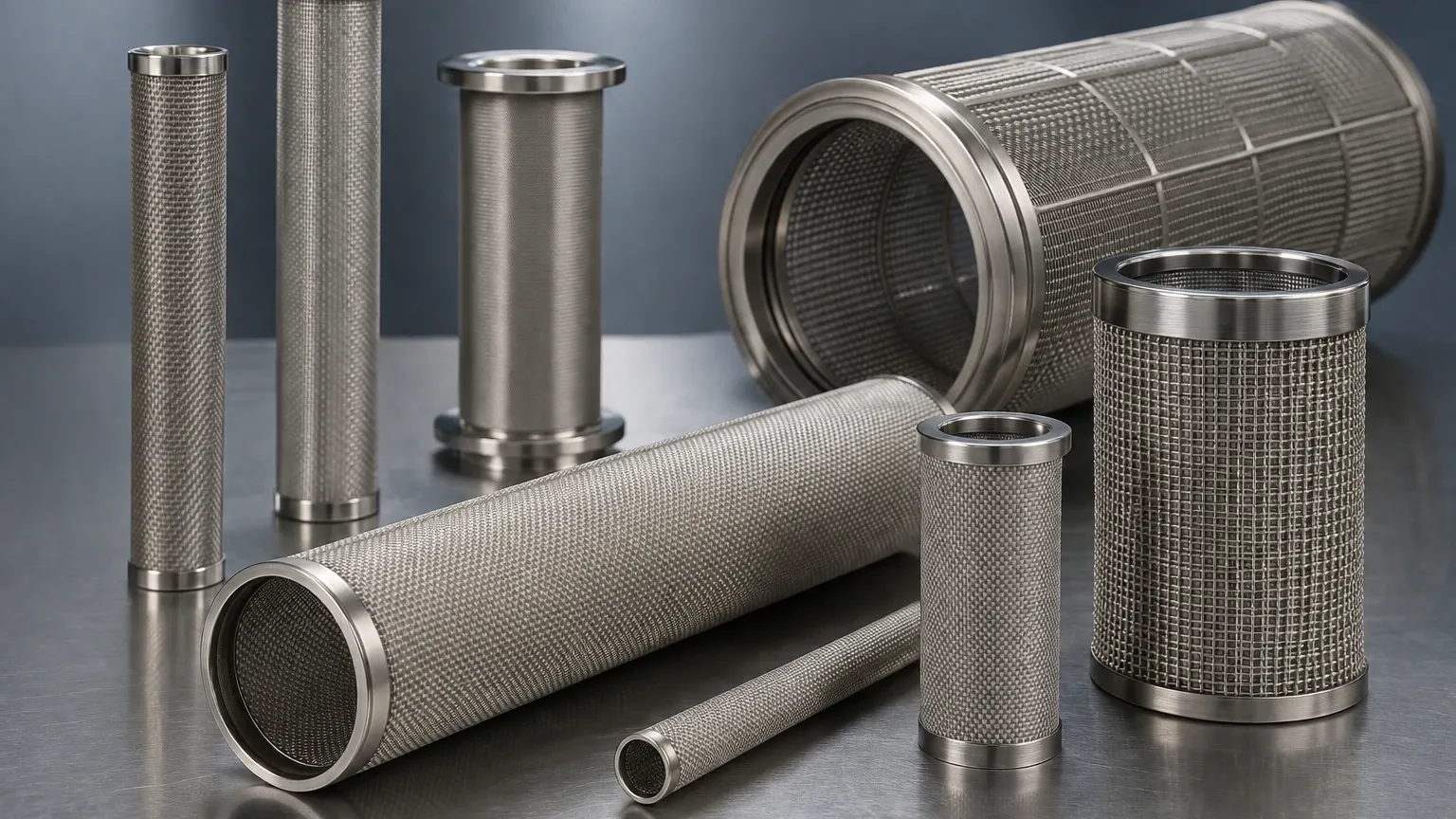
In industrial filtration, selecting the correct component requires a balance between mechanical strength, flow efficiency, and particle retention accuracy. The term 1 1 2 mesh filter typically refers to a specific sizing convention used in coarse filtration or, more commonly in industrial procurement, a filter assembly designed for 1.5-inch (1 1/2") piping systems. When integrated into Wire Mesh Filter Cylinders & Tubes, these components serve as the first line of defense in complex fluid processing systems, protecting downstream equipment from large particulates and debris.
This guide examines the engineering considerations, material selections, and performance variables that technical professionals must evaluate when specifying stainless steel wire mesh filters for industrial applications.
Understanding the Technical Specifications of Coarse Mesh
In the context of wire mesh, the "mesh count" refers to the number of openings per linear inch. A 1 1/2 mesh specification is categorized as a coarse screen. In such configurations, the aperture size is significantly larger than that of fine micron-rated filters, often exceeding 10mm depending on the wire diameter.
However, in many B2B procurement scenarios, a "1 1 2 mesh filter" refers to a filter element designed to fit a 1.5-inch nominal pipe size (NPS). Engineers must distinguish between the mesh density and the physical dimensions of the filter housing or cylinder. For coarse filtration, the primary goal is often the removal of large scale, wood chips, or plastic debris from process water or chemical slurries.
Key Metrics for Selection:
1. Aperture (Opening Size): The clear distance between two adjacent wires. For coarse filters, this determines the maximum particle size that can pass through the system.
2. Wire Diameter: This affects both the mechanical strength of the cylinder and the total open area. Thicker wires provide better resistance to high-pressure differentials but reduce the effective flow area.
3. Percentage of Open Area: Calculated by the formula `(Aperture / (Aperture + Wire Diameter))^2 x 100`. A higher open area results in a lower initial pressure drop across the filter.
Engineering Wire Mesh Filter Cylinders & Tubes
The structural integrity of a filter is as critical as its filtration rating. In industrial environments, filters are often subjected to turbulent flow, pressure surges, and mechanical vibrations. Wire Mesh Filter Cylinders & Tubes are engineered to withstand these stresses through various construction methods.
Single-Layer vs. Multi-Layer Construction
A single-layer wire mesh tube is suitable for low-pressure applications where the primary concern is simple straining. However, for high-pressure hydraulic or chemical processing, multi-layer sintered or reinforced designs are preferred. In these configurations, the 1 1/2 mesh or coarse outer layer provides structural support, while finer inner layers handle the actual particle retention.
Longitudinal vs. Spiral Welding
The method of joining the mesh to form a cylinder impacts the filter's longevity. Precision longitudinal welding ensures a consistent diameter and a smooth seam, which is essential for filters that must fit tightly within a housing. Spiral welding is often used for larger diameter tubes to enhance hoop strength, preventing the cylinder from collapsing under external pressure.
Material Selection: Stainless Steel Grades and Durability
Material compatibility is a non-negotiable factor in industrial filtration. Most high-performance wire mesh filters are manufactured from stainless steel due to its corrosion resistance and thermal stability.
* Grade 304 Stainless Steel: The standard choice for general industrial use, including water treatment and food processing. It offers excellent cost-effectiveness and good corrosion resistance in non-acidic environments.
* Grade 316L Stainless Steel: Specified for pharmaceutical, chemical, and marine applications. The addition of molybdenum and a lower carbon content (the "L" designation) provides superior resistance to pitting and crevice corrosion, especially in chloride-rich environments.
* Specialty Alloys: In extreme cases involving highly corrosive acids or temperatures exceeding 500°C, alloys such as Inconel or Monel may be required, though stainless steel remains the industry benchmark for the majority of B2B filtration needs.
Performance Evaluation and Flow Dynamics
When integrating a 1 1 2 mesh filter into a system, engineers must calculate the expected pressure drop (ΔP). A filter that is too restrictive will cause the pump to work harder, increasing energy costs and the risk of cavitation. Conversely, a filter with too much open area may lack the structural rigidity required for the application.
Factors Influencing Pressure Drop:
* Fluid Viscosity: Thicker fluids (like heavy oils or resins) require larger apertures or greater surface areas to maintain flow rates.
* Flow Velocity: Higher velocities increase the friction loss through the mesh openings.
* Contaminant Loading: As particles accumulate on the surface of the wire mesh filter cylinders & tubes, the effective open area decreases, causing the pressure drop to rise. Systems should be designed with a "clean" pressure drop of less than 2-3 psi to allow for sufficient operating time before cleaning is required.
Customization Options for Industrial Applications
Standard off-the-shelf filters rarely meet the specific needs of specialized industrial machinery. Customization is often necessary to ensure seamless integration into existing infrastructure.
End Fittings and Connections
A 1 1/2 mesh filter assembly can be customized with various end configurations, including:
* NPT/BSP Threaded Ends: For direct connection to piping.
* Flanged Ends: For high-pressure systems requiring secure, leak-proof seals.
* O-Ring Seals: Common in hydraulic and pharmaceutical applications to prevent bypass.
* Closed Bottoms or Handles: Facilitating easy removal and manual cleaning during maintenance cycles.
Pleating for Surface Area Extension
If the installation space is limited but high flow rates are required, the wire mesh can be pleated. Pleating increases the surface area of the filter within the same cylindrical footprint, significantly extending the dirt-holding capacity and reducing the frequency of maintenance shutdowns.
Maintenance, Cleaning, and Total Cost of Ownership
One of the primary advantages of stainless steel wire mesh filters over disposable synthetic filters is their cleanability. A well-maintained stainless steel filter can last for years, providing a much lower total cost of ownership (TCO) despite a higher initial purchase price.
Cleaning Methodologies:
1. Backwashing: Reversing the flow of fluid through the filter to dislodge particles trapped on the surface. This is often automated in continuous process industries.
2. Ultrasonic Cleaning: Using high-frequency sound waves in a solvent bath to remove fine particles embedded deep within the mesh pores. This is highly effective for multi-layer sintered filters.
3. Chemical Cleaning: Utilizing surfactants or mild acids to dissolve scale or organic buildup, provided the chemical is compatible with the stainless steel grade.
Determining Replacement Cycles
While wire mesh filters are durable, they are not indestructible. Engineers should monitor for signs of "wire shifting" or fatigue cracks in the mesh. If the structural integrity of the cylinder is compromised, the risk of media migration (where pieces of the filter itself enter the process stream) increases. Regular inspection during scheduled downtime is essential for maintaining system safety.
Conclusion: Selecting the Right Filtration Partner
Choosing a 1 1 2 mesh filter involves more than just matching a part number. It requires a deep understanding of the fluid dynamics, chemical environment, and mechanical requirements of the specific application. By focusing on high-quality Wire Mesh Filter Cylinders & Tubes, facilities can ensure efficient operation, protect expensive downstream components, and minimize unplanned downtime.
When sourcing these components, it is vital to work with manufacturers who provide transparent material certifications and can offer engineering support for customized designs. Whether the application involves simple water straining or complex chemical filtration, the precision of the wire mesh remains the critical factor in process success.
