


1 Mesh Screen Filter
In the landscape of industrial filtration, the term "mesh" is a fundamental unit of measurement that dictates the performance, flow capacity, and structural integrity of a filter element. While many high-precision applications focus on micron-rated fine meshes, the 1 mesh screen filter serves as a critical component in heavy-duty industrial processes. As the coarsest standard mesh size available, it provides the primary line of defense in fluid systems and acts as the structural backbone for more complex filtration assemblies.
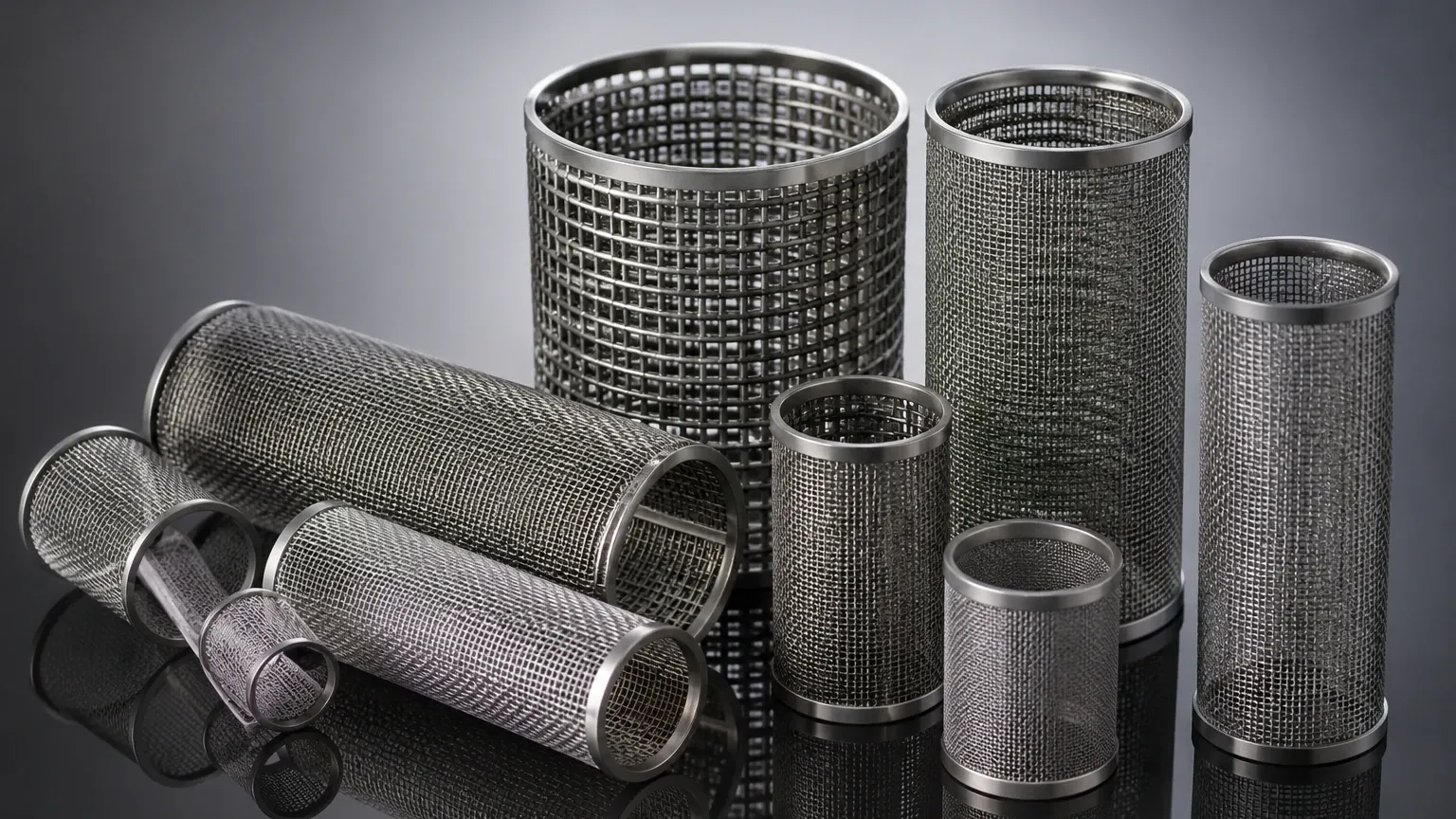
For engineers and procurement specialists, understanding the technical specifications and application limits of a 1 mesh screen is essential for optimizing system longevity and preventing downstream equipment failure. When formed into Wire Mesh Filter Cylinders & Tubes, these components offer a unique balance of high flow rates and extreme durability.
Understanding the Technical Specifications of a 1 Mesh Screen Filter
To specify a 1 mesh screen filter correctly, one must first understand the mathematical relationship between the mesh count, wire diameter, and aperture size. In the wire cloth industry, "mesh count" refers to the number of openings per linear inch, measured from the center of one wire to the center of the next.
The Geometry of 1 Mesh
A 1 mesh screen has exactly one opening per linear inch. However, the actual size of that opening (the aperture) is determined by the diameter of the wire used in the weaving process. For example:
* Aperture Calculation: Aperture = (1 / Mesh Count) – Wire Diameter.
* Example: If a 1 mesh screen uses a 0.080-inch (2.03 mm) wire, the clear opening is 0.920 inches (23.37 mm).
Because the wire diameter can vary based on the required structural strength, the "open area percentage"—the ratio of the area of the openings to the total area of the screen—is a vital metric for calculating pressure drop and flow velocity. A 1 mesh screen typically offers a very high open area, often exceeding 80%, making it ideal for high-volume intake systems where minimal resistance to flow is required.
Material Selection for Industrial Environments
Since 1 mesh screen filters are often the first point of contact for raw process fluids, they are exposed to significant mechanical stress, abrasion, and potential chemical corrosion. Choosing the correct alloy is paramount to ensuring a low total cost of ownership.
Stainless Steel 304 vs. 316L
At Kaifil, we primarily utilize stainless steel for its superior mechanical properties.
1. Stainless Steel 304: This is the standard industrial grade, providing excellent strength and basic corrosion resistance. It is suitable for most water treatment, food processing (non-acidic), and general industrial applications.
2. Stainless Steel 316L: For environments involving chlorides, marine conditions, or acidic chemical processing, 316L is the preferred choice. The addition of molybdenum enhances resistance to pitting and crevice corrosion, which is critical when the filter is submerged or exposed to harsh cleaning agents.
For specialized applications involving high temperatures or extreme chemical volatility, exotic alloys like Monel, Inconel, or Hastelloy may be considered, though these are typically reserved for environments where standard stainless steel would succumb to rapid degradation.
Structural Roles: From Primary Strainers to Support Cages
A 1 mesh screen filter is rarely used in isolation for fine particle removal. Instead, its industrial utility is found in two primary roles: coarse straining and structural support.
Coarse Straining and Intake Protection
In raw water intake systems, such as those drawing from rivers or cooling ponds, a 1 mesh screen acts as a "trash rack" or primary strainer. It prevents large debris—such as stones, sticks, and aquatic life—from entering the pumping system. By capturing these large objects, the 1 mesh screen protects expensive centrifugal pumps and prevents the clogging of finer downstream filters.
Support for Multi-Layer Filter Elements
In many high-pressure hydraulic or chemical filtration systems, fine wire mesh (such as 100 mesh or 500 mesh) lacks the inherent stiffness to withstand the differential pressure of the fluid flow. In these instances, a 1 mesh screen is used as a "support cage" or outer shroud. When fabricated into Wire Mesh Filter Cylinders & Tubes, the heavy-gauge wire of the 1 mesh provides the necessary rigidity to keep the finer filtration media from collapsing or deforming under load.
Customization and Fabrication: Cylinders and Tubes
Standard flat sheets of wire mesh are often insufficient for industrial piping and vessel requirements. Custom fabrication is where the 1 mesh screen filter is transformed into a functional engineering component.
Welding and Seaming
Because 1 mesh utilizes relatively thick wire diameters, specialized welding techniques are required to ensure the integrity of the cylinder. Resistance spot welding and TIG (Tungsten Inert Gas) welding are commonly used to create high-strength longitudinal seams. A properly welded seam must be as strong as the parent mesh to prevent failure during pressure surges.
Edging and Reinforcement
To facilitate installation into filter housings, 1 mesh cylinders often require custom end treatments. These can include:
* Flanges and Rings: Machined or stamped metal rings welded to the ends of the cylinder to provide a sealing surface.
* U-Binding: A metal strip folded over the raw edges of the mesh to prevent fraying and provide a smooth contact point for gaskets.
* Reinforcement Ribs: For exceptionally long tubes, internal or external ribs may be added to prevent the cylinder from buckling under vacuum or high-pressure conditions.
Engineering Selection Criteria: What Buyers Must Confirm
When sourcing a 1 mesh screen filter, engineers should provide a detailed specification sheet to the manufacturer to ensure the component meets the application's demands. Key considerations include:
1. Maximum Differential Pressure (ΔP): What is the highest pressure drop the filter will experience before cleaning? This dictates the required wire diameter and the need for internal reinforcement.
2. Flow Direction: Will the fluid flow from the inside-out or outside-in? This determines whether the support structure should be placed on the interior or exterior of the filter element.
3. Media Compatibility: Is the fluid corrosive? What is the operating temperature? These factors narrow down the material selection from 304 stainless steel to more resilient alloys.
4. Cleaning Method: Will the filter be cleaned via backwashing, ultrasonic baths, or manual scraping? A 1 mesh screen is highly durable and can typically withstand aggressive mechanical cleaning, but the fabrication method (welding vs. crimping) must account for these forces.
Maintenance and Life Cycle Considerations
One of the primary advantages of a stainless steel 1 mesh screen filter is its cleanability. Unlike disposable synthetic filters, metal mesh can be cleaned and reused indefinitely, provided the wire is not physically damaged or chemically compromised.
In heavy industrial applications, the 1 mesh screen should be inspected periodically for "blinding"—where large debris becomes wedged in the apertures—and for signs of erosion. In high-velocity systems, the abrasive nature of suspended solids can gradually wear down the wire diameter, eventually leading to a loss of structural integrity. However, due to the thickness of the wire used in 1 mesh configurations, these components typically offer a service life measured in years rather than months.
Conclusion
The 1 mesh screen filter is an indispensable tool in the industrial engineer's toolkit. Whether it is serving as a rugged intake guard for a municipal water system or providing the structural foundation for a multi-stage chemical filter, its performance is rooted in its simplicity and strength. By selecting the appropriate material grade and specifying the correct fabrication details for Wire Mesh Filter Cylinders & Tubes, facilities can ensure efficient flow, protect downstream equipment, and achieve a sustainable, long-term filtration solution.
At Kaifil, we specialize in bridging the gap between standard mesh specifications and custom engineering requirements. Our expertise in stainless steel fabrication allows us to produce 1 mesh components that meet the rigorous standards of the chemical, pharmaceutical, and water treatment industries, ensuring that your filtration system performs reliably in the most demanding environments.
