


1 Inch Mesh Filter
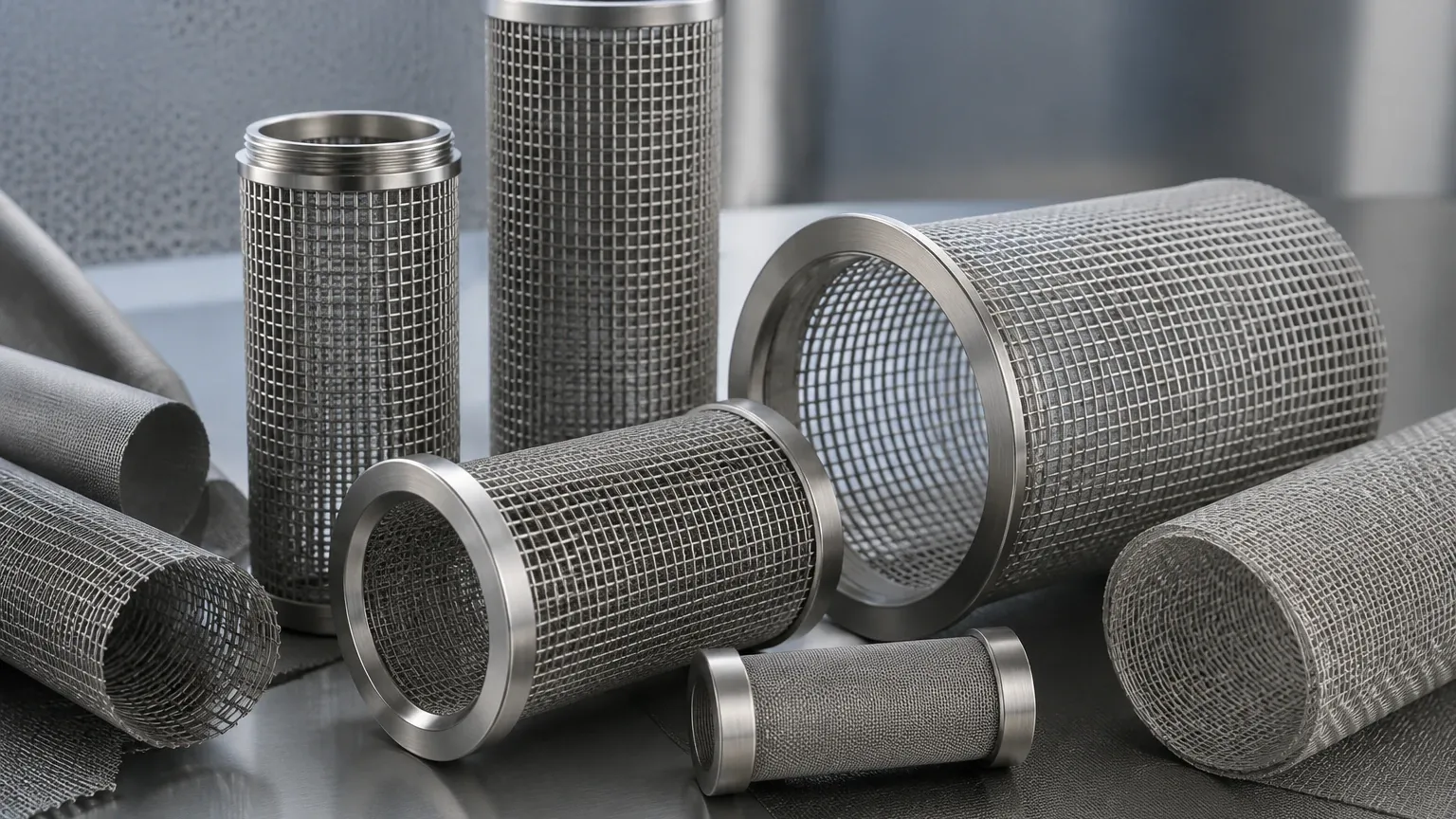
In industrial filtration, the term "1 inch mesh filter" frequently appears in procurement specifications and engineering designs. Depending on the specific application, this designation may refer to the outer diameter of a filter tube, the nominal pipe size of the connection, or, in coarse straining applications, the mesh opening size itself. For most precision industrial processes, a 1 inch mesh filter typically describes a compact filtration component—often a Wire Mesh Filter Cylinders & Tubes assembly—designed for integration into small-bore piping systems or as a secondary protection stage for sensitive equipment.
Selecting the correct filtration media requires a deep understanding of fluid dynamics, material science, and mechanical constraints. This guide examines the technical parameters, construction methods, and selection criteria essential for engineers and purchasing teams when evaluating stainless steel wire mesh filtration solutions.
1. Defining the 1 Inch Mesh Filter in Industrial Contexts
Before finalizing a purchase order, it is critical to define what "1 inch" signifies in your specific system. In the B2B industrial sector, this usually falls into three categories:
* Outer Diameter (OD): A filter cylinder with a 1-inch (25.4 mm) diameter, commonly used in hydraulic lines, fuel systems, and laboratory-scale chemical processing.
* Connection Size: A filter housing or element designed with a 1-inch NPT, BSP, or flange connection to match standard piping.
* Mesh Opening: In coarse straining (e.g., wastewater intake), a 1-inch mesh refers to one opening per linear inch. However, in precision filtration, we deal with much finer mesh counts where the "1 inch" refers to the physical dimensions of the filter element.
For the purposes of this guide, we focus on the engineering of small-diameter Wire Mesh Filter Cylinders & Tubes used for precision liquid and gas filtration.
2. Material Engineering: Why Stainless Steel?
Industrial filters operate in demanding environments involving high pressures, corrosive chemicals, and extreme temperatures. Stainless steel is the industry standard due to its mechanical properties and longevity.
Grade 304 Stainless Steel
304 is the most common grade used for general industrial applications. It provides excellent strength and good corrosion resistance for water treatment, hydraulic oils, and non-acidic chemical processing. It is a cost-effective choice for environments where the filter is not exposed to high chloride concentrations or aggressive acids.
Grade 316L Stainless Steel
For pharmaceutical, food and beverage, and marine applications, 316L is the preferred material. The addition of molybdenum enhances resistance to pitting and crevice corrosion, particularly in chloride-rich environments. The "L" (low carbon) designation is crucial for welded components like filter cylinders, as it prevents carbide precipitation during the welding process, ensuring the structural integrity of the seam remains as corrosion-resistant as the mesh itself.
Exotic Alloys
In specialized cases involving high-temperature oxidation or highly acidic media, alloys such as Monel, Inconel, or Hastelloy may be utilized. These are typically reserved for specific chemical manufacturing processes where standard stainless steel would fail prematurely.
3. Structural Design of Wire Mesh Filter Cylinders & Tubes
The performance of a 1 inch mesh filter is dictated by its geometry and construction. Different designs offer varying balances between filtration area, pressure drop, and mechanical strength.
Single-Layer vs. Multi-Layer Construction
* Single-Layer: Simple and economical, these are used for low-pressure applications or as coarse strainers. They are easy to clean but lack the depth and strength required for high-differential pressure environments.
* Multi-Layer (Sintered): Multiple layers of wire mesh are bonded together through a heat-treatment process (sintering). This creates a robust, integrated structure where one layer provides the filtration rating while other layers provide mechanical support and drainage. Sintered tubes are essential for high-pressure hydraulic systems where the mesh must resist deformation.
Pleated vs. Cylindrical Geometry
A standard cylindrical filter is easier to manufacture and clean. However, a pleated design significantly increases the effective filtration surface area within the same 1-inch footprint. This results in:
* Lower clean pressure drop.
* Higher dirt-holding capacity.
* Longer service intervals.
End Cap and Fitting Configurations
The interface between the filter and the housing is a common point of bypass if not engineered correctly. Common configurations include:
* DOE (Double Open End): Requires gaskets at both ends to ensure a seal.
* SOE (Single Open End): Usually features a threaded fitting (NPT/BSP) or an O-ring (e.g., 222 or 226 style) at one end and a closed cap at the other.
* Custom Flanges: For specialized machinery where the filter must be bolted directly into a manifold.
4. Filtration Precision: Mesh Count and Micron Ratings
When specifying a 1 inch mesh filter, the "mesh count" refers to the number of wires per linear inch. This directly correlates to the micron rating, which defines the size of particles the filter will retain.
| Mesh Count | Micron Rating (Approx.) | Typical Application |
| :— | :— | :— |
| 20 | 840 | Coarse pre-filtration, pump protection |
| 60 | 250 | Sand and scale removal |
| 100 | 149 | Fine sediment removal, nozzle protection |
| 200 | 74 | Hydraulic fluid conditioning |
| 400+ | 37 and below | Critical pharmaceutical and chemical polishing |
Engineers must distinguish between nominal and absolute filtration ratings. A nominal rating indicates the filter will trap a high percentage of particles of a certain size, while an absolute rating (often achieved through multi-layer sintered mesh) guarantees that no particle larger than the specified micron size will pass through the media.
5. Engineering Selection Criteria
To ensure the longevity and efficiency of a Wire Mesh Filter Cylinders & Tubes installation, several technical factors must be calculated during the design phase.
Flow Rate and Velocity
Fluid velocity through the mesh should be kept within specific limits to prevent "particle migration" (where high pressure forces particles through the mesh) and to minimize turbulence. For liquid filtration, a common target is a face velocity of less than 2-3 feet per minute, though this varies by fluid viscosity.
Clean Pressure Drop (ΔP)
The initial pressure drop across a clean filter should ideally not exceed 2-5 PSI. If the initial ΔP is too high, the filter will reach its terminal pressure drop (the point where it must be cleaned or replaced) much faster, increasing operational costs.
Viscosity Considerations
High-viscosity fluids (like heavy oils or syrups) require larger surface areas or coarser mesh to maintain acceptable flow rates. When selecting a 1 inch mesh filter for viscous media, pleating is often mandatory to compensate for the higher resistance to flow.
Chemical Compatibility
Beyond the stainless steel grade, consider the materials used for seals and gaskets (e.g., Viton, EPDM, PTFE). A mismatch here can lead to seal failure and bypass, even if the metal mesh remains intact.
6. Applications in Industrial Sectors
Small-diameter wire mesh filters are versatile components used across various sectors:
* Chemical Processing: Protecting sensitive instrumentation and valves from pipeline scale and reaction byproducts. The high thermal stability of stainless steel allows for filtration of hot reagents.
* Food & Beverage: Used in the filtration of edible oils, beverages, and steam. Components must meet hygienic standards, often requiring smooth surface finishes (electropolishing) to prevent bacterial growth.
* Hydraulic Systems: Protecting servo-valves and actuators from particulate contamination. Sintered wire mesh tubes are preferred here for their ability to withstand high-pressure spikes.
* Water Treatment: Serving as pre-filters for RO (Reverse Osmosis) membranes or as final strainers in point-of-use industrial water dispensers.
7. Maintenance, Cleaning, and Replacement Cycles
One of the primary advantages of stainless steel Wire Mesh Filter Cylinders & Tubes over disposable polymer filters is their cleanability. Depending on the contaminant, several methods can be employed:
1. Backwashing: Reversing the flow of the fluid to dislodge particles from the surface of the mesh. This is effective for surface-loading contaminants.
2. Ultrasonic Cleaning: Using high-frequency sound waves in a cleaning solvent to remove fine particles lodged deep within the mesh pores. This is the most effective method for restoring sintered multi-layer filters.
3. Chemical Cleaning: Using acids or alkalis to dissolve organic or mineral deposits. This requires careful selection of chemicals to ensure they do not compromise the stainless steel or the welds.
Determining Replacement Cycles
While cleanable, wire mesh filters are not infinite. Mechanical fatigue from pressure cycling or gradual "blinding" (where pores become permanently blocked) will eventually necessitate replacement. Monitoring the pressure differential across the filter is the most reliable way to determine when a cleaning cycle or replacement is required.
8. Buyer’s Checklist: Customization and Procurement
When sourcing a 1 inch mesh filter from a manufacturer like Kaifil, providing precise technical data ensures the component will perform as expected. International buyers should confirm the following details:
* Dimensional Accuracy: Confirm OD, ID, and overall length. Specify tolerances if the filter must fit into a precision-machined housing.
* Mesh Specification: Define the required micron rating and whether it must be absolute or nominal.
* Layer Configuration: Specify if a single layer is sufficient or if a multi-layer sintered structure is required for pressure resistance.
* End Fittings: Provide drawings or standard specifications (e.g., 1" NPT male) for the connection points.
* Material Certification: Request Mill Test Reports (MTRs) to verify the grade of stainless steel (304 vs 316L).
* Quantity and Lead Time: For OEM applications, discuss batch sizes and shipping schedules to align with production requirements.
Conclusion
The 1 inch mesh filter is a critical component in maintaining the purity and safety of industrial fluid systems. By selecting high-quality Wire Mesh Filter Cylinders & Tubes, engineers can achieve a balance of precision filtration, mechanical durability, and long-term cost-efficiency. Whether for protecting a high-pressure hydraulic pump or ensuring the clarity of a pharmaceutical intermediate, the correct specification of material, mesh count, and structural design is the foundation of reliable industrial performance.
