


1 Mesh Filter
In the landscape of industrial filtration, the term "mesh" defines the number of openings per linear inch of a screen. A 1 mesh filter represents the coarsest end of this spectrum, featuring exactly one opening per inch. While fine filtration often garners the most attention in high-purity applications, coarse filtration components like Wire Mesh Filter Cylinders & Tubes are the critical first line of defense in industrial fluid systems.
For engineers and procurement professionals, selecting a 1 mesh filter involves more than just identifying the opening size. It requires an understanding of wire diameter, open area ratios, material integrity, and the specific mechanical demands of the application. This guide provides a technical overview of 1 mesh filtration components, their engineering considerations, and the factors that influence long-term performance in demanding environments.
Understanding the Technical Specifications of a 1 Mesh Filter
The most common misconception in filtration is that mesh count alone dictates performance. For a 1 mesh filter, the physical opening size is heavily dependent on the wire diameter used during the weaving process. Because there is only one wire and one opening per linear inch, the relationship is expressed by the formula:
*1 = (Opening Size + Wire Diameter)*
If a heavy-duty 1 mesh screen uses a 2.0mm wire, the resulting opening will be approximately 23.4mm. Conversely, using a thinner wire increases the opening size and the overall open area. In industrial B2B contexts, specifying the wire diameter is as important as the mesh count itself, as it determines the mechanical strength of the filter and its ability to withstand high-velocity flow or heavy debris loads.
Open Area and Flow Characteristics
One of the primary advantages of a 1 mesh configuration is the high percentage of open area, often exceeding 80%. This results in an extremely low pressure drop (ΔP) across the filter element. In hydraulic systems or large-scale water intake pipes, maintaining flow velocity while capturing large contaminants—such as stones, wood chips, or plastic fragments—is essential to prevent pump cavitation and downstream mechanical failure.
Engineering Considerations for Wire Mesh Filter Cylinders & Tubes
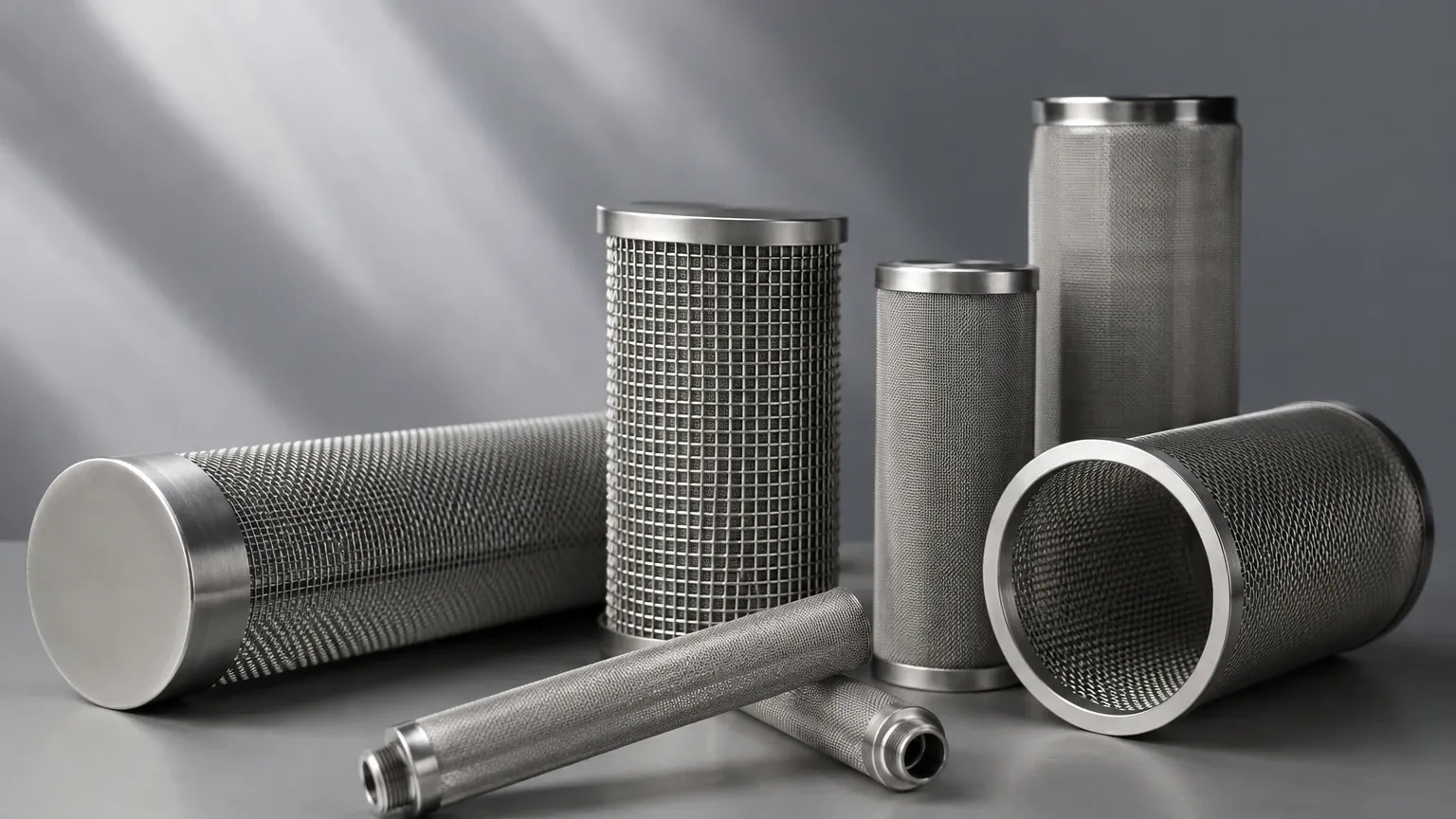
When 1 mesh media is fabricated into Wire Mesh Filter Cylinders & Tubes, several structural engineering factors come into play. These components are rarely used in isolation; they often serve as the primary "trash rack" or as a rigid support structure for finer mesh layers.
Structural Integrity and Seam Welding
Because 1 mesh filters deal with large-scale debris, the integrity of the cylinder's longitudinal seam is paramount. For stainless steel components, TIG (Tungsten Inert Gas) welding or plasma welding is typically preferred over spot welding. A continuous weld ensures that the cylinder does not unzip under the weight of captured debris or during high-pressure backwashing cycles.
Support and Reinforcement
In many high-pressure applications, a 1 mesh cylinder acts as an internal or external support cage. For example, a 100-mesh fine filter may be wrapped around a 1 mesh stainless steel tube. The 1 mesh component provides the necessary hoop strength to prevent the finer, more fragile mesh from collapsing under differential pressure, while the fine mesh performs the actual particulate separation.
Industrial Applications and Use Cases
The utility of a 1 mesh filter spans across various heavy industries where liquid or gas streams are prone to large-scale contamination.
1. Water Treatment and Intake: In municipal or industrial water intake from rivers or lakes, 1 mesh screens prevent large organic matter and debris from entering the primary filtration system.
2. Chemical Processing: During the initial stages of raw material processing, coarse filters remove large undissolved solids or packaging remnants that could damage agitators or clog heat exchangers.
3. Food and Beverage: In the processing of bulk agricultural products, these filters are used to separate large stems, stones, or foreign objects from the product stream before finer processing begins.
4. Oil and Gas: Used in the protection of large-diameter pipelines to capture "pigs" (pipeline inspection gauges) or large scale-buildup during maintenance operations.
Material Selection: SS304 vs. SS316
Material science is a critical boundary in filter selection. Most industrial wire mesh filters are manufactured from stainless steel due to its balance of strength and corrosion resistance.
* Stainless Steel 304: The standard grade for most industrial applications. It offers excellent strength and good corrosion resistance for freshwater and general chemical use.
* Stainless Steel 316: Contains molybdenum, which provides superior resistance to chlorides and pitting. This is the mandatory choice for marine environments, brine filtration, and highly acidic chemical processing.
For specialized applications, Kaifil also evaluates the use of Duplex stainless steel or Monel if the environment involves extreme temperatures or highly aggressive media. Choosing the wrong alloy can lead to premature failure via stress corrosion cracking, which can be catastrophic in high-pressure systems.
Installation Constraints and Maintenance
Proper installation of a 1 mesh filter is vital for its efficacy. Engineers must consider the flow direction—whether the fluid moves from the inside out or outside in. This determines where the debris will accumulate and how the filter should be reinforced.
Cleaning and Replacement Cycles
While coarse filters do not clog as quickly as fine filters, they are subject to "blinding" if fibrous materials or large flat debris (like plastic film) cover the openings.
* Manual Cleaning: Given the large openings, 1 mesh filters are often easy to clean via manual spray or mechanical brushing.
* Automated Backwashing: In automated systems, the high open area allows for efficient backwashing with minimal water loss.
* Replacement Indicators: The primary indicator for replacement in a 1 mesh system is often physical deformation or wire thinning due to abrasion rather than a rise in differential pressure.
What International Buyers Should Confirm
When sourcing Wire Mesh Filter Cylinders & Tubes from a manufacturer like Kaifil, procurement teams should provide a detailed specification sheet to ensure the component meets the application's demands. Essential data points include:
* Exact Wire Diameter: Do not rely on "standard" mesh; specify the millimeter or inch thickness required for your pressure rating.
* Dimensional Tolerances: For cylindrical filters, the outer diameter (OD) and length (L) must have tight tolerances to fit into existing housing or piping.
* End Fittings: Specify if the filter requires flanges, threaded NPT/BSP fittings, or reinforced end caps.
* Certification: Request material mill certificates (MTRs) to verify the alloy grade and ensure compliance with international standards like ASTM or ISO.
Total Cost of Ownership (TCO)
The initial purchase price of a 1 mesh filter is only one component of the TCO. Engineers should evaluate the "cost per gallon filtered" over the component's lifespan. A cheaper, thinner-wire filter may save on upfront costs but fail prematurely due to vibration or abrasion, leading to expensive downtime and potential damage to downstream pumps. Investing in a precision-manufactured, heavy-gauge stainless steel filter from a specialized manufacturer ensures durability and reduces the frequency of maintenance interventions.
Conclusion
The 1 mesh filter serves as a foundational component in industrial engineering, providing essential protection for complex systems. By understanding the technical nuances of wire diameter, material selection, and structural fabrication, engineers can optimize their filtration processes for both performance and longevity. Whether used as a standalone debris catcher or as a structural skeleton for multi-stage filtration, the quality of the 1 mesh component dictates the reliability of the entire fluid system.
As a professional manufacturer, Kaifil specializes in translating these technical requirements into high-performance Wire Mesh Filter Cylinders & Tubes, ensuring that every industrial application receives a solution tailored to its specific environmental and mechanical challenges.
