


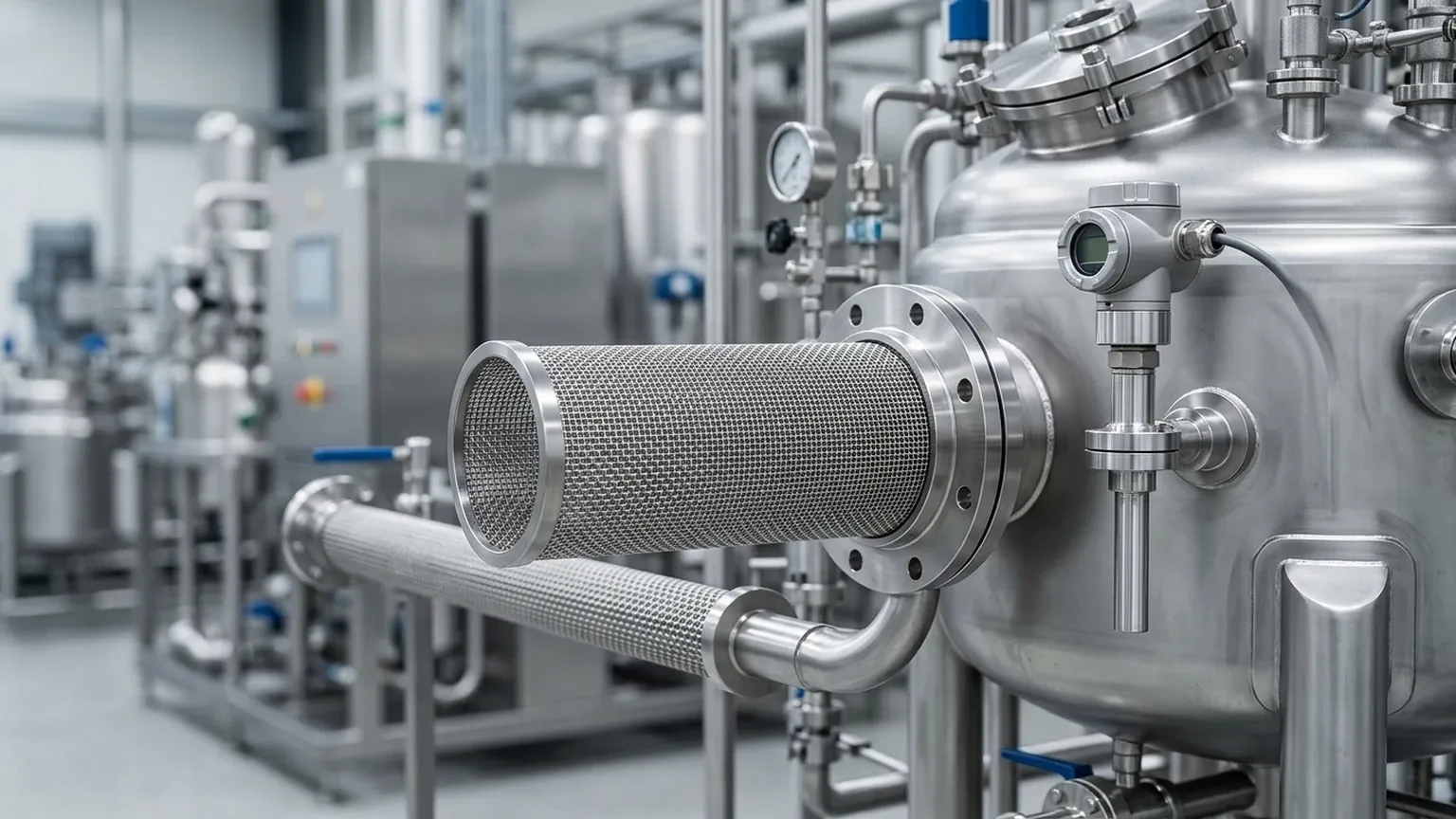
In industrial processing, the efficiency of liquid and gas separation depends heavily on the mechanical integrity and filtration precision of the components used. Among the most versatile geometries in this field are Wire Mesh Filter Cylinders & Tubes, which provide a high surface-area-to-volume ratio suitable for high-pressure and high-flow environments. For engineers and procurement specialists, selecting the right filtration equipment involves a deep dive into material science, structural design, and the capabilities of specialized manufacturers like anpeng wire mesh filter equipment co ltd and other industry leaders.
This guide examines the technical parameters of stainless steel cylindrical filters, the manufacturing standards required for industrial reliability, and the critical factors that influence the total cost of ownership in demanding applications.
Engineering Fundamentals of Wire Mesh Filter Cylinders & Tubes
The primary function of a cylindrical filter is to provide a rigid, permeable barrier that captures particulate matter while allowing the fluid phase to pass with minimal resistance. The cylindrical shape is preferred in industrial piping systems because it can be easily integrated into inline filter housings and offers inherent structural strength against radial pressure.
Geometry and Flow Dynamics
In a typical cylindrical filter, the fluid flow can be configured as "outside-in" or "inside-out." Outside-in flow is common in applications where the filter is submerged in a vessel, allowing the exterior surface to act as the primary collection zone. Inside-out flow is often used when the captured solids need to be contained within the tube for easier removal during maintenance. The choice between these configurations dictates the placement of reinforcement layers, such as perforated metal cores or external cages.
Micron Ratings and Filtration Efficiency
Filtration precision is defined by the micron rating, which can be categorized as absolute or nominal. For critical applications in the pharmaceutical or chemical industries, absolute-rated Wire Mesh Filter Cylinders & Tubes are required to ensure that 99.9% of particles above a specific size are retained. Stainless steel wire mesh allows for precise control over pore size, ranging from coarse 500-micron screens to ultra-fine 1-micron Dutch weave meshes.
Material Selection and Corrosion Resistance
The longevity of a filter in an industrial environment is largely determined by its metallurgical composition. While various alloys are available, stainless steel remains the standard due to its balance of mechanical strength and chemical resistance.
1. AISI 304/304L: The most common grade for general-purpose filtration. It offers excellent forming and welding characteristics but may be susceptible to pitting in high-chloride environments.
2. AISI 316/316L: Containing molybdenum, this grade provides superior resistance to corrosion from acids and salts. It is the preferred choice for marine, chemical processing, and food-grade applications.
3. Specialty Alloys: In extreme cases involving high temperatures or highly aggressive chemicals, alloys such as Monel, Inconel, or Hastelloy may be utilized to prevent premature failure of the mesh structure.
The Role of Manufacturing Hubs: Anpeng Wire Mesh Filter Equipment Co Ltd
When sourcing industrial filtration components, the geographical and technical origin of the product often serves as a proxy for quality and scale. The Anping region in China is globally recognized as a center for wire mesh production. Companies such as anpeng wire mesh filter equipment co ltd represent the large-scale manufacturing capabilities that support global supply chains.
For international buyers, evaluating a manufacturer in this region involves verifying their adherence to international standards such as ISO 9001. While high-volume production facilities like anpeng wire mesh filter equipment co ltd offer competitive pricing, engineers must ensure that the specific technical requirements—such as burr-free edges, precise seam welding, and material certification—are strictly met. Reliability in these components is not just about the mesh itself, but the engineering precision applied during the conversion of mesh into finished tubes and cylinders.
Structural Design and Reinforcement
Single-layer wire mesh is often insufficient for high-pressure industrial applications. To prevent the mesh from collapsing or deforming under the force of the fluid (differential pressure), several reinforcement techniques are employed:
Perforated Metal Support
Adding a perforated stainless steel tube inside or outside the wire mesh provides the necessary mechanical rigidity. The perforated core handles the pressure load, while the fine wire mesh performs the filtration. This combination is essential for hydraulic systems and high-viscosity fluid processing.
Sintered Mesh Structures
Sintering involves diffusion-bonding multiple layers of wire mesh at high temperatures. This process creates a monolithic structure that is incredibly strong and cannot be easily blinded or deformed. Sintered filter cylinders are often used in backwashable systems because they can withstand the high reverse-pressure pulses required to dislodge accumulated debris.
Multi-Layer Mesh Lamination
By laminating a fine filtration layer between two coarser protective layers, manufacturers can create a filter media that offers both high precision and high durability. This "sandwich" construction protects the delicate fine mesh from mechanical damage during handling and operation.
Technical Considerations for Procurement and Customization
Standardized filter sizes are available, but most industrial systems require customized dimensions to fit existing housings. When requesting a quote for custom filtration components, engineers should provide the following specifications:
* Total Surface Area: Calculated based on the required flow rate and the maximum allowable pressure drop.
* End Cap Configuration: Options include open ends, closed ends with bolt holes, threaded fittings (NPT/BSP), or specialized flanges for sanitary applications.
* Welding Integrity: For critical applications, TIG (Tungsten Inert Gas) or plasma welding is preferred over spot welding to ensure a continuous, leak-proof seam that does not introduce contaminants.
* Cleaning Compatibility: If the filter is intended for reuse, the material and construction must be compatible with ultrasonic cleaning, chemical baths, or high-pressure steam sterilization.
0
Installation and Operational Best Practices
Proper installation is as critical as the filter design itself. Misalignment or improper sealing can lead to "bypass," where the fluid flows around the filter rather than through it, rendering the entire system ineffective.
Sealing Mechanisms
Most filter cylinders utilize O-rings or flat gaskets at the end caps. It is vital to ensure that the gasket material (e.g., Viton, EPDM, PTFE) is chemically compatible with the process fluid. In high-temperature applications, metal-to-metal seals or graphite gaskets may be necessary.
Monitoring Differential Pressure
Installing pressure gauges upstream and downstream of the filter allows operators to monitor the "delta-P" (differential pressure). A sudden increase in delta-P indicates that the filter is reaching its loading capacity and requires cleaning or replacement. Operating a filter beyond its rated differential pressure can lead to structural failure or "media migration," where fragments of the filter enter the downstream flow.
Evaluating Total Cost of Ownership (TCO)
While the initial purchase price is a significant factor, the total cost of ownership for industrial filters includes maintenance labor, cleaning costs, and the potential cost of system downtime.
* Disposable vs. Cleanable: Stainless steel filters have a higher upfront cost than polymer-based disposables but offer a lower TCO over time in many applications due to their ability to be cleaned and reused hundreds of times.
* Energy Consumption: A poorly designed filter with a high initial pressure drop forces pumps to work harder, increasing energy costs. Selecting a mesh with high porosity (open area) can mitigate these long-term expenses.
* Quality Consistency: Sourcing from reputable manufacturers ensures that each batch of filters performs identically. Inconsistent mesh quality from unverified suppliers can lead to unpredictable filtration cycles and increased risk of process contamination.
Conclusion
Industrial filtration is a precise science that requires a balance of metallurgical knowledge and mechanical engineering. Whether you are evaluating high-volume manufacturers like anpeng wire mesh filter equipment co ltd or seeking highly specialized OEM solutions from providers like Kaifil, the focus must remain on the technical specifications that drive performance. By understanding the nuances of wire mesh weaves, reinforcement structures, and material grades, engineering teams can implement filtration solutions that protect sensitive equipment and ensure product purity in the most demanding environments.
