


How to Clean Wire Mesh Air Filter: An Engineering Guide to Industrial Maintenance
In industrial environments, the efficiency of air intake systems, pneumatic machinery, and exhaust scrubbers relies heavily on the integrity of the filtration media. Unlike disposable polymer or paper filters, stainless steel wire mesh provides a robust, reusable solution capable of withstanding high temperatures, corrosive vapors, and significant mechanical stress. However, the primary advantage of these components—their cleanability—requires a standardized technical approach to ensure that the filtration efficiency and structural integrity are maintained over multiple service cycles.
Understanding how to clean wire mesh air filter components is not merely a maintenance task but a critical engineering process that impacts the total cost of ownership (TCO) and system uptime. This guide explores the technical methodologies for cleaning, the engineering considerations for different filter geometries, and the selection criteria for high-performance Wire Mesh Filter Cylinders & Tubes.
1. The Role of Wire Mesh in Industrial Air Filtration
Industrial wire mesh filters are typically constructed from 304 or 316L stainless steel, offering a precise aperture size that ensures consistent particle retention. In air filtration applications, these filters serve several roles:
* Pre-filtration: Protecting high-efficiency particulate air (HEPA) filters or sensitive machinery from large debris.
* Flame Arresting: Utilizing the thermal mass of the metal mesh to dissipate heat and prevent flame propagation in exhaust systems.
* Moisture Separation: Coalescing oil mists or water droplets from compressed air streams.
The cleanability of these filters stems from their surface-loading characteristics. Unlike depth media, which trap particles within a complex matrix, wire mesh primarily captures contaminants on the surface of the weave. This allows for more effective recovery of the original flow rate and pressure drop characteristics through proper cleaning protocols.
2. Monitoring Filter Performance: When to Clean
Determining the optimal cleaning interval is essential for preventing equipment damage and energy waste. Engineers should monitor the following parameters:
Differential Pressure (ΔP)
The most reliable indicator of a loaded filter is the increase in differential pressure across the filter element. As particulates accumulate on the mesh, the effective open area decreases, forcing the system to work harder to maintain flow. Most industrial systems should have a set limit (e.g., 10–15 psi over the clean pressure drop) at which cleaning is mandatory.
Flow Rate Degradation
In constant-pressure systems, a decrease in downstream flow rate indicates significant blinding of the mesh. If the flow drops below the required threshold for process cooling or pneumatic actuation, the filter must be serviced immediately.
Visual Inspection and Particle Shedding
In some applications, visual inspection may reveal "bridging" across the mesh openings. Furthermore, if the filter is overloaded, there is a risk of "breakthrough," where the pressure force pushes contaminants through the mesh or causes the mesh to deform, bypassing the filtration barrier.
3. Detailed Procedure: How to Clean Wire Mesh Air Filter
The process of how to clean wire mesh air filter elements varies depending on the type of contaminant (e.g., dry dust, oily residue, or carbonaceous deposits). The following steps outline a professional industrial approach:
Step 1: Initial Dry Removal
Before applying liquids, remove loose surface dust using low-pressure compressed air (less than 30 psi) or an industrial vacuum. Always direct the air or vacuum from the "clean side" to the "dirty side" (back-flushing) to push particles out of the mesh rather than deeper into the weave.
Step 2: Solvent or Detergent Soaking
If the filter is contaminated with oils, greases, or sticky resins, a chemical soak is required. Use a mild alkaline detergent or a compatible solvent. Ensure the chemical agent is compatible with the stainless steel grade (e.g., avoiding high concentrations of chlorides which can cause pitting in 304 stainless steel). Soaking for 30 to 60 minutes usually softens the contaminants.
Step 3: Agitation and Rinsing
After soaking, rinse the filter with low-pressure water. For complex geometries like pleated cylinders, gentle agitation in the cleaning solution can help dislodge particles trapped in the folds. Avoid using stiff wire brushes, as these can displace the wires in the mesh, altering the filtration rating (micron size).
Step 4: Final Inspection and Drying
Once cleaned, the filter should be inspected under a light source to check for remaining "blinded" areas. The filter must be completely dried before re-installation to prevent flash rusting (if non-stainless components are present) or the immediate accumulation of dust on damp surfaces. Forced warm air is the preferred drying method.
4. Advanced Cleaning Techniques: Ultrasonic and Chemical Methods
For high-precision applications where sub-micron particles or hardened deposits are present, standard washing may be insufficient. In these cases, advanced methods are employed:
Ultrasonic Cleaning
Ultrasonic cleaning is the gold standard for Wire Mesh Filter Cylinders & Tubes. This process uses high-frequency sound waves to create cavitation bubbles in a cleaning fluid. When these bubbles collapse against the wire mesh, they release energy that dislodges microscopic contaminants from the tightest weaves and internal structural supports. This is particularly effective for multi-layered sintered mesh filters.
Chemical Passivation
If the filter has been exposed to corrosive environments, a passivation treatment (typically using nitric or citric acid) can be performed after cleaning. This restores the protective chromium oxide layer on the stainless steel surface, extending the service life of the filter in harsh chemical processing or marine air intake applications.
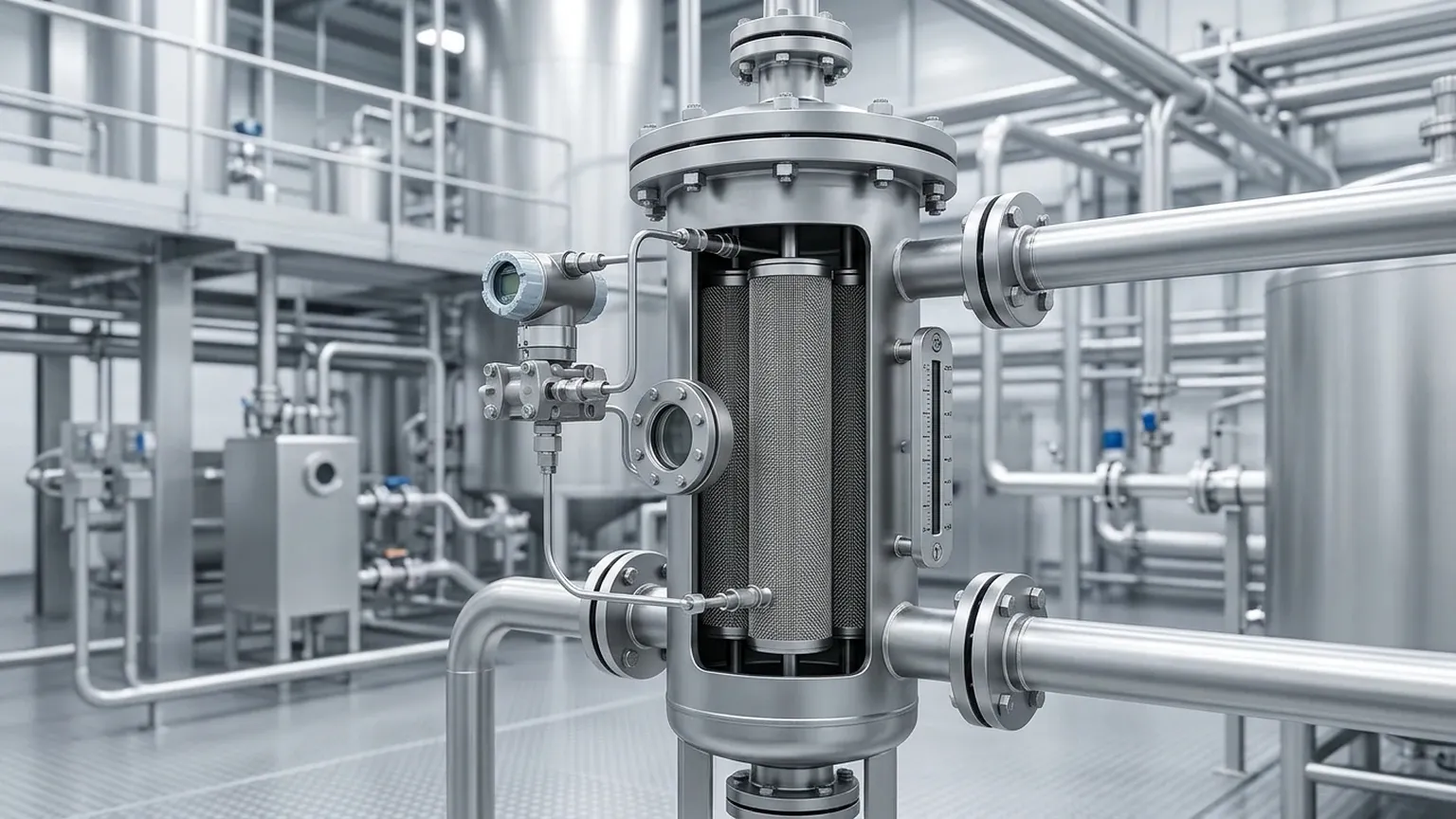
5. Structural Integrity of Wire Mesh Filter Cylinders & Tubes
When cleaning industrial filters, it is vital to maintain the structural integrity of the component. Wire Mesh Filter Cylinders & Tubes are engineered to withstand specific collapse pressures and flow velocities. Improper cleaning can compromise these specs:
* Mechanical Stress: Using high-pressure power washers can distort the mesh or break the spot welds that secure the mesh to the support cage.
* Thermal Shock: Rapidly moving a filter from a high-temperature process to a cold cleaning bath can cause thermal fatigue in the metal, leading to micro-cracking over time.
* Support Structures: Ensure that the perforated metal cores or external cages are not bent during handling. These structures are critical for preventing the mesh from collapsing under high differential pressure.
By choosing high-quality Wire Mesh Filter Cylinders & Tubes, engineers ensure they are working with components designed for repeated maintenance cycles and high-pressure back-pulsing.
6. Selection Criteria for Enhanced Cleanability
To simplify the cleaning process, engineers should consider the filter design during the procurement phase. Not all wire mesh filters are equally easy to maintain. Key factors include:
| Feature | Impact on Cleaning |
| :— | :— |
| Plain Weave | Easiest to clean; straight-through apertures allow for simple back-flushing. |
| Dutch Weave | Higher filtration efficiency but more difficult to clean due to the complex, overlapping wire structure. |
| Sintered Mesh | Extremely durable; can withstand aggressive ultrasonic cleaning and high-pressure back-washing without wire migration. |
| Pleated Design | Increases surface area (lowering ΔP) but requires careful cleaning in the pleat roots to prevent contaminant buildup. |
When specifying filters for applications with high dust loads, opting for a coarser pre-filter mesh can significantly extend the time between deep cleaning cycles for the primary fine-mesh filters.
7. Risks and Failure Modes during Maintenance
While cleaning extends the life of a filter, improper technique can lead to premature failure. Engineers must be aware of the following risks:
1. Wire Migration: If the mesh is handled roughly, the wires can shift, creating larger holes that allow oversized particles to pass through.
2. Corrosion Fatigue: Using inappropriate cleaning agents (like bleach or certain acids on 304 stainless) can initiate stress corrosion cracking, especially in the heat-affected zones near welds.
3. Incomplete Cleaning: If a filter is only partially cleaned, the remaining "plugged" areas will experience higher localized flow velocities when the filter is returned to service, leading to faster loading and potential structural failure in those areas.
8. Total Cost of Ownership (TCO) Considerations
The decision to use cleanable wire mesh filters instead of disposable alternatives is driven by TCO. While the initial investment in stainless steel Wire Mesh Filter Cylinders & Tubes is higher, the long-term savings are substantial:
* Reduced Waste: Eliminates the disposal costs associated with contaminated filter cartridges.
* Lower Inventory: Fewer replacement units need to be kept in stock.
* Process Stability: Stainless steel filters maintain their shape and efficiency across a wider range of temperatures and pressures than polymer filters.
To maximize these benefits, facility managers should implement a logged maintenance schedule, tracking the number of cleaning cycles for each filter and performing integrity tests (such as bubble point testing) periodically to ensure the filter still meets its original micron rating.
Conclusion
Mastering how to clean wire mesh air filter components is a vital skill for maintaining industrial efficiency and protecting expensive downstream equipment. By following a structured approach—incorporating dry removal, chemical soaking, and advanced techniques like ultrasonic cleaning—engineers can ensure that their filtration systems operate at peak performance for years.
Selecting the right hardware is the first step in this journey. High-quality Wire Mesh Filter Cylinders & Tubes provide the mechanical strength and material purity required to survive rigorous cleaning protocols. Whether in chemical processing, food and beverage, or heavy industrial ventilation, a well-maintained wire mesh filter is a cornerstone of reliable, cost-effective operation.
