


Wire Mesh and Micron Paper Filter: An Engineering Guide to Industrial Media Selection
In industrial filtration, the selection of filter media is a critical engineering decision that directly impacts process efficiency, equipment longevity, and total operational costs. Two of the most prevalent media types utilized across the chemical, pharmaceutical, and hydraulic sectors are stainless steel wire mesh and micron paper. While both serve the fundamental purpose of particle separation, their mechanical properties, chemical resistances, and fluid dynamics differ significantly.
For engineers and procurement specialists, understanding the technical nuances between a wire mesh and micron paper filter is essential for optimizing system performance. This guide examines the operating principles, selection criteria, and engineering considerations required to specify the correct filtration solution for demanding industrial environments.
Fundamentals of Wire Mesh Filter Cylinders & Tubes
Wire Mesh Filter Cylinders & Tubes represent a robust, reusable solution for high-precision filtration. These components are typically manufactured from stainless steel (AISI 304, 316, or 316L) and are engineered to withstand extreme temperatures and corrosive environments that would degrade organic or synthetic media.
Construction and Weave Types
The performance of a wire mesh filter is dictated by its weave pattern. Common industrial weaves include:
* Plain Weave: The simplest form where wires cross over and under each other. It provides high flow rates but is generally limited to coarser filtration.
* Twill Weave: Each shute wire passes successively over and under two warp wires, allowing for heavier wire diameters and finer mesh counts.
* Dutch Weave: Utilizes a higher density of shute wires than warp wires, creating a "tortuous path" for particles. This results in superior strength and precise micron ratings, often used in high-pressure hydraulic and fuel systems.
Structural Integrity
Unlike paper media, stainless steel wire mesh provides significant structural rigidity. In many applications, these cylinders are self-supporting or reinforced with internal perforated cores to resist collapse under high differential pressure (ΔP). This makes them ideal for high-viscosity fluids or systems subject to pressure surges.
Characteristics of Micron Paper Filter Media
Micron paper filters, often referred to as cellulose or fiber filters, are typically used for fine filtration where high dirt-holding capacity is required in a single-use format. These filters are composed of randomly oriented fibers (cellulose, glass, or synthetic) that create a complex three-dimensional matrix.
Depth Filtration Mechanism
While wire mesh primarily functions through surface filtration (sieving), micron paper utilizes depth filtration. Particles are trapped not just on the surface, but throughout the thickness of the media. This allows paper filters to capture a wide range of particle sizes, including deformable contaminants that might otherwise squeeze through a rigid mesh opening.
Limitations in Industrial Settings
Despite their efficiency, micron paper filters have distinct engineering limitations:
1. Temperature Sensitivity: Standard cellulose filters typically cannot exceed operating temperatures of 100°C to 120°C without risking fiber degradation.
2. Chemical Compatibility: They are susceptible to swelling or dissolving when exposed to strong acids, bases, or certain organic solvents.
3. Moisture Absorption: In hydraulic or oil systems, paper media can absorb water, which increases flow resistance and may lead to structural failure of the filter element.
Comparative Performance: Wire Mesh vs. Micron Paper
When evaluating a wire mesh and micron paper filter, engineers must weigh the trade-offs between initial capital expenditure (CAPEX) and ongoing operational expenditure (OPEX).
| Feature | Stainless Steel Wire Mesh | Micron Paper Filter |
| :— | :— | :— |
| Filtration Type | Surface (Sieving) | Depth |
| Micron Rating | Absolute (Precise) | Nominal (Variable) |
| Reusability | Cleanable and Reusable | Disposable |
| Temperature Range | Up to 800°C (Material dependent) | Generally < 120°C |
| Structural Strength | High (Rigid) | Low (Requires support) |
| Chemical Resistance | Excellent (316L) | Limited |
| Flow Resistance | Low (High open area) | Moderate to High |
The Role of Absolute vs. Nominal Ratings
Wire mesh filters are often preferred when an "absolute" micron rating is required. Because the pore sizes are fixed by the mechanical weave, the largest possible particle that can pass through is strictly defined. In contrast, micron paper is often rated "nominally," meaning it will trap a certain percentage of particles at a given size, but some larger particles may still pass through the fiber matrix due to the irregular nature of the pore structure.
Engineering Selection Criteria for Industrial Applications
Selecting between these media types requires a detailed analysis of the fluid properties and the process requirements. Engineers should consider the following factors:
1. Fluid Viscosity and Flow Rate
High-viscosity fluids (such as heavy oils or polymers) require media with low flow resistance to prevent excessive pressure drop. Wire Mesh Filter Cylinders & Tubes offer a high percentage of open area, which minimizes ΔP even at high flow velocities. If micron paper is used for high-viscosity fluids, the surface area must be significantly increased (often through pleating) to prevent rapid clogging.
2. Particle Loading and Type
If the contaminant load consists of hard, spherical particles, surface filtration with wire mesh is highly effective. However, if the contaminants are "slimy" or deformable (such as biological matter or soft polymers), they can quickly blind the surface of a mesh filter. In these instances, the depth filtration provided by micron paper or a combination of both media may be necessary.
3. Cleaning and Maintenance Cycles
In continuous processes where downtime is costly, cleanable stainless steel filters offer a significant advantage. They can be cleaned via backwashing, ultrasonic baths, or chemical cleaning. Micron paper filters must be replaced once the terminal pressure drop is reached, necessitating system shutdown or the use of duplex filter housings.
Hybrid Applications: Combining Media for Optimal Performance
In many sophisticated industrial systems, the debate is not whether to use a wire mesh and micron paper filter, but how to use them together. A common engineering strategy is to implement a multi-stage filtration approach:
* Pre-filtration: A coarse stainless steel wire mesh filter is used to remove the bulk of large contaminants, protecting downstream components.
* Fine Filtration: A high-efficiency micron paper or synthetic depth filter is used as a secondary stage to achieve the final required fluid cleanliness.
This hybrid approach extends the life of the more expensive fine filter elements and ensures that the system meets stringent ISO cleanliness standards without frequent maintenance intervals.
Installation Constraints and Operational Risks
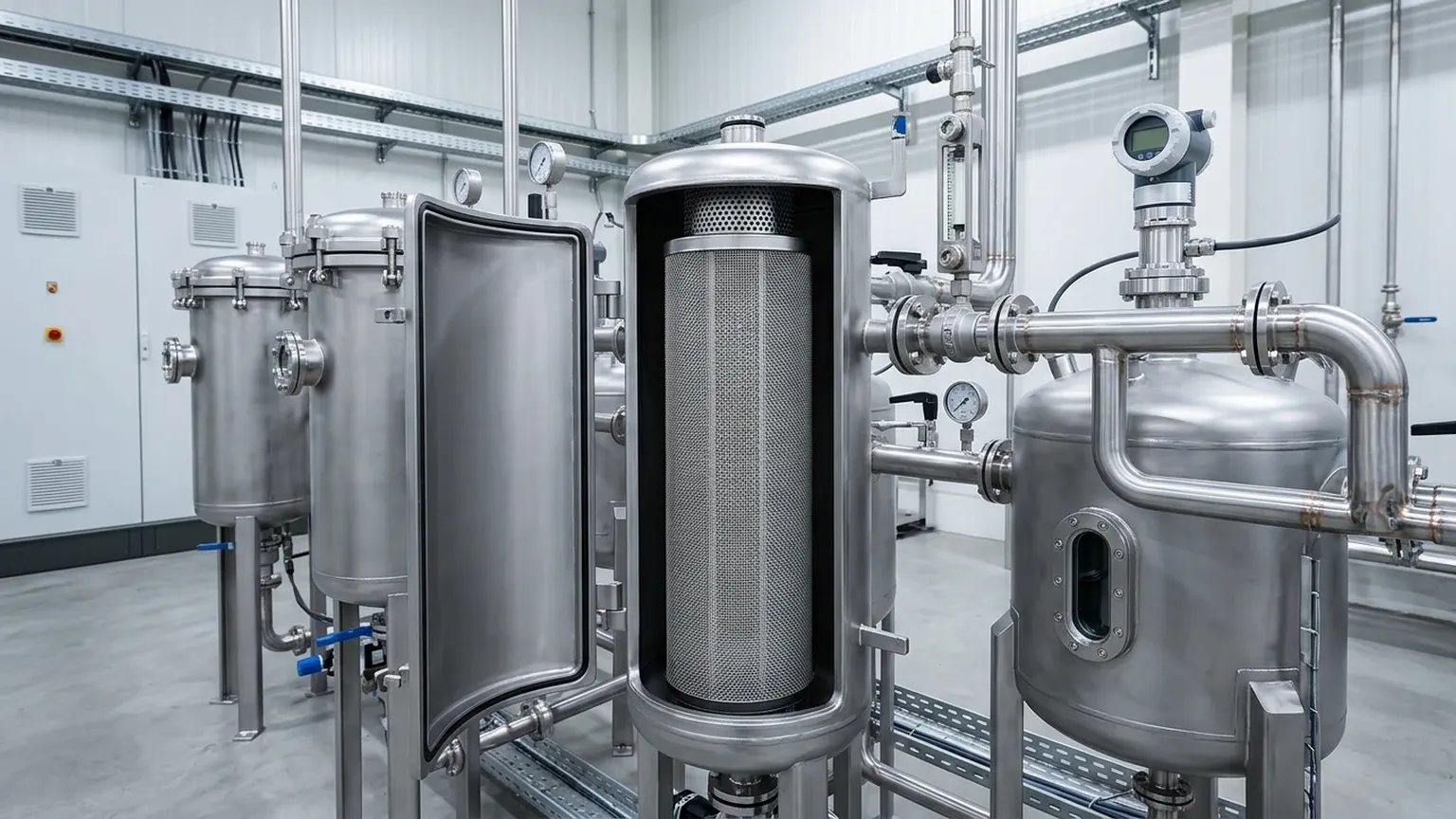
Proper installation is as critical as media selection. For Wire Mesh Filter Cylinders & Tubes, ensuring a proper seal at the end caps is paramount. Any bypass—even a gap of a few microns—can render the entire filtration system ineffective, especially in pharmaceutical or semiconductor applications.
Risk of Media Migration
A significant risk with low-quality micron paper filters is "media migration," where fibers from the filter itself break loose and enter the downstream flow. This is particularly dangerous in hydraulic systems where fibers can jam precision valves. Stainless steel wire mesh, especially when sintered, eliminates the risk of media migration, providing a cleaner effluent.
Pressure Drop Monitoring
Engineers must install differential pressure gauges across the filter housing. For wire mesh, a sudden spike in ΔP may indicate surface blinding, while a slow, steady increase is typical. For paper filters, a sudden drop in ΔP might indicate a "burst" or breakthrough, where the media has failed structurally under load.
Procurement Checklist for International Buyers
When sourcing filtration components from a manufacturer like Kaifil, providing precise technical specifications ensures the final product meets application demands. International buyers should confirm the following:
1. Material Grade: Specify AISI 304 for general use or 316L for high-corrosion environments.
2. Micron Rating (Absolute vs. Nominal): Define the maximum allowable particle size for the process.
3. Operating Conditions: Provide maximum operating pressure, temperature, and expected pressure surges.
4. Fluid Compatibility: List all chemicals, including cleaning agents used in CIP (Clean-in-Place) cycles.
5. Dimensional Tolerances: Ensure the filter cylinder dimensions (OD, ID, and Length) are compatible with existing housings to prevent bypass.
6. Certification Requirements: For food and beverage or pharmaceutical applications, ensure materials are FDA-compliant or meet relevant industry standards.
Total Cost of Ownership (TCO) Considerations
While the initial cost of a stainless steel wire mesh filter is higher than a disposable micron paper element, the TCO often favors the metal solution in long-term industrial operations. The elimination of recurring replacement costs, reduced disposal fees (especially for hazardous waste), and minimized downtime contribute to a faster return on investment (ROI).
However, in laboratory settings or low-volume batch processes where cleaning is impractical, the micron paper filter remains a cost-effective and hygienic choice. The decision ultimately rests on the specific mechanical and economic boundaries of the project.
Conclusion
The choice between a wire mesh and micron paper filter is not a matter of one being superior to the other, but rather which media aligns with the engineering requirements of the application. Stainless steel Wire Mesh Filter Cylinders & Tubes provide the durability, precision, and reusability required for high-stakes industrial processing. Meanwhile, micron paper offers specialized depth filtration for high-efficiency, single-use scenarios.
By carefully evaluating fluid dynamics, contaminant types, and operational constraints, engineering teams can design filtration systems that maximize purity while minimizing maintenance overhead. For custom filtration challenges, partnering with a manufacturer capable of providing precision-engineered metal components is the most reliable path to achieving optimized process performance.
