


Metal Mesh Filters 20x25x2: A Technical Guide to Industrial Specification and Application
In industrial filtration, selecting the correct media and dimensions is critical for maintaining system integrity and operational efficiency. Among the various configurations available to engineers, metal mesh filters 20x25x2 represent a widely utilized dimensional standard, particularly in environments where high temperatures, corrosive chemicals, or high-pressure differentials preclude the use of synthetic or paper-based media. This guide examines the technical considerations, material properties, and engineering requirements for specifying these filters in industrial contexts.
Engineering Principles of Metal Mesh Filtration
Metal mesh filters operate primarily through mechanical sieving. Unlike depth filtration media, which trap particles within a complex three-dimensional matrix, wire mesh provides surface filtration. This characteristic allows for precise control over the maximum particle size allowed to pass through the system, known as the absolute micron rating.
For a filter with nominal dimensions of 20x25x2 inches, the internal structure is typically composed of multiple layers of woven wire cloth. The "2-inch" depth allows for several engineering configurations:
1. Multi-Layer Lamination: Several layers of mesh with varying aperture sizes are bonded together. The outer layers provide structural support and coarse pre-filtration, while the inner layers define the filtration accuracy.
2. Pleated Media: To increase the effective filtration area within the 20x25x2 footprint, the metal mesh can be pleated. Pleating significantly reduces the face velocity of the fluid or gas passing through the mesh, which in turn lowers the initial pressure drop and extends the service life between cleaning cycles.
3. Corrugated Support: In high-pressure applications, the mesh is often supported by a perforated metal plate or a coarser expanded metal grid to prevent deformation under load.
Material Selection for Industrial Environments
The performance of metal mesh filters 20x25x2 is largely dictated by the alloy used in their construction. Industrial environments demand materials that can withstand specific chemical and thermal stresses.
Stainless Steel 304
This is the standard grade for general industrial use. It offers excellent strength and good corrosion resistance for most water-based and atmospheric applications. It is frequently used in industrial HVAC, grease filtration, and general machinery protection.
Stainless Steel 316L
For applications involving high chloride concentrations, organic acids, or pharmaceutical processing, 316L is the preferred specification. The addition of molybdenum provides superior resistance to pitting and crevice corrosion. Furthermore, the low carbon content (the "L" designation) prevents carbide precipitation during welding, ensuring the structural integrity of the filter frame and mesh joins.
Specialty Alloys
In extreme cases, such as high-temperature petrochemical processing or highly acidic environments, filters may be constructed from Inconel, Monel, or Hastelloy. These materials maintain their mechanical properties at temperatures where stainless steel would undergo oxidation or lose tensile strength.
Performance Metrics: Pressure Drop and Efficiency
When specifying metal mesh filters 20x25x2, engineers must balance filtration efficiency with the system's allowable pressure drop (Delta P). A filter with a very fine mesh will capture smaller particles but will also create a higher resistance to flow.
Clean Pressure Drop
The initial pressure drop across a clean metal mesh filter is a function of the mesh's open area percentage, the fluid viscosity, and the velocity. For air filtration, a 20x25x2 metal mesh filter typically exhibits a very low initial resistance compared to HEPA or high-efficiency bag filters, making them ideal as pre-filters to protect more expensive downstream components.
Dirt Holding Capacity
Because metal mesh is a surface medium, its dirt-holding capacity is inherently lower than that of depth media unless it is pleated. However, the primary advantage of metal mesh is its cleanability. Unlike disposable filters, metal mesh components can be cleaned via ultrasonic baths, backwashing, or chemical cleaning, restoring the pressure drop to near-original levels.
Customization and Structural Configurations
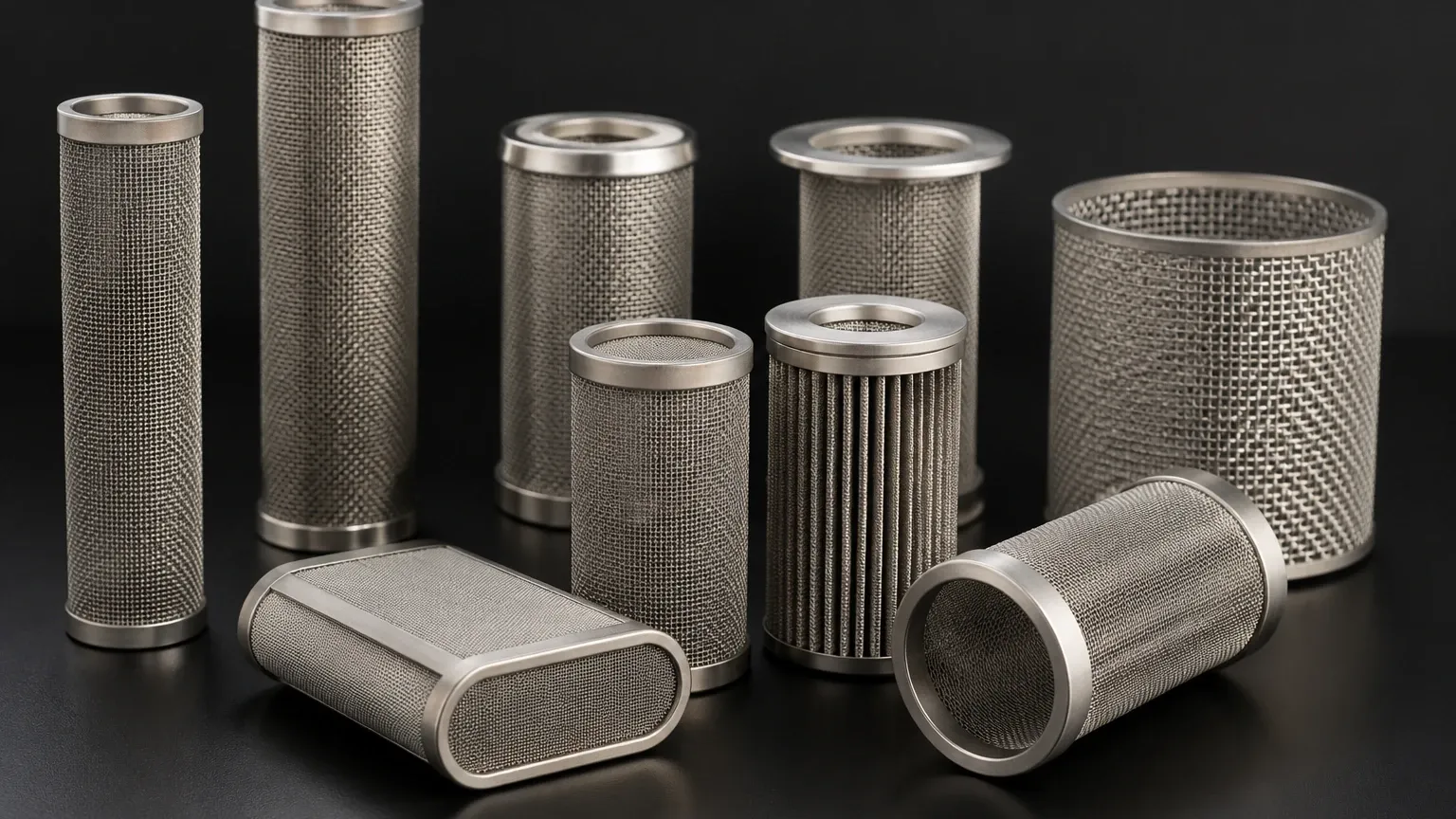
While the 20x25x2 panel format is common, many industrial systems require specialized geometries to fit into existing housings or to meet specific flow dynamics. Beyond flat panels, manufacturers like Kaifil specialize in forming these materials into complex shapes. For instance, in hydraulic and liquid processing systems, the same high-quality mesh used in panels is often transitioned into Wire Mesh Filter Cylinders & Tubes to handle radial flow patterns.
Customization options for the 20x25x2 format include:
* Frame Construction: Frames can be rigid (welded) or semi-rigid (u-channel) and are typically made from 18-gauge to 22-gauge stainless steel or galvanized steel.
* Drainage Holes: For grease or oil-mist applications, frames are often equipped with drainage holes to allow captured fluids to exit the filter housing without re-entrainment.
* Handle and Gasket Integration: To ensure a bypass-free seal, filters may be specified with silicone, EPDM, or Viton gaskets and integrated pull handles for ease of maintenance in tight industrial cabinets.
Applications Across Key Industrial Sectors
The versatility of metal mesh filters 20x25x2 makes them indispensable in several sectors:
1. Chemical Processing
In chemical plants, these filters are used to remove particulate matter from process air or as vent filters on storage tanks. Their ability to withstand aggressive solvents and high temperatures makes them superior to polymer-based alternatives.
2. Food and Beverage
Stainless steel mesh is inherently non-toxic and easy to sanitize. In food processing, 20x25x2 filters are often used in steam filtration or as protective screens in intake systems where they must withstand frequent Washdown procedures with caustic cleaning agents.
3. HVAC and Air Intake
Large-scale industrial HVAC systems utilize metal mesh filters as permanent, washable pre-filters. They are particularly effective at capturing large particulates, insects, and debris that would otherwise clog high-efficiency secondary filters.
4. Oil and Gas
In offshore or refinery environments, the salt-laden air is highly corrosive. Using 316L stainless steel mesh filters ensures long-term durability and protects sensitive turbine and compressor intakes from corrosive salt crystals and moisture droplets.
Maintenance and Lifecycle Considerations
The total cost of ownership (TCO) for metal mesh filters 20x25x2 is often lower than disposable filters despite the higher initial capital expenditure. This is due to their extended service life, which can span several years if maintained correctly.
Cleaning Protocols
1. Inspection: Regularly monitor the pressure differential. A common rule of thumb is to clean the filter when the pressure drop reaches double the initial clean value.
2. Solvent Cleaning: For oil or grease-laden filters, a degreasing agent is required. The filter should be soaked and then rinsed with low-pressure water.
3. Ultrasonic Cleaning: For fine mesh filters where particles may be lodged in the wire intersections, ultrasonic cleaning is the most effective method to ensure all contaminants are removed without damaging the mesh structure.
4. Drying: After cleaning, filters must be thoroughly dried before re-installation to prevent microbial growth or immediate dust loading.
Procurement Checklist for Industrial Buyers
When sourcing metal mesh filters 20x25x2, purchasing teams and engineers should confirm the following technical details with the manufacturer to ensure the product meets the application's demands:
* Mesh Type: Specify whether a plain weave, twill weave, or dutch weave is required. Dutch weaves generally offer higher strength and finer filtration.
* Micron Rating: Distinguish between nominal (60-70% efficiency) and absolute (99% efficiency) micron ratings.
* Operating Temperature: Confirm the maximum continuous operating temperature, especially if gaskets or adhesives are used in the construction.
* Chemical Compatibility: Provide a list of chemicals the filter will encounter to ensure the correct alloy (304 vs. 316L) is selected.
* Flow Rate and Velocity: Ensure the 20x25x2 face area is sufficient for the required CFM (Cubic Feet per Minute) or GPM (Gallons per Minute) without exceeding the maximum recommended face velocity.
By focusing on these technical parameters, industrial operators can ensure that their filtration systems remain robust, reducing downtime and protecting downstream equipment from damage. Whether used as a standalone solution or integrated with Wire Mesh Filter Cylinders & Tubes, high-quality stainless steel mesh remains a cornerstone of modern industrial engineering.
