


Wire Cylinder Mesh
In industrial filtration, the structural integrity and precision of the filter media are paramount to ensuring process efficiency and equipment longevity. Wire cylinder mesh, often referred to as wire mesh filter cylinders or tubes, serves as a foundational component in systems designed to remove particulates from liquids and gases. These components are engineered to withstand significant mechanical stress, corrosive environments, and high temperatures, making them indispensable in sectors ranging from chemical processing to food production.
Selecting the appropriate Wire Mesh Filter Cylinders & Tubes requires a deep understanding of fluid dynamics, material science, and the specific mechanical requirements of the filtration system. This guide examines the technical considerations, manufacturing variations, and engineering criteria essential for professionals tasked with specifying or procuring these critical components.
Understanding Wire Mesh Filter Cylinders & Tubes in Industrial Applications
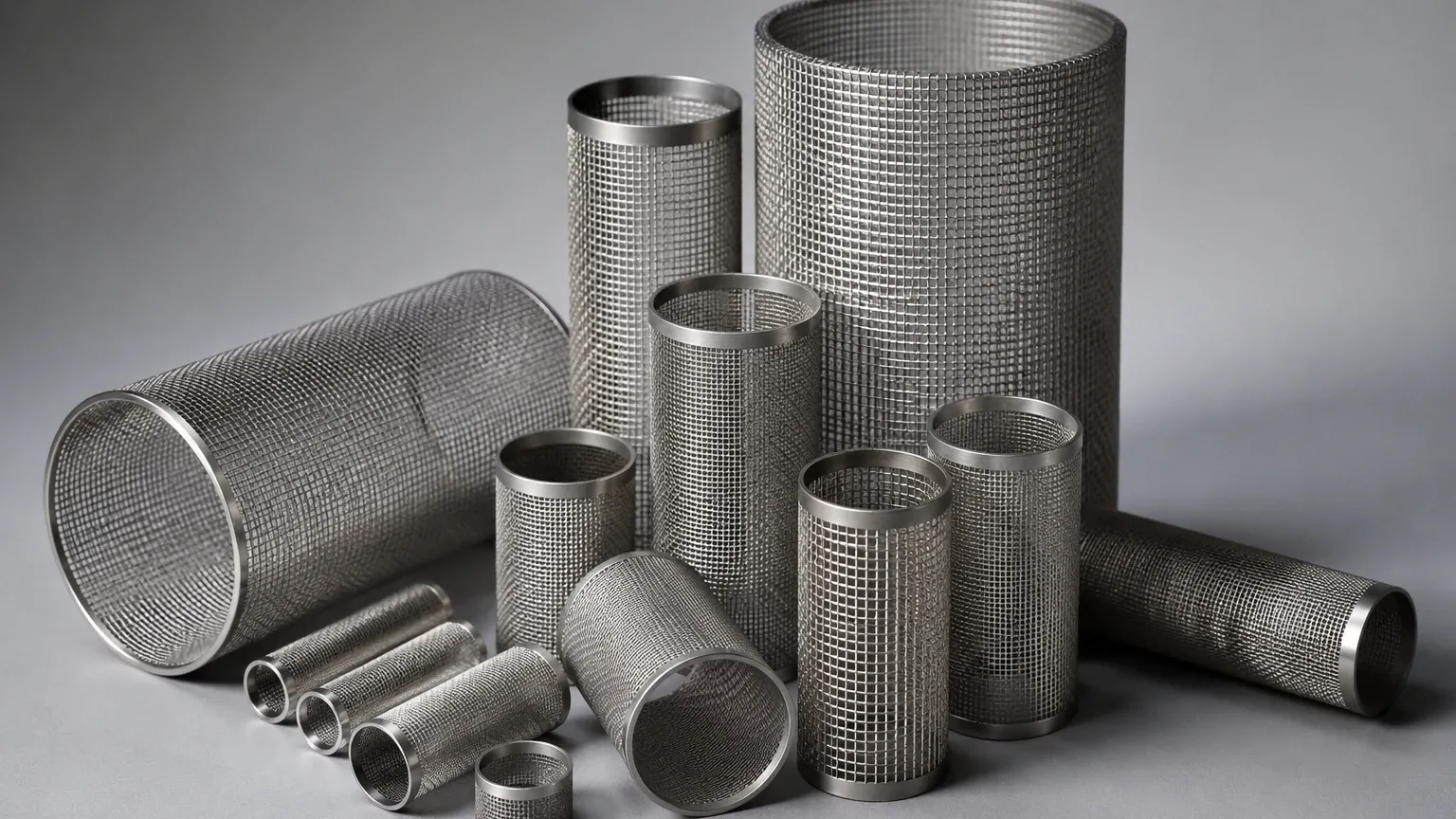
A wire cylinder mesh is a cylindrical structure fabricated from woven wire cloth or sintered metal mesh. Unlike flat mesh sheets, the cylindrical form factor provides a high surface-area-to-volume ratio, which is critical for managing flow rates and minimizing pressure drops. These filters are typically integrated into housings where the fluid flows either from the outside in or from the inside out, depending on the system design.
The primary function of these cylinders is to provide a precise barrier that captures particles of a specific size while allowing the carrier fluid to pass through with minimal resistance. Because they are often used in high-pressure or high-flow environments, the "wire cylinder mesh" must be designed with both filtration accuracy and structural rigidity in mind. This is frequently achieved through multi-layer constructions or by reinforcing the mesh with perforated metal cores or external support cages.
Material Selection and Chemical Compatibility
The performance of a wire mesh filter is largely dictated by the alloy from which it is manufactured. Stainless steel is the industry standard due to its balance of mechanical strength and resistance to oxidation.
Stainless Steel 304 vs. 316L
* Type 304: This is the most common grade, offering excellent strength and basic corrosion resistance. It is suitable for water treatment, hydraulic oils, and general industrial applications where extreme chemical exposure is not a primary concern.
* Type 316L: Containing molybdenum, 316L provides superior resistance to chlorides and acids. In the pharmaceutical and chemical processing industries, 316L is preferred to prevent pitting corrosion and ensure the purity of the filtered product. The "L" denotes low carbon, which is essential for maintaining corrosion resistance in the heat-affected zones of welded joints.
Specialized Alloys
For environments involving extreme temperatures or highly aggressive chemicals, alloys such as Monel, Inconel, or Hastelloy may be utilized. These materials maintain their structural integrity at temperatures exceeding 500°C and resist corrosion in environments where standard stainless steels would fail rapidly.
Structural Design: Single-Layer vs. Multi-Layer Configurations
Engineering a filter cylinder involves more than just selecting a mesh size; it requires designing a structure that can handle the operational differential pressure (ΔP).
Single-Layer Cylinders
Single-layer wire cylinder mesh designs are typically used for low-pressure applications or as primary strainers. They are cost-effective and easy to clean, but they lack the mechanical strength required for high-pressure hydraulic systems or fine-micron filtration where the mesh wires are extremely thin.
Multi-Layer and Sintered Mesh
To achieve both fine filtration and high strength, engineers often specify multi-layer configurations. These may include:
* Filtration Layer: The middle layer that determines the micron rating.
* Drainage/Support Layers: Coarser mesh layers on either side of the filtration layer that provide mechanical support and help distribute the flow evenly.
* Sintering: In high-performance applications, these layers are diffusion-bonded (sintered) together in a vacuum furnace. Sintered wire mesh cylinders offer permanent pore shapes, excellent mechanical strength, and the ability to withstand high back-pressure during cleaning cycles.
Engineering Performance: Micron Ratings and Flow Dynamics
The efficiency of a wire mesh filter is defined by its micron rating, which can be categorized as either nominal or absolute.
* Nominal Rating: Refers to the ability of the mesh to retain a majority of particulates of a certain size. It is an indicator of the general pore size but does not guarantee 100% retention.
* Absolute Rating: This represents the pore size at which no particle larger than the rating can pass through the mesh. For critical applications in the pharmaceutical or aerospace sectors, absolute-rated wire cylinder mesh is mandatory to ensure process safety.
Flow dynamics also play a crucial role in filter selection. A filter with too small a surface area will result in a high initial pressure drop, leading to premature clogging and increased energy consumption by pumps. Engineers must calculate the "open area" of the mesh—the percentage of the total surface area that is not obstructed by wires—to ensure the cylinder can handle the required flow velocity without excessive turbulence or pressure loss.
Customization and OEM Manufacturing Capabilities
Industrial filtration systems rarely adhere to a one-size-fits-all model. Customization is often necessary to integrate a filter into existing machinery or to meet unique process requirements. Kaifil specializes in providing tailored solutions that address specific engineering challenges.
Customization options for Wire Mesh Filter Cylinders & Tubes include:
* End Fittings: Cylinders can be equipped with various end caps, including NPT/BSP threads, flanges, O-ring seals, or plain ends for welding.
* Dimensions: Custom diameters and lengths are essential for retrofitting older systems or optimizing the footprint of new equipment.
* Reinforcement: For high-viscosity fluids or high-pressure differentials, internal perforated cores or external mesh wraps can be added to prevent the cylinder from collapsing or bursting.
* Pleating: To significantly increase the filtration surface area within the same cylindrical volume, the mesh can be pleated before being formed into a tube. This is particularly useful in hydraulic and gas filtration where space is limited.
Maintenance, Cleaning, and Service Life Optimization
One of the primary advantages of stainless steel wire cylinder mesh over disposable polymer filters is cleanability. However, the cleaning method must be compatible with the mesh structure and the type of contaminant being removed.
Cleaning Techniques
1. Backwashing: Reversing the flow of the fluid to dislodge particles from the surface of the mesh. This is effective for surface-loading filters but less so for depth-style multi-layer mesh.
2. Ultrasonic Cleaning: Using high-frequency sound waves in a cleaning solvent to create cavitation bubbles that remove fine particles from deep within the mesh pores. This is the most effective method for restoring sintered mesh filters.
3. Chemical Cleaning: Using acids or alkalis to dissolve organic or mineral deposits. It is vital to ensure the chemical agent does not compromise the stainless steel alloy or the integrity of the welds.
Monitoring Differential Pressure
The most reliable way to determine the replacement or cleaning cycle of a filter is by monitoring the differential pressure across the element. As the mesh captures particles, the ΔP will increase. Establishing a "terminal pressure drop"—the point at which the filter must be cleaned or replaced to prevent bypass or structural failure—is a standard practice in industrial maintenance protocols.
Selection Criteria for Industrial Procurement
When sourcing wire cylinder mesh for a project, purchasing teams and engineers should confirm several technical parameters to ensure the component is fit for purpose.
First, define the operating environment, including the maximum operating temperature and the chemical composition of the fluid. This dictates the material grade. Second, specify the required filtration accuracy (micron rating) and whether an absolute or nominal rating is required. Third, consider the mechanical load; will the filter be subject to high-pressure pulses or heavy solid loading? This determines whether a reinforced or sintered construction is necessary.
Furthermore, documentation and quality control are essential. In industries like food and beverage or pharmaceuticals, ensuring the materials are FDA-compliant and that the manufacturing process follows ISO standards is non-negotiable. Kaifil provides the technical expertise and manufacturing precision required to meet these rigorous standards, offering reliable components for demanding industrial environments.
For those evaluating specific designs or requiring technical support for custom filtration projects, it is advisable to Review product options and application support to ensure the selected wire mesh configuration aligns with the total cost of ownership and performance goals of the facility.
