


Engineering Guide to Wire Mesh Cabin Air Filters: Performance, Selection, and Industrial Applications
In demanding industrial environments, air filtration systems must do more than simply capture dust; they must withstand mechanical stress, chemical exposure, and extreme temperature fluctuations. While synthetic and paper-based media are common in light-duty commercial applications, the wire mesh cabin air filter has emerged as a critical component for heavy machinery, specialized HVAC systems, and industrial control rooms. These filters leverage the structural integrity of stainless steel to provide a permanent, cleanable, and highly efficient solution for protecting both personnel and sensitive electronic equipment.
For engineers and procurement specialists, selecting the right filtration media involves a deep understanding of material properties, airflow dynamics, and the long-term operational costs associated with maintenance. This guide explores the technical specifications of wire mesh filtration, the role of Wire Mesh Filter Cylinders & Tubes in air intake designs, and the engineering considerations necessary for optimizing cabin air quality in industrial settings.
1. Operating Principles of Wire Mesh Filtration
The primary function of a wire mesh cabin air filter is to remove airborne particulates through a combination of inertial impaction, interception, and diffusion. Unlike depth filtration media (such as fiberglass), which traps particles within a thick matrix of fibers, wire mesh operates primarily as a surface filter. This characteristic allows for more predictable pressure drop calculations and simplifies the cleaning process.
Material Science and Durability
Most industrial wire mesh filters are constructed from Austenitic stainless steel, typically Grade 304 or 316L.
* Grade 304: Offers excellent resistance to oxidation and is suitable for most standard industrial environments where moisture and general atmospheric corrosion are present.
* Grade 316L: Contains molybdenum, providing enhanced resistance to chlorides and pitting. This is the preferred choice for marine environments, chemical processing plants, and applications where the filter may be exposed to corrosive cleaning agents.
The durability of these materials ensures that the filter does not shed fibers—a common failure mode in synthetic filters—thereby preventing downstream contamination of sensitive electronics or HVAC coils.
Weave Patterns and Micron Ratings
The performance of a wire mesh cabin air filter is dictated by its weave pattern. For cabin air applications, the most common weaves include:
* Plain Weave: A simple over-under pattern that provides high open area and low resistance to airflow. It is ideal for pre-filtration stages where large debris (e.g., wood chips, metal shavings, or large dust particles) must be removed.
* Dutch Weave: This pattern uses a larger diameter wire in the warp direction and a smaller diameter wire in the shute direction. This creates a dense, strong mesh with very fine pore sizes, suitable for capturing smaller particulates while maintaining high mechanical strength.
* Twilled Weave: Used when a heavier wire is required for a specific mesh count, allowing for greater thickness and durability without sacrificing filtration accuracy.
2. Structural Integration: Wire Mesh Filter Cylinders & Tubes
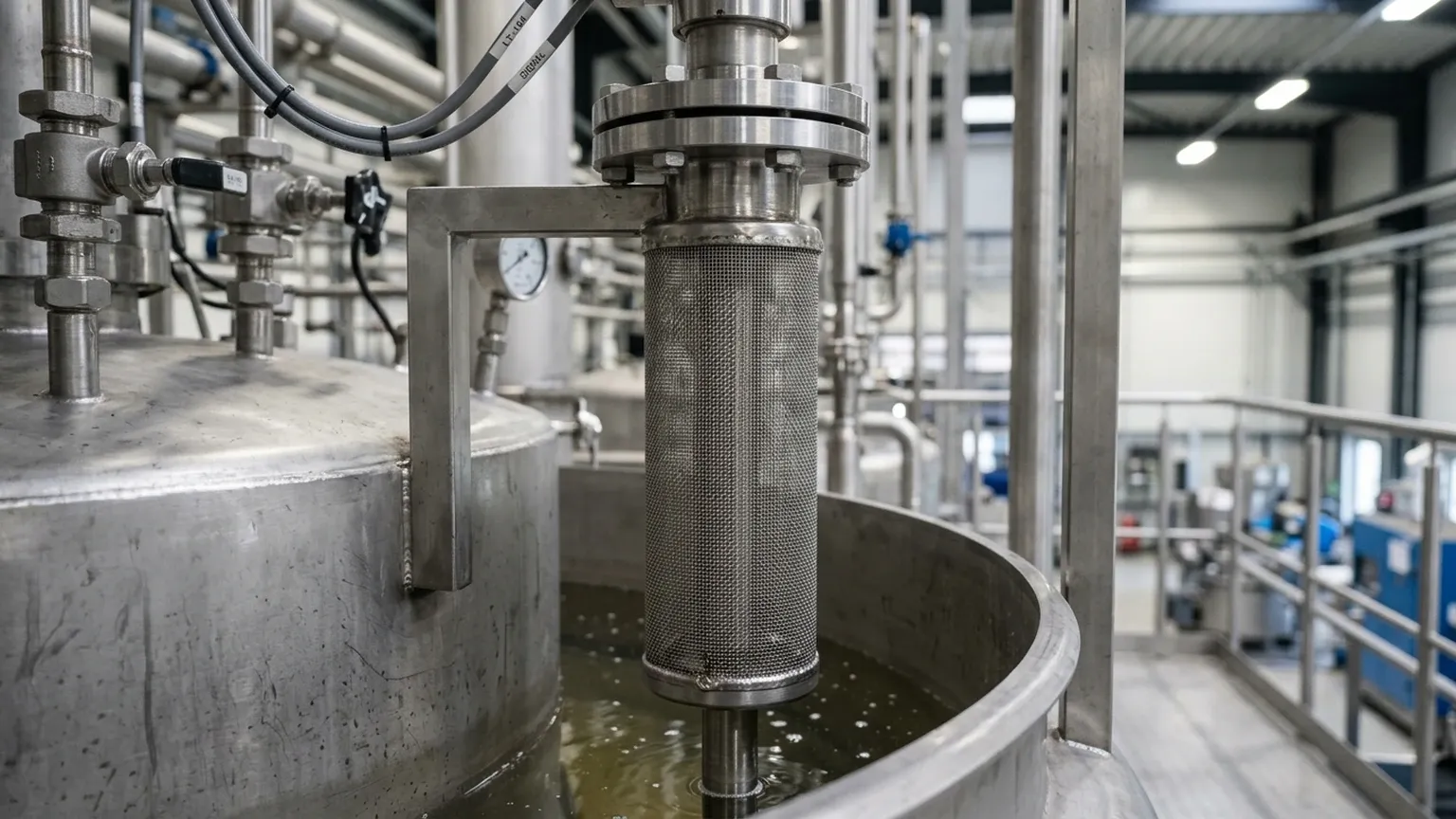
In many industrial air intake systems, the filter is not a flat panel but a three-dimensional structure designed to maximize surface area within a compact footprint. This is where Wire Mesh Filter Cylinders & Tubes become essential. By forming the mesh into a cylindrical shape, engineers can achieve several mechanical advantages:
Enhanced Surface Area
Cylindrical designs allow for pleating, which significantly increases the effective filtration area compared to a flat panel of the same diameter. A higher surface area reduces the face velocity of the air passing through the mesh, which in turn lowers the initial pressure drop and extends the time between cleaning cycles.
Mechanical Rigidity
In high-vibration environments—such as the cabins of mining excavators, agricultural tractors, or heavy-duty cranes—the filter must maintain its shape under constant stress. Wire mesh tubes provide inherent structural rigidity. When reinforced with internal perforated cores or external support cages, these filters can withstand high differential pressures without collapsing or bypassing.
Sealing and Housing Compatibility
Cylindrical filters are often easier to seal than rectangular panels. Using high-temperature silicone or EPDM gaskets on the end caps of wire mesh tubes ensures a leak-proof fit within the filter housing. This prevents "bypass air," where unfiltered air enters the cabin through gaps around the filter frame, a common issue in poorly designed synthetic filter assemblies.
3. Engineering Selection Criteria for Industrial Buyers
When specifying a wire mesh cabin air filter for a new project or as an OEM replacement, several technical parameters must be evaluated to ensure the component meets the application's demands.
Airflow Capacity and Pressure Drop (Delta P)
The most critical factor in cabin HVAC design is the relationship between airflow and pressure drop. Every filter introduces resistance. If the resistance is too high, the blower motor will draw excessive current, leading to premature failure and reduced cooling/heating efficiency.
Engineers must calculate the Clean Pressure Drop at the system's maximum rated CFM (Cubic Feet per Minute). Stainless steel mesh provides a distinct advantage here because the wire diameters and aperture sizes are precisely controlled during manufacturing, allowing for highly accurate CFD (Computational Fluid Dynamics) modeling of the airflow.
Filtration Efficiency and Particle Size
What is the target particulate? In a mining environment, the focus may be on coarse dust (PM10), whereas in a chemical plant, the concern might be finer aerosols or crystallized chemical vapors. Wire mesh filters can be engineered with specific micron ratings, typically ranging from 5μm to 200μm for cabin air applications. For ultra-fine filtration, multi-layer sintered mesh—which bonds multiple layers of wire cloth together—can provide high-efficiency particulate capture while remaining structurally robust.
Environmental Constraints
* Temperature: Unlike plastic-framed filters that may warp or off-gas at high temperatures, stainless steel wire mesh cabin air filters can operate in environments exceeding 400°C (752°F), making them suitable for cabins located near furnaces, smelters, or engine compartments.
* Moisture and Humidity: In tropical or marine climates, paper filters can become soggy and develop mold. Wire mesh is impervious to moisture, maintaining its structural integrity and preventing microbial growth.
4. Installation and Customization Constraints
Industrial filtration is rarely a one-size-fits-all solution. Customization is often required to fit existing housing constraints or to meet specific airflow requirements. When working with a manufacturer like Kaifil, buyers should consider the following customization options:
End Cap Configurations
End caps can be manufactured from stainless steel, galvanized steel, or molded polymers depending on the cost and weight requirements. For high-vibration applications, welded stainless steel end caps provide the most secure bond to the wire mesh cylinder.
Multi-Stage Filtration
In some scenarios, a single layer of mesh is insufficient. Engineers may specify a multi-stage wire mesh cabin air filter that incorporates a coarse outer layer for large debris and a fine inner layer for smaller particulates. This "gradient" approach prevents the fine mesh from clogging prematurely, thereby extending the service life of the filter.
Pleat Geometry
The depth and frequency of pleats in a wire mesh filter must be carefully calculated. Pleats that are too dense can cause "bridge-over," where dust accumulates at the tips of the pleats and restricts airflow, while pleats that are too shallow do not provide enough surface area. Professional filtration manufacturers use specialized pleating equipment to ensure uniformity and structural stability.
5. Total Cost of Ownership (TCO) and Sustainability
One of the most compelling arguments for switching to wire mesh cabin air filters in industrial settings is the Total Cost of Ownership. While the initial purchase price of a stainless steel filter is higher than that of a disposable synthetic filter, the long-term savings are substantial.
Cleanability and Reuse
Disposable filters represent a recurring expense and a significant waste stream. In contrast, wire mesh filters are permanent components. They can be cleaned using several methods:
* Compressed Air: For dry, loose dust.
* Ultrasonic Cleaning: For removing fine particulates trapped deep within the mesh pores.
* Chemical Soaking: For removing oils, greases, or chemical residues.
The ability to restore a filter to near-original pressure drop levels through cleaning significantly reduces the frequency of procurement cycles and the costs associated with inventory management.
Reduced Downtime
In industries like mining or heavy construction, equipment downtime can cost thousands of dollars per hour. A wire mesh cabin air filter is less likely to suffer catastrophic failure (such as tearing or collapsing) compared to paper alternatives. Its robust construction ensures that the cabin remains pressurized and clean, protecting the operator and preventing the HVAC system from becoming a point of failure for the entire machine.
6. Addressing Common Engineering Concerns
Will a metal filter provide the same efficiency as a HEPA filter?
It is important to manage expectations regarding filtration levels. Standard wire mesh is excellent for pre-filtration and primary filtration of industrial dust. However, if true HEPA-level filtration (99.97% at 0.3μm) is required, a wire mesh filter is typically used as a high-durability pre-filter to protect the expensive, delicate HEPA element from large particulates and mechanical damage.
How do I determine the replacement cycle?
Unlike disposable filters, which are replaced based on a calendar schedule, wire mesh filters should be cleaned based on pressure drop. Installing a simple differential pressure gauge (manometer) in the cabin HVAC system allows operators to see exactly when the filter is loaded. The filter only needs to be replaced if the mesh becomes physically damaged or if the cleaning process no longer restores the required airflow.
Is weight a concern?
While stainless steel is heavier than plastic and paper, the weight of a wire mesh cabin air filter is usually negligible relative to the overall weight of industrial machinery. For weight-sensitive applications, aluminum mesh or thinner gauge stainless steel with reinforced frames can be utilized.
Conclusion: Making an Informed Procurement Decision
The transition to a wire mesh cabin air filter is a strategic move for industrial operations looking to improve reliability and reduce operational waste. By selecting a solution that incorporates high-quality materials and precision-engineered Wire Mesh Filter Cylinders & Tubes, companies can ensure their filtration systems perform consistently in the harshest environments.
When evaluating suppliers, engineers should look for manufacturers that offer comprehensive customization, from material selection (304 vs. 316L) to specific weave types and structural reinforcements. A well-designed wire mesh filter is not just a consumable part; it is a critical piece of industrial equipment that protects the health of the workforce and the longevity of the machinery.
For those managing fleets of heavy equipment or complex industrial HVAC systems, the move toward permanent, cleanable metal filtration represents the intersection of engineering efficiency and fiscal responsibility. By focusing on the technical boundaries of micron ratings, pressure drops, and material compatibility, procurement teams can secure filtration solutions that stand up to the rigors of modern industry.
