


Metal Mesh Filter for Aeropress: Engineering and Industrial Selection Guide
In the landscape of precision liquid extraction, the choice of filtration media significantly dictates the quality, clarity, and chemical profile of the final output. While paper filters are common in consumer applications, industrial-grade filtration often demands the durability and specific permeability of metal components. For specialized brewing and small-scale liquid processing, a metal mesh filter for aeropress represents a shift toward sustainable, high-performance filtration that prioritizes the retention of essential oils and fine particulates that paper often strips away.
From an engineering perspective, selecting a metal mesh filter involves more than choosing a size; it requires an understanding of fluid dynamics, material science, and the structural integrity of the filter media. This guide explores the technical nuances of these components, drawing parallels between specialized consumer filters and the broader application of Wire Mesh Filter Cylinders & Tubes in industrial environments.
Understanding the Mechanics of Metal Mesh Filtration
Metal mesh filters operate primarily on the principle of surface filtration. Unlike depth filters (such as thick paper or felt), which trap particles within a tortuous path of fibers, a metal mesh provides a precise, two-dimensional barrier. This allows for a more predictable and consistent filtration performance, especially in pressurized systems like the Aeropress or industrial hydraulic circuits.
Pore Size and Particulate Retention
In the context of a metal mesh filter for aeropress, the pore size—often measured in microns (µm)—determines the "body" of the filtrate. A standard paper filter typically captures particles down to 10–20 microns. In contrast, stainless steel mesh filters for this application are often engineered between 100 and 300 microns. This larger pore size allows micro-sediments and natural oils to pass through, resulting in a different flavor profile and mouthfeel in food and beverage applications.
For industrial buyers, the "absolute" vs. "nominal" micron rating is a critical distinction. An absolute rating indicates the diameter of the largest hard spherical particle that will pass through the filter under specific test conditions, whereas a nominal rating is an average based on weight percentage retention. When specifying filters for precision equipment, engineers must prioritize absolute ratings to ensure system protection.
Material Selection: Why Stainless Steel Dominates
For any application involving food contact or corrosive fluids, the material of construction is non-negotiable. Stainless steel is the industry standard due to its inert nature and resistance to oxidation.
1. Grade 304 Stainless Steel: This is the most common grade used in filtration. It offers excellent corrosion resistance and is suitable for most food and beverage applications. It is cost-effective and provides the necessary structural rigidity for circular filters and tubes.
2. Grade 316L Stainless Steel: For environments involving high salinity, high acidity, or extreme temperatures, 316L (low carbon) is preferred. The addition of molybdenum enhances its resistance to pitting and crevice corrosion, making it the superior choice for pharmaceutical and heavy-duty chemical processing.
In the production of a metal mesh filter for aeropress, using high-quality stainless steel ensures that the filter does not impart any metallic taste to the liquid and remains resistant to the oils and acids present in coffee and other extracts.
Engineering Design: From Flat Discs to Wire Mesh Filter Cylinders & Tubes
While a standard Aeropress filter is a flat disc, the engineering principles behind it are identical to those used in Wire Mesh Filter Cylinders & Tubes. In many industrial B2B scenarios, a flat filter is insufficient for the required flow rates or pressure levels. This is where cylindrical geometry becomes essential.
Structural Reinforcement
In pressurized filtration, the mesh itself may be too thin to withstand the differential pressure (ΔP). Industrial filters often utilize a multi-layer construction:
* The Filtration Layer: The fine mesh that determines the micron rating.
* The Support Layer: A coarser, heavier wire mesh or perforated metal sheet that provides mechanical strength.
* The Drainage Layer: Ensures even flow distribution across the filter surface.
When scaling from a simple disc to a cylindrical tube, the welding technique is paramount. Plasma or TIG welding is typically used to ensure a seamless bond that does not introduce contaminants or weak points where the mesh could fray.
Technical Specifications: Weave Patterns and Their Impact
The performance of a metal mesh filter for aeropress is largely determined by the weave pattern of the wire. Different weaves offer varying levels of strength, flow capacity, and filtration accuracy.
Plain Weave
This is the most straightforward pattern, where each warp wire crosses alternately over and under each shute wire. It provides the highest flow rate but is limited in how fine the pores can be while maintaining structural integrity. Most consumer-grade metal filters utilize a fine plain weave.
Twill Weave
In a twill weave, each shute wire passes successively over and under two warp wires. This allows for a heavier wire diameter to be used for a given mesh count, resulting in a stronger filter that can achieve finer filtration than a plain weave.
Dutch Weave (Plain and Twill)
Dutch weaves use a larger diameter warp wire and a smaller diameter shute wire. This creates a dense, strong mesh with very small, curved openings. While not typically used for simple coffee filtration, Dutch weave is the gold standard for industrial Wire Mesh Filter Cylinders & Tubes used in high-pressure hydraulic and fuel systems.
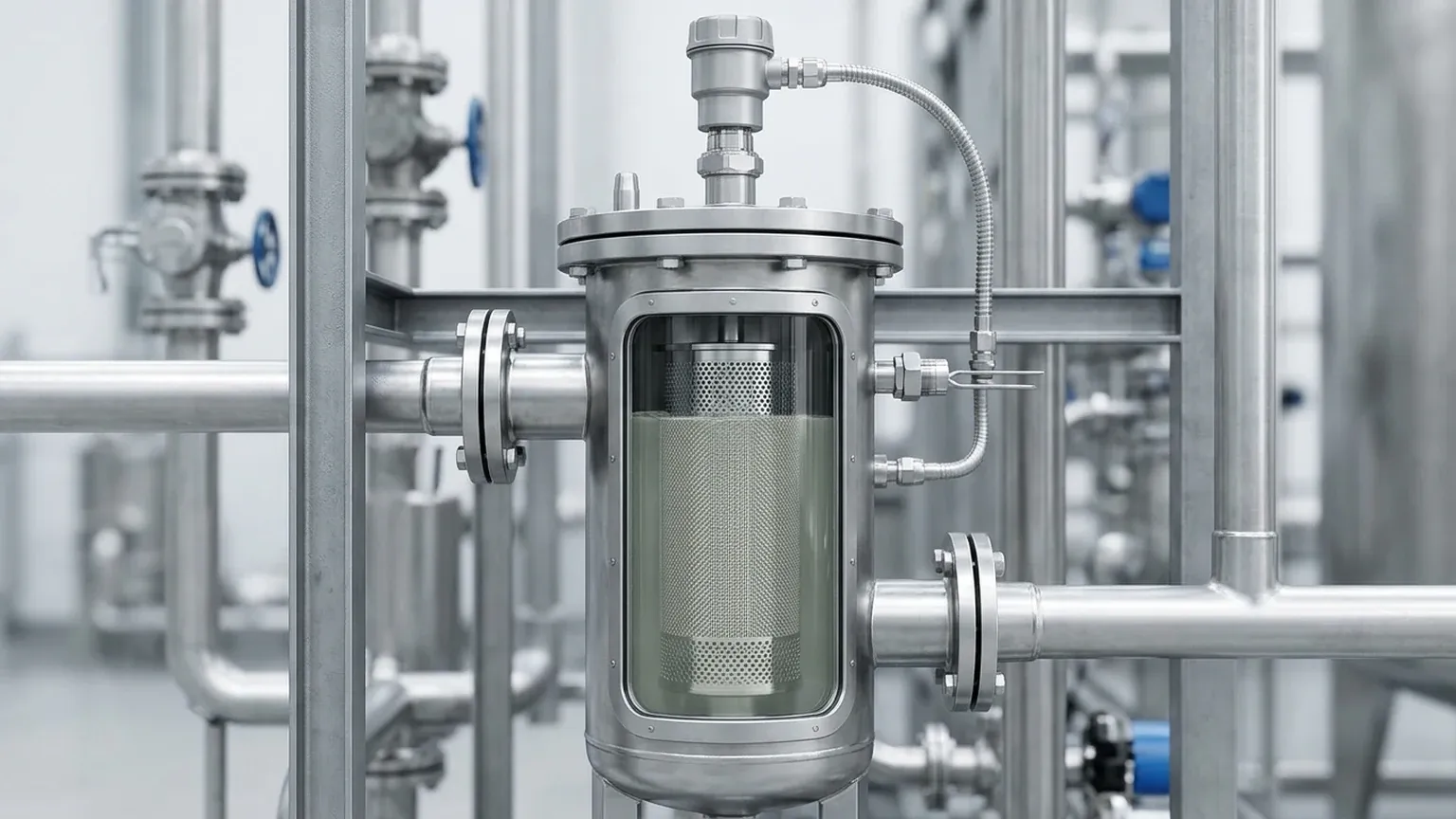
Performance Evaluation: Flow Rate and Pressure Drop
For engineers designing systems around a metal mesh filter for aeropress or industrial equivalents, the relationship between flow rate and pressure drop is the most critical performance metric.
* Clean Pressure Drop: The initial resistance offered by a clean filter. A lower ΔP is generally preferred as it requires less energy (or manual force) to move the liquid through the media.
* Dirt Holding Capacity: Metal mesh filters have a lower dirt-holding capacity than depth filters because they are surface-based. Once the surface pores are covered, the pressure drop increases exponentially.
In B2B applications, calculating the required surface area is vital. If the flow rate is too high for the available surface area, the filter will clog prematurely, leading to increased maintenance cycles and potential system downtime.
Maintenance and Longevity in Industrial Environments
One of the primary advantages of a metal mesh filter for aeropress over paper is reusability. In an industrial context, this translates to a lower Total Cost of Ownership (TCO). However, reusability is only an advantage if the filter can be effectively cleaned.
Cleaning Protocols
1. Backwashing: Reversing the flow of fluid to dislodge particles trapped on the surface.
2. Ultrasonic Cleaning: Using high-frequency sound waves in a solvent bath to remove microscopic particulates from the mesh intersections.
3. Chemical Cleaning: Using mild acids or bases to dissolve organic or mineral buildup, provided the stainless steel grade is compatible.
For B2B buyers, the ease of cleaning is a major selection criterion. A filter that requires specialized equipment to clean may offset the cost savings of its reusability.
Information for International Buyers and Engineers
When sourcing a metal mesh filter for aeropress or customized Wire Mesh Filter Cylinders & Tubes, international procurement teams should confirm several technical details to ensure the product meets industrial standards:
* Material Certification: Request Mill Test Reports (MTRs) to verify the chemical composition of the stainless steel (e.g., ensuring 316L contains the required molybdenum content).
* Edge Treatment: For disc filters, ensure the edges are photo-etched or laser-cut to prevent loose wires from entering the filtrate. For cylinders, verify the quality of the longitudinal seam weld.
* Dimensional Tolerances: In precision equipment, a variance of even 0.5mm can lead to bypass—where unfiltered liquid escapes around the edges of the filter.
* Compliance: For food and beverage applications, ensure the manufacturer complies with FDA or EU 1935/2004 standards for food contact materials.
Conclusion
The transition from disposable paper to a metal mesh filter for aeropress is more than a sustainability choice; it is a technical decision that affects the physical and chemical properties of the extraction. By understanding the underlying engineering of wire mesh—from material grades and weave patterns to the structural advantages of Wire Mesh Filter Cylinders & Tubes—engineers and purchasing managers can select filtration solutions that offer superior durability, precision, and long-term value.
Whether for a specialized consumer product or a complex industrial processing line, the reliability of a stainless steel filter depends on the manufacturer’s ability to balance filtration accuracy with mechanical strength. As industrial requirements become more stringent, the role of high-precision metal mesh continues to expand across the chemical, pharmaceutical, and food processing sectors.
