


In the commercial food and beverage sector, filtration is not merely a step in production but a critical engineering process that dictates product consistency, equipment longevity, and sensory quality. For large-scale coffee extraction and industrial brewing systems, the choice of filtration media is a pivotal decision for process engineers. While paper and polymer filters are common in consumer settings, the industrial wire mesh coffee filter offers a level of durability, precision, and chemical neutrality that is essential for high-volume operations. This guide explores the technical specifications, material science, and engineering considerations involved in selecting and implementing stainless steel filtration components in commercial brewing environments.
Operating Principles of Wire Mesh in Coffee Filtration
Industrial coffee filtration relies on the mechanical separation of solids from liquids based on pore size and surface area. Unlike depth filtration media, which trap particles within a thick matrix, a wire mesh coffee filter operates primarily through surface filtration. This means the particles are captured on the surface of the mesh, allowing for easier cleaning and more predictable flow rates.
From an engineering perspective, the filtration performance is defined by the mesh count and the wire diameter. The mesh count refers to the number of openings per linear inch. In coffee applications, the objective is to balance the extraction of essential oils and soluble solids with the exclusion of insoluble silt. A precise wire mesh allows the natural oils of the coffee—which contribute to the body and mouthfeel—to pass through, whereas paper filters often absorb these compounds.
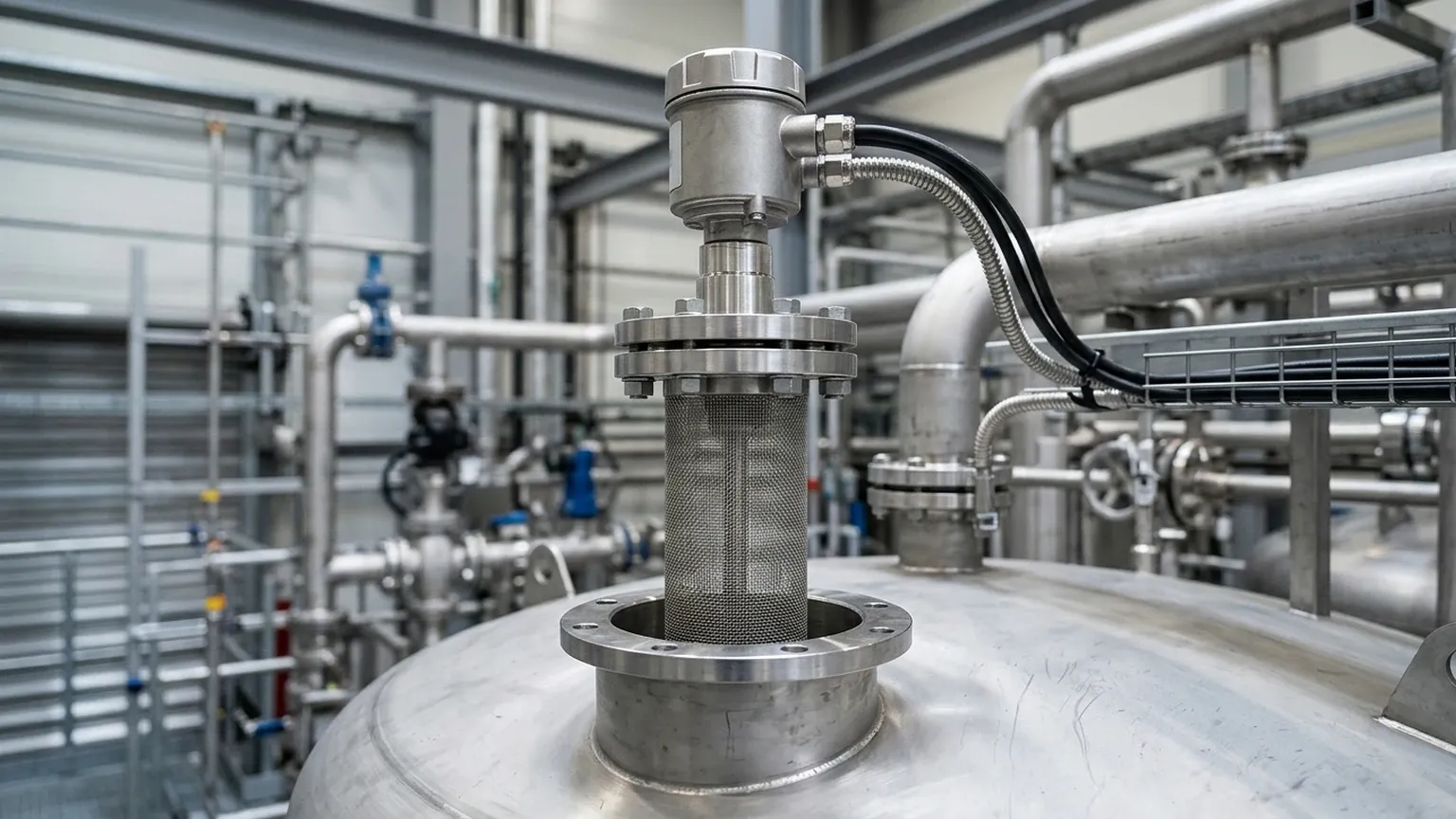
For industrial brewing, Wire Mesh Filter Cylinders & Tubes are the standard configuration. These geometries provide a high surface-to-volume ratio, ensuring that the pressure drop across the filter remains within operational limits even during high-velocity extraction cycles. The structural rigidity of a cylinder also prevents the filter from collapsing under the hydraulic loads common in pressurized brewing systems.
Material Selection and Food-Grade Compliance
The chemical environment of coffee extraction is surprisingly aggressive. Coffee is naturally acidic (pH 4.8 to 5.10) and contains various oils and volatile compounds that can react with inferior metals. Therefore, material selection is the first boundary for any industrial buyer.
Stainless Steel 304 vs. 316L
Stainless steel is the industry standard due to its corrosion resistance and ease of sterilization.
* Type 304: This is the most common grade used for food applications. It offers excellent corrosion resistance and mechanical strength.
* Type 316L: For applications involving higher temperatures or more acidic profiles, 316L is preferred. The addition of molybdenum enhances resistance to pitting and crevice corrosion, which is vital for long-term durability in continuous brewing processes.
Compliance Standards
Any wire mesh coffee filter used in a commercial capacity must comply with international food safety standards, such as those set by the FDA (U.S. Food and Drug Administration) or EU Regulation 1935/2004. These regulations ensure that the metal does not leach harmful substances into the beverage and that the manufacturing lubricants used during the weaving process have been thoroughly removed through ultrasonic cleaning or chemical passivation.
Engineering Design: Weave Types and Configurations
The performance of a wire mesh filter is largely determined by the weave pattern. For industrial coffee filtration, three primary patterns are utilized:
1. Plain Weave: The simplest and most common weave where each warp wire crosses alternately over and under each shute wire. It provides high flow rates and is easy to clean, making it suitable for coarse grinds.
2. Twill Weave: Each shute wire passes over and under two warp wires. This allows for a heavier wire diameter to be used for a given mesh count, increasing the mechanical strength of the filter.
3. Dutch Weave: This weave uses a larger diameter for the warp wires and a smaller diameter for the shute wires, resulting in a very dense, high-strength mesh. Dutch weaves are often used when fine filtration (down to 10-20 microns) is required without sacrificing the structural integrity of the cylinder.
In many high-pressure applications, a single layer of mesh is insufficient. Engineers often specify multi-layer sintered mesh. In this configuration, multiple layers of wire mesh are fused together through a heat-treating process (sintering). This creates a composite material that combines the fine filtration of a thin mesh with the mechanical support of a coarse, heavy-duty mesh. This is particularly relevant for Wire Mesh Filter Cylinders & Tubes used in industrial espresso machines or cold brew concentrate systems where high differential pressures are present.
Selection Criteria for International Buyers
When sourcing filtration components for industrial equipment, buyers must look beyond the basic dimensions. To ensure compatibility and performance, the following technical specifications should be confirmed with the manufacturer:
Micron Rating
For coffee, the ideal micron rating typically falls between 50 and 150 microns. A filter that is too fine will lead to rapid clogging (blinding) and excessive pressure drop, while a filter that is too coarse will result in "muddy" coffee with high sediment levels. The choice depends on the specific grind size used in the process.
Open Area Percentage
The open area is the ratio of the total area of the openings to the total area of the mesh. A higher open area results in higher flow rates and lower energy consumption for pumps, but it may reduce the mechanical strength of the filter. Engineers must calculate the required flow rate to determine the minimum surface area needed for the filter cylinders.
Connection and Sealing Interfaces
A wire mesh coffee filter is only as effective as its seal. Industrial buyers should specify the type of end caps required—whether they are threaded, flanged, or designed for O-ring seals. Any bypass (liquid leaking around the filter) will compromise the entire batch. Precision TIG welding is generally preferred for attaching end caps to the mesh to ensure a hygienic, crevice-free joint.
Installation Constraints and Application Risks
Integrating a wire mesh filter into an industrial brewing line requires careful consideration of the physical and operational environment.
Mechanical Stress and Fatigue
In cyclic brewing operations, the filter is subjected to repeated pressure pulses. Over time, this can lead to metal fatigue, particularly at the weld points or where the mesh is crimped. Specifying reinforced internal supports or perforated metal cores for larger Wire Mesh Filter Cylinders & Tubes can mitigate the risk of structural failure.
Clogging and Blinding
Unlike disposable filters, a permanent wire mesh coffee filter is susceptible to "blinding," where fine particles become wedged in the mesh openings. This is often caused by an inconsistent grind size (producing too many "fines"). To prevent this, the filtration system should be designed with a bypass or a redundant filter housing to allow for cleaning without stopping production.
Temperature Fluctuations
Coffee extraction typically occurs between 90°C and 96°C. The thermal expansion of the stainless steel must be accounted for in the housing design. If the filter is held too rigidly between two fixed points, thermal stress can cause the mesh to warp or tear.
Maintenance and Total Cost of Ownership (TCO)
While the initial cost of a high-quality stainless steel wire mesh coffee filter is significantly higher than paper alternatives, the Total Cost of Ownership (TCO) is often lower in industrial settings. The primary factors in TCO include:
* Longevity: A well-engineered stainless steel filter can last for years if maintained correctly, eliminating the recurring cost and waste of disposables.
* Cleaning Procedures: Industrial filters must be cleaned regularly to remove coffee oils that can become rancid. Common methods include backwashing (reversing the flow of water), ultrasonic cleaning, or soaking in food-grade caustic cleaners. The filter design must be robust enough to withstand these cleaning cycles.
* Waste Reduction: In large-scale operations, the disposal of thousands of used paper filters presents a logistical and environmental challenge. Transitioning to permanent metal filtration aligns with corporate sustainability goals and reduces waste disposal fees.
Conclusion
The selection of a wire mesh coffee filter for industrial applications is a nuanced engineering task that requires a deep understanding of fluid dynamics, material science, and food safety regulations. By focusing on high-quality Wire Mesh Filter Cylinders & Tubes, manufacturers can ensure consistent product quality, minimize downtime, and achieve a more sustainable production process. When sourcing these components, engineers should prioritize precision in micron ratings, structural integrity in design, and the use of high-grade stainless steel to meet the demanding requirements of the modern food and beverage industry.
