


Engineering Guide to Wedge Wire Mesh Filters: Design, Selection, and Industrial Application
In industrial filtration, the selection of a filter medium is dictated by the physical properties of the fluid, the nature of the contaminants, and the mechanical demands of the system. While woven wire mesh is a staple for fine filtration, the wedge wire mesh filter occupies a critical niche where mechanical strength, high flow rates, and non-clogging characteristics are paramount. Often utilized in the form of Wire Mesh Filter Cylinders & Tubes, wedge wire technology—also known as profile wire—provides a robust solution for demanding liquid-solid separation tasks.
This guide examines the engineering principles behind wedge wire filters, providing technical professionals and purchasing teams with the factual data required to evaluate these components for industrial integration.
1. Fundamentals of Wedge Wire Design
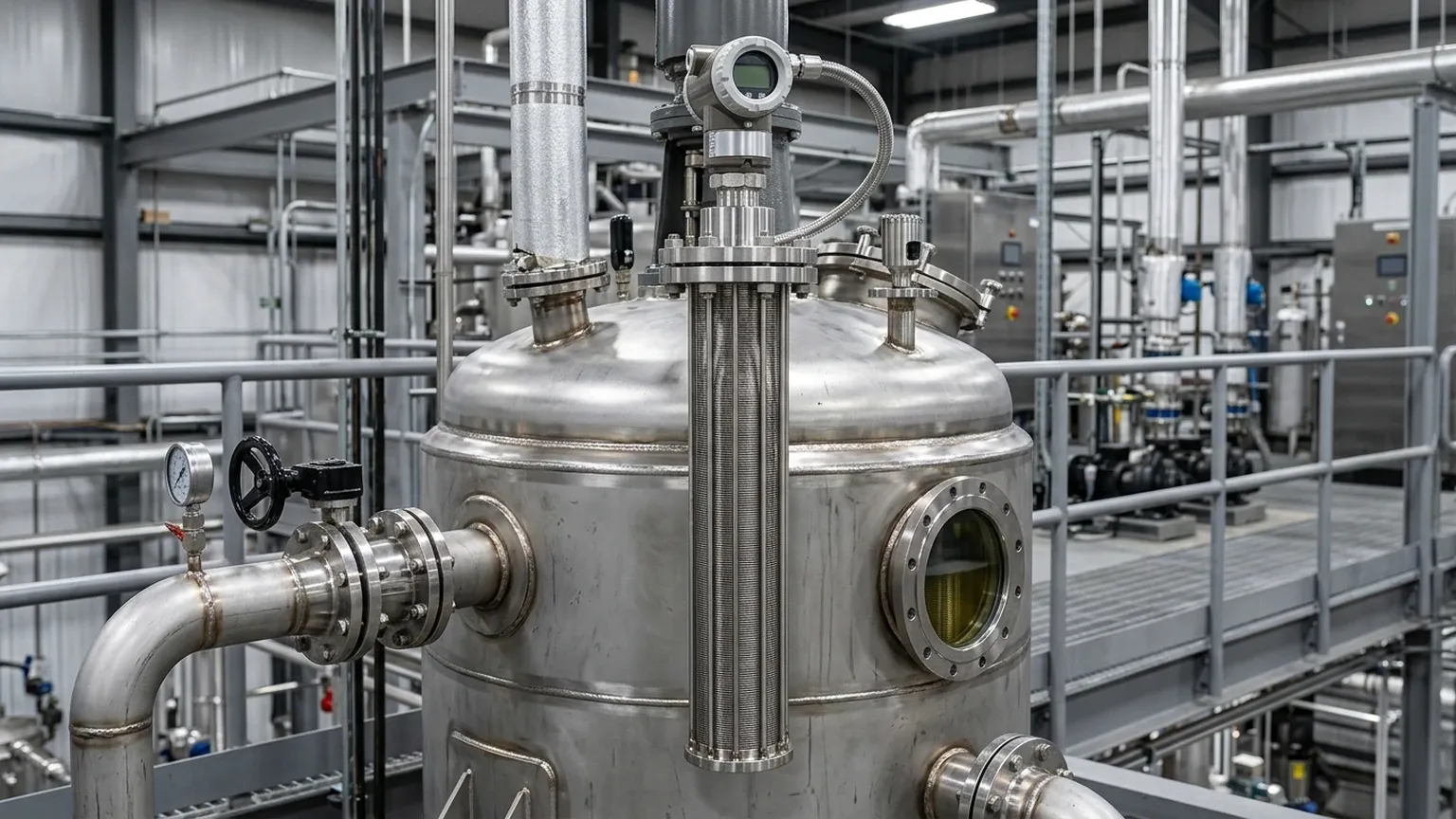
A wedge wire mesh filter is not a woven product; rather, it is a welded structure. It is manufactured by wrapping a continuous V-shaped profile wire around a circular array of longitudinal support rods. Every intersection of the profile wire and the support rod is resistance-welded, creating a rigid, high-strength cylinder or tube.
The V-Shaped Profile
The defining characteristic of this filter is the V-shaped (triangular) cross-section of the surface wire. The "point" of the V faces inward (for outside-to-inside flow), creating a slot that widens toward the downstream side. This geometry is engineered to prevent "near-size" particles from becoming lodged in the opening. If a particle is small enough to enter the slot, it will continue to pass through as the opening widens, effectively eliminating the risk of blinding or clogging that is common in standard woven meshes.
Continuous Slot Geometry
Unlike square or rectangular openings in woven mesh, wedge wire provides a continuous slot. This design maximizes the open area relative to the structural integrity of the filter. For engineers, this translates to a lower initial pressure drop and higher throughput capacities in a smaller footprint.
2. Material Specifications and Chemical Compatibility
Industrial environments often involve corrosive fluids, high temperatures, or strict hygienic requirements. Consequently, material selection is the first critical decision in the procurement process.
* Stainless Steel 304: The standard choice for general industrial applications, offering good corrosion resistance and mechanical strength at a cost-effective price point.
* Stainless Steel 316L: Specified for environments involving chlorides, acids, or pharmaceutical and food-grade requirements. The low carbon content and addition of molybdenum enhance pitting resistance and weld stability.
* Duplex Stainless Steels: For extreme environments, such as seawater filtration or high-pressure chemical processing, duplex alloys provide superior yield strength and resistance to stress corrosion cracking.
When selecting a wedge wire mesh filter, engineers must verify the compatibility of the alloy with the process fluid, particularly at peak operating temperatures, to prevent premature failure due to chemical erosion or intergranular corrosion.
3. Key Performance Parameters: Slot Size and Open Area
The performance of a wedge wire filter is defined by its slot width (aperture) and the resulting percentage of open area.
Slot Width Precision
Slot widths typically range from as fine as 20 microns up to several millimeters. Unlike woven mesh, where the aperture can shift under high pressure, the welded nature of wedge wire ensures that the slot width remains constant even under significant differential pressure. This precision is vital for applications requiring strict particle size cut-offs.
Calculating Open Area
The percentage of open area is calculated using the formula:
Open Area % = (Slot Width / (Slot Width + Wire Width)) × 100
Engineers must balance the need for a fine slot width with the requirement for high flow. A narrower slot width necessitates a narrower profile wire to maintain a high open area, which may impact the mechanical burst strength of the cylinder. Customization of these dimensions allows for the optimization of the filter for specific viscosity and flow rate requirements.
4. Mechanical Strength and Structural Integrity
One of the primary reasons for selecting a wedge wire mesh filter over a standard wire mesh filter is its inherent structural rigidity. In high-viscosity applications or systems subject to pressure surges (water hammer), woven mesh can deform or tear.
Support Rod Configuration
The support rods provide the primary longitudinal strength. The spacing and diameter of these rods are adjusted based on the required collapse pressure and the length of the filter tube. For long Wire Mesh Filter Cylinders & Tubes, internal or external reinforcement rings may be added to prevent buckling under high differential pressure.
Direction of Flow
Wedge wire filters can be engineered for two flow directions:
1. FOTI (Flow Out-To-In): The most common configuration. The V-profile is on the exterior, and the support rods are on the interior.
2. FITO (Flow In-To-Out): Used in internal pressure applications or specific centrifuge designs. The V-profile is on the interior, and support rods are on the exterior.
5. Industrial Applications and Use Cases
The unique properties of the wedge wire mesh filter make it suitable for several specialized industrial sectors:
* Water Treatment and Intake: Used in well screens and intake structures to prevent sand and debris from entering pumps. The non-clogging surface is essential for submerged applications where manual cleaning is difficult.
* Food and Beverage Processing: In brewing (lauter tuns) and sugar processing, wedge wire provides a hygienic, easy-to-clean surface that can withstand the mechanical stress of grain beds or high-viscosity syrups.
* Petrochemicals and Refining: Employed in catalyst bed supports and reactor internals where high temperatures and chemical resistance are mandatory.
* Pulp and Paper: Used in pressure screens and dewatering processes where the continuous slot allows for efficient fiber separation without plugging.
6. Maintenance and Cleaning Efficiency
The total cost of ownership (TCO) for a filter is heavily influenced by its cleaning cycle and lifespan. Wedge wire filters excel in systems requiring automated cleaning.
Backwashing and Backpulsing
Because the V-shaped slot widens inward, backwashing (reversing the flow) is exceptionally effective. The reverse flow easily dislodges particles trapped on the surface. This efficiency reduces the volume of backwash fluid required and shortens the downtime associated with cleaning cycles.
Mechanical Cleaning
In applications involving sticky or fibrous solids, mechanical scrapers can be used on the smooth surface of the wedge wire. Unlike woven mesh, which would be damaged by a scraper, the rigid surface of a wedge wire cylinder can withstand continuous mechanical abrasion.
7. Comparison: Wedge Wire vs. Woven Wire Mesh
When deciding between these two technologies, engineers should consider the following trade-offs:
| Feature | Wedge Wire Mesh Filter | Woven Wire Mesh |
| :— | :— | :— |
| Filtration Rating | Typically 20µm and above | Can reach sub-micron levels |
| Mechanical Strength | Extremely High (Self-supporting) | Low (Requires support basket) |
| Clogging Resistance | Excellent (V-shape geometry) | Moderate (Prone to blinding) |
| Cleaning | Easy (Backwash/Scraper) | Difficult (Often requires ultrasonic) |
| Initial Cost | Higher | Lower |
| Service Life | Long (Years) | Shorter (Months/Years) |
8. Procurement Considerations for International Buyers
When sourcing Wire Mesh Filter Cylinders & Tubes for global projects, technical specifications must be communicated clearly to ensure the component meets local engineering standards.
Technical Confirmation Checklist
Before finalizing a purchase order, buyers should confirm the following with the manufacturer:
1. Dimensional Tolerances: Specify the allowable variance in diameter and length, especially for filters that must fit into existing housings with tight seals.
2. Slot Width Verification: Request a certificate of conformance or a microscopic inspection report to ensure slot uniformity across the entire surface.
3. End Fittings: Wedge wire tubes can be supplied with plain ends, NPT/BSP threads, flanges, or quick-connect fittings. The welding quality at these junctions is critical for pressure integrity.
4. Surface Treatment: Depending on the application, filters may require pickling, passivation, or electropolishing to enhance corrosion resistance and remove surface contaminants from the welding process.
5. Pressure Ratings: Provide the maximum operating pressure and the maximum allowable differential pressure (PSID) to ensure the support rod configuration is sufficient.
9. Conclusion
The wedge wire mesh filter is a high-performance engineering component designed for reliability in the most demanding industrial environments. Its V-shaped profile and welded construction offer a combination of precision, strength, and ease of maintenance that woven media cannot match. By understanding the relationship between slot geometry, material properties, and mechanical design, engineers can specify filtration solutions that optimize process efficiency and minimize long-term operational costs.
For custom requirements involving specific diameters, lengths, or alloy grades, working with a manufacturer capable of precision OEM fabrication ensures that the final product aligns with the technical demands of the system.
