


Engineering Foundations of Wire Mesh for Air Filter Applications
In industrial environments, air filtration is a critical process required to protect downstream equipment, ensure product purity, and maintain environmental safety. While synthetic and cellulose-based media are common in standard HVAC applications, demanding industrial processes often require the structural integrity and thermal resistance of metal. Utilizing wire mesh for air filter applications provides a robust solution for high-temperature, high-pressure, and corrosive gas streams where traditional media would fail.
Industrial wire mesh filters operate on precise mechanical principles. Unlike disposable filters, these components are engineered for long-term service life, offering cleanability and consistent performance across a wide range of flow rates. Understanding the technical nuances of material selection, weave patterns, and structural design is essential for engineers tasked with optimizing air intake or exhaust systems.
Principles of Filtration in Metal Mesh Media
Air filtration via wire mesh relies on several physical mechanisms to capture particulate matter. The efficiency of a filter is not merely a function of the hole size, but a complex interaction between the air velocity, particle mass, and the geometry of the mesh.
1. Inertial Impingement: This occurs when larger particles, due to their inertia, cannot follow the streamlines of the air as it bends around the wire strands. Instead, they collide with the wire and become trapped. This is particularly effective for larger contaminants in high-velocity streams.
2. Interception: Smaller particles that follow the air streamlines may still come within one particle radius of a wire strand. When this happens, the particle touches the wire and is captured.
3. Diffusion: For extremely fine sub-micron particles, Brownian motion causes them to move erratically across the streamlines, increasing the likelihood of contact with the filter media. While more common in HEPA-grade synthetic filters, specialized fine-weave wire mesh can utilize this principle in specific low-flow applications.
In most industrial air applications, wire mesh acts as a surface filter. This means the contaminants are trapped on the upstream face of the media, forming a "filter cake" that can actually increase filtration efficiency over time, albeit at the cost of increased pressure drop.
Material Selection and Environmental Compatibility
The primary advantage of using stainless steel wire mesh for air filter construction is its resistance to environmental degradation. Engineering teams must select materials based on the chemical composition of the air stream and the operating temperature.
* AISI 304 Stainless Steel: The standard choice for general industrial air filtration. It offers excellent strength and basic corrosion resistance suitable for dry air and non-corrosive gas streams.
* AISI 316/316L Stainless Steel: Recommended for marine environments or chemical processing plants where the air may contain salt spray, acid vapors, or high moisture levels. The addition of molybdenum enhances resistance to pitting and crevice corrosion.
* High-Temperature Alloys: For applications such as kiln exhaust or engine breathers, specialized alloys like Inconel or Monel may be used to maintain structural integrity at temperatures exceeding 500°C.
Beyond the alloy, the type of weave significantly impacts performance. Plain weave offers the highest open area for low pressure drop, while Dutch weave provides a more tortuous path for finer filtration. Sintered wire mesh, which involves bonding multiple layers of mesh through heat and pressure, is often used when the application requires extreme rigidity and the ability to withstand high-pressure pulses during backcleaning.
Design Considerations: Wire Mesh Filter Cylinders & Tubes
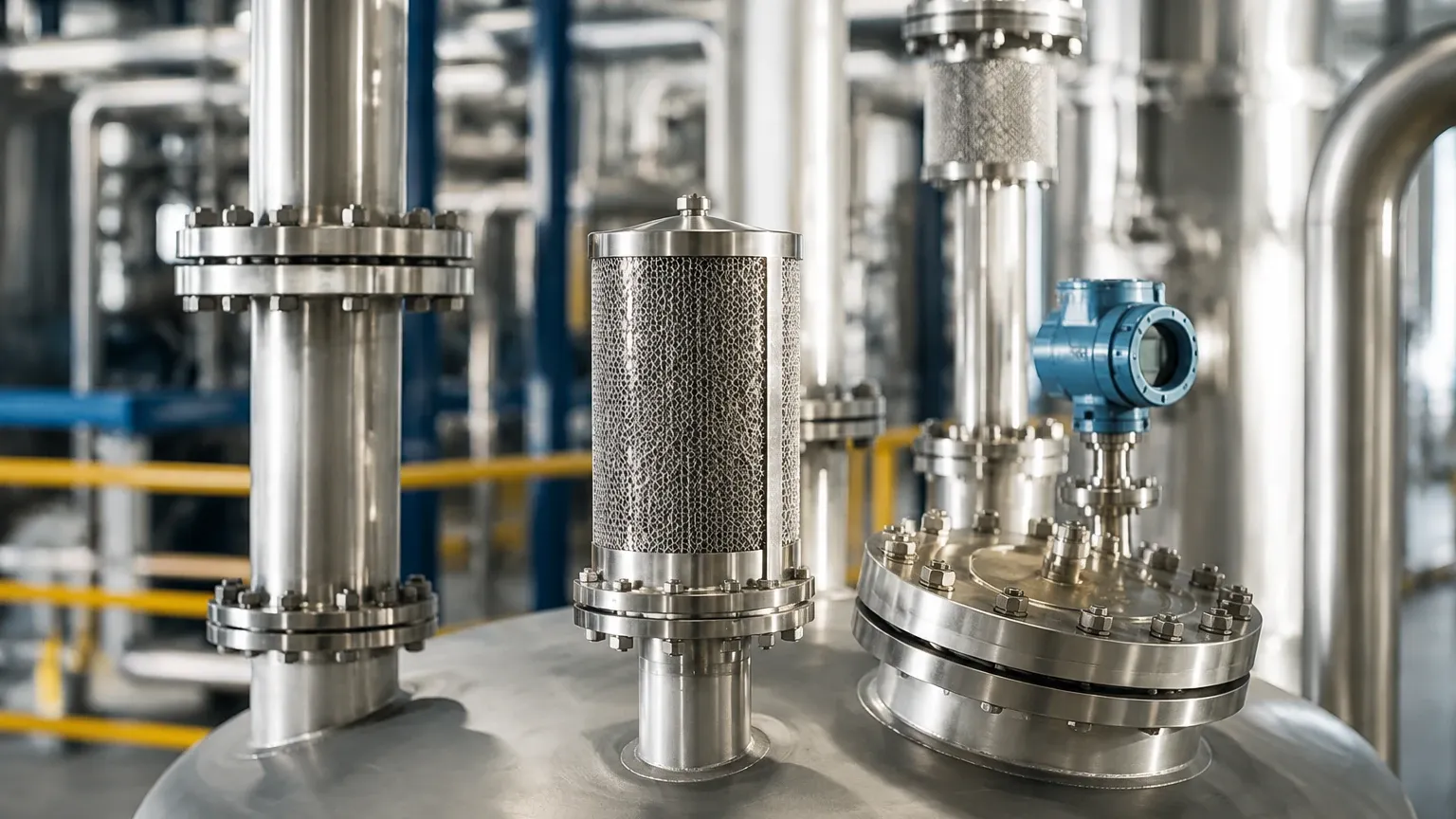
For most industrial air systems, the media is fabricated into specific geometries to maximize surface area within a compact footprint. Wire Mesh Filter Cylinders & Tubes are the preferred configuration for several reasons.
Structural Rigidity
The cylindrical shape is inherently strong, allowing the filter to withstand significant differential pressure (ΔP) without collapsing. In high-flow air intake systems, the force exerted by the air can be substantial. Engineers often incorporate internal support cores—perforated metal tubes or heavy-duty wire cages—to ensure the mesh remains stable under load.
Surface Area Optimization
To handle high volumes of air without excessive pressure drop, the mesh is often pleated before being formed into a cylinder. Pleating increases the effective filtration area by 3 to 10 times compared to a flat cylindrical surface. This lower face velocity through the media improves capture efficiency and extends the time between cleaning cycles.
Sealing and Integration
The performance of an air filter is only as good as its seal. Industrial cylinders and tubes are designed with various end-cap configurations, including DOE (Double Open End), SOE (Single Open End), and threaded connections (NPT/BSP). Gaskets made of Viton, EPDM, or PTFE are selected based on the temperature and chemical exposure to prevent bypass, which occurs when unfiltered air leaks around the filter element.
Performance Metrics: Micron Rating and Pressure Drop
When specifying wire mesh for air filter use, two metrics are paramount: the micron rating and the clean pressure drop.
Micron Rating
Wire mesh is typically rated by its "absolute" or "nominal" micron size. An absolute rating indicates the diameter of the largest hard spherical particle that will pass through the mesh. In air filtration, where particles are often non-spherical and deformable, the nominal rating (representing a percentage of capture) is frequently used to balance filtration fineness with airflow requirements.
Pressure Drop (ΔP)
The resistance to airflow is a critical energy consideration. A high initial pressure drop requires more fan power, increasing operational costs. Engineers must calculate the "Clean Pressure Drop" based on the air's viscosity, density, and face velocity. As the filter loads with dust, the ΔP increases. A common engineering practice is to design the system to trigger a cleaning cycle or replacement when the ΔP reaches a predetermined terminal limit (e.g., 5-10 times the initial ΔP).
Installation Constraints and Application Risks
Successful implementation of wire mesh filters requires attention to the physical constraints of the installation site.
1. Vibration and Fatigue: In applications like compressor intakes or engine exhausts, high-frequency vibrations can lead to metal fatigue. Filters must be securely mounted, and pleat tips should be supported to prevent wire breakage, which could lead to downstream contamination.
2. Moisture and Oil Mists: If the air stream contains oil mists or high humidity, the wire mesh may become "blinded" as the liquid bridges the openings. In these cases, a pre-separator or a coalescing stage may be required upstream of the fine wire mesh filter.
3. Velocity Profiles: Uneven air distribution across the filter surface can lead to localized high-velocity zones, causing premature wear or breakthrough. Diffusers or plenum chambers are often used to normalize the airflow before it hits the filter tubes.
Maintenance, Cleaning, and Life Cycle Costs
One of the strongest arguments for stainless steel filtration is the total cost of ownership (TCO). While the initial capital expenditure is higher than disposable media, the ability to clean and reuse the filter provides long-term savings.
Cleaning Methods
* Ultrasonic Cleaning: The most effective method for removing fine particulates lodged deep within the mesh. High-frequency sound waves create cavitation bubbles that scrub the metal surfaces.
* Backwashing/Backpulsing: In automated systems, a reverse flow of compressed air is used to dislodge the filter cake. This is common in dust collection systems using wire mesh tubes.
* Chemical Cleaning: For filters contaminated with oils or organic polymers, solvent baths or caustic washes can restore the media to near-original condition without damaging the stainless steel.
Longevity
A well-maintained stainless steel filter can last for years. This reduces the waste stream associated with disposable filters and ensures that the filtration performance remains consistent, as metal mesh does not suffer from the "unloading" or fiber migration issues common in aging synthetic media.
Procurement Checklist for International Buyers
When sourcing wire mesh for air filter components for global industrial projects, buyers should confirm several technical details with the manufacturer to ensure the product meets site requirements:
* Mesh Specification: Confirm the wire diameter and mesh count (wires per inch) to verify the micron rating.
* Material Certification: Request Mill Test Reports (MTRs) to ensure the stainless steel grade (304, 316L, etc.) meets international standards.
* Pressure Rating: Define the maximum operating pressure and the maximum allowable differential pressure the cylinder can withstand before structural deformation.
* Flow Capacity: Provide the manufacturer with the standard cubic feet per minute (SCFM) or cubic meters per hour (m³/h) to ensure the filter size is adequate for the required flow rate.
* Customization Options: Inquire about custom lengths, diameters, and end-fitting types to ensure seamless integration into existing housing units.
By focusing on these technical parameters, engineering and procurement teams can secure filtration solutions that provide reliable, high-performance air purification in the most demanding industrial environments. The durability and precision of Wire Mesh Filter Cylinders & Tubes make them an essential component in modern industrial process engineering.
