


Wire Mesh Oil Filter
In industrial engineering, the integrity of lubrication and hydraulic systems depends heavily on the efficiency of filtration components. Contamination in oil-based systems is a primary cause of component wear, valve stiction, and premature pump failure. Among the various technologies available, the use of stainless steel wire mesh has become a standard for demanding applications. This guide examines the technical specifications, selection criteria, and engineering considerations for implementing a wire mesh oil filter within industrial environments.
Understanding the Role of Wire Mesh in Oil Filtration
Industrial oils, whether used for lubrication, power transmission, or cooling, are subject to particulate contamination from both internal wear and external ingress. A wire mesh oil filter serves as a robust barrier, designed to remove solid particles while maintaining the necessary flow rates required for system operation.
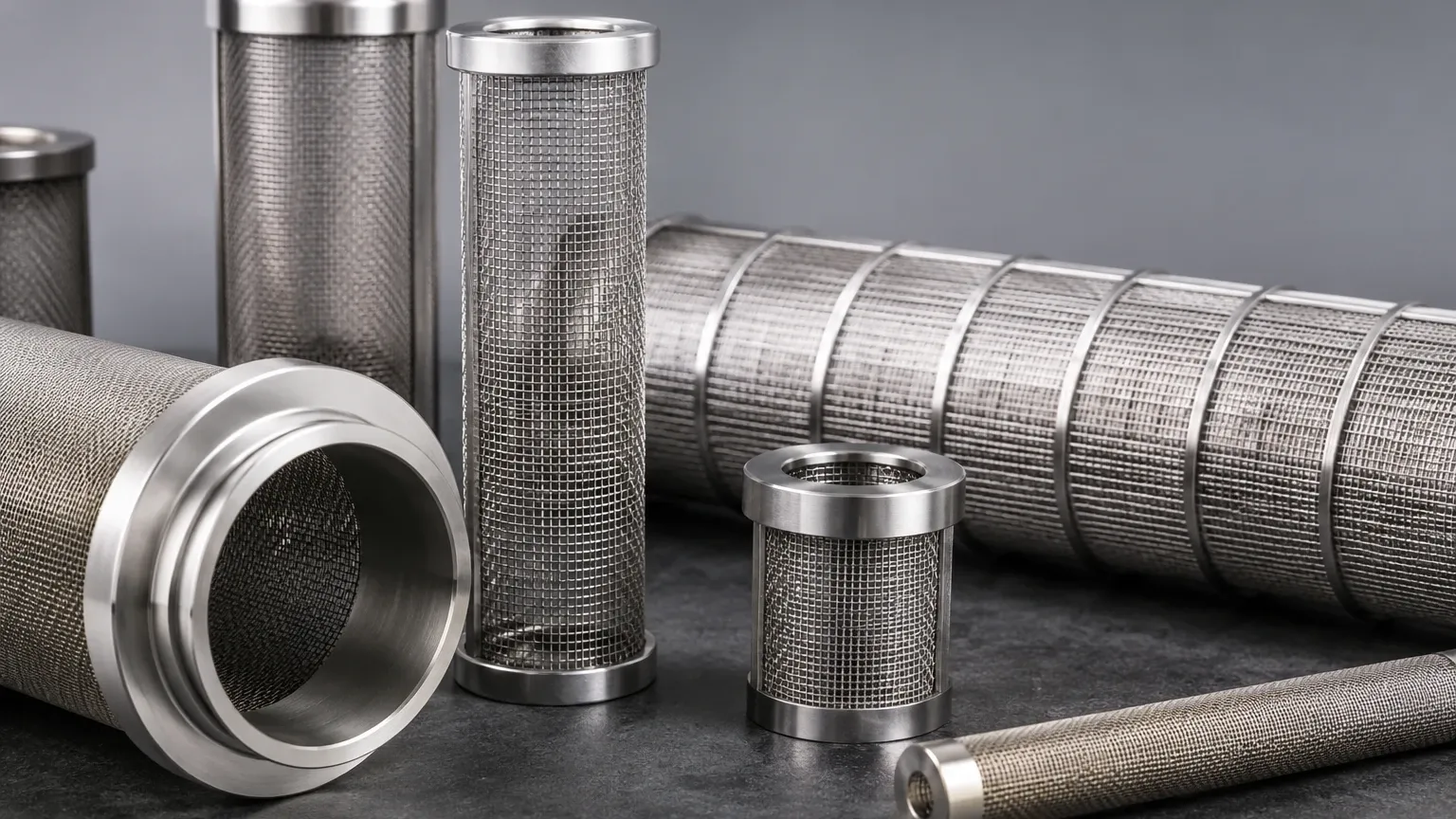
Unlike disposable cellulose or synthetic fiber media, stainless steel wire mesh provides a rigid, uniform pore structure. This structural stability is critical in oil systems where pressure fluctuations and high-viscosity fluids can cause softer media to deform or shed fibers. The primary advantage of Wire Mesh Filter Cylinders & Tubes lies in their durability and cleanability, offering a long-term solution that reduces the total cost of ownership compared to frequent cartridge replacements.
Operating Principles: Surface Filtration vs. Depth Filtration
Wire mesh filters primarily operate on the principle of surface filtration. Particles larger than the mesh aperture are trapped on the upstream surface of the media. This mechanism provides a precise "absolute" cut-off point, ensuring that no particles larger than the specified micron rating pass through the system.
In contrast, depth filtration media (such as felt or wound yarn) trap particles within the thickness of the material. While depth media can hold a higher volume of fine contaminants, they are prone to media migration and can be difficult to clean. For industrial oil applications—particularly those involving high-pressure hydraulic lines or high-temperature lubrication—the predictable performance of a stainless steel wire mesh oil filter is often preferred for its mechanical strength and resistance to chemical degradation.
Engineering Considerations for Material Selection
Selecting the correct material for a wire mesh oil filter is the first step in ensuring system longevity. Most industrial applications utilize austenitic stainless steels due to their balance of corrosion resistance and mechanical properties.
1. Stainless Steel Grade 304
Grade 304 is the most common material for general industrial oil filtration. It offers excellent strength and good corrosion resistance for standard hydraulic oils and lubricants. It is suitable for applications where the environment is not excessively corrosive and where cost-effectiveness is a priority.
2. Stainless Steel Grade 316L
For applications involving synthetic oils, aggressive additives, or corrosive environments (such as offshore or chemical processing plants), Grade 316L is recommended. The addition of molybdenum provides enhanced resistance to pitting and crevice corrosion. The "L" designation refers to low carbon content, which improves weldability and prevents sensitization during the manufacturing of filter cylinders and tubes.
3. Specialty Alloys
In extreme cases involving high temperatures (exceeding 300°C) or highly acidic fluids, specialty alloys such as Monel or Inconel may be specified. However, for the vast majority of B2B oil filtration needs, 304 and 316L provide the necessary performance boundaries.
Design Variations: Cylinders, Tubes, and Structural Reinforcement
The physical configuration of Wire Mesh Filter Cylinders & Tubes must be engineered to withstand the operational stresses of the system. This includes differential pressure (ΔP), flow velocity, and mechanical vibration.
Single-Layer vs. Multi-Layer Construction
* Single-Layer Filters: These consist of a single ply of woven wire mesh. They are easy to clean and suitable for low-pressure applications or as suction strainers.
* Multi-Layer Sintered Mesh: For high-pressure environments, multiple layers of mesh are sintered together. This process fuses the wires at their contact points, creating a monolithic structure that combines a fine filtration layer with coarser support layers. This prevents the fine mesh from migrating or deforming under high differential pressure.
Structural Support
In many industrial oil systems, the filter element must endure high collapse pressures. To achieve this, wire mesh tubes are often reinforced with an internal or external perforated metal core. This core provides the mechanical skeleton, while the wire mesh provides the filtration precision. For high-flow applications, pleated designs are utilized to increase the effective surface area within the same footprint, reducing the flux rate and extending the interval between cleanings.
Selection Criteria: Matching the Filter to the Application
When specifying a wire mesh oil filter, engineers must evaluate several technical parameters to ensure compatibility and efficiency.
Micron Rating and Aperture Size
The micron rating defines the size of particles the filter will remove. In oil systems, this is usually categorized as:
* Nominal Rating: An indicative value representing the approximate size of particles retained (e.g., 50% or 90% efficiency).
* Absolute Rating: The diameter of the largest hard spherical particle that will pass through the filter under specified test conditions. For critical hydraulic components, absolute ratings are typically required.
Oil Viscosity and Temperature
Oil viscosity is highly temperature-dependent. At cold start-up, oil is thicker, leading to higher pressure drops across the filter. If the mesh is too fine or the surface area too small, the bypass valve may open, allowing unfiltered oil to circulate. Engineers must calculate the maximum allowable pressure drop at the lowest operating temperature to select the appropriate mesh density.
Flow Rate and Velocity
High flow velocities can lead to turbulence and erosion of the mesh wires. The filter must be sized so that the fluid velocity remains within laminar or transitional flow regimes. This ensures that the pressure drop remains manageable and that the mesh is not subjected to excessive mechanical stress.
Installation and Maintenance Protocols
Proper installation is vital to prevent bypass leakage. A wire mesh oil filter must be securely seated within its housing, typically utilizing O-rings or flat gaskets made of Viton (FKM) or Buna-N (NBR), depending on the oil chemistry and temperature.
Cleaning and Reusability
One of the primary B2B advantages of stainless steel Wire Mesh Filter Cylinders & Tubes is their ability to be cleaned and reused. Cleaning methods include:
* Backwashing: Reversing the flow of clean fluid through the filter to dislodge surface contaminants.
* Ultrasonic Cleaning: Using high-frequency sound waves in a cleaning solvent to remove fine particulates trapped within the mesh pores.
* Chemical Cleaning: Utilizing specialized solvents to dissolve varnishes or oxidized oil deposits.
It is essential to establish a pressure-drop monitoring system (using differential pressure gauges). Once the ΔP reaches a predetermined limit, the filter should be removed for cleaning. Over-cleaning or using abrasive tools can damage the wire weave, compromising the micron rating.
Application Risks and Mitigation
While wire mesh filters are highly reliable, certain risks must be managed:
* Fatigue Failure: In systems with high-frequency pressure pulsations, the mesh wires can undergo fatigue. This is mitigated by using pleated designs with adequate support or multi-layer sintered structures.
* Compatibility: Ensure that all components, including end caps and adhesives (if used), are compatible with the specific oil additives. For high-performance applications, all-welded construction is preferred over adhesive bonding to eliminate the risk of chemical breakdown.
* Bypass Prevention: Ensure that the filter seals are inspected during every maintenance cycle. A damaged seal can render the most precise filter ineffective.
Procurement Checklist for International Buyers
When sourcing Wire Mesh Filter Cylinders & Tubes from a manufacturer like Kaifil, technical professionals should provide the following data to ensure an accurate quote and fit-for-purpose product:
1. Fluid Specification: Type of oil (mineral, synthetic, water-glycol) and its viscosity grade.
2. Operating Conditions: Normal and maximum operating temperature and pressure.
3. Filtration Requirement: Desired absolute or nominal micron rating.
4. Dimensions: Outer diameter (OD), inner diameter (ID), and overall length. Specify tolerances if the filter must fit into a precision housing.
5. End Cap Configuration: Threaded connections, flange types, or open/closed ends.
6. Structural Requirements: Anticipated maximum differential pressure before cleaning.
Conclusion
The selection of a wire mesh oil filter is a critical decision in the design and maintenance of industrial machinery. By opting for high-quality stainless steel Wire Mesh Filter Cylinders & Tubes, engineers can achieve a balance of precision filtration, mechanical durability, and long-term cost efficiency. Whether for hydraulic systems, industrial gearboxes, or large-scale lubrication circuits, understanding the technical boundaries of mesh materials and structures ensures that the filtration system protects the most sensitive components of the industrial infrastructure.
