


1 2 Inch Woven Wire Mesh: Engineering Specifications and Industrial Applications
In the landscape of industrial filtration and structural separation, the selection of mesh size is a critical engineering decision that dictates flow rates, structural integrity, and filtration efficiency. Among the various specifications available, 1 2 inch woven wire mesh (referring to a 0.5-inch clear opening or center-to-center spacing) serves as a versatile standard for coarse filtration, protective screening, and aggregate sorting.
As a specialized manufacturer, Kaifil provides high-performance stainless steel solutions designed to meet the rigorous demands of chemical processing, food production, and hydraulic systems. Understanding the technical nuances of woven wire mesh at this specific scale is essential for engineers and procurement teams who must balance durability with precise performance parameters.
Technical Fundamentals of 1 2 Inch Woven Wire Mesh
When specifying a 1 2 inch woven wire mesh, it is vital to distinguish between "mesh count" and "clear opening." In the context of larger apertures, engineers typically focus on the clear opening—the actual space between parallel wires—rather than the number of openings per linear inch.
Clear Opening vs. Center-to-Center
The clear opening is the most significant metric for filtration and separation tasks. For a 1/2 inch specification, the actual space available for media to pass through depends heavily on the wire diameter. For instance, if a mesh has a 0.5-inch clear opening and uses a 0.063-inch wire, the center-to-center distance is 0.563 inches. Conversely, if the 1/2 inch refers to center-to-center spacing, the clear opening would be reduced by the thickness of the wire.
Wire Gauge and Structural Stability
The diameter of the wire used in the weaving process determines the mesh's resistance to deformation and its overall weight. Common wire gauges for 1/2 inch openings range from 0.047 inches (18 gauge) for light-duty screening to 0.120 inches (11 gauge) for heavy-duty industrial applications. Thicker wires provide higher impact resistance and longer service life in abrasive environments but reduce the total open area, which can impact flow dynamics.
Material Performance and Environmental Compatibility
Material selection is the primary factor in determining the longevity of a woven wire mesh component. At Kaifil, we prioritize stainless steel alloys due to their superior mechanical properties and resistance to environmental degradation.
Stainless Steel 304 (SS304)
SS304 is the industry standard for general-purpose applications. It offers excellent corrosion resistance in most atmospheric conditions and is widely used in food and beverage processing due to its ease of cleaning and sanitization. For 1/2 inch mesh used in non-corrosive industrial environments, SS304 provides a cost-effective balance of strength and durability.
Stainless Steel 316L (SS316L)
For applications involving marine environments, chemical processing, or high-temperature filtration, SS316L is the preferred choice. The addition of molybdenum enhances its resistance to pitting and crevice corrosion, particularly in chloride-rich environments. In pharmaceutical and chemical sectors, where material purity and resistance to aggressive cleaning agents are paramount, SS316L ensures that the 1 2 inch woven wire mesh maintains its structural integrity over extended operational cycles.
Weave Styles and Structural Variations
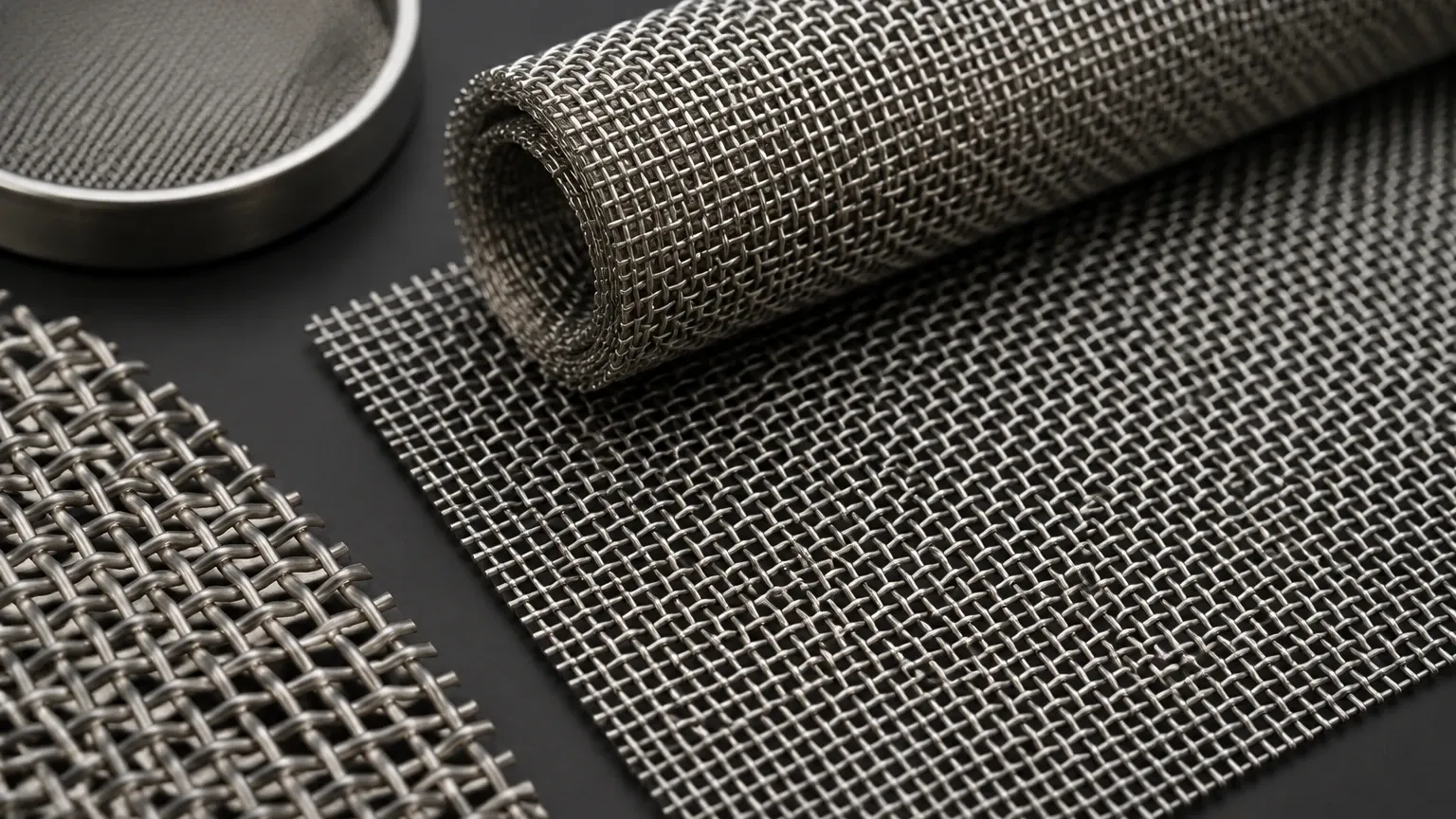
While finer meshes often utilize twill or dutch weaves, a 1 2 inch woven wire mesh is typically produced using plain weave or crimped variations. The choice of weave affects the mesh's rigidity and the stability of the openings.
1. Plain Weave: Each warp wire crosses alternately over and under each weft wire. This is the most common weave for 1/2 inch specifications, providing a consistent aperture and reliable performance for most separation tasks.
2. Pre-Crimped Mesh: For larger openings like 1/2 inch, the wires are often crimped before weaving. This "lock-crimp" or "intermediate crimp" style ensures that the wires remain securely in place, preventing the mesh from shifting under mechanical stress or high-pressure flow. This is particularly important in vibrating screens or heavy-duty guards.
3. Flat Top Weave: In this variation, all the crimps are on the underside, leaving a smooth surface on the top. This is ideal for applications where material must slide across the mesh without obstruction, such as in conveyor systems or architectural panels.
To explore the specific weave patterns suitable for your project, you can Plain, twill and dutch woven wire mesh in SS304/316L — rolls, cut mesh and framed panels. Send mesh count or micron target for a technical quote.
Calculating Performance: Open Area and Flow Dynamics
For engineers, the "Percentage of Open Area" is a critical calculation. This figure represents the ratio of the total area of the openings to the total area of the mesh. It directly influences the pressure drop across the filter and the volume of material that can pass through in a given timeframe.
The Formula for Open Area
The percentage of open area (OA) for woven wire mesh is calculated using the following formula:
\[ OA = \left( \frac{O}{O + D} \right)^2 \times 100 \]
Where:
* O = Clear Opening (e.g., 0.5 inches)
* D = Wire Diameter
If an engineer selects a 1/2 inch opening with a 0.080-inch wire, the open area is approximately 74%. Increasing the wire diameter to 0.120 inches for added strength drops the open area to roughly 65%. This reduction can lead to higher differential pressure, which may require adjustments in pump capacity or system design. Kaifil’s engineering team assists customers in optimizing this ratio to ensure that structural requirements do not unnecessarily compromise flow efficiency.
Industrial Applications of 1 2 Inch Woven Wire Mesh
The 1/2 inch specification is a "workhorse" size used across diverse sectors. Its utility stems from being small enough to catch significant debris while large enough to allow high-volume throughput.
Chemical and Petrochemical Processing
In these industries, 1 2 inch woven wire mesh is frequently used as a catalyst support grid or as a primary strainer in large-scale piping systems. Its ability to withstand corrosive fluids while maintaining a rigid structure makes it indispensable for protecting downstream equipment like pumps and valves from large particulate matter.
Food and Beverage Industry
Stainless steel mesh with 1/2 inch openings is commonly utilized in the initial stages of raw material processing. It serves as a scalping screen to remove oversized contaminants or as a drying rack for large food products. Because Kaifil utilizes high-grade stainless steel, these components meet the strict hygiene standards required for direct food contact.
Water Treatment and Intake Screening
For municipal and industrial water treatment, 1/2 inch mesh acts as an effective barrier against aquatic debris, leaves, and large solids at intake points. The use of SS316L in these applications prevents premature failure due to oxidation and biofouling, reducing the total cost of ownership through extended maintenance intervals.
Machinery Guards and Security
Beyond filtration, the structural properties of woven wire mesh make it an excellent choice for safety guards. A 1/2 inch opening provides a high level of visibility and airflow while preventing personnel from coming into contact with moving parts. In architectural and security contexts, it offers a robust barrier that is difficult to penetrate but aesthetically clean.
Engineering Considerations for Customization
Standard off-the-shelf mesh may not always meet the specific requirements of a specialized industrial system. When sourcing 1 2 inch woven wire mesh, engineers should consider the following customization options provided by Kaifil:
* Edge Treatments: Depending on the installation method, mesh can be supplied with raw edges, hemmed edges, or welded into frames. Framed panels are often preferred for filtration cartridges to prevent fraying and ensure a bypass-free seal.
* Surface Finishes: While the standard finish is often sufficient, processes like electropolishing can enhance corrosion resistance and improve the "cleanability" of the mesh by removing microscopic surface irregularities.
* Dimensional Tolerances: For precision equipment, standard commercial tolerances may be insufficient. Specifying tighter tolerances on the aperture size and wire diameter ensures consistent performance across multiple batches.
Maintenance, Cleaning, and Replacement Cycles
The service life of a woven wire mesh component is dictated by the operating environment and the maintenance regime. In filtration applications, the primary cause of failure is blinding (clogging) or mechanical fatigue.
Cleaning Protocols
For 1/2 inch mesh, cleaning is relatively straightforward compared to micron-rated filters. High-pressure water jets, steam cleaning, or ultrasonic baths are effective at removing accumulated debris. It is crucial to ensure that cleaning agents are compatible with the stainless steel grade to avoid induced corrosion (such as stress corrosion cracking).
Identifying the Need for Replacement
Engineers should monitor for signs of wire thinning (due to abrasion), broken wires (due to fatigue), or permanent deformation of the mesh profile. In high-pressure systems, a sudden increase in differential pressure that cannot be resolved by cleaning usually indicates that the mesh has reached the end of its functional life. Because Kaifil focuses on durability, our woven wire mesh products are engineered to withstand repeated cleaning cycles before requiring replacement.
Conclusion: Sourcing Reliable Filtration Components
Selecting the right 1 2 inch woven wire mesh involves more than simply picking a size; it requires a deep understanding of metallurgy, mechanical stresses, and fluid dynamics. By evaluating the specific needs of your application—whether it is the high-corrosion environment of a chemical plant or the sanitary requirements of a food processing line—you can ensure that the chosen mesh provides optimal performance and longevity.
Kaifil’s commitment to quality manufacturing and engineering support helps technical teams navigate these choices with confidence. From initial material selection to the delivery of customized, framed filtration components, we provide the expertise necessary to optimize your industrial processes.
Before initiating your next procurement cycle, confirm the required wire gauge, the specific stainless steel grade, and the necessary edge treatments to ensure the product integrates seamlessly into your system. For detailed technical specifications or to request a quote for your specific dimensions, Plain, twill and dutch woven wire mesh in SS304/316L — rolls, cut mesh and framed panels. Send mesh count or micron target for a technical quote.
