


1 2 Woven Wire Mesh
In industrial filtration and separation, the specification of 1 2 woven wire mesh—referring generally to a 1/2-inch opening or a 2-mesh configuration—represents a critical threshold where coarse filtration meets structural reinforcement. For engineers and procurement specialists, selecting the correct mesh involves more than just identifying the aperture size. It requires a deep understanding of wire diameters, material metallurgy, and weave types to ensure the component survives the mechanical stresses of industrial processing.
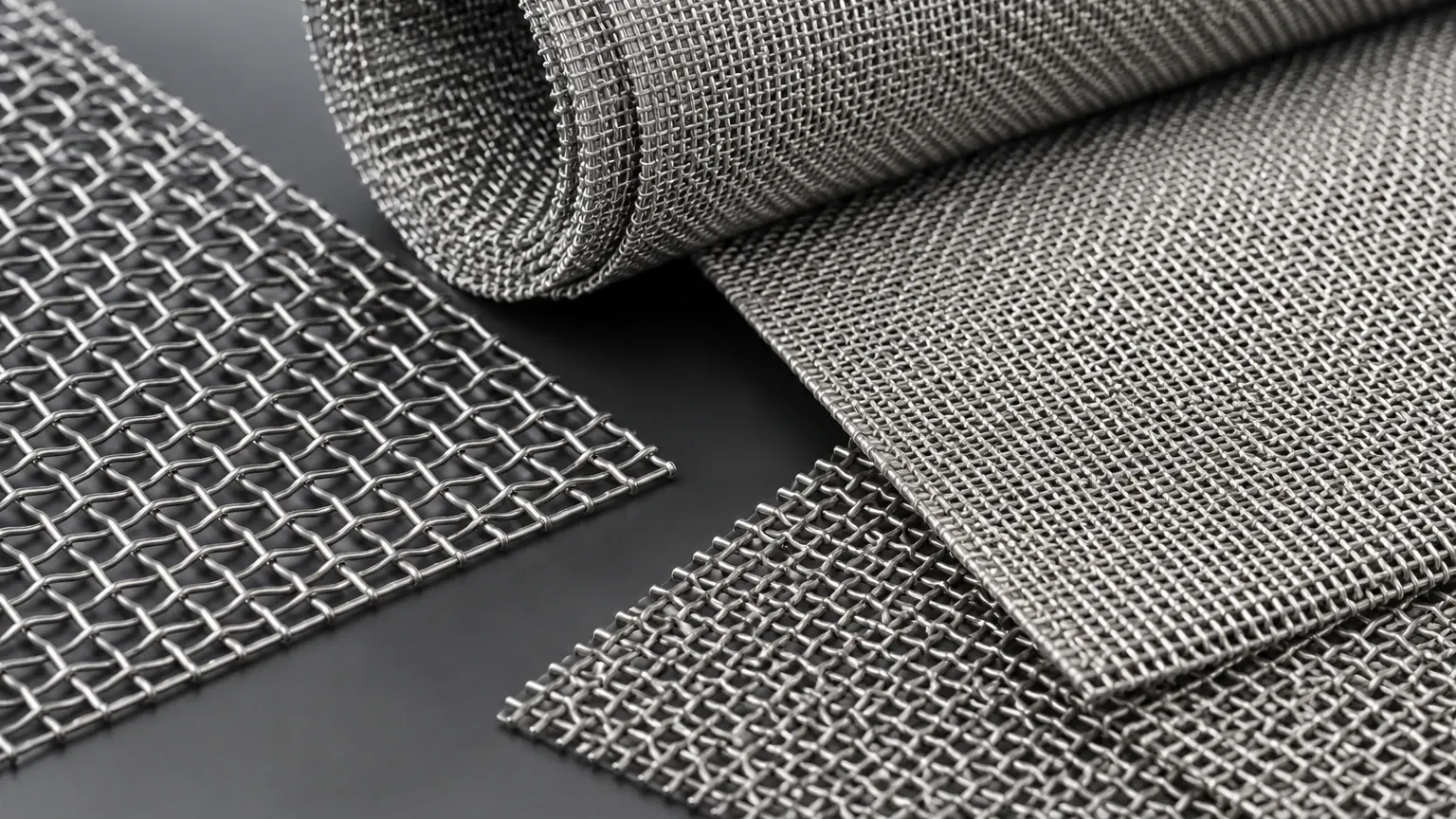
As a specialized manufacturer, Kaifil provides precision-engineered Plain, twill and dutch woven wire mesh in SS304/316L — rolls, cut mesh and framed panels. Send mesh count or micron target for a technical quote. to meet these demanding specifications. This guide examines the technical variables of 1/2-inch woven wire mesh, its engineering considerations, and the factors that influence long-term performance in B2B applications.
Understanding the Specification: 1/2-Inch Opening vs. 2 Mesh
In the context of woven wire mesh, the terms "1/2 inch" and "2 mesh" are often used interchangeably, but they describe different physical properties. Clarifying these definitions is the first step in technical procurement.
2 Mesh (Mesh Count)
Mesh count refers to the number of openings per linear inch, measured from the center of one wire to the center of the next. A 2-mesh specification means there are two openings per inch. However, the actual clear opening (the space between the wires) depends entirely on the wire diameter. For example:
* 2 Mesh with 0.063" wire: Results in a clear opening of 0.437 inches.
* 2 Mesh with 0.080" wire: Results in a clear opening of 0.420 inches.
* 2 Mesh with 0.120" wire: Results in a clear opening of 0.380 inches.
1/2-Inch Clear Opening (Space Cloth)
If an application requires a strict 1/2-inch (0.500") clear opening for particle sizing or safety guarding, this is referred to as "space cloth." To achieve a 0.500" opening with a 0.063" wire, the center-to-center distance would be 0.563", which does not align with a standard integer mesh count. Engineers must specify whether they require a specific mesh count or a specific clear opening to ensure the filtration accuracy meets the design intent.
Material Selection for Industrial Environments
The durability of 1 2 woven wire mesh is primarily dictated by the alloy selected. While carbon steel and galvanized options exist, stainless steel is the standard for high-performance industrial filtration due to its resistance to oxidation and chemical degradation.
Stainless Steel 304
SS304 is the most common grade for general industrial use. It offers excellent corrosion resistance in most atmospheric conditions and is suitable for food processing, architectural guards, and general water filtration. It is cost-effective but may struggle in high-chloride environments.
Stainless Steel 316L
For chemical processing, marine applications, or pharmaceutical production, SS316L is preferred. The addition of molybdenum provides superior resistance to pitting and crevice corrosion, particularly in the presence of chlorides or acidic solutions. The "L" designation (low carbon) ensures that the mesh remains corrosion-resistant after welding, which is vital for framed panels or custom-fabricated cartridges.
Specialized Alloys
In extreme environments involving high temperatures or highly corrosive media, alloys such as Monel, Inconel, or Hastelloy may be required. These materials maintain structural integrity where standard stainless steels might undergo stress corrosion cracking or rapid oxidation.
Engineering Considerations: Strength vs. Open Area
When specifying 1 2 woven wire mesh, engineers must balance the mechanical strength of the wire with the required "Open Area Percentage." This calculation determines the flow rate and pressure drop across the mesh.
The Open Area Calculation
The formula for calculating the percentage of open area is:
Open Area % = (Opening Size)² / (Opening Size + Wire Diameter)² x 100
A larger wire diameter increases the mesh's ability to withstand impact and heavy loads but reduces the open area, leading to higher resistance to flow (pressure drop). Conversely, a thinner wire increases the open area and flow efficiency but may lead to premature fatigue or deformation under hydraulic pressure.
Pressure Drop and Flow Velocity
In liquid filtration, a 1/2-inch opening is typically used for primary straining to remove large debris. If the flow velocity is high, a mesh with a low open area can create significant turbulence and backpressure. Engineers should model the expected flow rates to ensure the mesh does not become a bottleneck in the system.
Weave Types and Mechanical Stability
For a woven wire mesh with relatively large openings like 1/2 inch, the method of weaving and crimping significantly impacts the dimensional stability of the screen.
Plain Weave
In a plain weave, each warp wire passes alternately over and under each shute wire. This is the most common weave for 2-mesh configurations using standard wire gauges. It provides a consistent aperture and is easy to clean.
Crimping Styles
Because the wires in a 1/2-inch mesh are often thick, they are frequently "pre-crimped" before weaving to lock the wires into place. Common crimping styles include:
* Plain Crimp: Simple undulations that provide a secure fit for standard applications.
* Lock Crimp: The wires are crimped at the intersections with a distinct knuckle, ensuring the wires cannot shift. This is essential for vibrating screens or high-pressure filtration where aperture consistency is critical.
* Inter-Crimp: Extra crimps are placed between the intersections. This is often used when a large opening is required with a relatively thin wire, providing additional rigidity to the overall structure.
Common Applications for 1 2 Woven Wire Mesh
Given its coarse aperture, this mesh size serves several distinct roles across various industrial sectors.
1. Primary Intake Straining
In water treatment and power generation, 1 2 woven wire mesh is used at intake points to prevent large debris, such as wood, plastic, or aquatic life, from entering pumps and heat exchangers. Its high mechanical strength allows it to withstand the force of moving water and heavy debris loads.
2. Food and Beverage Processing
In the food industry, this mesh is used for scalping—removing large clumps or foreign objects from raw bulk materials like grains or sugar. Stainless steel construction ensures compliance with hygiene standards and allows for high-temperature CIP (Clean-in-Place) cycles.
3. Catalyst Support and Retention
In chemical reactors, coarse woven mesh acts as a support grid for finer mesh layers or catalyst pellets. It provides the structural foundation required to hold the weight of the catalyst bed while allowing the process gas or liquid to pass through with minimal resistance.
4. Safety Guarding and Enclosures
Beyond filtration, 1 2 woven wire mesh is frequently used for machine guards and security partitions. It provides a high level of visibility and airflow while preventing personnel from coming into contact with moving parts or hazardous areas.
Quality Evaluation and Risk Mitigation
Procuring industrial filtration components requires a rigorous evaluation of the supplier's manufacturing capabilities. Low-quality mesh can lead to catastrophic equipment failure or product contamination.
Dimensional Accuracy
Inconsistent wire spacing (wire shift) can lead to "bypass," where particles larger than the intended 1/2-inch limit pass through the system. Quality manufacturers use automated weaving looms and tensioning systems to ensure that every opening across a 100-foot roll is uniform.
Material Certification
Always request a Mill Test Report (MTR). This document confirms the chemical composition of the alloy. In B2B procurement, ensuring that a "316L" mesh actually contains the specified molybdenum content is vital for preventing premature corrosion in chemical environments.
Edge Treatment and Fabrication
For 1/2-inch mesh, the edges can be sharp and prone to unraveling if not properly finished. Depending on the application, engineers should specify:
* Raw Edges: For mesh that will be welded into a frame.
* Hemmed or Bound Edges: For removable panels to ensure safety and structural integrity.
* Welded Selvedge: Where the edge wires are resistance-welded to prevent fraying.
Total Cost of Ownership (TCO) in Filtration
While the initial purchase price of 1 2 woven wire mesh is a factor, the total cost of ownership is driven by service life and maintenance requirements. A cheaper, lower-grade mesh may save costs upfront but can lead to:
* Frequent Downtime: Replacing a failed screen in a high-capacity strainer can cost thousands of dollars in lost production.
* Pump Damage: If the mesh fails and allows large debris through, it can cause cavitation or mechanical damage to downstream pumps.
* Cleaning Efficiency: High-quality stainless steel mesh with a smooth plain weave is easier to backwash or ultrasonic clean, extending the interval between manual cleanings.
Conclusion: Confirming the Technical Scope
Before finalizing a purchase for 1 2 woven wire mesh, technical teams should confirm the following data points with their manufacturer:
1. Exact Aperture: Is it a 2-mesh count or a 0.500" clear opening?
2. Wire Gauge: What is the specific wire diameter required for the pressure and load conditions?
3. Alloy Grade: Does the environment require SS304, SS316L, or a high-nickel alloy?
4. Form Factor: Is the mesh required in bulk rolls, cut-to-size pieces, or fully fabricated framed panels?
By addressing these engineering variables, organizations can ensure they receive a filtration solution that balances flow efficiency with long-term mechanical durability. Kaifil's expertise in custom stainless steel filtration allows for the development of high-performance components tailored to these exact industrial requirements, ensuring reliable performance in even the most demanding processing environments.
