


1 4 Inch Woven Wire Mesh: A Technical Guide for Industrial Filtration and Separation
In industrial engineering and procurement, selecting the correct mesh size is a critical factor in determining the efficiency, longevity, and safety of a filtration system. Among the various specifications available, 1 4 inch woven wire mesh—often referred to in the industry as 4 mesh—serves as a fundamental component for coarse filtration, protective screening, and structural support. This specific mesh size offers a balance between high flow rates and robust mechanical strength, making it indispensable in sectors ranging from chemical processing to heavy industrial manufacturing.
Understanding the nuances of wire diameter, open area, and material composition is essential for engineers who must ensure that their filtration components can withstand the rigors of demanding environments. This guide explores the technical specifications, engineering considerations, and application-specific benefits of utilizing stainless steel woven wire mesh in industrial operations.
Understanding the Specifications of 1 4 Inch Woven Wire Mesh
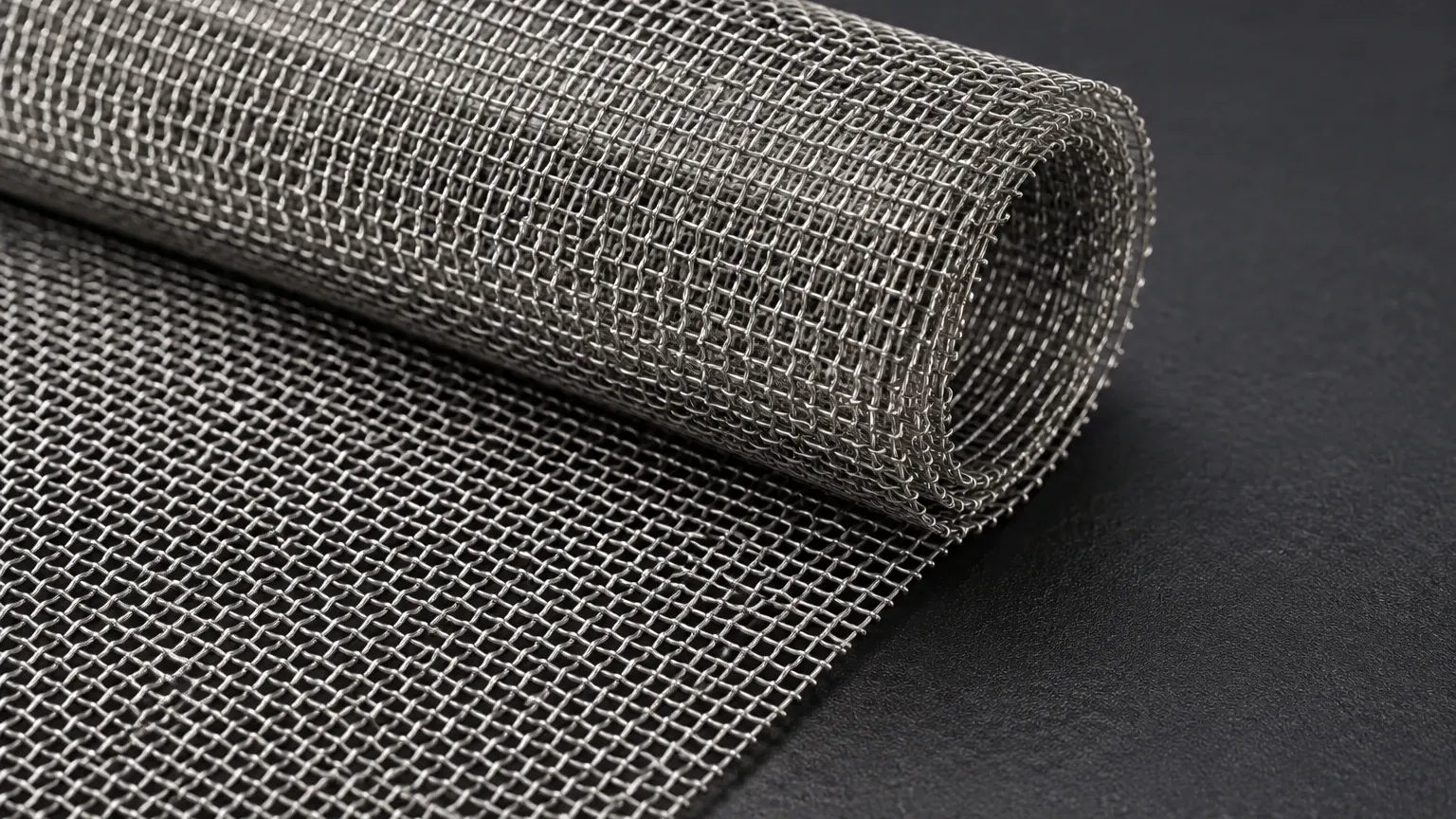
When specifying a "1 4 inch" mesh, it is vital to distinguish between the mesh count and the actual clear opening size. In the context of Woven Wire Mesh, a 4-mesh specification typically means there are four openings per linear inch. However, the actual clear opening (the space between the wires) is determined by the wire diameter used during the weaving process.
Mesh Count vs. Opening Size
For a standard 4-mesh configuration, if a wire diameter of 0.063 inches (approx. 1.6 mm) is used, the resulting clear opening is 0.187 inches. To achieve a true 0.25-inch (1/4 inch) clear opening, the mesh count and wire diameter must be adjusted accordingly. Engineers must specify whether they require a "4 mesh" (which is approximately 1/4 inch center-to-center) or a specific "1/4 inch clear opening."
The Importance of Wire Diameter
The wire diameter directly impacts two critical performance metrics: structural integrity and open area. A thicker wire increases the mesh's resistance to mechanical deformation and abrasive wear but reduces the percentage of open area, thereby increasing pressure drop across the filter. Conversely, a thinner wire maximizes throughput but may require additional support structures in high-pressure hydraulic or fluid processing applications.
Material Selection: Stainless Steel 304 vs. 316L
Material science plays a pivotal role in the performance of industrial filters. For most 1 4 inch woven wire mesh applications, stainless steel is the preferred material due to its corrosion resistance and thermal stability. Kaifil specializes in providing high-grade alloys tailored to specific environmental stressors.
Stainless Steel 304
SS304 is the standard industrial grade, offering excellent value for applications where moisture is present but highly corrosive chemicals are not. It provides sufficient heat resistance for most food and beverage processing and general industrial screening. It is the most common choice for architectural mesh and basic protective guards.
Stainless Steel 316L
For environments involving chlorides, acids, or high-salinity fluids—common in chemical processing and marine applications—SS316L is the superior choice. The addition of molybdenum enhances its resistance to pitting and crevice corrosion. The "L" denotes low carbon content, which is essential for components that require welding, as it prevents carbide precipitation and ensures the integrity of the mesh joints during custom fabrication.
For those seeking specific technical data on alloy performance, you can Plain, twill and dutch woven wire mesh in SS304/316L — rolls, cut mesh and framed panels. Send mesh count or micron target for a technical quote.
Engineering Considerations for Industrial Filtration
When integrating 1 4 inch woven wire mesh into a larger system, engineers must evaluate several mechanical and fluid dynamic factors to ensure optimal performance.
Flow Rate and Pressure Drop
The percentage of open area is a primary calculation for any filtration system. A 4-mesh screen with a standard wire diameter typically offers an open area between 50% and 65%. This high transparency allows for significant fluid or gas flow with minimal resistance. However, as particles accumulate on the surface (the "filter cake"), the effective open area decreases, leading to a rise in differential pressure. Engineers must calculate the maximum allowable pressure drop ($ΔP$) to determine the appropriate cleaning or replacement cycle.
Mechanical Loading and Support
While woven wire mesh is inherently flexible, 1/4 inch specifications often utilize heavier wire gauges that provide significant rigidity. In high-velocity flow environments or applications involving heavy particulate loads, the mesh may be subject to "blinding" or physical sagging. In such cases, the mesh is often reinforced with a perforated metal backing or integrated into a multi-layer sintered structure to distribute mechanical stress.
Weave Type and Stability
Most 1/4 inch mesh is produced using a Plain Weave, where each shute wire passes alternately over and under each warp wire. This provides a stable, consistent opening size. For heavier industrial applications, a Crimp Weave (such as intermediate crimp or lock crimp) may be used to ensure the wires remain locked in position, preventing "mesh migration" under vibration or high-pressure pulses.
Custom Fabrication and OEM Capabilities
Industrial applications rarely rely on raw mesh rolls alone. Most systems require precision-engineered components that are ready for immediate installation. Kaifil’s manufacturing capabilities allow for the transformation of bulk Woven Wire Mesh into specialized filtration tools.
Precision Cutting and Edging
1 4 inch woven wire mesh can be supplied in custom-cut circles, rectangles, or complex geometric shapes. To prevent fraying and ensure safety during handling, edges can be finished with U-binding, welding, or integrated into custom-machined flanges. This is particularly important in pharmaceutical and food-grade applications where "stray wires" could contaminate the product stream.
Cylindrical and Pleated Cartridges
For liquid filtration, the mesh is often formed into cylindrical cartridges. While 1/4 inch mesh is too coarse for fine polishing, it is frequently used as the outer protective layer or the inner support core for finer mesh layers. This multi-stage approach allows the coarse mesh to protect delicate fine-mesh layers from mechanical damage caused by large debris or turbulent flow.
Framing and Reinforcement
In air intake systems or vibratory separators, the mesh is often mounted within a rigid stainless steel frame. This ensures the mesh remains taut, which is critical for maintaining uniform opening sizes and preventing material bypass.
Applications in Demanding Industrial Environments
The versatility of 1 4 inch woven wire mesh allows it to serve various roles across multiple industries. Its primary function is usually pre-filtration—removing large contaminants before they reach sensitive downstream equipment like pumps, nozzles, or fine membrane filters.
Chemical and Petrochemical Processing
In chemical plants, 4-mesh screens are used in strainers to protect high-pressure pumps from welding slag, scale, and other debris found in piping systems. The use of SS316L ensures that these screens do not degrade when exposed to aggressive solvents or catalysts.
Food and Beverage Industry
Stainless steel mesh is the material of choice for food safety. 1/4 inch mesh is used in the initial stages of processing raw agricultural products, such as washing stations or bulk separation of solids from liquids. The smooth surface of woven stainless steel allows for easy cleaning and sterilization, meeting stringent hygienic standards.
Water Treatment and Irrigation
In large-scale water intake systems, coarse woven mesh acts as a primary barrier against aquatic debris, leaves, and stones. Its high open area ensures that large volumes of water can be processed without frequent clogging, reducing maintenance costs for municipal and industrial water treatment facilities.
Hydraulic and Lubrication Systems
In heavy machinery, coarse mesh screens are installed in reservoirs to prevent large particles from entering the suction line of hydraulic pumps. This "last line of defense" is crucial for preventing catastrophic pump failure in mining, construction, and manufacturing equipment.
Selection Criteria and Total Cost of Ownership
When purchasing 1 4 inch woven wire mesh, procurement teams should look beyond the initial price per square foot. The total cost of ownership (TCO) is influenced by the durability of the material and the precision of the manufacture.
1. Dimensional Accuracy: Ensure the mesh count and wire diameter are consistent across the entire roll. Variations can lead to uneven flow and premature failure in specific areas of the screen.
2. Alloy Verification: For critical applications, request material test reports (MTRs) to confirm the chemical composition of the stainless steel. Inferior alloys may lead to rapid corrosion and system downtime.
3. Weldability and Formability: If the mesh is to be further fabricated, it must be free of excessive oils or coatings and have the appropriate temper for forming or welding.
4. Replacement Cycles: High-quality stainless steel mesh from a reputable manufacturer like Kaifil will typically have a longer service life than lower-grade alternatives, reducing the frequency of shutdowns and the labor costs associated with filter replacement.
Conclusion
The 1 4 inch woven wire mesh is a workhorse of industrial filtration, providing the necessary strength and flow capacity for a wide range of pre-filtration and separation tasks. By carefully selecting the appropriate stainless steel grade, wire diameter, and fabrication method, engineers can significantly optimize the performance and reliability of their industrial systems.
Whether you are designing a new chemical processing line or upgrading a water treatment facility, understanding the technical boundaries of woven wire mesh ensures that your filtration solution is both cost-effective and technically sound. For specialized requirements, working with an experienced manufacturer like Kaifil allows for the development of customized mesh components that meet the exact demands of your application, from micron-rated precision to heavy-duty industrial screening.
