


1 8 Woven Wire Mesh
In the landscape of industrial filtration and separation, precision is the primary metric of performance. Among the various specifications used by engineers and procurement teams, 1 8 woven wire mesh represents a critical category of hardware used for medium-coarse screening, structural reinforcement, and high-flow filtration. Understanding the technical nuances of this specific mesh size—whether it refers to an 8-mesh count or a 1/8-inch clear opening—is essential for ensuring equipment longevity and process efficiency.
As a specialized manufacturer, Kaifil provides high-performance Plain, twill and dutch woven wire mesh in SS304/316L — rolls, cut mesh and framed panels. Send mesh count or micron target for a technical quote. to meet the rigorous demands of chemical processing, food production, and hydraulic systems. This guide examines the technical parameters, material considerations, and engineering applications of 1/8-inch woven wire mesh solutions.
Understanding the Specifications: 8-Mesh vs. 1/8" Opening
One of the most common points of confusion in the procurement of Woven Wire Mesh is the distinction between mesh count and aperture size. When an engineer specifies "1 8 woven wire mesh," it typically refers to one of two things:
1. 8-Mesh (8 Openings Per Inch): This indicates there are eight wires per linear inch in both the warp and shute directions. The actual opening (aperture) will be less than 1/8 inch because the thickness of the wire occupies space within that inch.
2. 1/8" Clear Opening: This specifies that the space between the wires is exactly 0.125 inches (3.175 mm), regardless of the wire diameter. In this case, the mesh count will vary depending on the wire gauge selected.
The Relationship Between Wire Diameter and Aperture
For an 8-mesh configuration, the aperture is calculated by subtracting the wire diameter from the pitch (the center-to-center distance between wires). For example, if an 8-mesh screen uses a 0.028-inch wire, the aperture would be approximately 0.097 inches. If a larger 1/8" (0.125") opening is required, the mesh count would likely drop to around 6 or 7, depending on the wire's structural requirements.
Engineers must confirm whether the process requires a specific number of openings per inch or a specific particle size retention (aperture) before finalizing a purchase order.
Material Science: Selecting the Right Alloy
The performance of 1 8 woven wire mesh is heavily dictated by its metallurgical composition. While various metals can be woven, stainless steel remains the industry standard due to its balance of mechanical strength and chemical resistance.
Stainless Steel 304 (SS304)
SS304 is the most widely used material for industrial screening. It offers excellent corrosion resistance in most atmospheric conditions and is highly cost-effective. It is suitable for architectural applications, general industrial sieving, and protective guards where extreme chemical exposure is not a factor.
Stainless Steel 316L (SS316L)
For more demanding environments, SS316L is the preferred choice. The addition of molybdenum provides superior resistance to chlorides and pitting, making it essential for marine environments, pharmaceutical manufacturing, and chemical processing. The "L" denotes low carbon content, which improves weldability and prevents sensitization during the fabrication of framed panels or filter cartridges.
Specialized Alloys
In high-temperature or highly acidic environments, alloys such as Monel, Inconel, or Hastelloy may be required. These materials maintain their structural integrity at temperatures exceeding 1000°F, where standard stainless steel might succumb to oxidation or mechanical failure.
Engineering Performance: Open Area and Flow Rates
In filtration and fluid dynamics, the "Open Area" percentage is a vital metric. It determines the throughput capacity and the pressure drop across the mesh. The formula for calculating the open area of Woven Wire Mesh is:
Open Area % = (Aperture² / (Aperture + Wire Diameter)²) x 100
A 1/8-inch opening mesh typically offers a high percentage of open area (often between 50% and 70%), which facilitates high flow rates with minimal resistance. This makes it ideal for applications where large volumes of liquid or gas must pass through the system while capturing relatively large debris.
Pressure Drop Considerations
When integrated into a hydraulic or gas filtration system, the 1 8 woven wire mesh must be evaluated for its clean pressure drop. If the wire diameter is too thick, the open area decreases, leading to higher energy consumption by pumps or blowers to maintain flow. Conversely, if the wire is too thin, the mesh may deform under the pressure of the fluid, leading to bypass or structural failure.
Key Industrial Applications for 1/8 Woven Wire Mesh
The versatility of this mesh size allows it to serve multiple functions across various sectors. Below are the primary industrial use cases:
1. Pre-Filtration and Debris Removal
In water treatment and chemical processing, 1/8-inch mesh acts as a primary stage of filtration. It protects downstream equipment, such as fine filter cartridges or sensitive pumps, by removing large particulates, scale, and organic matter from the flow stream.
2. Food and Beverage Processing
In the food industry, stainless steel Woven Wire Mesh is used for grading, scalping, and sifting. The 1/8" specification is frequently found in grain processing, nut sizing, and as a support structure for finer mesh in juice extraction. Using SS316L ensures compliance with food safety standards and resistance to acidic cleaning agents.
3. Architectural and Security Screening
Due to its robust physical profile, 1/8" mesh is often used in architectural cladding, ventilation grilles, and security partitions. It provides a high degree of transparency and airflow while maintaining a physical barrier against pests or unauthorized access.
4. Heat Treating and Drying Trays
In industrial ovens and drying systems, the 1/8" opening allows for optimal heat circulation around the product. When fabricated into trays or baskets, the mesh must be able to withstand thermal cycling without warping, a task for which Kaifil’s precision-woven components are specifically designed.
Manufacturing Quality and Weave Types
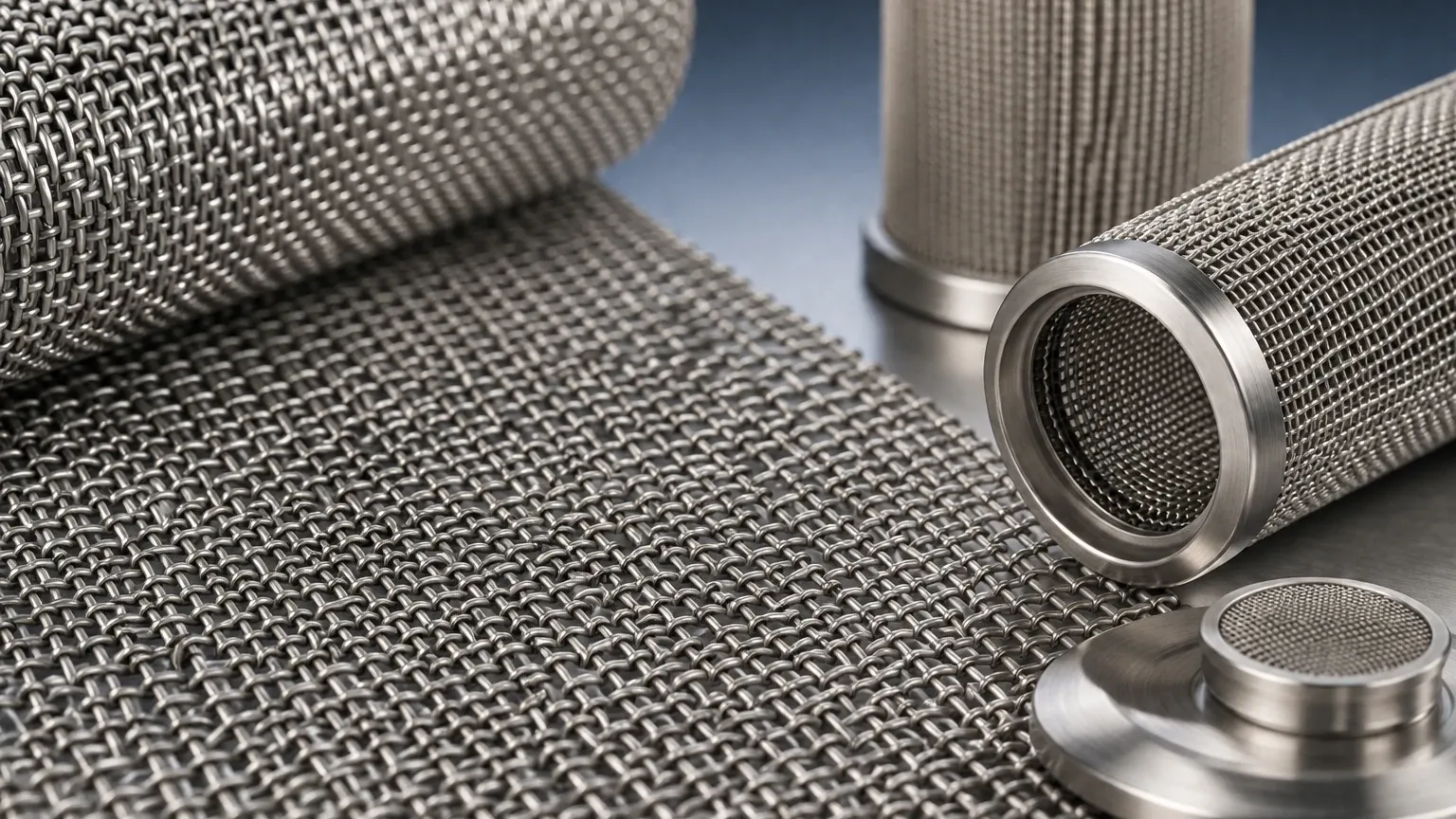
The method of weaving significantly impacts the stability and surface characteristics of the mesh. For a 1 8 woven wire mesh, the most common weave is the Plain Weave.
* Plain Weave: Each shute wire passes alternately over and under each warp wire. This creates a stable, consistent aperture and is the most common choice for 1/8" specifications.
* Lock Crimp Weave: For heavier wire diameters used in vibrating screens, the wires are pre-crimped to "lock" them into place. This prevents the wires from shifting under mechanical vibration, ensuring the aperture remains constant throughout the service life of the screen.
Kaifil utilizes advanced weaving looms to ensure that the tension across the mesh is uniform. This prevents "bagging" or irregular openings, which are common failure points in lower-quality mesh products.
Procurement Guide: What Engineers Should Confirm
To ensure the successful integration of 1 8 woven wire mesh into a project, technical professionals should confirm the following details with their manufacturer:
1. Exact Aperture vs. Mesh Count: Specify if the 1/8" measurement is the clear opening or the mesh count.
2. Wire Gauge (Diameter): Determine the required wire thickness based on the mechanical load and the desired open area.
3. Material Grade: Choose between SS304, SS316L, or specialty alloys based on the chemical environment.
4. Edge Treatment: Decide if the mesh should be supplied as raw rolls, cut-to-size pieces, or with finished edges (such as hemmed, welded, or framed) to prevent fraying and facilitate installation.
5. Compliance Standards: Verify if the material needs to meet specific ASTM, ISO, or FDA standards for quality and safety.
Total Cost of Ownership and Maintenance
While the initial purchase price of Woven Wire Mesh is a factor, the total cost of ownership is determined by the mesh's durability and maintenance requirements. Low-quality mesh may suffer from inconsistent wire spacing or poor alloy purity, leading to premature corrosion or mechanical fatigue.
Investing in high-quality stainless steel mesh from a reputable manufacturer like Kaifil reduces the frequency of replacement cycles. Maintenance typically involves regular inspection for wire thinning or localized corrosion and cleaning using non-abrasive methods to prevent the buildup of contaminants (blinding) that can restrict flow.
Conclusion
The 1 8 woven wire mesh is a versatile and essential component in modern industrial operations. Whether it is used for protecting expensive machinery in a chemical plant or ensuring product consistency in a food processing facility, its performance relies on precise manufacturing and correct material selection. By understanding the technical relationship between mesh count, wire diameter, and material properties, engineers can optimize their filtration systems for maximum efficiency and longevity.
For customized solutions tailored to specific industrial challenges, Kaifil offers extensive OEM capabilities and engineering support. From material selection to the production of complex framed panels, our focus remains on delivering reliable, high-performance filtration components that meet the exact needs of our global clientele.
