


5 Mesh Wire Mesh
In the landscape of industrial filtration and separation, the specification of a mesh size is the primary determinant of performance, durability, and suitability for a given environment. Among the coarser grades of industrial screens, 5 mesh wire mesh occupies a critical niche. It provides a balance of high mechanical strength and significant open area, making it a staple in heavy-duty filtration, protective screening, and structural support across the chemical, food processing, and mining sectors.
Selecting the correct Woven Wire Mesh requires more than just identifying the mesh count. Engineers must evaluate wire diameter, material grade, and weave type to ensure the component survives the operational stresses of the application. This guide provides a technical overview of 5 mesh specifications, engineering considerations, and selection criteria for industrial procurement.
Understanding the Geometry of 5 Mesh Wire Mesh
The term "5 mesh" refers to the number of openings per linear inch, measured from the center of one wire to a point exactly one inch away. In a square weave, this means there are 25 openings per square inch. However, the mesh count alone does not define the filtration capability; the wire diameter is the variable that determines the actual aperture (opening size) and the percentage of open area.
The Relationship Between Mesh, Wire, and Aperture
To calculate the aperture of a 5 mesh screen, engineers use the following formula:
* Aperture = (1 / Mesh Count) – Wire Diameter
For example, if a 5 mesh screen utilizes a wire diameter of 0.047 inches (1.2mm), the calculation would be:
(1 / 5) – 0.047 = 0.153 inches (approximately 3.89mm).
If the application requires higher throughput, a thinner wire might be selected, increasing the aperture and the open area. Conversely, if the mesh is subjected to high-pressure liquid flow or abrasive materials, a thicker wire gauge is necessary to prevent deformation, even though it reduces the opening size.
Open Area and Flow Dynamics
The percentage of open area is a critical metric for engineers calculating pressure drop and flow rates. It is determined by the ratio of the square of the aperture to the square of the pitch (the distance between the centers of two adjacent wires). A standard 5 mesh wire mesh typically offers an open area ranging from 50% to 75%, depending on the wire gauge. High open area percentages minimize flow resistance, which is essential in gravity-fed filtration or high-volume air intake systems.
Material Selection: SS304 vs. SS316L
For most industrial environments, stainless steel is the standard material for woven wire mesh due to its combination of tensile strength and corrosion resistance. The choice between Grade 304 and Grade 316L is usually dictated by the chemical composition of the process fluid.
1. Stainless Steel 304: This is the most common specification for general industrial use. It provides excellent resistance to atmospheric corrosion and is suitable for most food-grade applications and fresh-water filtration. It is cost-effective but may struggle in high-chloride environments.
2. Stainless Steel 316L: The "L" denotes low carbon, which improves weldability and prevents sensitization during the manufacturing of filter cartridges. The addition of molybdenum provides superior resistance to pitting and crevice corrosion, making 316L the preferred choice for marine environments, pharmaceutical processing, and chemical plants handling acids or salts.
For specialized high-temperature applications, alloys such as Inconel or Monel may be used, though these are typically reserved for environments where standard stainless steel would suffer from rapid oxidation or stress corrosion cracking.
Key Industrial Applications for 5 Mesh
Because 5 mesh is a relatively coarse weave, it is rarely used for fine particle capture. Instead, it serves as the first line of defense or the structural backbone of a filtration system.
1. Coarse Pre-Filtration and Scalping
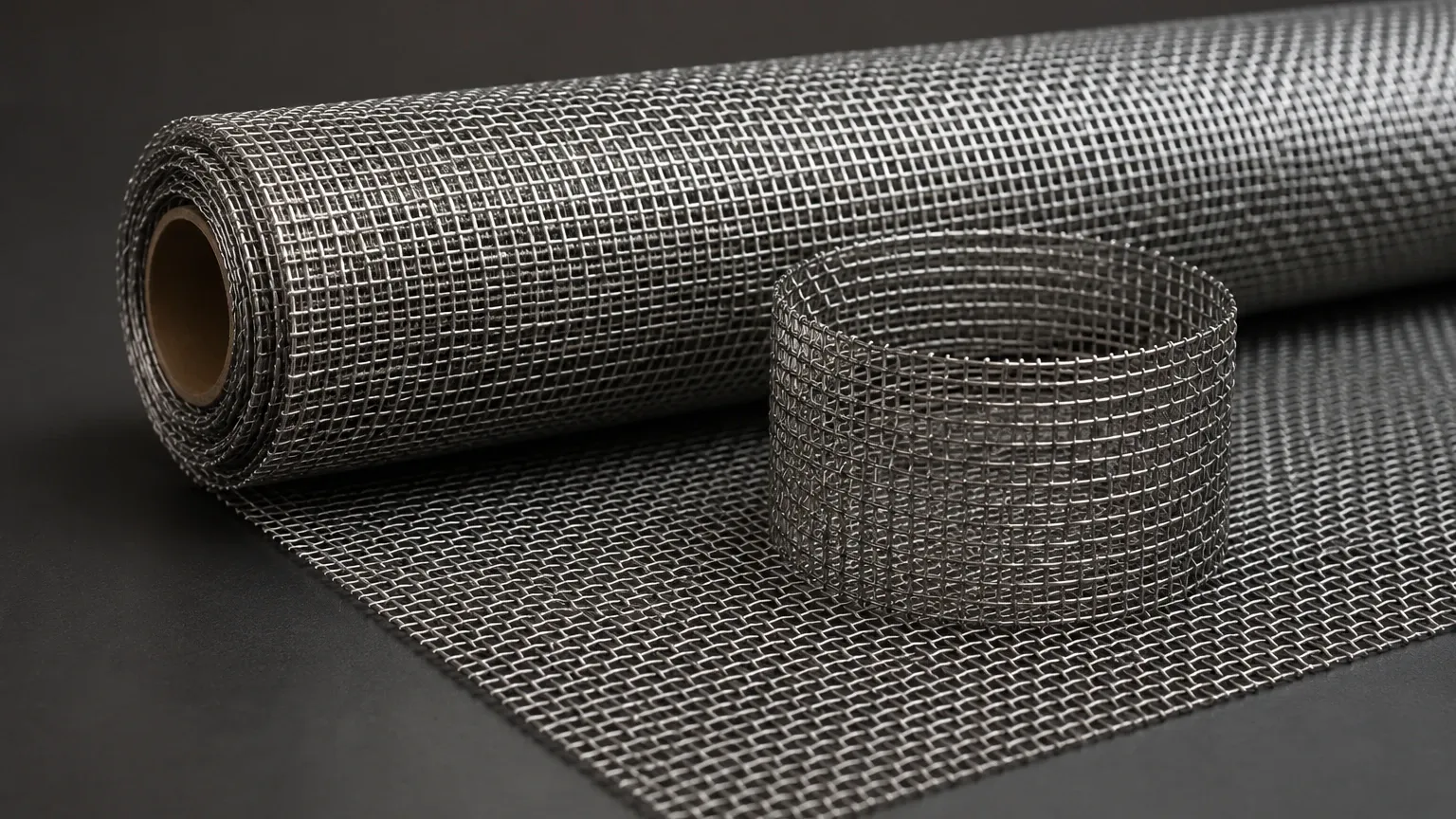
In water treatment and chemical processing, 5 mesh screens are used as "trash screens" or scalping filters. They remove large debris, such as stones, plastic fragments, or organic matter, before the fluid reaches finer, more delicate filter stages. This protects downstream pumps and high-precision Plain, twill and dutch woven wire mesh in SS304/316L — rolls, cut mesh and framed panels. Send mesh count or micron target for a technical quote. from premature clogging or mechanical damage.
2. Support Layers for Fine Mesh
Fine mesh (such as 100 mesh or 400 mesh) lacks the structural integrity to withstand high differential pressures. In these scenarios, a 5 mesh wire mesh is used as a support medium. The fine mesh is sintered or mechanically layered over the 5 mesh, which provides the necessary rigidity to prevent the fine screen from collapsing or "ballooning" under flow pressure.
3. Machine Guarding and Safety Enclosures
Beyond filtration, 5 mesh is frequently utilized in industrial safety. Its high visibility and airflow characteristics make it ideal for fan guards, vent covers, and protective barriers around moving machinery. The stainless steel construction ensures that these guards do not rust in humid factory environments, maintaining both safety and aesthetic standards.
4. Heat Treatment and Drying Trays
In the food and pharmaceutical industries, 5 mesh is often fabricated into trays for drying or heat treatment. The large aperture allows for maximum air circulation around the product, ensuring even heating or cooling, while the heavy wire gauge supports the weight of the bulk material without sagging.
Engineering Considerations for Custom Fabrication
When specifying 5 mesh for an OEM project, engineers must consider how the mesh will be integrated into the final assembly. Kaifil provides various customization options to meet specific mechanical requirements.
Weave Types
While plain weave is the most common for 5 mesh, where each shute wire passes alternately over and under each warp wire, other weaves may be applied for specialized needs. However, for a mesh count as low as 5, plain weave is almost always preferred due to its stability and the consistency of the aperture size.
Edge Treatment and Framing
Unfinished mesh edges can be hazardous and prone to fraying. Depending on the application, the mesh can be supplied with:
* Raw Edges: For further fabrication or welding into a housing.
* Framed Edges: The mesh is encased in a U-profile or flat bar frame (usually SS304 or SS316) for easy installation as a removable panel.
* Hemmed Edges: The edges are folded over to provide a smooth, safe finish.
Precision Cutting and Forming
For filter cartridge manufacturing, 5 mesh often needs to be cut into precise discs or formed into cylinders. Using advanced cutting techniques ensures that the mesh retains its dimensional stability. If the mesh is being used in a hydraulic filter, it may be pleated alongside other media to increase the surface area; in this case, the ductility of the wire becomes a critical factor in the selection process.
Performance Evaluation and Quality Control
To ensure the reliability of 5 mesh wire mesh in demanding environments, several quality benchmarks must be confirmed during the procurement phase:
* Wire Diameter Tolerance: Variations in wire diameter can lead to inconsistent aperture sizes. For precision industrial applications, tolerances should adhere to ASTM or ISO standards.
* Mesh Count Accuracy: A deviation from 5 wires per inch can significantly alter the filtration characteristics and flow calculations.
* Surface Cleanliness: For food and pharmaceutical applications, the mesh must be free of lubricants, oils, and metallic dust from the weaving process. Ultrasonic cleaning is often employed to meet these hygiene standards.
* Material Certification: Mill test reports (MTRs) should be provided to verify the chemical composition of the stainless steel, ensuring it meets the requirements for corrosion resistance.
Maintenance and Replacement Cycles
The longevity of a 5 mesh wire mesh component is largely dependent on the abrasiveness of the media and the cleaning protocols. Because the openings are large, 5 mesh is relatively easy to clean compared to finer grades. Methods such as backwashing, steam cleaning, or mechanical brushing are typically effective.
However, engineers should monitor for signs of "blinding" (where particles become wedged in the openings) or wire thinning due to erosion. In high-vibration environments, fatigue failure at the wire intersections can occur. Regular inspection of the mesh integrity is vital to prevent bypass—where unfiltered fluid escapes through a breach in the screen.
Conclusion: Selecting the Right Partner for Filtration Solutions
Choosing the right Woven Wire Mesh involves a detailed understanding of the operational environment. A 5 mesh screen is a robust solution for coarse separation, but its effectiveness depends on the precision of its manufacture and the suitability of its material grade.
Before finalizing a purchase, technical teams should confirm the following:
1. The specific wire diameter required for the expected pressure loads.
2. The chemical compatibility of the alloy (SS304 vs. SS316L) with the process fluid.
3. The need for specialized fabrication, such as custom-sized discs, cylinders, or framed panels.
Kaifil specializes in providing engineered filtration components that meet these rigorous industrial standards. By focusing on material quality and manufacturing precision, we ensure that your filtration systems operate at peak efficiency with minimal downtime. Whether you require standard rolls or custom-fabricated components, understanding the technical nuances of 5 mesh is the first step toward a successful industrial application.
