


Braided Mesh Wire Wrap: An Engineering Guide to Industrial Protection and Shielding
In high-demand industrial environments, protecting sensitive components from mechanical wear, thermal extremes, and electromagnetic interference (EMI) is a critical engineering priority. While Woven Wire Mesh remains the industry standard for precision filtration and separation, the specialized geometry of braided mesh wire wrap provides a unique solution for tubular protection and flexible shielding.
For engineers and procurement professionals, selecting the correct mesh structure involves more than just choosing a material; it requires an understanding of how wire diameter, weave pattern, and alloy composition interact under operational stress. This guide examines the technical specifications, application logic, and selection criteria for braided mesh solutions within the broader context of industrial wire components.
Understanding the Mechanics: Braided vs. Woven Structures
To make an informed purchasing decision, it is essential to distinguish between the two primary methods of metal mesh construction: weaving and braiding.
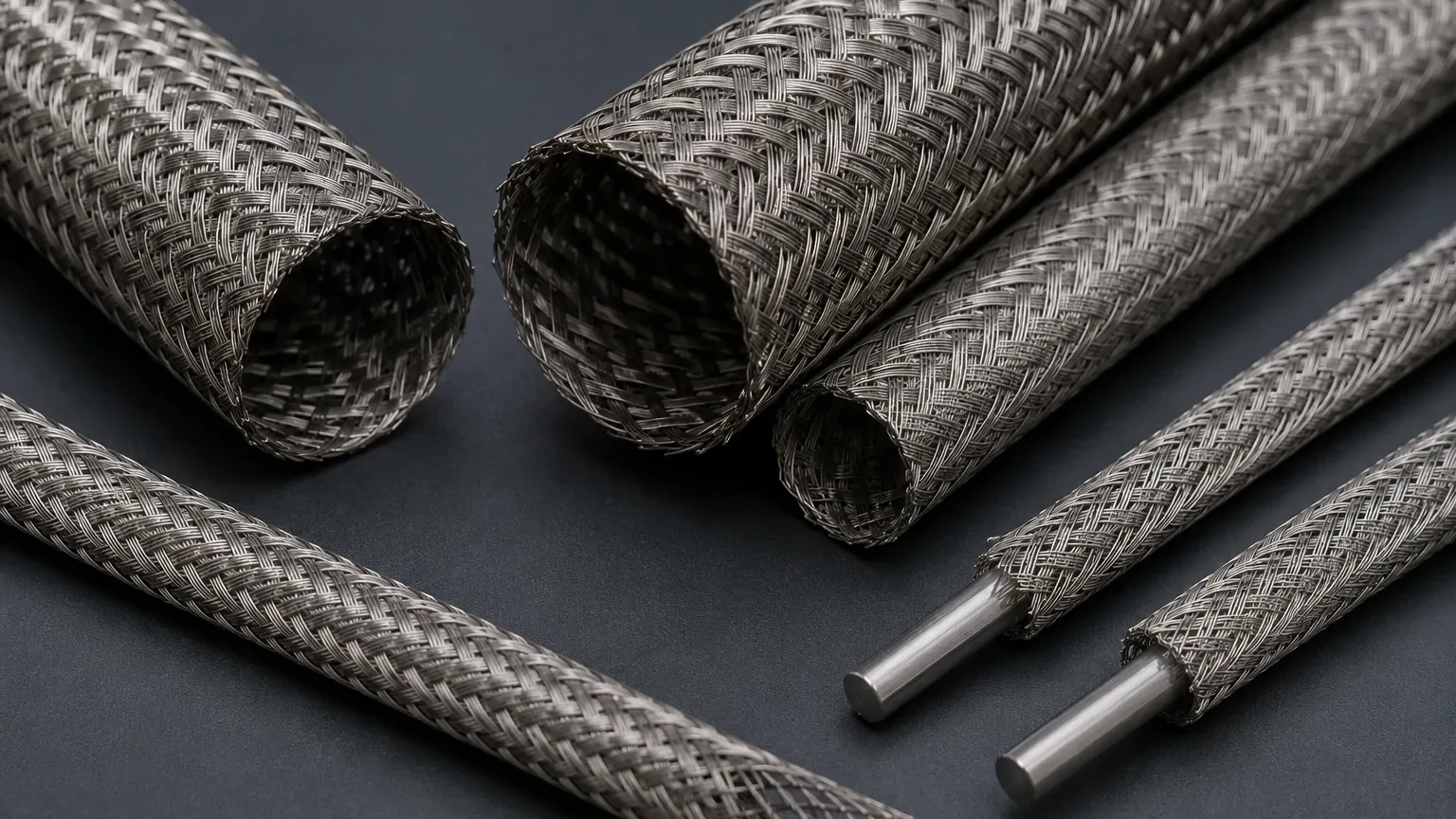
Woven Wire Mesh is typically produced on a loom where warp and weft wires cross over and under each other at 90-degree angles. This results in a stable, rigid structure ideal for flat panels, filter cartridges, and sieves. In contrast, braided mesh wire wrap is constructed by intertwining multiple strands of wire in a diagonal, tubular pattern.
This braided architecture allows for several unique mechanical properties:
1. Radial Expansion: Unlike fixed woven structures, braided wraps can expand and contract in diameter, allowing them to fit snugly over irregular shapes, connectors, and varying hose sizes.
2. Flexibility: The diagonal orientation of the wires allows the sleeve to bend without kinking or compromising the structural integrity of the mesh.
3. Coverage Density: By adjusting the number of carriers and the pick count (the number of wire crossovers per inch), manufacturers can fine-tune the percentage of surface coverage to balance protection with weight and visibility.
Material Selection: SS304 vs. SS316L
In industrial filtration and protection, material science dictates the longevity of the component. Kaifil specializes in high-grade stainless steel alloys to ensure performance in corrosive or high-temperature environments.
Stainless Steel 304
SS304 is the most common choice for general industrial applications. It offers excellent tensile strength and good resistance to atmospheric corrosion. It is frequently used in mechanical protection wraps where the primary goal is abrasion resistance in non-acidic environments.
Stainless Steel 316L
For chemical processing, pharmaceutical manufacturing, or marine applications, SS316L is the preferred specification. The addition of molybdenum provides superior resistance to chlorides and pitting. In applications involving Plain, twill and dutch woven wire mesh in SS304/316L — rolls, cut mesh and framed panels. Send mesh count or micron target for a technical quote., SS316L is often the baseline to ensure compliance with strict hygiene and durability standards.
Key Applications of Braided Mesh Wire Wrap
1. EMI/RFI Shielding
In modern manufacturing, electronic noise can disrupt sensitive instrumentation. Braided metal wraps act as a Faraday cage, attenuating electromagnetic interference (EMI) and radio frequency interference (RFI). The effectiveness of the shield is largely determined by the optical coverage—the percentage of the underlying cable covered by the wire. For high-frequency shielding, a tighter braid with higher coverage is required.
2. Mechanical and Abrasion Protection
Hydraulic hoses and pneumatic lines in heavy machinery are often subjected to friction and external impacts. A stainless steel braided mesh wire wrap provides a sacrificial layer that absorbs wear, preventing leaks and catastrophic hose failure. Because the braid is flexible, it does not impede the movement of robotic arms or dynamic machinery parts.
3. Thermal Management
In high-heat environments, such as exhaust systems or steam lines, metal mesh wraps help dissipate heat and provide a physical barrier to prevent accidental contact burns. Unlike plastic sleeving, stainless steel braids maintain their structural integrity at temperatures exceeding 800°C (depending on the alloy).
4. Explosive Environment Safety (Blast Mitigation)
In high-pressure fluid systems, a failure can result in a dangerous "hose whip." A robust braided wrap can help contain the energy of a burst hose, protecting personnel and nearby equipment from high-velocity fluid or metal fragments.
Technical Evaluation Criteria for Engineers
When specifying a braided mesh wire wrap for a project, engineers should evaluate the following four parameters to ensure the product meets the application’s demands.
Nominal Diameter and Expansion Ratio
Braided sleeves are defined by their nominal (relaxed) diameter. However, because of the braided structure, they have an expansion range. For example, a 1/2-inch nominal sleeve might expand to 3/4-inch or contract to 1/4-inch. It is vital to confirm that the maximum expansion diameter can accommodate the largest connector or fitting on the cable or hose being protected.
Wire Gauge and Strand Count
The thickness of the individual wires (gauge) and the number of wires per carrier (the bundle of wires moved together during braiding) determine the sleeve's weight and durability. Heavier gauges offer better abrasion resistance but reduced flexibility.
Optical Coverage
For shielding applications, coverage is usually expressed as a percentage (e.g., 85% or 95% coverage). Higher coverage provides better EMI protection but increases the stiffness of the wrap. For purely mechanical protection, a lower coverage might be acceptable to reduce costs and weight.
Corrosion and Chemical Compatibility
If the wrap will be exposed to cleaning agents (common in food and beverage) or salt spray, the alloy grade must be confirmed. Using a lower-grade material in a high-chloride environment will lead to stress corrosion cracking, eventually causing the wrap to fray and fail.
Integration with Industrial Filtration Systems
While braided mesh wire wrap is primarily used for external protection, it often works in tandem with Woven Wire Mesh components. For instance, in a complex hydraulic system, the internal filtration might be handled by a pleated stainless steel cartridge made of fine woven mesh, while the external hoses are protected by braided wraps.
At Kaifil, we understand that these components are part of a larger ecosystem. Our manufacturing process ensures that the wire used in our braided products meets the same rigorous quality standards as the wire used in our precision filtration media. This consistency is vital for OEM partners who require documented material traceability and performance reliability across their entire equipment line.
Common Risks and Procurement Pitfalls
Choosing the wrong mesh product can lead to increased maintenance costs or equipment downtime. Common issues include:
* Fraying at the Ends: If the braid is not properly terminated (using heat shrink, metal bands, or specialized crimps), the wires can unravel.
* Galvanic Corrosion: Wrapping a stainless steel braid over a dissimilar metal (like aluminum) in the presence of moisture can cause rapid corrosion. Engineers must ensure material compatibility across the entire assembly.
* Under-specifying Coverage: For EMI shielding, even a small gap in coverage can allow interference to leak through, rendering the shield ineffective for sensitive data transmission.
Customization and OEM Capabilities
Standard off-the-shelf wraps may not meet the specific requirements of specialized industries like aerospace or pharmaceutical processing. Customization options often include:
* Hybrid Braids: Combining stainless steel with synthetic fibers like Aramid or PEEK to achieve specific weight or thermal properties.
* Custom Lengths and Pre-cut Sections: Reducing onsite labor by receiving mesh already cut to the required dimensions with finished edges.
* Specific Alloy Requests: Utilizing Monel, Inconel, or Hastelloy for extreme chemical or temperature resistance beyond the capabilities of standard 300-series stainless steel.
Conclusion: Selecting the Right Partner
Selecting the appropriate braided mesh wire wrap requires a balance of mechanical performance, material science, and cost-efficiency. By focusing on the specific environmental stressors—whether they be chemical, thermal, or mechanical—engineers can significantly extend the service life of their industrial assets.
Kaifil provides a comprehensive range of metal mesh solutions, from high-precision Woven Wire Mesh for filtration to durable braided wraps for component protection. Our expertise in stainless steel manufacturing allows us to support technical teams in finding the most reliable solution for their specific application needs.
For technical specifications, material certifications, or to discuss a custom design for your next project, please consult our engineering resources.
