


H250 Woven Wire Mesh
In the landscape of industrial filtration and separation, precision is the primary determinant of operational efficiency. Among the various specifications utilized by engineers and procurement specialists, H250 woven wire mesh—frequently associated with high-density 250-mesh configurations—stands as a critical component for fine-particle management. This specification requires a sophisticated balance of wire diameter, aperture size, and structural integrity to perform under the rigorous conditions of chemical processing, pharmaceutical manufacturing, and hydraulic systems.
Selecting the correct woven wire mesh involves more than identifying a mesh count; it requires an understanding of how the material interacts with the fluid or gas being filtered, the mechanical stresses of the system, and the long-term maintenance requirements. This guide provides a technical overview of H250 specifications, material considerations, and the engineering factors that influence its performance in industrial applications.
Understanding H250 Woven Wire Mesh Specifications
The term "H250" in the context of industrial wire cloth typically refers to a mesh with 250 openings per linear inch. In the world of precision weaving, a 250-mesh specification is categorized as a fine mesh, capable of capturing particles in the micronic range. To understand its utility, one must look at the mathematical relationship between the wire diameter and the resulting aperture.
For a standard H250 woven wire mesh, the wire diameter is often approximately 0.040 mm (0.0016 inches). With 250 wires per inch, the resulting aperture (the clear opening between wires) is roughly 0.061 mm or 61 microns. This creates an open area of approximately 36%. These figures are critical for engineers calculating flow rates and pressure drops. A higher open area generally allows for higher flow rates but may compromise the mechanical strength of the mesh if the wire diameter is too thin. Conversely, increasing the wire diameter to enhance durability will decrease the open area and increase the resistance to flow.
When specifying H250 mesh, it is essential to confirm whether the application requires a square weave (plain weave) or a specialized Dutch weave. While square weaves provide a straight-through path for the media, Dutch weaves offer a more complex, tortuous path that enhances filtration depth and pressure resistance.
Material Selection for High-Precision Filtration
The performance of Woven Wire Mesh is fundamentally tied to its metallurgy. In industrial environments where H250 mesh is deployed, the primary materials of choice are Stainless Steel 304 and 316L. The selection between these two grades depends largely on the chemical composition of the filtrate and the operating temperature.
Stainless Steel 304
SS304 is the most common material for general industrial filtration. It offers excellent physical properties and good resistance to oxidation. It is suitable for applications involving water filtration, food processing, and standard hydraulic fluids. However, in environments with high chloride concentrations or acidic conditions, SS304 may be susceptible to pitting and crevice corrosion.
Stainless Steel 316L
For more demanding environments, particularly in the chemical and pharmaceutical sectors, SS316L is the preferred standard. The addition of molybdenum provides superior resistance to chlorides and organic acids. The "L" designation stands for low carbon, which is vital if the mesh is to be welded into a filter cartridge or frame. Low carbon content prevents carbide precipitation during welding, ensuring that the mesh maintains its corrosion resistance at the joints.
Beyond these standard grades, specialized alloys such as Monel, Inconel, or Hastelloy may be used for H250 mesh in extreme environments involving high heat or highly aggressive chemical reagents. At Kaifil, material traceability is a priority to ensure that the mesh performs as predicted by engineering models.
Weaving Patterns and Structural Integrity
The method by which the H250 woven wire mesh is constructed significantly impacts its mechanical behavior. For a 250-mesh count, two primary weaving patterns are typically utilized: Plain Weave and Twill Weave.
Plain Weave
In a plain weave, each warp wire passes alternately over and under each shute wire. This is the most common and economical weave. For H250 specifications, a plain weave provides a consistent aperture size and is relatively easy to clean. However, as the mesh count increases, the wire becomes thinner, which can limit the maximum pressure the mesh can withstand without deformation.
Twill Weave
In a twill weave, each warp wire passes over two and under two shute wires. This allows for the use of a heavier wire diameter than would be possible in a plain weave of the same mesh count. For H250 applications requiring higher structural rigidity or greater resistance to mechanical abrasion, a twill weave is often the superior choice. It results in a more flexible mesh that can be formed into complex shapes without compromising the integrity of the openings.
Engineers must also consider the "stability" of the weave. In high-vibration environments or high-pressure pulse applications, the wires in a fine mesh can shift, leading to "pore migration" where the aperture sizes become inconsistent. Specialized finishing processes, such as calendering (passing the mesh through heavy rollers), can flatten the wire intersections and lock them in place, enhancing both the stability and the surface smoothness of the mesh.
Performance Metrics: Micron Rating and Flow Dynamics
When integrating h250 woven wire mesh into a filtration system, the primary performance metric is the micron rating. It is important to distinguish between "nominal" and "absolute" micron ratings.
* Nominal Micron Rating: This represents the average pore size and indicates that the mesh will retain a large percentage of particles of that size (typically 60% to 90%).
* Absolute Micron Rating: This refers to the diameter of the largest hard spherical particle that will pass through the mesh under specified test conditions. For an H250 square mesh, the absolute rating is very close to the physical aperture size (approx. 61-63 microns).
Flow dynamics are equally critical. As the mesh traps particles, a filter cake builds up on the surface. While this cake can actually improve filtration efficiency by trapping smaller particles, it also increases the pressure drop across the mesh (delta P). If the initial pressure drop of the clean H250 mesh is too high due to a low open area, the service life between cleaning cycles will be significantly shortened. Designers must calculate the total surface area required to keep the initial velocity through the mesh low enough to prevent premature blinding.
Industrial Applications and Environment Compatibility
The versatility of H250 woven wire mesh allows it to serve in a variety of specialized roles across different industries. Its 60-micron range capability makes it an ideal "polishing" filter or a pre-filter for even finer membranes.
1. Chemical Processing: Used in the filtration of resins, solvents, and intermediate chemical products where particle consistency is vital for downstream reactions.
2. Pharmaceuticals: Employed in active pharmaceutical ingredient (API) recovery and solvent purification. The smooth surface of stainless steel H250 mesh allows for thorough sterilization (SIP/CIP) and prevents bacterial growth.
3. Hydraulics and Aerospace: Fine mesh is essential for protecting sensitive valves and actuators from particulate contamination that could cause mechanical failure. H250 mesh is often used in last-chance filters within these systems.
4. Food and Beverage: Used for straining oils, syrups, and juices. The material must be food-grade and resistant to the organic acids found in many food products.
In each of these applications, the compatibility of the mesh with the operating temperature is a factor. Stainless steel meshes can typically operate at temperatures up to 800°F (427°C) in oxidizing atmospheres, making them far more durable than polymer-based alternatives.
Maintenance and Longevity in Industrial Systems
One of the primary advantages of using stainless steel Woven Wire Mesh over disposable media is cleanability. However, the fine nature of H250 mesh requires specific cleaning protocols to avoid damaging the delicate wires.
* Ultrasonic Cleaning: This is the most effective method for fine meshes. High-frequency sound waves create cavitation bubbles that dislodge particles trapped deep within the mesh apertures without mechanical scrubbing.
* Backwashing: In automated systems, a reverse flow of clean fluid can be used to dislodge the filter cake. The pressure used for backwashing must be carefully regulated to stay below the "bubble point" or the structural yield strength of the mesh.
* Chemical Cleaning: For organic contaminants, compatible solvents or caustic solutions can be used to dissolve the buildup. It is imperative that the cleaning agents do not cause stress corrosion cracking in the stainless steel.
Regular inspection of the mesh is necessary to identify signs of mechanical fatigue, such as wire breakage or thinning due to erosion. In high-velocity systems, the impact of abrasive particles can eventually wear down the wire diameter, increasing the aperture size and compromising filtration accuracy.
Procurement and Customization Guide
When purchasing h250 woven wire mesh for a project, providing a vague specification can lead to performance gaps. Procurement teams should confirm the following technical details with the manufacturer:
* Exact Mesh Count and Wire Diameter: Specify both to ensure the desired open area and aperture size.
* Material Grade: Confirm SS304, SS316L, or other alloys with material test reports (MTRs).
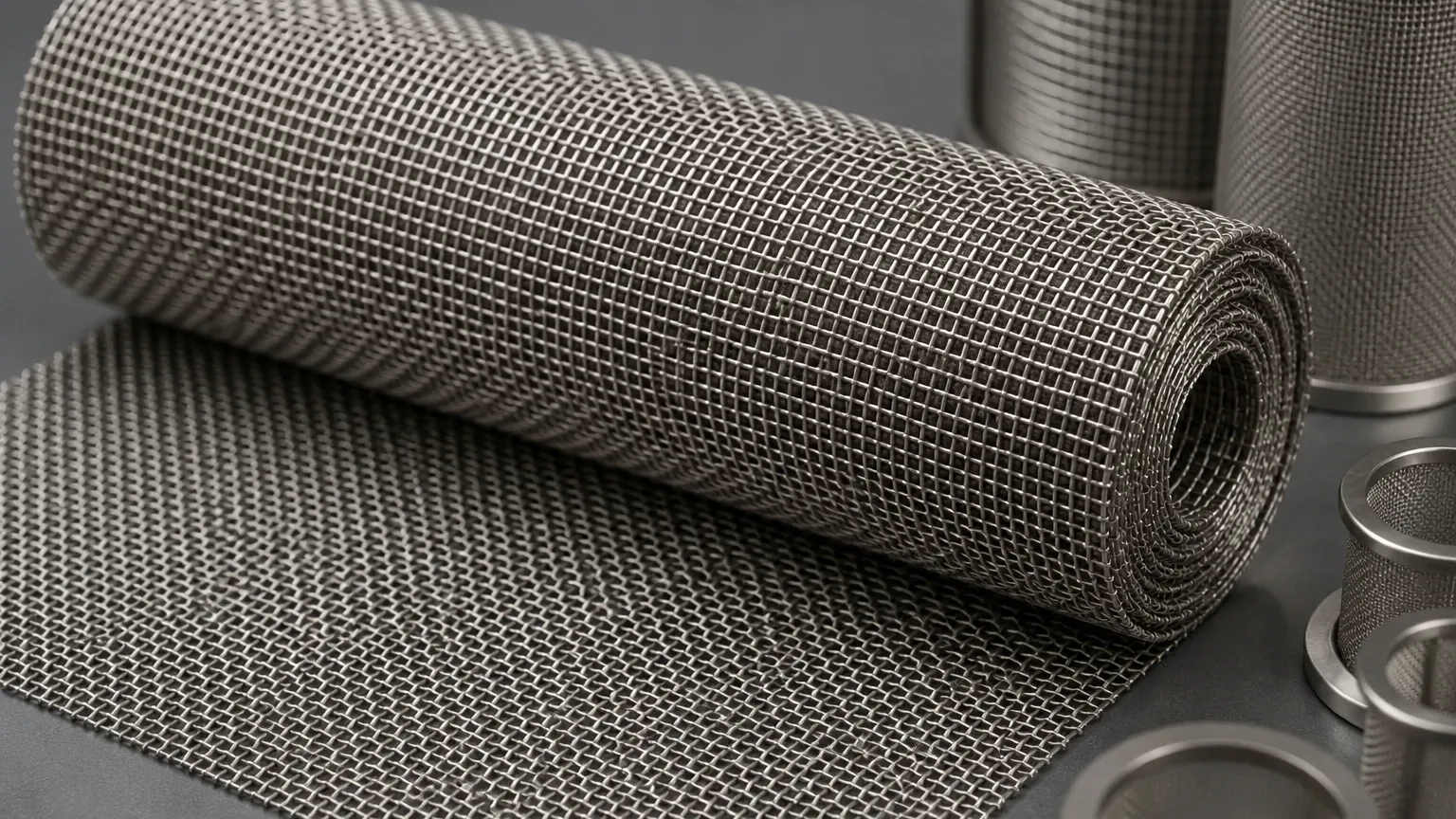
* Form Factor: Will the mesh be delivered in bulk rolls, cut-to-size pieces, or fabricated into framed panels or pleated cartridges?
* Edge Treatment: For cut pieces, should the edges be welded, hemmed, or left raw? Raw edges on fine mesh can fray easily during installation.
* Compliance Standards: Does the mesh need to meet ASTM E2011, ISO 9044, or FDA requirements for food contact?
Kaifil specializes in tailoring these specifications to meet the exact needs of an engineering project. Whether you require Plain, twill and dutch woven wire mesh in SS304/316L — rolls, cut mesh and framed panels. Send mesh count or micron target for a technical quote., the focus remains on delivering a product that balances filtration precision with industrial durability.
By addressing these engineering considerations early in the design or procurement phase, organizations can ensure that their filtration systems operate with maximum uptime and minimal total cost of ownership. The H250 woven wire mesh is a high-performance tool that, when correctly specified and maintained, provides reliable service in the most demanding industrial environments.
