


Technical Analysis of 2×4 Woven Wire Mesh: Engineering Specifications and Industrial Applications
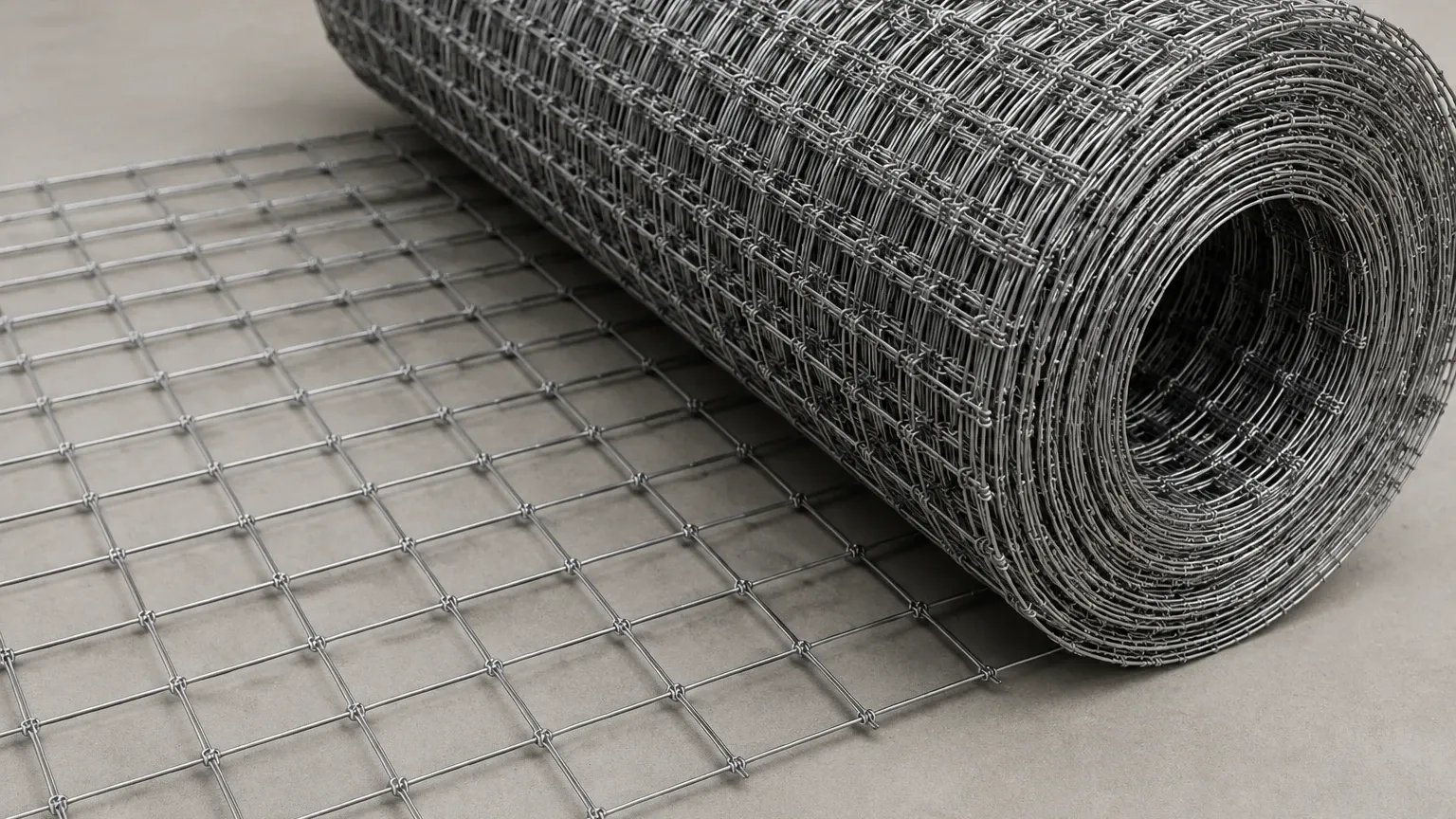
In industrial procurement and facility engineering, selecting the correct barrier or filtration substrate requires a deep understanding of material properties, weave patterns, and dimensional standards. While the term "2×4 woven wire fence 330 ft" is frequently associated with perimeter security or agricultural containment, its technical equivalent in the industrial sector—coarse Woven Wire Mesh—serves critical roles in machine guarding, pre-filtration stages, and structural reinforcement.
For engineers and procurement specialists, the transition from general-purpose fencing to industrial-grade mesh involves a shift in focus toward alloy purity, tensile strength, and aperture precision. This guide examines the technical parameters of 2×4 woven wire configurations and why the 330-foot (approximately 100-meter) roll format remains a standard for large-scale industrial projects.
Understanding the 2×4 Mesh Configuration
The designation "2×4" refers to the rectangular aperture size, typically measured in inches. In the context of woven wire mesh, this creates a non-symmetrical grid that offers specific mechanical advantages over square meshes.
1. Aperture Geometry and Flow Dynamics
In industrial filtration and separation, rectangular openings are often utilized to maximize open area while maintaining structural rigidity in one primary direction. A 2-inch by 4-inch opening allows for high throughput of fluids or air while effectively straining large-scale debris. This is particularly useful in the initial stages of wastewater treatment or in heavy-duty intake screens for cooling systems.
2. Weave Stability
Unlike welded wire, where wires are joined at intersections via heat, woven wire mesh relies on the mechanical interlocking of the warp and shute wires. For a large 2×4 opening, the crimp style is paramount. Engineers must specify whether the mesh is a plain weave or a lock-crimp variety. The lock-crimp method ensures that the wires remain fixed at their 2×4 intervals even under significant mechanical stress or vibration, which is common in industrial sifting and vibrating screen applications.
Material Selection: Beyond Galvanized Steel
While standard fencing often utilizes Class 1 or Class 3 galvanized coatings, industrial environments—especially in chemical processing, food and beverage, and pharmaceutical sectors—demand higher corrosion resistance.
Stainless Steel 304 vs. 316L
For most industrial applications involving the Woven Wire Mesh used in filtration or structural barriers, stainless steel is the preferred material.
* SS304: Offers excellent durability and cost-effectiveness for general industrial use. It resists oxidation and most organic chemicals.
* SS316L: Contains molybdenum, providing superior resistance to chlorides and pitting. This is essential for marine environments, brine filtration, or chemical plants where the mesh is exposed to aggressive solvents.
Using stainless steel for a 2×4 configuration ensures that the 330 ft installation does not require frequent replacement due to rust or structural failure, thereby lowering the total cost of ownership (TCO).
The Significance of the 330 Ft Roll Standard
In the context of 2×4 woven wire fence 330 ft specifications, the length of the roll is a critical logistical factor. A 330-foot roll is the standard 100-meter industrial length, designed to optimize shipping and installation efficiency.
1. Minimizing Seams and Weak Points
In large-scale industrial enclosures or long-run filtration banks, minimizing the number of joins is essential. Every seam represents a potential point of failure or a bypass for debris. A continuous 330 ft roll allows engineers to design longer spans without the need for frequent overlapping or welding, maintaining the integrity of the barrier.
2. Procurement and Waste Reduction
Standardizing on 330 ft rolls allows for more accurate material take-offs. For facility managers overseeing large perimeters or multiple filtration units, purchasing in bulk rolls reduces the per-linear-foot cost and ensures consistency in wire gauge and temper across the entire project.
Engineering Considerations for Industrial Use
When specifying a 2×4 woven wire mesh for a technical application, engineers must look beyond the basic dimensions. Several factors influence the performance and longevity of the mesh.
Wire Gauge and Tensile Strength
The diameter of the wire used in a 2×4 mesh significantly impacts its impact resistance and weight-bearing capacity. Common gauges for this mesh size range from 12.5 gauge to 9 gauge. In high-pressure filtration or heavy-duty machine guarding, a thicker wire gauge is necessary to prevent deformation.
Edge Treatment and Framing
For industrial safety applications, how the mesh is finished is as important as the weave itself. Options include:
* Raw Edges: Suitable for further fabrication or welding into frames.
* Knuckled Edges: Wires are bent back to eliminate sharp points, increasing safety for personnel.
* Framed Panels: The mesh is pre-cut from the 330 ft roll and secured into stainless steel frames for easy installation into filtration housings or architectural supports.
Common Risks in Specification
One of the primary risks when sourcing 2×4 woven wire mesh is the confusion between "commercial grade" and "industrial grade." Commercial-grade fencing may have inconsistent aperture sizes or lower-quality zinc coatings that flake off, potentially contaminating a production line.
Engineers should confirm the following before procurement:
1. Alloy Certification: Ensure the material meets ASTM or ISO standards for stainless steel composition.
2. Dimensional Tolerance: Confirm that the 2×4 openings are consistent throughout the 330 ft length to ensure uniform performance in separation tasks.
3. Crimp Type: Verify that the crimping method is suitable for the expected load or vibration levels of the application.
Applications in Industrial Filtration and Beyond
While the 2×4 configuration is a staple for perimeter control, its industrial utility is diverse:
* Pre-Filtration Screens: Acting as a primary stage to remove large particulates before fluids reach fine Plain, twill and dutch woven wire mesh in SS304/316L — rolls, cut mesh and framed panels. Send mesh count or micron target for a technical quote. stages.
* Debris Deflection: Used in heavy machinery to protect sensitive components from external impacts while allowing airflow for cooling.
* Catalyst Support: In chemical reactors, coarse woven mesh can provide the structural base for finer mesh layers or catalyst pellets.
* Architectural Safety: Providing fall protection in industrial mezzanines where high visibility and airflow are required alongside structural strength.
Maintenance and Replacement Cycles
The lifespan of a 2×4 woven wire installation depends heavily on the environment. In a controlled indoor industrial setting, a high-quality stainless steel mesh can last decades. However, in corrosive chemical environments, regular inspection for "wire thinning" or stress fractures at the crimp points is necessary.
When the mesh is used as a filtration component, the replacement cycle is often dictated by the accumulation of non-cleanable particulates or physical abrasion from high-velocity flow. Standardizing on 330 ft rolls allows maintenance teams to keep a consistent stock of replacement material that matches the original specifications exactly.
Conclusion: Making Informed Procurement Decisions
Selecting a 2×4 woven wire fence 330 ft solution for industrial use requires a technical perspective that prioritizes material integrity and engineering precision over simple boundary containment. By understanding the nuances of wire gauge, alloy selection, and weave stability, engineers can ensure that their filtration or barrier systems perform reliably under demanding conditions.
For those requiring precise specifications or custom configurations in stainless steel, consulting with a manufacturer that specializes in industrial filtration is the most effective way to ensure the mesh meets the rigorous demands of the application. Whether the goal is protecting equipment, ensuring personnel safety, or managing large-scale separation, the right woven wire mesh is a foundational component of industrial efficiency.
