


Tight Woven Wire Mesh: An Engineering Guide to High-Precision Filtration
In industrial filtration, the term "tightness" refers to the density and precision of the weave structure. A tight woven wire mesh is characterized by a high mesh count and small aperture sizes, often reaching into the micronic range. For engineers and procurement specialists in the chemical, pharmaceutical, and food processing sectors, selecting the correct mesh density is critical to balancing filtration efficiency with operational throughput.
As a specialized manufacturer, Kaifil provides precision-engineered Woven Wire Mesh solutions designed to meet the rigorous demands of high-pressure and high-purity environments. Understanding the mechanical properties, weave geometries, and material limitations of these components is essential for optimizing system performance and extending the service life of filtration equipment.
1. Defining Tight Woven Wire Mesh Structures
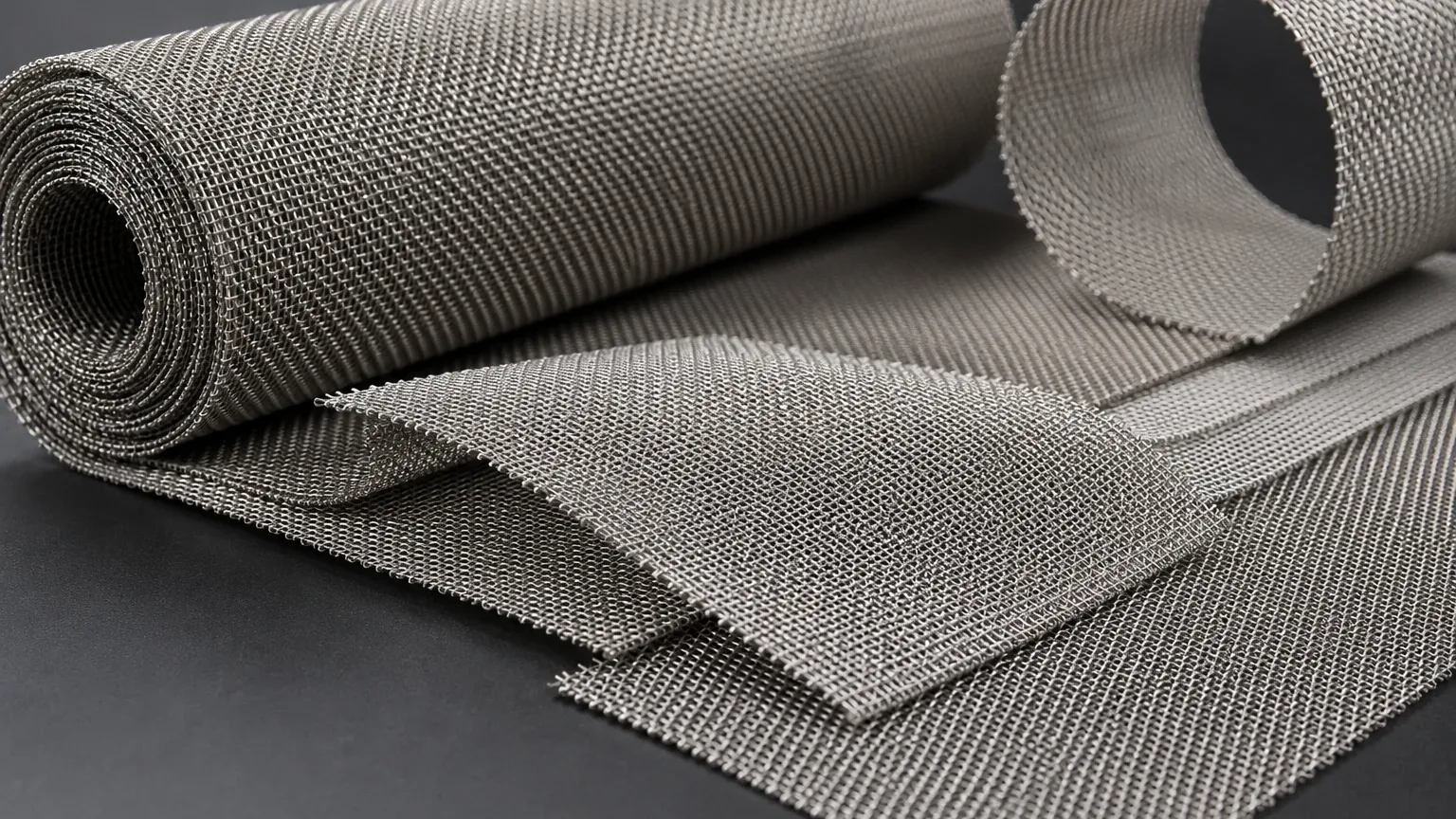
The "tightness" of a mesh is not merely a descriptive term but a function of the wire diameter and the number of wires per linear inch (mesh count). In a tight woven wire mesh, the spacing between wires is minimized to create a precise barrier against particulate matter. This is achieved through various weaving patterns, each offering distinct advantages in terms of strength and flow characteristics.
Plain Weave vs. Twill Weave
In a standard plain weave, each shute wire passes alternately over and under each warp wire. While this provides a stable structure, it is limited in how "tight" it can be because the wire diameter must be small enough to allow for the crimping process. To achieve a tighter weave with heavier wires, engineers often specify a twill weave. In this configuration, each shute wire passes over and under two warp wires, allowing for a higher density of wires and, consequently, a finer filtration rating without sacrificing the structural integrity of the individual wires.
Dutch Weave Variations
For the highest levels of precision, Dutch weaves (Plain Dutch and Twill Dutch) are the industry standard. These are characterized by having a larger diameter warp wire and a smaller diameter shute wire woven tightly together. The result is a "tight" mesh that does not have a straight-through opening, but rather a tortuous path for the fluid. This design provides superior mechanical strength and the ability to filter particles down to 5–10 microns, making it ideal for high-pressure hydraulic and fuel filtration.
2. Material Selection and Chemical Compatibility
The performance of a tight woven wire mesh is heavily dependent on the alloy from which it is manufactured. In industrial applications, stainless steel is the preferred material due to its corrosion resistance and mechanical stability at elevated temperatures.
* SS304/304L: This is the most common grade for general industrial use. It offers good corrosion resistance and is suitable for most food and beverage applications. However, in environments with high chloride concentrations, it may be susceptible to pitting.
* SS316/316L: Containing molybdenum, 316L provides enhanced resistance to chlorides and acids. It is the standard choice for chemical processing, pharmaceutical manufacturing, and marine environments where a tight woven wire mesh must maintain its structural integrity against aggressive media.
* Specialty Alloys: For extreme conditions, materials like Monel, Inconel, or Hastelloy may be required. These are typically used in specialized chemical reactors or high-temperature aerospace applications where standard stainless steels would fail due to oxidation or stress corrosion cracking.
When selecting a material, engineers must confirm the chemical composition of the filtrate to ensure that the mesh will not degrade, which could lead to wire migration and downstream contamination.
3. Key Engineering Performance Indicators
Evaluating a tight woven wire mesh requires looking beyond simple dimensions. Several performance indicators dictate how the mesh will behave under real-world operating conditions.
Filtration Accuracy: Absolute vs. Nominal
In B2B procurement, it is vital to distinguish between nominal and absolute filtration ratings. A nominal rating refers to the ability of the mesh to retain a certain percentage (usually 60% to 90%) of particles of a specific size. An absolute rating, often required in pharmaceutical and high-purity chemical sectors, indicates the pore size where 99.9% of particles are retained. Because a tight woven wire mesh is manufactured to high tolerances, it can provide reliable absolute ratings that are essential for critical separation tasks.
Flow Rate and Pressure Drop
The density of a tight weave naturally creates higher resistance to flow. The pressure drop (ΔP) across the mesh increases as the aperture size decreases. Engineers must calculate the clean pressure drop to ensure the pump system can handle the resistance. Furthermore, as the mesh captures contaminants, the ΔP will rise. A mesh that is too "tight" for the application may lead to frequent cleaning cycles or premature failure of the filter element due to excessive pressure stress.
Mechanical Strength and Stability
In high-pressure applications, the mesh must resist deformation. The "tightness" of the weave contributes to the overall stiffness of the cloth. However, in very fine meshes, the wires are necessarily thin. In these cases, the tight woven wire mesh is often sintered or bonded to a coarser support mesh to provide the necessary mechanical support while maintaining fine filtration capabilities.
4. Common Risks and Failure Modes in Precision Filtration
Implementing a high-density mesh involves navigating several technical risks that can impact the total cost of ownership.
Blinding and Clogging
Blinding occurs when particles that are nearly the same size as the mesh apertures become wedged in the openings. Because a tight woven wire mesh has such small openings, it is more susceptible to blinding than coarser screens. This is particularly problematic with gelatinous or irregular particles. Selecting the correct weave pattern—such as a Dutch weave which offers a more complex path—can sometimes mitigate this by preventing particles from seating perfectly in the aperture.
Wire Migration
In lower-quality mesh, or mesh subjected to high-frequency vibrations and pressure surges, individual wires may break or shift. This is known as wire migration. In industries like food and beverage or pharmaceuticals, wire migration is a critical failure that can lead to product recalls. Ensuring that the Woven Wire Mesh is manufactured with consistent tension and high-quality wire is the primary defense against this risk.
Corrosion and Erosion
While stainless steel is robust, the high surface-area-to-volume ratio of the fine wires in a tight mesh makes them more vulnerable to erosion-corrosion. High-velocity fluid streams containing abrasive particles can wear down the wires, gradually enlarging the apertures and compromising filtration accuracy. Regular inspection and the use of hardened or specialized alloys can extend the life of the mesh in these scenarios.
5. Customization and Selection Criteria for Procurement
When sourcing a tight woven wire mesh, providing a generic specification is rarely sufficient for industrial-grade performance. Procurement teams should work closely with manufacturers to define several key parameters:
1. Mesh Count and Wire Diameter: These define the aperture size and the open area percentage. A higher open area reduces pressure drop but may decrease the structural strength of the mesh.
2. Surface Treatment: Options such as passivating, electropolishing, or ultrasonic cleaning can be applied to the mesh. Electropolishing is particularly useful for a tight woven wire mesh used in sanitary applications, as it smooths the wire surfaces to prevent bacterial growth and makes cleaning easier.
3. Fabrication Requirements: Will the mesh be used as a flat panel, or does it need to be formed into a cylinder, pleated cartridge, or cone? The ductility of the weave must be considered if the mesh is to undergo significant forming processes.
4. Edge Treatment: For cut-to-size mesh, edge fraying can be an issue. Specifying welded edges, framed borders, or resin-sealed edges ensures the mesh remains intact during installation and operation.
For technical assistance in defining these variables, engineers can Review product options and application support to find the optimal balance between filtration precision and mechanical durability.
6. Maintenance and Replacement Cycles
The longevity of a tight woven wire mesh is determined by the cleaning efficiency and the operational environment. Unlike disposable polymer filters, stainless steel mesh is designed for reuse, which significantly lowers the long-term cost of filtration.
Cleaning Methods
* Backwashing: Effective for removing surface cakes in automated systems.
* Ultrasonic Cleaning: The most effective method for a tight woven wire mesh. High-frequency sound waves create cavitation bubbles that dislodge particles from deep within the weave structure without damaging the fine wires.
* Chemical Cleaning: Used to dissolve organic or mineral scaling. It is vital to ensure the cleaning agents are compatible with the specific stainless steel grade (e.g., avoiding high-concentration hydrochloric acid on SS304).
Determining Replacement
Replacement should be dictated by the "terminal pressure drop." Once the mesh can no longer be cleaned to a satisfactory baseline pressure drop, or if visual inspection reveals wire thinning or distorted apertures, the component must be replaced. In critical applications, a scheduled replacement cycle based on historical performance data is recommended to prevent unexpected downtime.
Conclusion
Selecting a tight woven wire mesh is a technical decision that impacts the efficiency, safety, and cost-effectiveness of industrial processes. By understanding the nuances of weave types, material properties, and the physical realities of fluid dynamics, engineers can specify filtration solutions that provide reliable, long-term service.
Whether you require Plain, twill and dutch woven wire mesh in SS304/316L — rolls, cut mesh and framed panels. Send mesh count or micron target for a technical quote., the focus must always remain on the precision of the manufacture and the suitability of the mesh for the specific challenges of the application. At Kaifil, we combine advanced manufacturing capabilities with deep engineering expertise to deliver custom filtration components that meet the highest industrial standards.
