


Woven Steel Mesh Near Me: A Professional Sourcing and Selection Guide
When engineers and procurement specialists search for "woven steel mesh near me," the objective is rarely just finding a local warehouse. In industrial filtration and precision manufacturing, the proximity of a supplier is often secondary to the technical competence, material traceability, and customization capabilities of the manufacturer. Woven wire mesh is a foundational component in sectors ranging from chemical processing to food production, where a failure in mesh integrity or an incorrect alloy selection can lead to significant downtime and product contamination.
Selecting the right Woven Wire Mesh requires a deep understanding of weave types, wire diameters, and metallurgical properties. This guide explores the technical parameters that define high-performance mesh and provides the framework necessary for making informed purchasing decisions that balance local availability with global manufacturing standards.
Understanding the Technical Parameters of Woven Wire Mesh
The performance of a filter or screen is dictated by its geometry and the precision of its manufacture. When evaluating options for woven steel mesh, three primary variables must be confirmed: mesh count, wire diameter, and the resulting open area.
Mesh Count and Micron Rating
Mesh count refers to the number of openings per linear inch. A higher mesh count indicates a finer screen. However, for engineering purposes, the micron rating (the size of the particles the mesh will retain) is often the more critical metric. It is important to distinguish between "nominal" and "absolute" micron ratings. Nominal ratings refer to an approximate retention level, while absolute ratings indicate the diameter of the largest hard spherical particle that will pass through the mesh under specific test conditions.
Wire Diameter and Open Area
The diameter of the wire used in the weaving process directly affects the mechanical strength and the "open area" percentage. The open area is the ratio of the total area of the apertures to the total area of the mesh. A higher open area allows for greater flow rates and lower pressure drops but may compromise the structural integrity of the mesh in high-pressure applications. Engineers must calculate the required flow velocity against the tensile strength of the wire to ensure the mesh can withstand the operating environment.
Comparing Weave Types for Industrial Applications
The method by which wires are interlaced—the weave—determines the mesh’s stability, filtration accuracy, and surface characteristics. While searching for "woven steel mesh near me" may yield standard stock, specialized applications often require specific weave geometries.
Plain Weave
This is the most common weave, where each warp wire crosses alternately over and under each shute wire. It provides a consistent aperture size and is suitable for most standard screening and low-pressure filtration tasks. Its simplicity makes it cost-effective and widely available.
Twill Weave
In a twill weave, each shute wire passes alternately over and under two warp wires. This allows for the use of heavier wires than a plain weave of the same mesh count, increasing the mesh's strength and durability. It is often used in applications where the mesh is subjected to heavy loads or abrasive materials.
Dutch Weave (Plain and Twill)
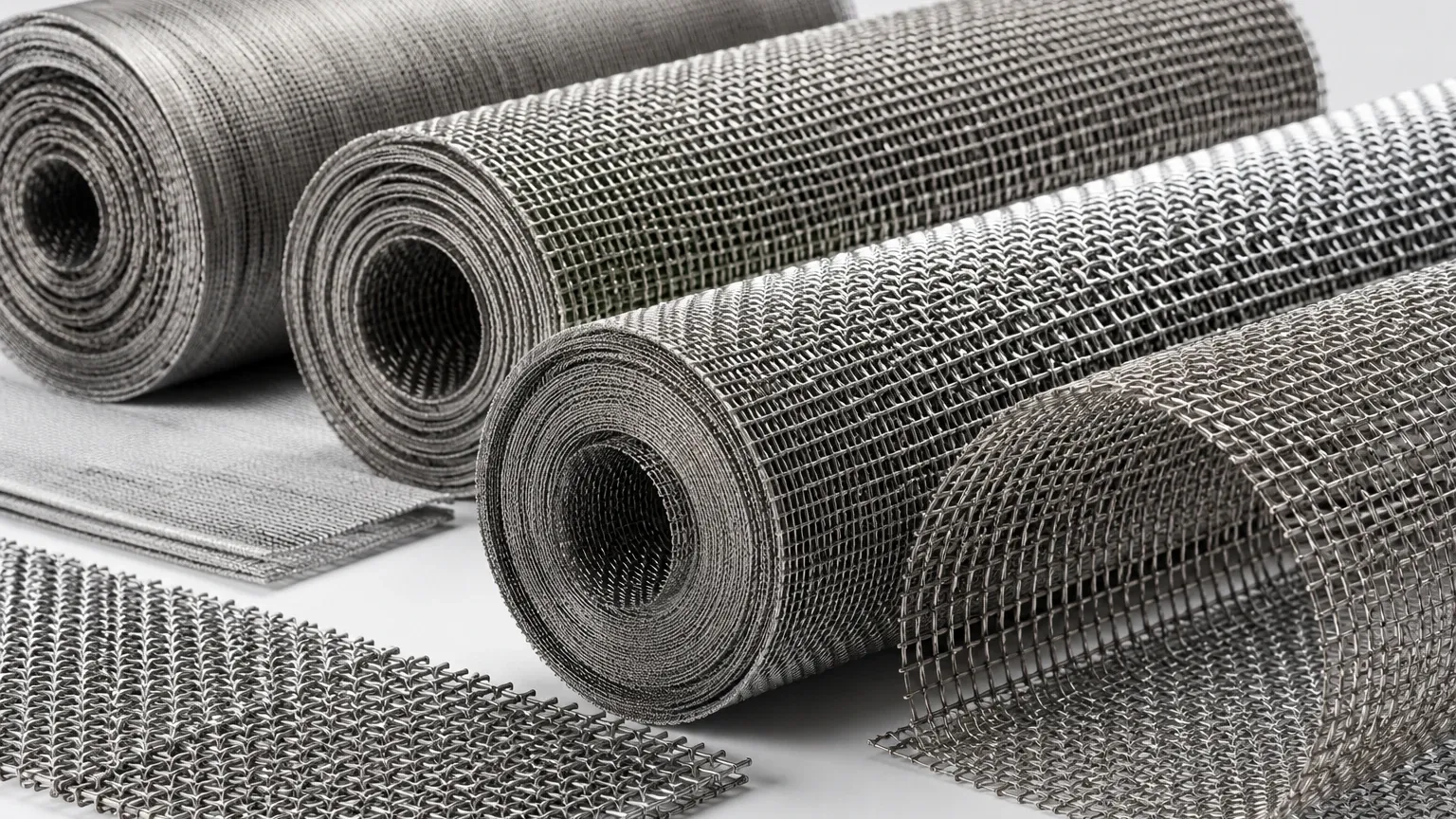
Dutch weaves utilize different diameters for the warp and shute wires. The shute wires are driven closely together, creating a dense, "zero-aperture" mesh that provides superior filtration in the micron range. Plain, twill and dutch woven wire mesh in SS304/316L — rolls, cut mesh and framed panels. Send mesh count or micron target for a technical quote. These weaves are essential for high-pressure hydraulic systems and fine chemical filtration where structural rigidity is as important as filtration precision.
Why "Near Me" Matters vs. Direct Manufacturer Expertise
The convenience of a local distributor is undeniable for urgent, small-scale repairs. However, for OEM integration and large-scale industrial projects, the limitations of local sourcing often become apparent. Local stockists typically carry a limited range of standard sizes and materials, which may not meet the specific requirements of a specialized filtration system.
Customization and Engineering Support
Direct manufacturers like Kaifil provide a level of customization that local distributors cannot match. This includes custom-cut shapes, framed panels, and specialized edge treatments (such as welding or binding) that prevent fraying and ensure a perfect fit within a housing. Furthermore, working directly with a manufacturer allows engineers to access technical data sheets, material certifications (MTRs), and expert advice on fluid dynamics and chemical compatibility.
Quality Assurance and Traceability
In industries such as pharmaceuticals and food processing, material traceability is a regulatory requirement. Sourcing directly from a manufacturer ensures that the Woven Wire Mesh is produced from verified batches of stainless steel (such as SS304 or SS316L). This reduces the risk of "rogue" materials entering the supply chain, which could lead to corrosion or product contamination.
Material Selection: SS304 vs. SS316L
Most searches for "woven steel mesh near me" focus on stainless steel due to its corrosion resistance and durability. However, choosing between the two most common grades—304 and 316L—is a critical engineering decision.
* Grade 304: This is the standard "18/8" stainless steel. It offers excellent corrosion resistance in most atmospheric environments and is suitable for food processing and general industrial use. However, it is susceptible to pitting and crevice corrosion in chloride-rich environments.
* Grade 316L: Containing molybdenum, 316L provides significantly better resistance to chlorides and acids. The "L" stands for low carbon, which improves weldability and reduces the risk of intergranular corrosion after welding. This grade is the industry standard for marine environments, chemical processing, and pharmaceutical applications.
Critical Evaluation Criteria for Filtration Projects
Before finalizing a purchase of woven steel mesh, technical teams should evaluate the following factors to ensure long-term performance and cost-efficiency:
Chemical Compatibility
The mesh must be inert to the fluid being filtered. This includes considering the pH levels, the presence of oxidizing agents, and the operating temperature. Even stainless steel can fail if the environment promotes stress corrosion cracking or localized pitting.
Pressure Drop and Flow Rate
Every filter media introduces a resistance to flow, known as pressure drop (ΔP). An excessive pressure drop can lead to pump strain and increased energy consumption. Engineers must select a mesh that provides the required filtration fineness while maintaining an acceptable flow rate. This often involves a trade-off between wire diameter and mesh count.
Mechanical Loading and Fatigue
In applications like vibrating screens or high-pressure hydraulic filters, the mesh is subjected to cyclic loading. The fatigue strength of the wire and the stability of the weave are paramount. If the mesh is not properly supported or if the wire gauge is too thin, the mesh may deform or rupture, leading to a bypass of unfiltered material.
Maintenance, Cleaning, and Replacement Cycles
One of the primary advantages of stainless steel Woven Wire Mesh over disposable media is its cleanability. However, the total cost of ownership (TCO) depends on how effectively the mesh can be maintained.
Cleaning Methods
* Backwashing: Reversing the flow of fluid to dislodge particles from the surface of the mesh.
* Ultrasonic Cleaning: Using high-frequency sound waves in a cleaning solvent to remove fine particles trapped deep within the weave, particularly in Dutch weave meshes.
* Chemical Cleaning: Using specialized solvents to dissolve organic or mineral deposits. It is vital to ensure the cleaning agent is compatible with the mesh material.
Replacement Indicators
The replacement cycle is typically determined by the "terminal pressure drop"—the point at which the mesh is so blinded by contaminants that cleaning no longer restores its performance. Regular inspection for mechanical damage, such as broken wires or distorted apertures, is also necessary to prevent catastrophic failure.
Conclusion: Strategic Sourcing for Industrial Success
While the search for "woven steel mesh near me" is a logical starting point for many procurement tasks, the complexities of industrial filtration demand a more rigorous approach. By focusing on technical specifications, material integrity, and the benefits of direct manufacturer partnership, organizations can ensure they receive filtration solutions that are not just available, but optimized for their specific application.
Kaifil specializes in bridging the gap between standard mesh products and custom-engineered filtration components. Whether you require precision Dutch weave for high-pressure hydraulics or durable SS316L panels for chemical processing, the focus remains on delivering reliable, high-performance solutions that meet the most demanding industrial standards. For those seeking technical guidance or custom configurations, engaging with a manufacturer who understands the nuances of Woven Wire Mesh is the most effective way to achieve efficient, durable, and cost-effective filtration performance.
