


Woven Wire Fence 2×4
In industrial environments, the selection of mesh materials often dictates the safety, efficiency, and longevity of a facility's infrastructure. While the term "fence" frequently evokes images of agricultural or residential boundaries, the woven wire fence 2×4 configuration represents a specific structural specification used extensively in industrial safety, coarse filtration support, and equipment guarding. Understanding the technical nuances of this mesh—from material chemistry to mechanical load capacities—is essential for engineers and procurement teams tasked with maintaining rigorous operational standards.
As a specialized manufacturer of stainless steel filtration solutions, Kaifil recognizes that the performance of any mesh component, whether a high-precision micron filter or a robust structural panel, depends on the precision of the weave and the integrity of the alloy. This guide examines the engineering considerations behind 2×4 woven wire configurations and how they integrate into broader industrial filtration and protection systems.
Understanding the 2×4 Mesh Configuration
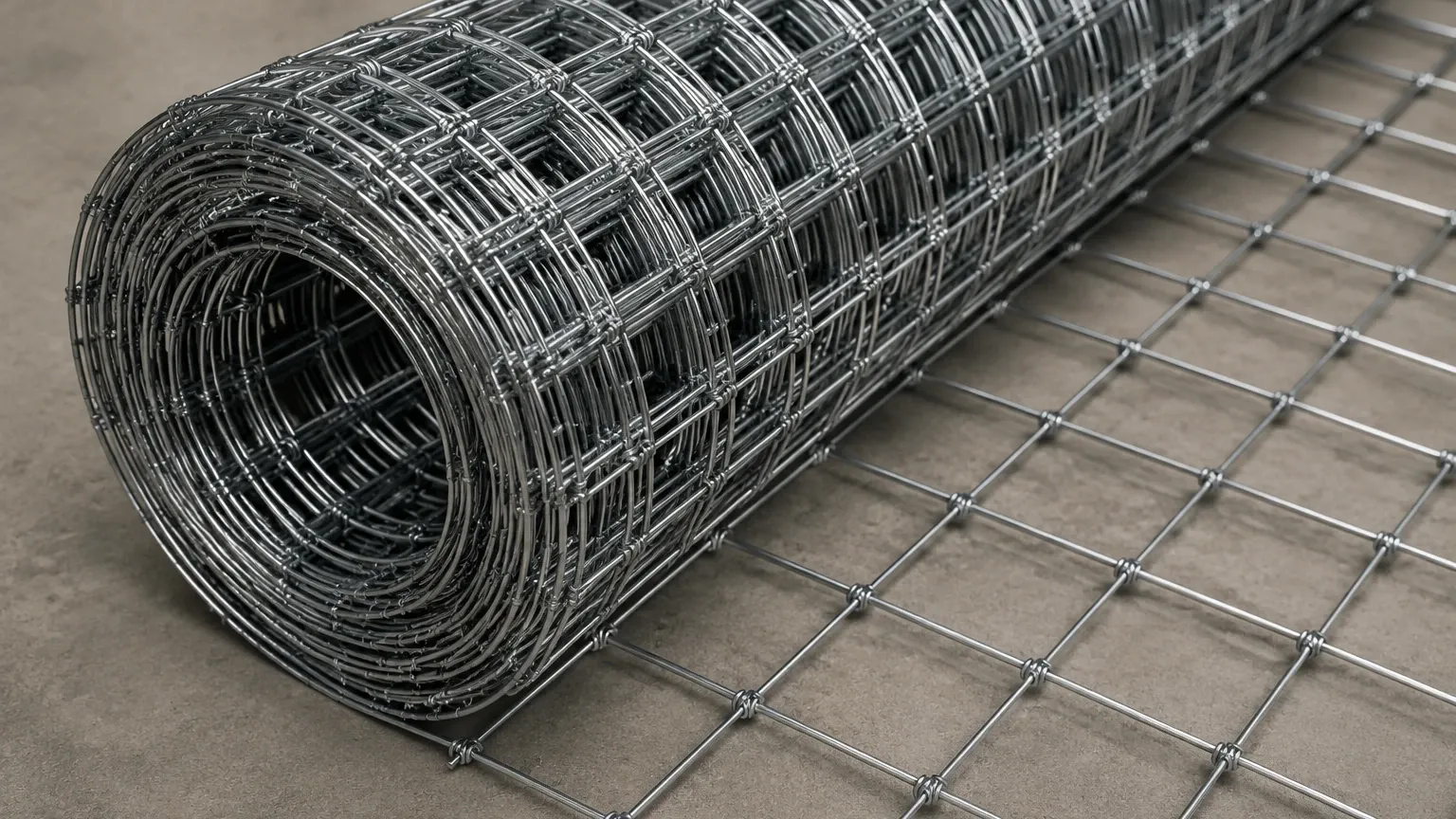
The "2×4" designation typically refers to the aperture size of the mesh, indicating rectangular openings that are 2 inches by 4 inches. In the world of Woven Wire Mesh, this is considered a large-opening, coarse specification. Unlike fine filtration media where mesh count is measured by the number of wires per linear inch, structural woven wire is often defined by the clear opening (space between wires) and the wire diameter (gauge).
The Mechanics of the Weave
For a 2×4 configuration to maintain its dimensional stability under stress, the weaving process must be precise. In industrial applications, this is often achieved through a "pre-crimping" process. The wires are passed through a set of dies to create indentations at the intersection points before being woven together. This mechanical interlock ensures that the 2-inch and 4-inch spacing remains consistent even when subjected to impact or heavy loads, which is a critical requirement for safety partitions and debris screens.
Wire Gauge and Structural Integrity
The diameter of the wire used in a 2×4 woven mesh significantly impacts its weight, tensile strength, and resistance to deformation. Common industrial gauges range from 8-gauge (approx. 4.11mm) to 12-gauge (approx. 2.68mm). Choosing the correct gauge involves a trade-off between the required physical barrier strength and the overall weight of the installation. For engineers, calculating the "open area" percentage is vital, as it determines how much air or fluid can pass through the mesh in ventilation or pre-filtration scenarios.
Material Selection: Why Stainless Steel Matters
While many standard 2×4 fences are manufactured from galvanized carbon steel, industrial environments—particularly those involving chemical processing, food production, or pharmaceutical manufacturing—demand higher-performance alloys. Kaifil specializes in Plain, twill and dutch woven wire mesh in SS304/316L — rolls, cut mesh and framed panels. Send mesh count or micron target for a technical quote.
Grade 304 Stainless Steel
SS304 is the most common choice for general industrial use. It provides excellent resistance to atmospheric corrosion and is suitable for most wash-down environments. In a 2×4 woven configuration, SS304 offers the necessary durability for machine guards and safety enclosures where exposure to harsh chemicals is limited but hygiene and longevity are required.
Grade 316L Stainless Steel
For more demanding applications, such as marine environments, wastewater treatment, or chemical processing involving chlorides, Grade 316L is the preferred material. The addition of molybdenum enhances its resistance to pitting and crevice corrosion. In filtration systems, a 2×4 woven panel made of 316L may serve as the outermost support cage for finer filter cartridges, ensuring that the entire assembly can withstand corrosive process fluids without structural failure.
Industrial Applications of 2×4 Woven Wire
The utility of a 2×4 woven wire structure extends far beyond simple fencing. Its rectangular aperture and high strength-to-weight ratio make it ideal for several technical applications:
1. Machine Guarding and Safety Enclosures: In automated manufacturing lines, 2×4 mesh provides a robust physical barrier that prevents personnel from reaching into moving parts while maintaining 100% visibility and airflow for cooling electronics.
2. Coarse Pre-Filtration and Trash Racks: In water treatment or intake systems, large-opening woven mesh acts as a primary stage to capture large debris (foliage, plastic, wood) before the fluid reaches finer filtration stages. The 2×4 spacing is particularly effective at preventing the passage of larger objects that could damage pumps or clog downstream filters.
3. Support Structures for Fine Mesh: In large-scale industrial filters, fine wire cloth lacks the structural rigidity to withstand high differential pressures. A heavy-duty 2×4 woven wire panel can be used as a "backing mesh" or support substrate, providing the necessary mechanical reinforcement for the delicate filtration media.
4. Warehouse Partitioning and Security: For the storage of high-value industrial components or hazardous materials, woven wire partitions offer a modular and secure solution that does not interfere with fire suppression (sprinkler) systems.
Engineering Evaluation Criteria
When specifying a woven wire fence 2×4 or similar structural mesh for a project, engineers must evaluate several technical factors to ensure the component is fit for purpose.
Load-Bearing Capacity
Unlike welded wire, where the strength is concentrated at the weld points, woven wire distributes stress across the entire length of the wire. This makes it more resilient to vibration and repeated impact. Engineers should request data on the maximum allowable load (static and dynamic) for the specific wire gauge and alloy selected, especially if the mesh will be used in a horizontal orientation (e.g., as a walkway or shelving).
Corrosion and Chemical Compatibility
It is essential to match the mesh alloy to the chemicals present in the environment. For example, in a food processing facility where acidic cleaning agents are used, SS316L is mandatory to prevent "tea staining" or localized rusting. Using a lower-grade material can lead to particulate contamination, which is unacceptable in pharmaceutical or food-grade filtration systems.
Installation and Framing
A 2×4 woven mesh panel is only as strong as its attachment point. For industrial use, these panels are typically mounted into angle iron or U-channel frames. The method of attachment—whether tack welding, bolting, or clamping—must be chosen based on the need for future maintenance and the level of vibration in the operating environment.
Common Risks and Mitigation in Mesh Specification
One of the primary risks in procuring 2×4 woven wire is the "unraveling" of the mesh if it is not properly finished at the edges. Because the wires are woven rather than welded, a cut edge can become a safety hazard and lead to a loss of tension across the panel. To mitigate this, industrial users should specify finished edges or have the mesh professionally framed by the manufacturer.
Another risk involves "blindness" or clogging in pre-filtration applications. While a 2×4 opening is large, certain types of fibrous debris can wrap around the wires, reducing the effective open area. In these cases, selecting a smooth-top weave (where one side of the mesh is flush) can help facilitate easier cleaning and debris removal.
Transitioning to Precision Filtration
While the 2×4 configuration serves as a robust structural solution, many industrial processes eventually require much finer control over particle size. This is where the transition from structural mesh to precision Woven Wire Mesh occurs.
In a multi-stage filtration system, the 2×4 mesh might serve as the first line of defense, followed by intermediate mesh counts (e.g., 20 mesh, 50 mesh), and finally reaching high-precision sintered or Dutch weave filter cartridges capable of removing sub-micron contaminants. By sourcing both structural support mesh and precision filter elements from a single manufacturer like Kaifil, engineers can ensure material consistency and compatibility across the entire filtration train.
Conclusion: Selecting the Right Solution
Specifying a woven wire fence 2×4 for an industrial project requires more than just choosing a dimensions; it requires an understanding of metallurgy, mechanical stresses, and environmental factors. Whether the goal is to protect personnel, support a complex filtration system, or manage large-scale debris, the quality of the weave and the choice of stainless steel grade are the primary drivers of performance.
For technical teams, the next step involves confirming the specific environmental conditions—such as temperature extremes, chemical exposure, and mechanical load requirements—before finalizing a specification. By focusing on high-quality stainless steel options, facilities can reduce the total cost of ownership through decreased maintenance and extended replacement cycles.
If your project requires specific aperture sizes, custom framing, or advice on transitioning from coarse structural mesh to high-precision filtration, consulting with a manufacturer experienced in industrial applications is the most reliable path to a successful installation.
