


Engineering Woven Wire Mesh for No-Climb and High-Security Industrial Applications
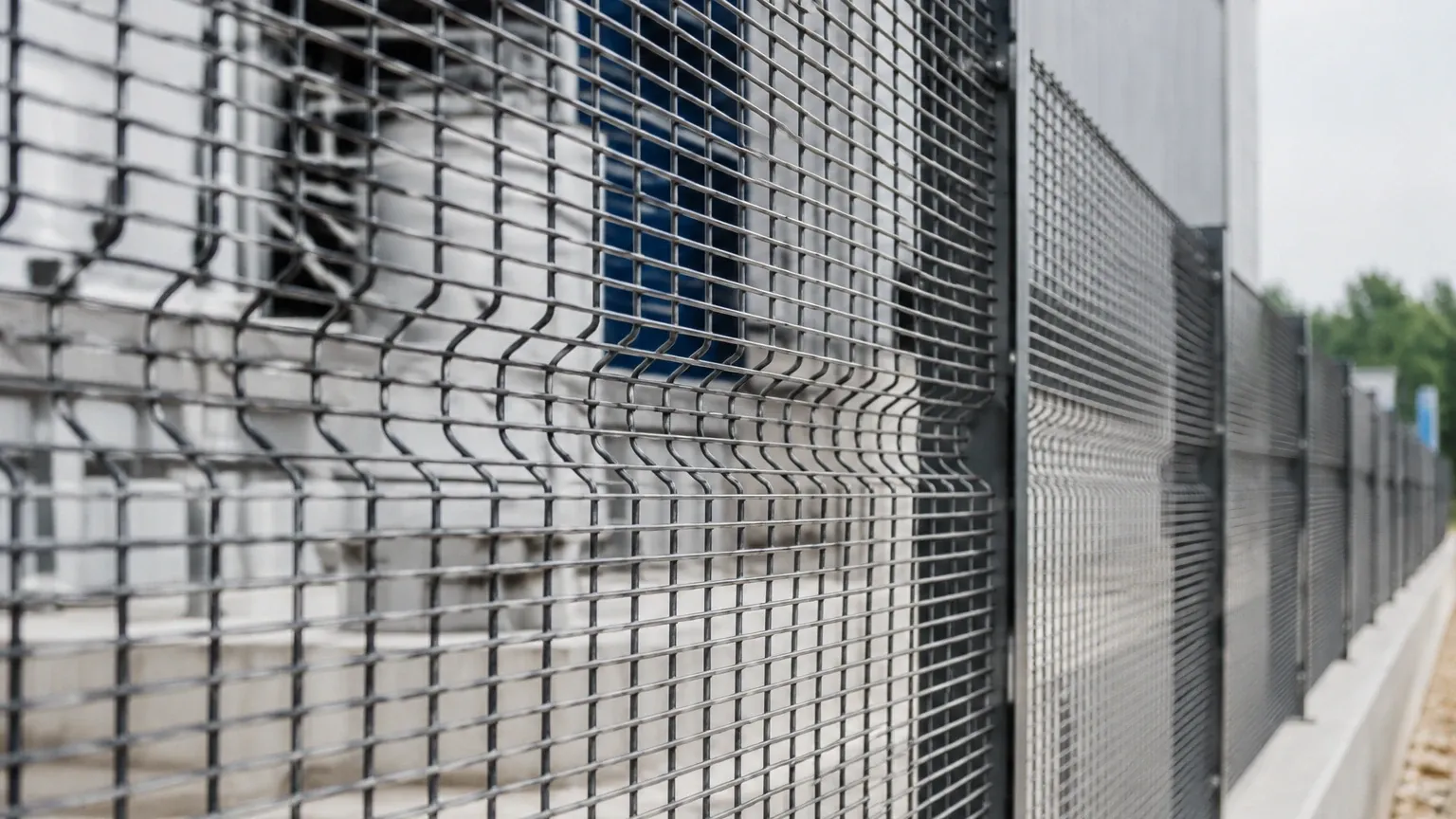
In the realm of industrial infrastructure and precision engineering, the selection of barrier materials is dictated by a balance of structural integrity, environmental resistance, and specific functional geometry. Among these materials, woven wire mesh stands out as a versatile solution, particularly when configured for "no-climb" applications. While often associated with high-security fencing, the technical principles behind a woven wire fence no climb design—characterized by small apertures and high-tensile wire—are equally critical in industrial safety guarding, debris exclusion, and specialized filtration systems.
For engineers and procurement professionals, understanding the mechanical properties of these meshes is essential for ensuring long-term performance in demanding environments. This guide explores the technical specifications, material considerations, and engineering logic required to select the optimal woven wire solution for containment and filtration.
Understanding the Technical Foundation of Woven Wire Mesh
Woven wire mesh is produced by weaving individual metal wires over and under one another in a precise, repeatable pattern. Unlike welded wire, where wires are joined at intersections via heat, woven mesh relies on mechanical tension and the physical crimping of the wires to maintain its structure. This manufacturing process allows for a higher degree of flexibility in material selection and aperture precision.
The most common weave for industrial barriers is the plain weave, where each warp wire crosses alternately over and under each shute wire. However, for applications requiring higher density or specific flow characteristics, twill or dutch weaves may be employed. In the context of a "no-climb" configuration, the goal is to achieve a mesh density that prevents the insertion of fingers or toes (typically apertures smaller than 1 inch or 25mm) while maintaining sufficient wire diameter to resist cutting or deformation.
The Mechanics of "No Climb" Design in Industrial Mesh
The term "no climb" refers specifically to the geometric limitation of the mesh. By reducing the vertical and horizontal spacing between wires, the mesh eliminates the leverage points necessary for climbing. In industrial settings, this design serves several critical functions:
1. Personnel Safety: Preventing unauthorized access to high-voltage equipment, rotating machinery, or hazardous chemical storage areas.
2. Security Perimeter: Providing a physical barrier that is difficult to scale and resistant to standard cutting tools.
3. Debris Containment: Acting as a high-strength screen to prevent large objects from entering or exiting a localized environment, such as in wind tunnels or heavy machinery enclosures.
From an engineering perspective, the "no climb" attribute is a function of the mesh count and wire diameter. A higher mesh count (the number of openings per linear inch) combined with a robust wire gauge ensures that the mesh remains rigid under physical pressure. This rigidity is vital; if the mesh bows or stretches significantly, the effective aperture size can change, potentially compromising the safety rating of the installation.
Material Performance: Selecting Stainless Steel for Durability
Industrial environments often expose woven wire structures to corrosive agents, extreme temperatures, and mechanical stress. Consequently, material selection is the most significant factor in the total cost of ownership. While galvanized steel is common in light commercial applications, industrial-grade solutions almost exclusively utilize stainless steel.
* Type 304 Stainless Steel: The standard for most industrial applications, offering excellent corrosion resistance and mechanical strength. It is suitable for indoor machine guarding and general outdoor perimeters in non-coastal environments.
* Type 316L Stainless Steel: Contains molybdenum, which provides superior resistance to chlorides and pitting. This is the preferred choice for chemical processing plants, marine environments, and pharmaceutical facilities where frequent wash-downs with caustic agents occur.
Using stainless steel for a woven wire fence no climb application ensures that the barrier does not degrade due to rust, which can weaken the wire and eventually lead to structural failure. Furthermore, the high tensile strength of stainless steel allows for thinner wire diameters to achieve the same security rating as thicker carbon steel wires, potentially improving visibility and airflow.
Beyond Fencing: Industrial Filtration and Safety Guarding
While the geometry of a no-climb mesh is ideal for fencing, the same technical specifications are applied to high-performance industrial filtration. In many chemical and water treatment processes, a rigid, small-aperture mesh is required to filter out large particulates while withstanding high pressure or flow rates.
For example, in intake screens for water treatment, the mesh must prevent the passage of aquatic life and debris (similar to a no-climb barrier) while resisting the constant force of moving water. In these scenarios, the precision of the weave is paramount. If the apertures are inconsistent, the filtration efficiency drops, and the risk of "blinding" (clogging) increases.
For specialized industrial requirements, engineers often require Plain, twill and dutch woven wire mesh in SS304/316L — rolls, cut mesh and framed panels. Send mesh count or micron target for a technical quote. This level of customization allows for the integration of no-climb characteristics into broader filtration and containment systems.
Critical Specifications for Procurement and Engineering
When specifying Woven Wire Mesh for an industrial project, several key metrics must be confirmed to ensure the product meets the application's demands:
1. Mesh Count vs. Aperture Size
Mesh count refers to the number of wires per inch. However, the aperture (the clear opening between wires) is what determines the "no climb" or filtration capability. Engineers must calculate the aperture using the formula:
*Aperture = (1 / Mesh Count) – Wire Diameter*.
2. Wire Diameter (Gauge)
The thickness of the wire affects both the strength of the mesh and the percentage of open area. In security and safety guarding, a heavier wire diameter is preferred to prevent mechanical breaching. In filtration, a balance must be struck between wire strength and the required flow rate (open area).
3. Open Area Percentage
This is the ratio of the area of the openings to the total area of the mesh. For machine guarding or enclosures requiring ventilation, a high open area is necessary to prevent heat buildup, even if the aperture must remain small enough to be "no climb."
4. Edge Treatment and Framing
Woven mesh can unravel if the edges are not properly secured. For industrial installations, mesh panels are often provided with welded edges, U-edging, or integrated into custom frames to ensure stability and ease of installation.
Installation and Maintenance Considerations
The performance of a no-climb woven wire system is heavily dependent on its installation. In fencing applications, the tensioning of the mesh is critical. Unlike chain link, which can be stretched significantly, high-precision woven wire mesh requires rigid framing or specialized tensioning hardware to prevent sagging.
In terms of maintenance, stainless steel mesh is relatively low-maintenance, but it is not "no-maintenance." In high-salinity or heavy industrial areas, regular cleaning to remove surface contaminants is necessary to prevent tea-staining or localized corrosion. For filtration applications, the replacement cycle is determined by the pressure drop across the mesh; as the mesh becomes fouled, the energy required to move fluid through it increases, signaling the need for cleaning or replacement.
Navigating Customization and OEM Solutions
Standard off-the-shelf mesh often fails to meet the specific tolerances required for advanced industrial applications. Whether the requirement is for a specific alloy, a non-standard width, or a unique weave pattern that combines filtration with structural security, OEM capabilities are vital.
Customization allows engineers to specify the exact tensile strength and chemical composition needed for their specific environment. For instance, a pharmaceutical facility might require a 316L mesh with a specific micron rating that also serves as a physical barrier in a cleanroom environment. Working with a manufacturer that understands these dual requirements—filtration performance and physical containment—ensures that the final product is fit for purpose.
Conclusion: Making Informed Selection Decisions
Selecting the right woven wire fence no climb or industrial mesh solution requires a deep dive into the mechanical and chemical requirements of the application. By focusing on aperture precision, material grade, and structural rigidity, engineers can implement solutions that provide both safety and functional efficiency.
When evaluating suppliers, it is important to confirm their ability to provide documented material certifications (MTRs) and their capacity to manufacture to tight tolerances. As industrial processes become more complex, the role of precision-woven wire mesh as a critical component in safety and filtration will only continue to grow. Whether the goal is to secure a perimeter or to refine a chemical process, the technical integrity of the mesh remains the foundation of a successful installation.
