


Industrial Handling and Installation of Woven Wire Mesh: A Guide to Unroller Rental and Equipment Selection
In the realm of industrial infrastructure and large-scale filtration projects, the efficiency of installation is often as critical as the quality of the material itself. Woven wire mesh, a versatile component used in everything from high-precision chemical filtration to heavy-duty perimeter security, is typically supplied in large, heavy rolls. For engineers and project managers, the logistical challenge lies in transitioning these rolls from a compact transport state to a functional, tensioned installation without compromising the structural integrity of the mesh. This is where specialized equipment, such as a woven wire fence unroller, becomes indispensable.
While the term "fence unroller" often evokes agricultural imagery, the mechanical principles behind these tools are vital for any application involving bulk Woven Wire Mesh. Whether you are installing security barriers or large-scale industrial sieves, understanding the nuances of woven wire fence unroller rental and equipment selection is essential for maintaining material performance and operational safety.
The Logistical Challenges of Large-Scale Woven Wire Mesh Deployment
Industrial-grade woven wire mesh, particularly when manufactured from stainless steel alloys like SS304 or SS316L, possesses significant weight and inherent mechanical tension. A standard roll can weigh several hundred pounds, making manual handling not only inefficient but also hazardous. Furthermore, the "memory" of the wire—its tendency to return to its coiled shape—presents a constant risk of kinking or deformation during the unrolling process.
For technical professionals, the primary concern is the preservation of the mesh’s aperture precision. In filtration applications, even a slight deformation in the weave can alter the micron rating, leading to bypass or inconsistent flow rates. In perimeter security, uneven tensioning creates weak points that can be exploited. Utilizing a dedicated unroller ensures that the mesh is deployed under controlled conditions, minimizing the risk of mechanical damage that could necessitate costly material replacements.
Understanding the Mechanics of a Woven Wire Fence Unroller
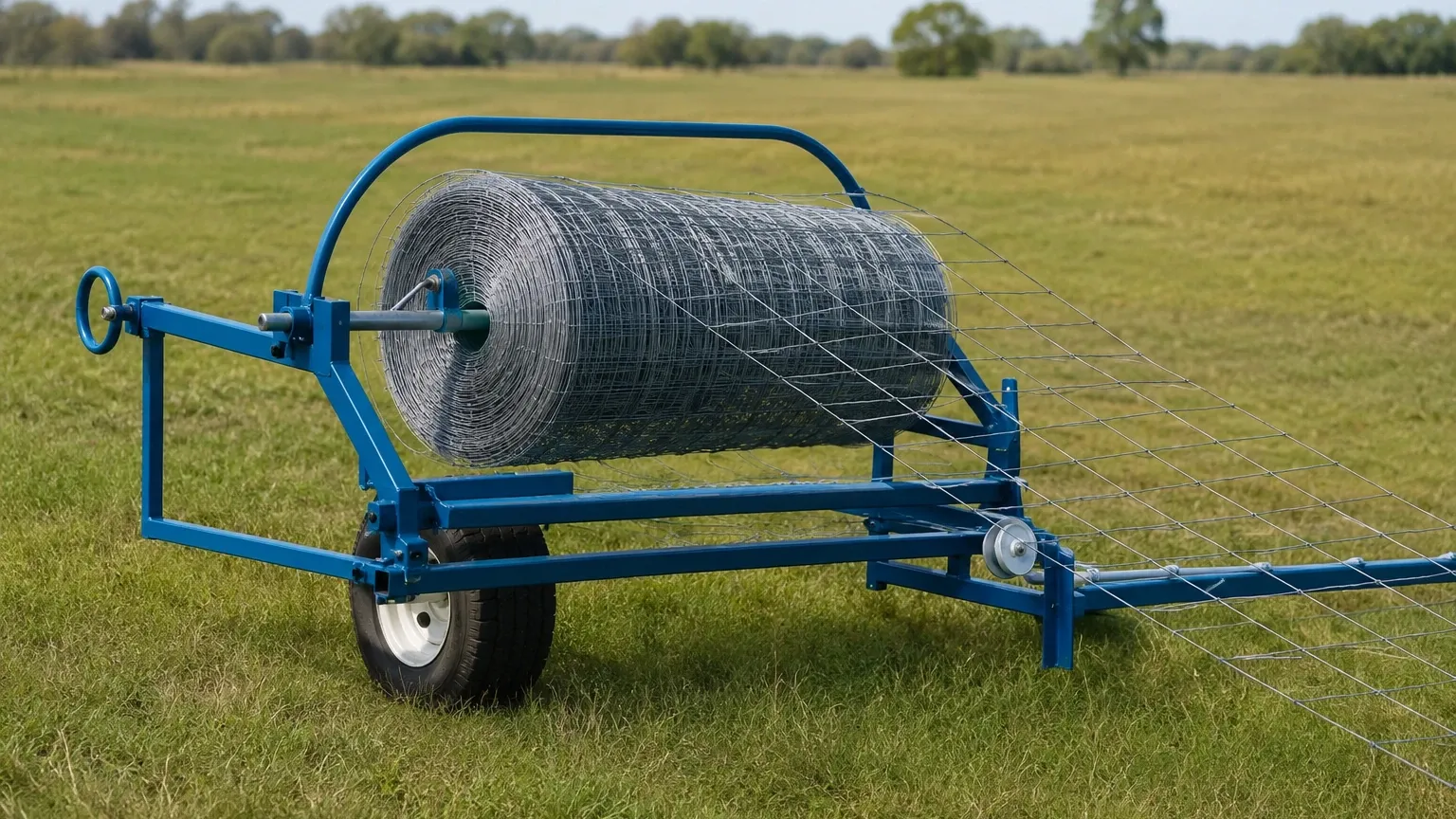
A woven wire fence unroller is a mechanical device designed to hold a roll of mesh vertically or horizontally and allow it to dispense smoothly as the equipment moves forward. These units are typically mounted on skid steers, tractors, or specialized industrial loaders.
Key components of a high-quality unroller include:
1. The Mandrel or Spindle: This central shaft supports the core of the mesh roll. In industrial settings, the mandrel must be adjustable to accommodate various roll widths and core diameters.
2. Tensioning Bars: These bars allow the operator to apply consistent drag to the roll. Proper tensioning is critical to ensure the mesh remains taut against its supporting structure (such as posts or frames) during the fastening process.
3. Clamping Mechanisms: Many advanced unrollers feature hydraulic or manual clamps that hold the leading edge of the mesh, allowing the operator to stretch the material to the required specification before securing it.
4. Swivel Mounts: For complex layouts, a swivel mount allows the unroller to operate at various angles, which is particularly useful when navigating corners or uneven industrial terrain.
Evaluating Woven Wire Fence Unroller Rental for Industrial Projects
For many organizations, the decision between purchasing and seeking a woven wire fence unroller rental depends on project frequency and capital expenditure (CAPEX) constraints.
When to Consider Rental
Rental is often the most logical choice for one-off infrastructure upgrades or short-term maintenance contracts. Industrial rental providers offer access to heavy-duty equipment that can handle the high-tensile strength of stainless steel woven wire mesh without the long-term burden of maintenance and storage. Furthermore, rental allows a team to select a specific model—such as a hydraulic-assist unroller—that might be too expensive to justify as a permanent asset but is necessary for a high-stakes installation.
Key Evaluation Criteria for Rental Equipment
When sourcing a rental unit, engineers should confirm the following specifications:
* Weight Capacity: Ensure the unit is rated for the specific gauge and length of the mesh rolls being used. Stainless steel mesh is significantly denser than galvanized carbon steel.
* Attachment Compatibility: Verify that the unroller’s mounting system (e.g., universal quick-attach) is compatible with the onsite prime mover.
* Tensioning Precision: For filtration or architectural panels, look for units that offer fine-tuned tensioning controls to prevent over-stretching the weave.
Technical Considerations for Mesh Integrity During Unrolling
The physical properties of the mesh dictate the handling requirements. Plain, twill and dutch woven wire mesh in SS304/316L — rolls, cut mesh and framed panels. Send mesh count or micron target for a technical quote. Each of these weave types reacts differently to mechanical stress.
* Plain Weave: The most common industrial weave. It is relatively stable but can be prone to "racking" (diagonal distortion) if pulled unevenly from one side during unrolling.
* Twill Weave: Used for heavier loads and finer filtration. The overlapping wires provide more flexibility, which means it requires very precise tensioning to avoid sagging.
* Dutch Weave: Characterized by high strength and very fine apertures. Because this mesh is often thicker and less flexible, the unroller must have a larger mandrel diameter to prevent the wire from reaching its yield point during the coiling and uncoiling process.
Failure to use an unroller can lead to "bird-nesting," where the outer layers of the roll loosen and tangle, or "telescoping," where the center of the roll slides out. Both issues result in significant downtime and material waste.
Material Selection: Impact on Handling and Installation Requirements
Before initiating a woven wire fence unroller rental, it is crucial to match the equipment to the specific material grade. In industrial environments, material selection is driven by corrosion resistance and mechanical durability.
* SS304 Mesh: Suitable for general industrial use and standard perimeter protection. It offers good strength and is relatively easy to handle with standard unrolling equipment.
* SS316L Mesh: The preferred choice for marine environments or chemical processing due to its superior resistance to pitting and chloride corrosion. However, 316L can have slightly different work-hardening characteristics, meaning it may require more robust tensioning equipment to achieve a perfectly flat installation.
Engineers must also consider the wire diameter (gauge) and mesh count. A high mesh count with fine wire is delicate and requires an unroller with smooth, non-abrasive contact points. Conversely, a low mesh count with heavy-gauge wire requires high-torque hydraulic equipment to manage the roll's inertia.
Best Practices for Tensioning and Securing Woven Wire Mesh
Once the unroller is in place and the mesh is being deployed, the installation team must follow a structured protocol to ensure the longevity of the system.
1. Initial Anchoring: The start of the roll must be securely anchored to a terminal post or frame. This anchor point must be capable of withstanding the full tension applied by the unroller.
2. Incremental Tensioning: Do not attempt to tension the entire run at once. Deploy the mesh in manageable sections (typically 20-50 feet depending on the gauge), applying tension and securing the mesh to intermediate supports as you go.
3. Vertical Alignment: Use a level to ensure the mesh remains perfectly vertical. If the unroller is tilted, the mesh will "walk" up or down the spindle, leading to uneven tension across the top and bottom edges.
4. Temperature Considerations: In outdoor industrial installations, be mindful of thermal expansion. Stainless steel has a specific coefficient of expansion; mesh installed in extreme cold may become overly tight and potentially snap fasteners when temperatures rise, or vice versa.
Conclusion: Optimizing Filtration and Security Infrastructure
The successful deployment of woven wire mesh is a balance of high-quality material science and precise mechanical execution. While the mesh itself provides the necessary filtration or protective properties, the equipment used during installation—specifically the woven wire fence unroller—determines the final uniformity and durability of the system.
By carefully evaluating the need for woven wire fence unroller rental and adhering to technical best practices for handling and tensioning, project managers can protect their investment in premium materials. Whether the application calls for the chemical resistance of SS316L or the structural rigidity of a heavy-duty plain weave, the right handling strategy ensures that the mesh performs to its engineered specifications for years to come.
For those in the procurement phase, it is recommended to consult with manufacturers who understand both the production and the practical application of these materials. Selecting the right mesh count and wire diameter is the first step toward a successful, high-performance installation.
