


Engineering Guide to Woven Wire Mesh: Selection for Brisbane Industrial Applications
In the landscape of industrial separation and filtration, woven wire mesh stands as a critical component for ensuring process efficiency and product purity. For engineering and procurement teams sourcing woven wire mesh Brisbane, the selection process extends far beyond simply choosing a material. It involves a deep understanding of weave geometries, metallurgical properties, and fluid dynamics to ensure the chosen mesh can withstand the rigors of specific industrial environments, such as chemical processing, water treatment, and food production.
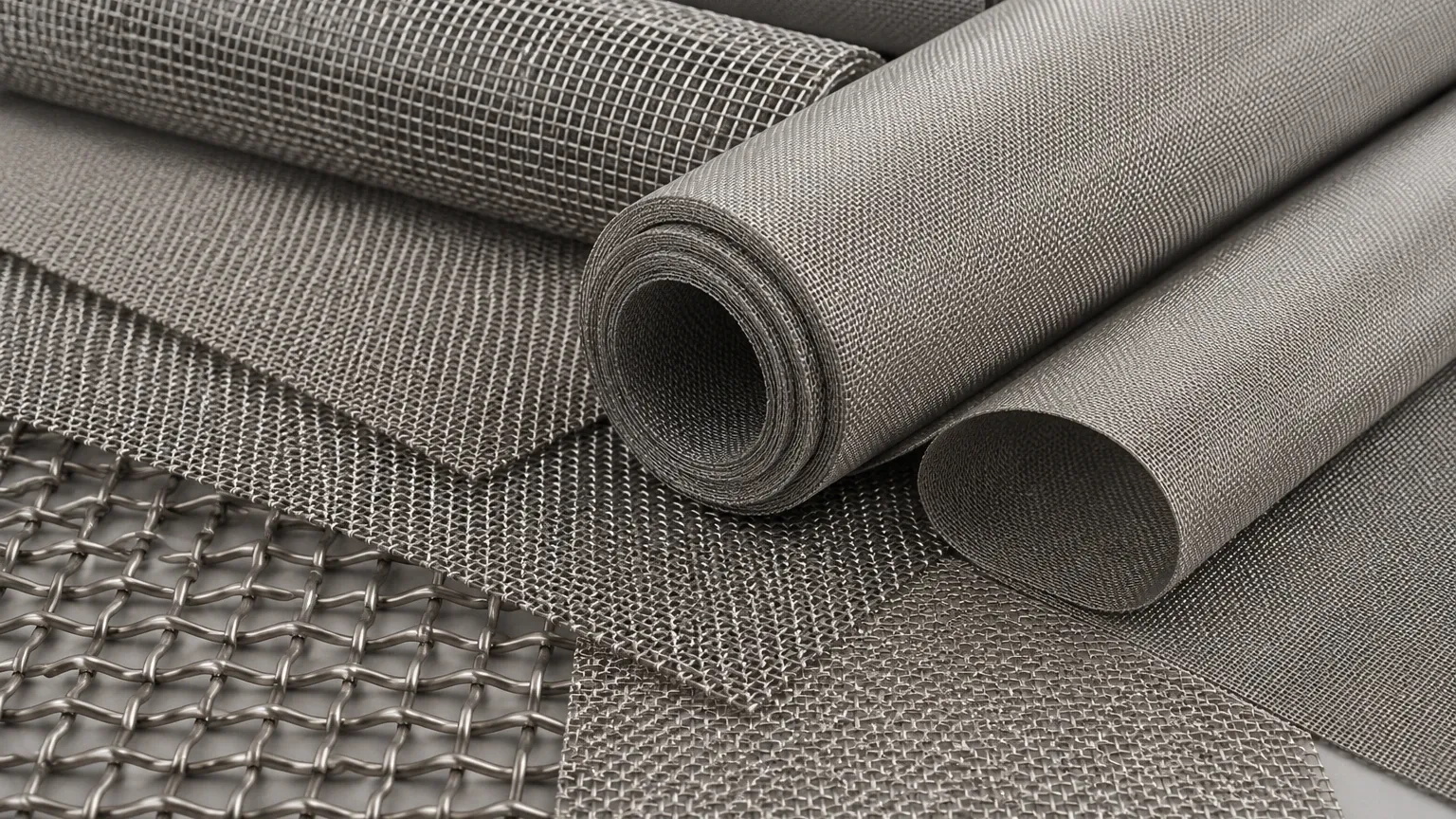
As a specialized manufacturer, Kaifil provides high-precision Plain, twill and dutch woven wire mesh in SS304/316L — rolls, cut mesh and framed panels. Send mesh count or micron target for a technical quote. to meet these demanding technical requirements. This guide explores the essential engineering considerations for selecting the right mesh for your application.
The Role of Woven Wire Mesh in Modern Industrial Filtration
Woven wire mesh is characterized by its precise aperture size and structural integrity. Unlike non-woven media, the weaving process creates a stable, predictable geometry that allows for consistent filtration performance. In industrial hubs like Brisbane, where sectors such as mining, agriculture, and chemical manufacturing are prominent, the demand for durable filtration solutions is high.
The primary function of the mesh is to act as a barrier, allowing fluids or gases to pass while retaining solid particles. The efficiency of this process is determined by the "open area," which influences flow rates and pressure drops. Engineers must balance the need for fine filtration (small apertures) with the requirement for high throughput (large open area). Selecting the wrong specification can lead to premature blinding, excessive energy consumption in pumping systems, or downstream contamination.
Analyzing Weave Structures: Plain, Twill, and Dutch
The method by which wires are interlaced significantly impacts the mechanical strength and filtration characteristics of the mesh. Understanding these patterns is fundamental when evaluating woven wire mesh brisbane options.
Plain Weave
This is the most common and straightforward weave, where each warp wire (running lengthwise) passes alternately over and under each weft wire (running crosswise). Plain weave offers a high degree of transparency and a consistent aperture size, making it ideal for general screening and low-pressure filtration applications.
Twill Weave
In a twill weave, each warp wire passes over two and under two weft wires. This structure allows for the use of heavier wires for a given mesh count, resulting in a more robust mesh. Twill weaves are often employed when a fine mesh is required but must also withstand significant mechanical stress or high-viscosity fluids.
Dutch Weave (Plain and Twill)
Dutch weaves utilize different diameters for warp and weft wires. Typically, a smaller number of thicker warp wires are combined with a larger number of thinner weft wires. This creates a dense, "tortuous path" for the fluid, providing superior filtration fineness and high pressure resistance. Plain Dutch weaves are excellent for heavy-duty filtration, while Twill Dutch weaves offer the finest filtration levels (down to a few microns) by allowing for a very high density of wires.
Material Selection for Harsh Industrial Environments
The chemical and physical environment of the application dictates the material grade required. In many Brisbane-based industries, corrosion resistance is a non-negotiable requirement due to coastal humidity or the presence of aggressive chemicals.
* Stainless Steel 304: The industry standard for general-purpose applications. It offers good corrosion resistance and is suitable for food and beverage processing where hygiene is paramount.
* Stainless Steel 316L: Containing molybdenum, 316L provides superior resistance to chlorides and pitting. This is the preferred choice for marine environments, pharmaceutical manufacturing, and chemical processing plants where 304 might fail due to chemical attack.
* High-Temperature Alloys: For applications involving extreme heat, such as catalyst recovery or high-temperature gas filtration, specialized alloys like Inconel or Monel may be necessary to maintain structural integrity and oxidation resistance.
Selecting the correct grade ensures the longevity of the filter component, reducing the total cost of ownership by extending replacement cycles and preventing unplanned downtime.
Critical Technical Specifications: Beyond the Mesh Count
When specifying woven wire mesh brisbane, engineers often focus on "mesh count" (the number of openings per linear inch). However, a complete technical specification requires several other parameters to ensure performance accuracy.
1. Aperture (Opening Size): The clear distance between two adjacent wires. This determines the largest particle that can pass through the mesh.
2. Wire Diameter: The thickness of the wire before weaving. Thicker wires increase the strength and lifespan of the mesh but reduce the open area.
3. Open Area Percentage: Calculated as `(Aperture / (Aperture + Wire Diameter))^2 x 100`. This figure is vital for calculating flow rates and potential pressure drops across the filter.
4. Micron Rating: This refers to the particle size retention capability. It can be expressed as "nominal" (approximately 60-80% retention) or "absolute" (99.9% retention). For precision applications, absolute ratings are generally required.
By providing these specific details to a manufacturer like Kaifil, engineers can receive a customized solution that aligns perfectly with their system's hydraulic requirements.
Sourcing and Customization for the Brisbane Industrial Sector
Local industrial requirements often necessitate customized filtration components rather than off-the-shelf rolls. Sourcing woven wire mesh brisbane involves looking for partners who can provide value-added fabrication services.
Kaifil specializes in OEM and customized filtration solutions, including:
* Cut-to-Size Pieces: Precision-cut circles, rectangles, or complex shapes to fit specific housing units.
* Multi-Layer Sintered Mesh: Combining multiple layers of mesh for increased strength and finer filtration without sacrificing flow.
* Framed Panels: Mesh tensioned and secured into stainless steel frames for use in vibrating screens or large-scale filtration beds.
* Cylindrical and Pleated Cartridges: Fabricating the mesh into structural elements for use in hydraulic systems or liquid processing lines.
Customization allows for the optimization of the filter for specific flow patterns and mechanical loads, which is often necessary in the complex processing plants found throughout Queensland.
Performance Evaluation and Maintenance Protocols
The lifecycle of a woven wire mesh filter is heavily influenced by how it is maintained. Unlike disposable synthetic filters, stainless steel mesh is often cleanable and reusable, which significantly reduces long-term operational costs.
Cleaning Methods
Depending on the contaminant, mesh can be cleaned using ultrasonic baths, backwashing (reversing the flow), or chemical cleaning. For Dutch weave meshes used in high-pressure applications, ultrasonic cleaning is often the most effective way to remove particles lodged deep within the weave structure.
Monitoring Pressure Drop
Engineers should monitor the differential pressure (ΔP) across the mesh. A sudden increase in ΔP indicates blinding or clogging, while a sudden decrease could suggest a breach in the mesh integrity. Establishing a baseline ΔP for a clean filter is essential for predictive maintenance.
Replacement Cycles
While stainless steel is durable, mechanical fatigue and abrasive wear will eventually necessitate replacement. Regular inspections should look for signs of wire thinning, mesh displacement, or corrosion. In high-vibration environments, such as those found in mining separation, checking the tension of framed panels is critical to prevent premature failure.
Conclusion: Making Informed Procurement Decisions
Selecting the right woven wire mesh brisbane requires a technical approach that considers the intersection of material science and fluid mechanics. By focusing on weave types, precise aperture calculations, and material grades, engineers can ensure their filtration systems operate at peak efficiency with minimal maintenance.
Kaifil remains committed to supporting global industrial sectors with high-performance, customized stainless steel filtration components. Whether you require standard rolls for general screening or precision-engineered Dutch weave cartridges for critical chemical separation, understanding these technical boundaries is the first step toward optimized filtration performance. Always confirm compatibility and performance expectations with your manufacturer to ensure the chosen solution meets the specific demands of your industrial environment.
