


Woven Wire Mesh Concrete Reinforcement: Engineering Guide for Industrial Applications
In industrial construction and the design of specialized processing facilities, the integrity of concrete structures is often challenged by corrosive environments, thermal fluctuations, and mechanical stress. While traditional carbon steel rebar is the standard for heavy structural loads, specialized applications—particularly those involving thin-slab construction, pre-cast filtration components, or environments exposed to aggressive chemicals—require a more precise solution. This is where woven wire mesh concrete reinforcement becomes a critical engineering consideration.
Unlike standard welded wire reinforcement (WWR), which consists of larger diameter rods welded at intersections, Woven Wire Mesh offers a higher degree of flexibility, a tighter aperture range, and superior surface area for bonding in specialized cementitious applications. For engineers and procurement teams at Kaifil, understanding the technical nuances of mesh selection is essential for ensuring the longevity of industrial infrastructure.
The Role of Woven Wire Mesh in Concrete Reinforcement
Concrete is characterized by high compressive strength but relatively low tensile strength. Reinforcement is integrated to absorb tensile stresses and control the width of cracks caused by drying shrinkage or thermal expansion. In many industrial filtration and processing environments, standard reinforcement is insufficient due to thickness constraints or chemical compatibility issues.
Crack Control and Secondary Reinforcement
Woven wire mesh concrete reinforcement is primarily utilized as secondary reinforcement. Its function is not to replace the primary load-bearing steel but to provide a distributed network of high-tensile wires that intercept micro-cracks before they propagate into structural failures. Because the wires in a woven mesh are interlaced rather than welded, the mesh maintains a degree of mechanical interlock that can be advantageous in dynamic loading scenarios.
Thin-Section Components
In the manufacture of custom filtration housings, drainage channels, and thin-wall pre-cast elements, there is often insufficient "cover" (the distance between the reinforcement and the concrete surface) to use traditional rebar. Woven mesh, with its fine wire diameters and precise mesh counts, allows for the reinforcement of sections as thin as 10mm to 25mm without compromising the protective concrete layer.
Material Selection: The Case for Stainless Steel
When specifying woven wire mesh concrete reinforcement, the choice of alloy is the most significant factor impacting the total cost of ownership and the service life of the structure. In B2B industrial sectors, such as chemical processing or food and beverage production, carbon steel is often excluded due to the risk of "rust bursting."
SS304 vs. SS316L
* Stainless Steel 304: This is the standard grade for general industrial applications. It provides excellent resistance to atmospheric corrosion and is suitable for most reinforcement tasks where the concrete will not be submerged in highly saline or acidic solutions.
* Stainless Steel 316L: For environments involving chlorides (such as marine applications or wastewater treatment) or aggressive cleaning chemicals in pharmaceutical plants, SS316L is the preferred choice. The addition of molybdenum enhances pitting resistance. Using SS316L woven mesh ensures that even if moisture penetrates the concrete capillaries, the reinforcement will not oxidize and expand, which is the leading cause of concrete spalling.
Technical Specifications and Weave Types
Selecting the correct mesh requires a detailed understanding of the mechanical requirements of the project. At Kaifil, we provide technical guidance on how different weave patterns influence the performance of the reinforcement.
Plain Weave Mesh
The most common configuration for reinforcement is the plain weave, where each warp wire crosses alternately over and under each weft wire. This provides a stable, consistent aperture that allows the concrete aggregate (depending on the size) to pass through and lock the mesh in place. For reinforcement, a lower mesh count with a larger wire diameter is typically preferred to maximize the cross-sectional area of the steel.
Twill Weave and Dutch Weave
While twill and dutch weaves are more common in high-precision filtration, they are occasionally used in concrete reinforcement for specialized composite materials. A twill weave allows for heavier wire diameters in a given mesh count, increasing the tensile strength of the reinforcement layer without significantly increasing the thickness of the mesh.
Mesh Count and Wire Diameter
Engineers must balance the "open area" of the mesh with the tensile requirements. If the mesh is too dense (high mesh count), the concrete paste may not penetrate effectively, leading to delamination. If the wire diameter is too small, it may not provide sufficient resistance to shrinkage stresses. Plain, twill and dutch woven wire mesh in SS304/316L — rolls, cut mesh and framed panels. Send mesh count or micron target for a technical quote.
Engineering Considerations for Industrial Projects
When integrating woven wire mesh concrete reinforcement into a project, several engineering factors must be evaluated during the design phase to avoid common pitfalls.
1. Bonding and Interlocking
The effectiveness of reinforcement depends on the bond between the steel and the cementitious matrix. Woven mesh provides a high surface-area-to-volume ratio, which enhances the chemical and mechanical bond. However, the weave pattern must be selected to ensure that the maximum aggregate size in the concrete mix is significantly smaller than the mesh aperture to prevent "honeycombing."
2. Thermal Expansion
Stainless steel has a coefficient of thermal expansion relatively close to that of concrete. This compatibility is vital in industrial settings where equipment may subject the concrete to temperature cycles (e.g., CIP processes in food plants). Using high-quality woven mesh ensures that the reinforcement and the concrete expand and contract at similar rates, reducing internal shear stresses.
3. Conductivity and Grounding
In certain electronics manufacturing or hazardous chemical environments, the reinforcement mesh may also serve a dual purpose as a Faraday cage or a grounding grid. Woven wire mesh provides excellent electrical continuity across the entire surface area, which can be a critical safety feature in industrial floor slabs or containment bunds.
Common Risks and Quality Control
Failure to specify the correct parameters for woven wire mesh concrete reinforcement can lead to structural deficiencies. Procurement teams should be aware of the following risks:
* Material Substitution: Using low-grade alloys or non-certified stainless steel can lead to premature corrosion. In the alkaline environment of concrete (pH 12-13), standard steel is protected by a passivating layer, but if chlorides are present, this layer breaks down. Only high-grade stainless steel maintains integrity in these conditions.
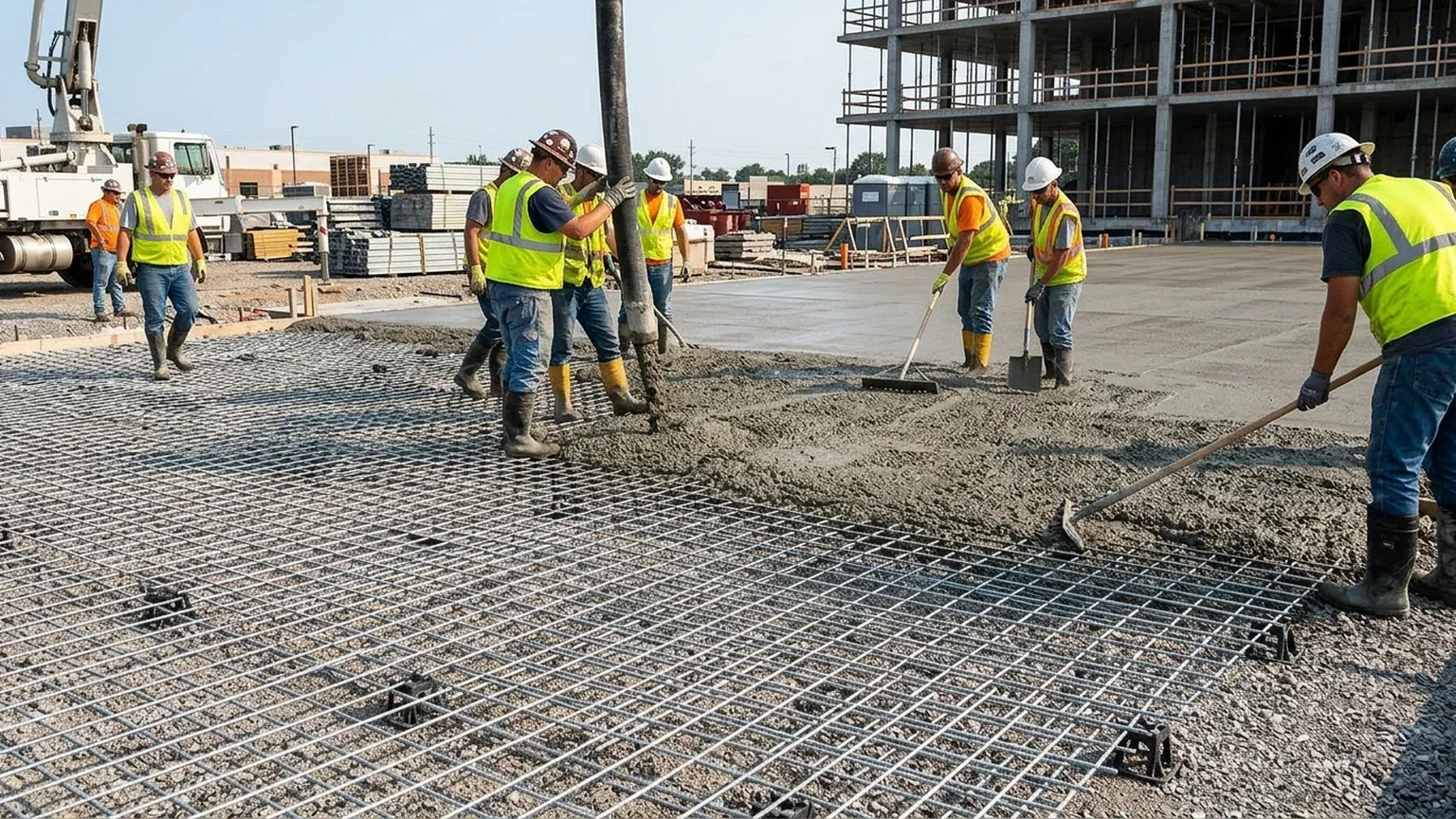
* Improper Placement: If the mesh is not properly supported by "chairs" or spacers during the concrete pour, it may end up at the bottom of the slab, where it provides zero tensile benefit. It must be positioned in the upper third of the slab for effective shrinkage crack control.
* Inadequate Overlap: When joining rolls of woven mesh, an adequate overlap (typically two mesh squares or a specified length) is required to ensure the continuous transfer of tensile loads.
Customization and OEM Solutions
Every industrial project has unique requirements. Kaifil specializes in providing customized filtration and reinforcement components that meet specific engineering tolerances. Whether the project requires specific wire diameters to meet tensile load calculations or custom-cut framed panels for easy installation in pre-cast molds, customization is key to efficiency.
For OEM applications, such as the production of reinforced ceramic filters or specialized industrial flooring, we work closely with engineering teams to determine the optimal mesh count and alloy. This collaborative approach ensures that the woven wire mesh concrete reinforcement performs as intended throughout the lifecycle of the facility.
Conclusion: Making Informed Purchasing Decisions
Selecting the right woven wire mesh concrete reinforcement is a technical decision that impacts the durability and safety of industrial infrastructure. By focusing on material grade, weave precision, and the specific requirements of the concrete mix, engineers can significantly reduce maintenance costs and prevent structural failures.
When evaluating suppliers, it is essential to confirm the origin of the materials and the precision of the weaving process. At Kaifil, we provide the technical expertise and high-performance stainless steel products necessary for demanding industrial environments. For those looking to optimize their filtration systems or reinforce critical concrete components, choosing a partner with deep manufacturing experience is the first step toward a successful installation.
Before proceeding with a purchase, engineers should confirm the following:
1. The specific chemical exposure the reinforcement will face (to choose between SS304 and SS316L).
2. The maximum aggregate size of the concrete to ensure proper mesh aperture selection.
3. The required tensile strength per linear meter to determine the necessary wire diameter.
By addressing these factors, procurement teams can ensure they receive a product that meets both the technical specifications and the long-term performance goals of their project.
