


Woven Wire Mesh Melbourne: A Technical Guide for Industrial Applications
In the diverse industrial landscape of Melbourne, from the chemical processing plants in the western suburbs to the sophisticated food and beverage facilities across Victoria, the demand for high-precision filtration and separation components is constant. Among these components, woven wire mesh stands as a fundamental technology. Selecting the right woven wire mesh Melbourne based solutions requires a deep understanding of material science, weave geometry, and mechanical performance to ensure operational efficiency and longevity.
Industrial engineers and procurement teams must navigate a complex array of specifications when sourcing filtration media. Whether the application involves hydraulic fluid filtration, pharmaceutical grade separation, or large-scale water treatment, the choice of mesh impacts everything from throughput rates to maintenance intervals. This guide examines the technical parameters and selection criteria essential for professional applications.
Understanding the Fundamentals of Woven Wire Mesh
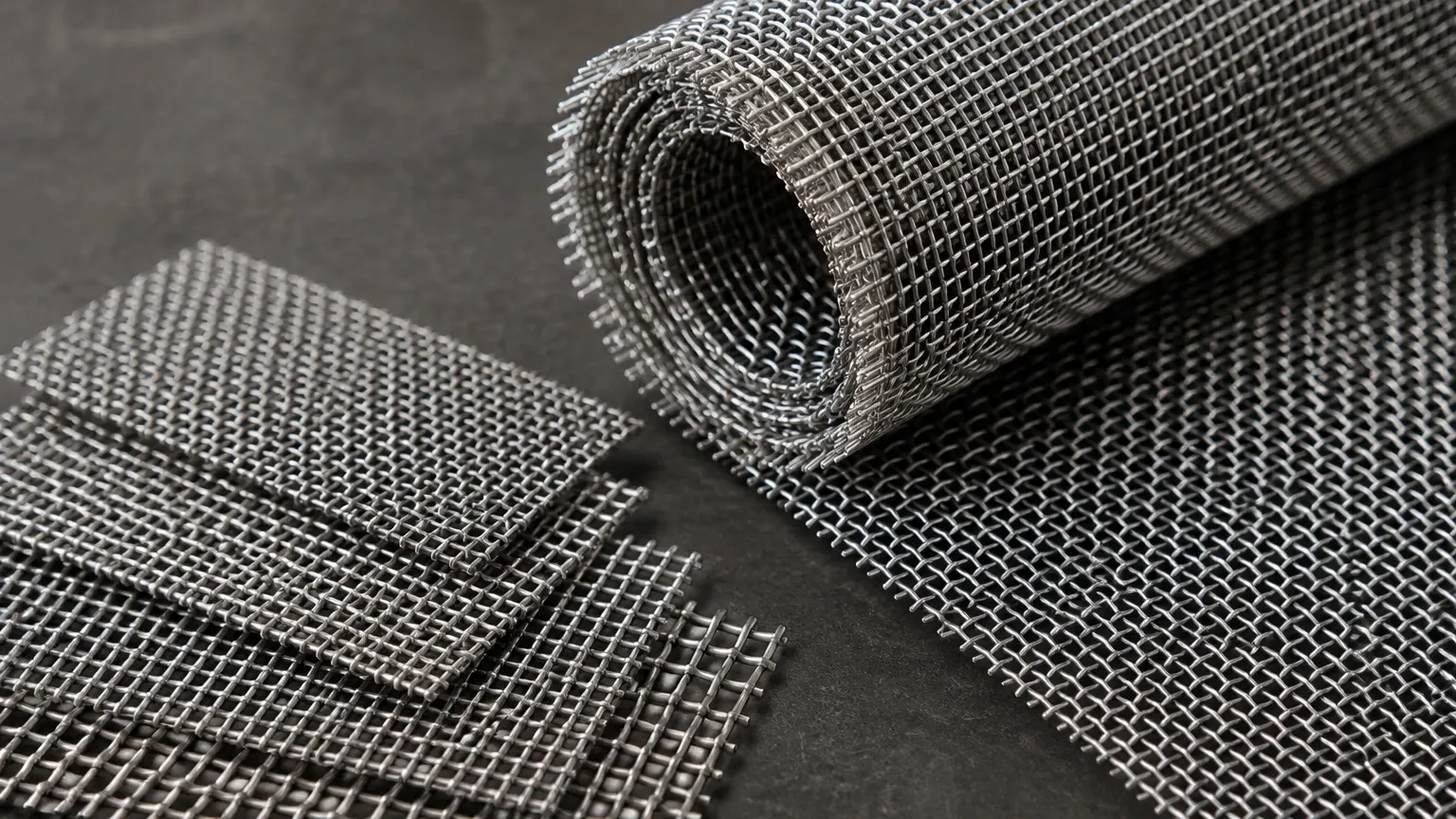
Woven wire mesh is produced by weaving individual wires over and under one another on industrial looms, creating a structured medium with precise openings. Unlike perforated metals or expanded mesh, woven wire provides a high degree of accuracy in aperture size, making it the preferred choice for fine filtration tasks.
The performance of the mesh is dictated by three primary variables: the wire diameter, the mesh count (the number of wires per linear inch), and the weave pattern. For industrial professionals in Melbourne, understanding how these variables interact is the first step in optimizing a filtration system.
Common Weave Patterns
1. Plain Weave: This is the most common pattern, where each warp wire crosses over and under one weft wire. It provides a stable structure with square openings and is suitable for a wide range of general filtration and screening applications.
2. Twill Weave: In this pattern, each warp wire passes over and under two weft wires. This allows for the use of heavier wires in a given mesh count, providing increased strength and the ability to produce finer meshes that would be too delicate for a plain weave.
3. Dutch Weave (Plain and Twill): Dutch weaves utilize different wire diameters for the warp and weft. This results in a much denser mesh with smaller, triangular openings. These are specifically designed for high-pressure filtration where high mechanical strength and fine micron ratings are required.
For those seeking specific configurations, Plain, twill and dutch woven wire mesh in SS304/316L — rolls, cut mesh and framed panels. Send mesh count or micron target for a technical quote. provides a comprehensive starting point for technical evaluation.
Material Selection: Why Stainless Steel Dominates
In the context of woven wire mesh Melbourne industries, environmental factors play a significant role in material selection. Melbourne’s coastal proximity and varied industrial climates necessitate materials that can withstand both atmospheric corrosion and aggressive process chemicals.
Grade 304 Stainless Steel
Grade 304 is the standard "18/8" stainless steel. It offers excellent corrosion resistance in most standard industrial environments and is highly cost-effective. It is widely used in food processing (where it is generally recognized as food-safe) and general manufacturing. However, in environments with high chloride exposure—such as those near Port Phillip Bay—it may be susceptible to pitting.
Grade 316L Stainless Steel
Grade 316L contains molybdenum, which significantly enhances its resistance to chloride-induced corrosion and chemical attack. The "L" denotes low carbon content, which improves weldability and prevents sensitization in heat-affected zones. For Melbourne-based chemical plants, pharmaceutical labs, and marine-related industries, 316L is the technical benchmark for durability.
Specialized Alloys
For extreme conditions involving high temperatures or highly acidic environments, alloys such as 904L, Inconel, or Monel may be required. These materials ensure that the mesh maintains its structural integrity and filtration accuracy even under severe thermal or chemical stress.
Technical Specifications and Engineering Considerations
When specifying Woven Wire Mesh, engineers must look beyond simple dimensions. The following metrics are critical for calculating the performance of a filtration system:
Aperture (Opening Size)
The aperture is the clear distance between two adjacent wires. This determines the largest particle that can pass through the mesh. In precision applications, the consistency of the aperture size across the entire roll of mesh is a key indicator of manufacturing quality.
Open Area Percentage
The open area is the ratio of the total area of the apertures to the total area of the mesh. A higher open area results in lower pressure drops and higher flow rates, which is essential for energy efficiency in pumping systems. However, increasing the open area often requires thinner wires, which can reduce the mechanical strength and service life of the filter.
Micron Rating
In fine filtration, the mesh is often rated by microns (one-millionth of a meter). There are two types of micron ratings:
* Nominal Micron Rating: Represents the average pore size, where a certain percentage of particles of that size will be retained.
* Absolute Micron Rating: Represents the size of the largest particle that can pass through the mesh under laboratory conditions. For critical pharmaceutical or hydraulic applications, the absolute rating is the more reliable metric.
Applications in Melbourne’s Key Industrial Sectors
The versatility of woven wire mesh Melbourne suppliers provide allows it to serve a vast array of local sectors. Each industry has unique requirements that dictate mesh selection.
Food and Beverage Processing
Melbourne is a hub for food innovation and production. Woven wire mesh is used here for sifting, grading, and filtration. Compliance with hygiene standards is paramount, making high-grade stainless steel (SS304 or SS316) essential. The mesh must be easy to clean (CIP – Clean In Place) and resistant to the organic acids found in food products.
Chemical and Petrochemical
In the chemical sector, mesh components are used in catalyst recovery, gas-liquid separation, and filtration of corrosive fluids. The primary concern here is chemical compatibility. Engineers must ensure that the wire alloy will not react with the process media, which could lead to contamination or premature failure of the filter element.
Water and Wastewater Treatment
With a focus on sustainability, Melbourne’s water treatment facilities utilize woven wire mesh for primary filtration and the removal of suspended solids. These applications often require large-scale panels or cylindrical filter cartridges capable of handling high flow volumes while resisting the abrasive nature of sand and silt.
Pharmaceutical and Biotechnology
Precision is the defining requirement in pharmaceutical manufacturing. Woven wire mesh is used in fluid bed dryers, granulators, and sterile filtration. The mesh must have a perfectly smooth surface to prevent particle entrapment and must be capable of withstanding rigorous sterilization processes, including autoclaving.
Customization and OEM Solutions
Standard off-the-shelf mesh rolls are often insufficient for specialized industrial machinery. This is where the capability for customization becomes vital. Manufacturers like Kaifil specialize in transforming raw Woven Wire Mesh into finished, application-specific components.
Custom Fabrication Options
* Slitting and Cutting: Mesh can be precision-slit into narrow ribbons or die-cut into specific shapes (circles, donuts, or complex geometries) for integration into existing equipment.
* Pleating: To increase the effective filtration area without increasing the footprint of the filter, the mesh can be pleated. This is common in hydraulic and high-pressure gas filtration.
* Framing and Edging: For safety and structural integrity, mesh panels can be fitted with U-binders, spot-welded frames, or polymer edges.
* Multi-layer Sintering: Multiple layers of mesh can be sintered together to create a composite material that combines the fine filtration of a thin mesh with the mechanical support of a coarse mesh.
Evaluating Total Cost of Ownership (TCO)
For procurement professionals in Melbourne, the initial purchase price of woven wire mesh is only one component of the total cost. A low-cost, low-quality mesh can lead to significantly higher expenses over time due to:
1. Frequent Replacement Cycles: Poor quality wire or inconsistent weaving leads to faster wear and tear, necessitating more frequent shutdowns for replacement.
2. Product Contamination: If wires break or the mesh corrodes, metal fragments can enter the process stream, potentially ruining entire batches of product.
3. Energy Inefficiency: Inconsistent aperture sizes or poorly designed weaves can cause higher-than-expected pressure drops, forcing pumps to work harder and consume more electricity.
4. Downstream Damage: If a filter fails to catch particles of the specified size, it can lead to the damage of expensive downstream equipment, such as high-pressure pumps or delicate sensors.
Investing in high-quality, technically verified mesh ensures a lower TCO by extending the service life of the filtration component and protecting the integrity of the entire production line.
Maintenance and Replacement Cycles
To maintain optimal performance, industrial filters must be monitored and maintained. The replacement cycle for woven wire mesh depends on the solids loading of the fluid, the flow rate, and the cleaning protocols used.
In many Melbourne industrial applications, differential pressure (DP) sensors are used to monitor the health of the mesh. A steady increase in DP indicates that the mesh is becoming blinded or clogged. While many stainless steel meshes can be cleaned via backwashing, ultrasonic cleaning, or chemical baths, eventually, the mechanical fatigue of the wires will necessitate a full replacement.
Engineers should work closely with manufacturers to establish a baseline for expected service life. By analyzing used filter elements, manufacturers can often suggest adjustments in mesh count or material grade to extend the interval between replacements.
Conclusion: Selecting the Right Partner for Woven Wire Mesh
Selecting woven wire mesh Melbourne solutions involves more than just picking a mesh count from a table. It requires a holistic view of the industrial process, an understanding of material limitations, and a focus on long-term reliability. Whether you are designing a new filtration system or looking to optimize an existing one, technical expertise is the most valuable asset.
Kaifil provides the engineering support and manufacturing precision necessary to meet the demanding standards of Melbourne’s industrial sectors. By focusing on high-quality stainless steel alloys and precision weaving techniques, we ensure that our filtration components deliver consistent, dependable performance in the most challenging environments.
For detailed specifications, material certifications, or to discuss a custom filtration project, engineers and purchasing teams are encouraged to explore our full range of capabilities. Review product options and application support to find the ideal mesh configuration for your specific industrial needs. From initial material selection to the delivery of custom-fabricated components, professional guidance ensures that your filtration systems operate at peak efficiency.
