


Engineering Guide to Woven Wire Mesh Patterns in Industrial Filtration
In industrial filtration, the selection of a filtration medium is rarely a matter of simple sizing. For engineers and procurement specialists, the performance of a filter system is dictated by the precise geometry of the media. At the heart of this geometry is the woven wire mesh pattern, a critical specification that determines everything from flow resistance and mechanical strength to the absolute micron rating of the component.
Kaifil, as a specialist in custom stainless steel filtration solutions, recognizes that selecting the correct Woven Wire Mesh requires a deep understanding of how different weave structures interact with various fluids and particulates. This guide examines the technical characteristics of common weave patterns, their engineering trade-offs, and how to select the optimal configuration for demanding industrial environments.
The Fundamentals of Woven Wire Mesh Geometry
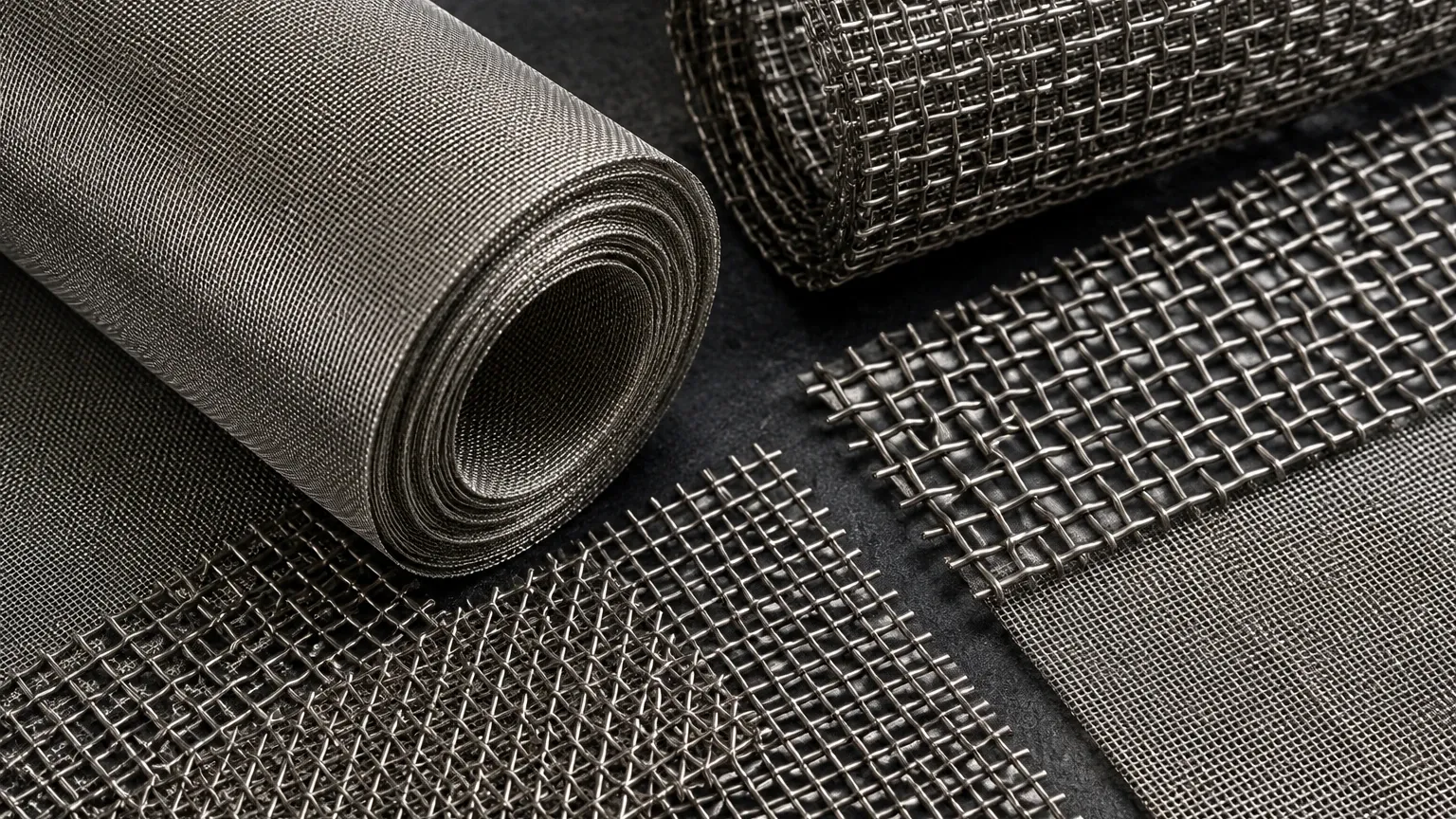
Woven wire mesh is produced by interlacing longitudinal wires (warp) and transverse wires (weft or shute). The manner in which these wires cross each other defines the "pattern." While the mesh count (the number of openings per linear inch) and the wire diameter are standard metrics, the pattern itself dictates the shape of the pore and the stability of the mesh under pressure.
For industrial applications—ranging from chemical processing to hydraulic systems—the pattern must be chosen based on the required filtration accuracy and the physical stresses the filter will encounter. A pattern that excels in high-flow water treatment may fail prematurely in a high-viscosity polymer melt application. Therefore, understanding the mechanical nuances of each woven wire mesh pattern is the first step toward optimizing filtration performance.
Analysis of Common Woven Wire Mesh Patterns
1. Plain Weave
The plain weave is the most fundamental and widely used pattern. In this configuration, each weft wire passes over one warp wire and under the next, and vice versa.
* Characteristics: It provides square or rectangular openings and offers the highest degree of transparency and flow area for a given wire diameter.
* Engineering Considerations: Plain weave is ideal for simple screening and separation tasks where high flow rates are a priority. However, because the wires are bent at every intersection, there is a limit to how fine the mesh can be before the wire becomes too thin to maintain structural integrity.
* Best For: General industrial sieving, protective screens, and pre-filtration in water treatment.
2. Twill Weave
In a twill weave, each weft wire passes over and under two warp wires in a staggered sequence. This creates a diagonal pattern on the surface of the mesh.
* Characteristics: This pattern allows for the use of heavier wire diameters than a plain weave of the same mesh count. It is more flexible and offers higher mechanical strength.
* Engineering Considerations: Engineers often specify twill weave when a fine mesh is required but the application involves high pressures or abrasive materials that would cause a plain weave to deform or tear.
* Best For: High-pressure hydraulic filters, fine chemical filtration, and applications requiring high durability.
3. Plain Dutch Weave
Dutch weaves depart from the square opening concept. They utilize a relatively heavy warp wire combined with a much finer, more closely packed weft wire. In a plain dutch weave, the wires follow a simple over-under pattern, but the weft wires are driven together so tightly that they create a "zero-open" appearance when viewed directly.
* Characteristics: This results in a wedge-shaped opening that provides excellent filtration accuracy in the micron range. It offers high mechanical strength and low pressure drop relative to its filtration fineness.
* Engineering Considerations: Because the openings are triangular and tortuous, plain dutch weave is highly effective at capturing irregularly shaped particles. It is significantly more robust than plain or twill square mesh.
* Best For: High-pressure liquid filtration, fuel filters, and gas purification.
4. Twill Dutch Weave
Combining the principles of twill and dutch weaving, this pattern involves weft wires passing over and under two warp wires, allowing for an even higher density of weft wires. This creates a double layer of weft wires, resulting in the finest filtration capabilities available in woven metal media.
* Characteristics: It can achieve absolute filtration ratings down to 5–10 microns. The surface is smooth, and the structure is extremely dense.
* Engineering Considerations: While it provides superior filtration, the dense structure also results in a higher pressure drop. Engineers must balance the need for fine particle retention with the available pump head and flow requirements.
* Best For: Pharmaceutical processing, aerospace filtration, and ultra-fine chemical separation.
5. Reverse Dutch Weave
As the name suggests, this pattern reverses the wire diameters used in standard dutch weave. It uses a large number of fine warp wires and a smaller number of heavy weft wires.
* Characteristics: This creates a mesh with exceptional mechanical strength along the warp direction and a very smooth surface. It is particularly resistant to high-pressure backwashing.
* Engineering Considerations: This pattern is often used in continuous filtration systems where the mesh is subjected to mechanical scrapers or high-pressure pulses for cleaning.
* Best For: Polymer melt filtration, high-pressure sand control in oil and gas, and automatic self-cleaning filters.
Material Selection and Environmental Compatibility
The effectiveness of a woven wire mesh pattern is inextricably linked to the material from which it is manufactured. Kaifil specializes in stainless steel alloys to ensure longevity in corrosive or high-temperature environments.
* Stainless Steel 304: The standard industrial grade, offering good corrosion resistance and excellent forming properties. It is suitable for most food-grade and general industrial applications.
* Stainless Steel 316L: Containing molybdenum, 316L provides superior resistance to chlorides and acids. It is the preferred choice for marine environments, pharmaceutical manufacturing, and aggressive chemical processing. The "L" denotes low carbon, which is essential for components that require welding, as it prevents sensitisation and intergranular corrosion.
For technical specifications or to discuss material compatibility for your specific project, you can Plain, twill and dutch woven wire mesh in SS304/316L — rolls, cut mesh and framed panels. Send mesh count or micron target for a technical quote.
Technical Evaluation Criteria for Engineers
When specifying a woven wire mesh pattern, engineers should evaluate the following performance metrics to ensure the filter meets the application’s operational lifespan goals:
Micron Rating: Absolute vs. Nominal
In square weave patterns (Plain/Twill), the micron rating is typically nominal, based on the physical aperture size. In Dutch weaves, the rating is often considered absolute because the complex path through the mesh ensures that no particle larger than the rated size can pass through. Understanding this distinction is vital for protecting downstream equipment like high-pressure pumps or sensitive nozzles.
Effective Open Area (EOA)
The EOA determines the flow capacity of the filter. A higher EOA results in lower initial pressure drop and longer service intervals. However, increasing the EOA often requires thinner wires, which can compromise the structural integrity of the filter element. Patterns like Twill Weave allow for a balance between high EOA and mechanical durability.
Pressure Drop and Dirt Holding Capacity
A dense woven wire mesh pattern like Twill Dutch provides excellent filtration but may clog faster if the particulate load is high. Engineers must consider the "dirt holding capacity"—the amount of contaminant the mesh can trap before the pressure drop reaches a critical limit. In systems with high solids loading, a coarser plain weave or a multi-layer sintered mesh may be more appropriate.
Customization and OEM Capabilities
Industrial filtration often requires more than just a roll of mesh. Kaifil provides comprehensive OEM services to transform raw woven wire mesh into functional components. Customization options include:
* Calendering: Passing the mesh through heavy rollers to flatten the wire knuckles. This provides a uniform thickness, a smoother surface, and can slightly reduce the pore size, which is beneficial for surface filtration and cleaning.
* Sintering: Bonding multiple layers of mesh together using heat and pressure without melting the wires. This creates an exceptionally strong composite that combines the fine filtration of a Dutch weave with the structural support of a coarse square mesh.
* Fabrication: Cutting, pleating, and welding mesh into custom cartridges, discs, or conical strainers. Precise welding is crucial to ensure that the filtration integrity is maintained at the seams.
Total Cost of Ownership (TCO) in Filtration
While the initial purchase price of a filter is a factor, the Total Cost of Ownership is driven by durability and maintenance. A cheaper, lower-quality woven wire mesh pattern may suffer from wire migration (where wires shift and change the pore size) or premature fatigue failure under pressure cycles.
Investing in a precision-woven, high-grade stainless steel mesh from a manufacturer like Kaifil reduces the frequency of replacement and minimizes downtime. Furthermore, stainless steel mesh is often cleanable and reusable. Methods such as ultrasonic cleaning, backwashing, or chemical soaking can restore the mesh to near-original performance, providing significant long-term savings compared to disposable synthetic filters.
Conclusion
Selecting the right woven wire mesh pattern is a technical decision that impacts the efficiency, safety, and cost-effectiveness of industrial processes. Whether the priority is the high flow of a plain weave, the fine precision of a twill dutch weave, or the ruggedness of a reverse dutch weave, the choice must be backed by engineering data and application requirements.
Kaifil’s expertise in manufacturing and customizing stainless steel filtration solutions ensures that engineers have access to the high-performance components needed for demanding environments. By focusing on material quality, weave precision, and customized design, we help our global partners achieve optimized filtration performance. For detailed selection advice or to request a technical quote for your specific filtration challenge, review our product options and application support to find the ideal solution for your facility.
