


Filter Cartridge 40
In industrial filtration, the designation "40" typically refers to one of two critical specifications: the physical length of the filter element (40 inches) or the filtration fineness (40 microns). Both parameters are foundational to the design of high-capacity fluid processing systems. A filter cartridge 40 inches in length is the industry standard for high-flow applications, providing the maximum surface area possible within a single standard housing footprint. Understanding the engineering nuances behind these specifications is essential for technical professionals tasked with optimizing filtration efficiency, reducing downtime, and ensuring the longevity of downstream equipment.
For engineers and procurement teams, selecting the correct Filter Cartridges involves more than matching dimensions. It requires a deep dive into material compatibility, structural integrity under differential pressure, and the specific requirements of the medium being filtered. Whether the application involves chemical processing, high-temperature steam, or hydraulic oil reclamation, the choice of a 40-inch or 40-micron filter element dictates the total cost of ownership and the reliability of the entire process loop.
The Engineering Significance of the 40-Inch Standard
The 40-inch length is widely regarded as the "high-capacity" standard in industrial liquid and gas filtration. While 10-inch, 20-inch, and 30-inch cartridges are common, the 40-inch variant offers distinct mechanical and economic advantages in large-scale operations.
Maximizing Surface Area and Flow Rates
By utilizing a 40-inch cartridge, engineers can achieve significantly higher flow rates per housing. In a multi-round filter vessel, using 40-inch elements instead of 10-inch elements reduces the number of individual components to be handled during maintenance. More importantly, it minimizes the number of potential leak points. Every connection between a filter and its seat is a potential bypass point; by using a single long element rather than stacking shorter ones, the integrity of the seal is greatly enhanced.
Footprint and Vessel Optimization
In facilities where floor space is at a premium, such as offshore platforms or compact chemical plants, the vertical expansion of the filter vessel (moving from 20-inch to 40-inch elements) allows for increased throughput without increasing the diameter of the vessel. This optimization leads to lower capital expenditure on housings and reduced piping complexity.
Material Selection for Stainless Steel Filter Cartridges
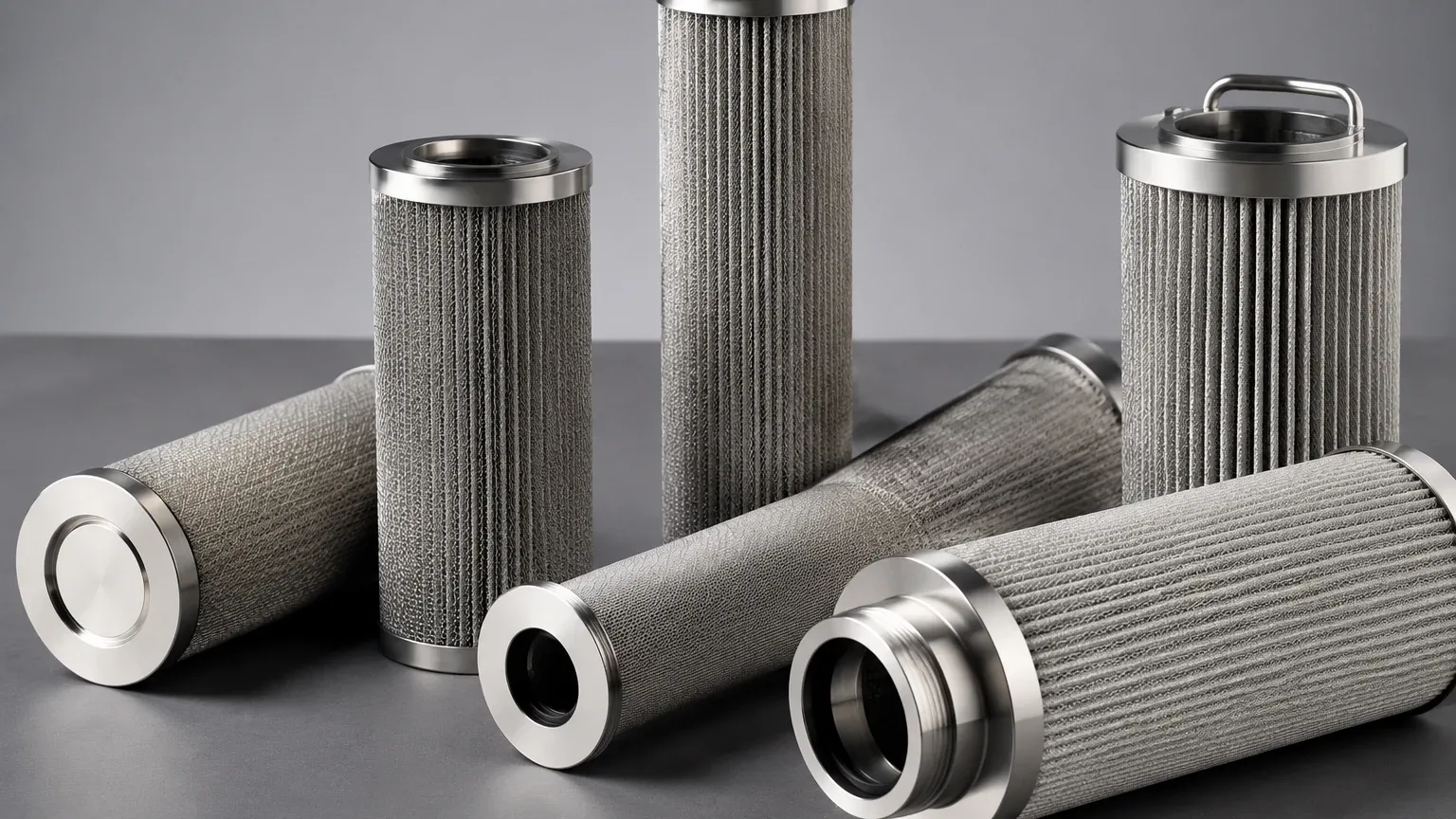
While polymer-based filters are common in water treatment, demanding industrial environments require the durability of metal. A stainless steel filter cartridge 40 inches in length provides the thermal and chemical resistance necessary for aggressive solvents, high-viscosity fluids, and extreme temperatures.
Stainless Steel 304 vs. 316L
* Type 304: Suitable for general industrial applications, including air filtration, hydraulic oils, and non-corrosive chemicals. It offers excellent mechanical strength and cost-effectiveness.
* Type 316L: The "L" stands for low carbon, which improves weldability and resistance to intergranular corrosion. This material is the standard for pharmaceutical, food and beverage, and marine applications where resistance to chlorides and organic acids is paramount.
Wire Mesh vs. Sintered Metal
For a 40-micron rating, engineers must choose between woven wire mesh and sintered metal fiber or powder.
* Woven Wire Mesh: Provides a precise, two-dimensional pore structure. It is easy to clean via backwashing or ultrasonic baths, making it ideal for processes where the filter must be reused many times.
* Sintered Metal: Created by bonding multiple layers of mesh or metal fibers through heat and pressure. This results in a robust, three-dimensional depth filtration medium that can withstand higher differential pressures without media migration.
Understanding the 40-Micron Rating in Industrial Processes
When a filter cartridge 40 refers to the micron rating, it indicates the size of particles the media is designed to capture. A 40-micron filter is generally categorized as a medium-to-coarse filter, often serving as a critical protection layer in a multi-stage filtration system.
Nominal vs. Absolute Ratings
It is vital to distinguish between a nominal 40-micron rating and an absolute 40-micron rating.
* Nominal Rating: An approximate value indicating that the filter will retain a majority (typically 60% to 90%) of particles at 40 microns. This is often sufficient for pre-filtration.
* Absolute Rating: A laboratory-verified value indicating that 99.9% or more of particles at 40 microns are retained. This is required for critical applications where downstream components, such as high-pressure nozzles or sensitive membranes, must be protected from any particles exceeding a specific size.
Common Applications for 40-Micron Filtration
* Cooling Water Loops: Removing scale and debris to protect heat exchangers.
* Pre-filtration for RO Systems: Protecting delicate reverse osmosis membranes from premature fouling by larger suspended solids.
* Hydraulic Systems: Protecting pumps and valves from large metallic shavings or environmental contaminants.
* Food and Beverage: Removing pulp or coarse particulates from process liquids before fine polishing.
Structural Integrity and Design Considerations
A 40-inch filter cartridge faces unique mechanical stresses compared to its shorter counterparts. The length of the element makes it more susceptible to bending or buckling under high flow velocities or pressure surges.
Internal Support Cores
To prevent collapse, high-quality stainless steel cartridges utilize a perforated internal core. The thickness of this core and the pattern of the perforations must be engineered to balance structural rigidity with minimal flow resistance. In high-viscosity applications, an outer cage may also be added to protect the pleated media from external forces during installation or backpulsing.
End Cap Configurations
Compatibility with existing housings depends on the end cap design. Common configurations for a filter cartridge 40 include:
* DOE (Double Open End): Uses flat gaskets on both ends; common in older or simpler housing designs.
* Code 7 (226 O-ring/Fin): Features a locking tab and two O-rings for a high-integrity seal, often used in critical pharmaceutical or chemical processes.
* Code 3 (222 O-ring/Flat): A standard O-ring seal for general industrial use.
Performance Evaluation: Pressure Drop and Dirt Holding Capacity
The efficiency of a filter is not just about what it stops, but how it affects the system's energy consumption. The initial pressure drop (clean ΔP) should be kept as low as possible to reduce pump work.
The Impact of Surface Area
A pleated 40-inch cartridge provides significantly more surface area than a cylindrical (non-pleated) version of the same length. Increased surface area leads to:
1. Lower Face Velocity: Fluid moves through the media more slowly, improving the capture efficiency of smaller particles.
2. Extended Service Life: More space is available to trap contaminants before the terminal pressure drop is reached, necessitating a change-out or cleaning cycle.
3. Higher Dirt Holding Capacity (DHC): The total mass of contaminants a filter can retain. For a filter cartridge 40, a high DHC is essential for maintaining continuous production in high-solids environments.
Total Cost of Ownership (TCO) and Maintenance
While the initial purchase price of a stainless steel filter cartridge 40 is higher than that of a disposable polypropylene element, the TCO is often much lower in industrial settings.
Cleanability and Reuse
Stainless steel elements are designed for longevity. Depending on the contaminant, these filters can be cleaned using:
* Backpulsing: Reversing the flow to dislodge surface cake.
* Ultrasonic Cleaning: Using high-frequency sound waves in a cleaning solution to remove particles lodged deep within the mesh.
* Chemical Cleaning: Using acids or solvents to dissolve organic or mineral buildup without damaging the stainless steel substrate.
Reducing Waste and Environmental Impact
In modern ESG-conscious manufacturing, the transition from disposable filters to permanent, cleanable stainless steel elements significantly reduces the facility's waste stream. This also eliminates the logistical burden and cost of disposing of contaminated filter media, which may be classified as hazardous waste depending on the process fluid.
Customization and OEM Solutions
Every industrial process has unique variables, including fluid chemistry, temperature spikes, and flow fluctuations. Standard off-the-shelf solutions may not always suffice. Customization options for a filter cartridge 40 typically include:
* Bespoke Micron Ratings: Engineering a specific pore size (e.g., 35 microns or 45 microns) to meet a proprietary process requirement.
* Reinforced Construction: Adding extra support for high-pressure applications exceeding 100 PSI differential pressure.
* Specialty Coatings: Applying surface treatments to improve hydrophobicity or to prevent the adhesion of sticky resins.
By working with a manufacturer that understands the complexities of metal filtration, engineers can develop Filter Cartridges that are tailored to their specific operational constraints, ensuring maximum uptime and product purity.
Conclusion: Technical Checklist for Selection
Before finalizing the specification for a filter cartridge 40, technical teams should confirm the following parameters:
1. Fluid Compatibility: Does the stainless steel grade (304 or 316L) and the gasket material (Viton, EPDM, PTFE) match the chemical profile of the process fluid?
2. Operating Temperature: Will the filter maintain structural integrity at the maximum process temperature?
3. Micron Efficiency: Is an absolute or nominal 40-micron rating required for downstream protection?
4. Housing Fit: Does the end cap configuration (DOE, Code 7, etc.) match the existing vessel internal hardware?
5. Cleaning Protocol: Is there a documented procedure for cleaning and validating the filter for reuse?
By addressing these factors, industrial professionals can ensure that their filtration system operates at peak efficiency, protecting both the product quality and the mechanical assets of the facility.
