


Filter Cartridge 59900
In the landscape of industrial and commercial filtration, specific part numbers often become benchmarks for size, fit, and performance expectations. The filter cartridge 59900 is one such designation, frequently referenced in high-volume water circulation and light industrial applications. For procurement teams and maintenance engineers, understanding the technical specifications of this cartridge—and knowing when to transition from standard consumer-grade materials to high-performance industrial alternatives—is critical for operational efficiency and equipment longevity.
Industrial filtration requires a rigorous approach to material science and fluid dynamics. While the 59900 designation provides a starting point for dimensions and basic compatibility, the specific demands of chemical processing, pharmaceutical manufacturing, and food production often necessitate a more robust solution. This guide examines the technical parameters of the filter cartridge 59900, the engineering considerations for selecting Filter Cartridges, and the advantages of utilizing custom-engineered stainless steel components in demanding environments.
Technical Specifications and Geometry of the 59900 Series
The filter cartridge 59900 is characterized primarily by its physical dimensions and its role in low-to-medium pressure systems. Typically associated with a "Type A" or "Type C" geometry, these cartridges generally feature an outer diameter of approximately 4.25 inches (108mm) and a length of 8 inches (203mm). However, in a B2B context, the "59900" specification is less about a single brand and more about a standardized form factor that must interface correctly with existing housing manifolds.
Micron Ratings and Filtration Efficiency
Standard versions of these cartridges often utilize pleated paper or synthetic fibers (such as Dacron), providing nominal filtration usually ranging from 10 to 50 microns. In industrial settings, the distinction between nominal and absolute filtration is vital. A nominal rating indicates that the filter will trap a large percentage of particles at the specified size, whereas an absolute rating—common in precision stainless steel mesh—guarantees that no particles above that size will pass through the media. When evaluating a filter cartridge 59900 for industrial use, engineers must confirm whether the process requires the high-retention accuracy of sintered metal or the general-purpose performance of disposable media.
Flow Rate and Differential Pressure
The flow capacity of a cartridge is dictated by its effective filtration area (EFA). Pleated designs are utilized to maximize this area within the 8-inch cylindrical envelope. For a standard 59900-style cartridge, flow rates are typically optimized for aqueous solutions at low viscosities. As the filter accumulates debris, the differential pressure (ΔP) across the media increases. Monitoring this pressure drop is essential; exceeding the manufacturer’s recommended ΔP can lead to media migration, cartridge collapse, or bypass, where unfiltered fluid escapes into the clean stream.
Material Selection: Transitioning from Synthetic to Stainless Steel
While many applications utilize disposable synthetic 59900 cartridges, industrial environments often reach the limits of polymer-based media. Factors such as temperature, chemical reactivity, and mechanical stress dictate a move toward metallic filtration solutions.
Temperature and Chemical Compatibility
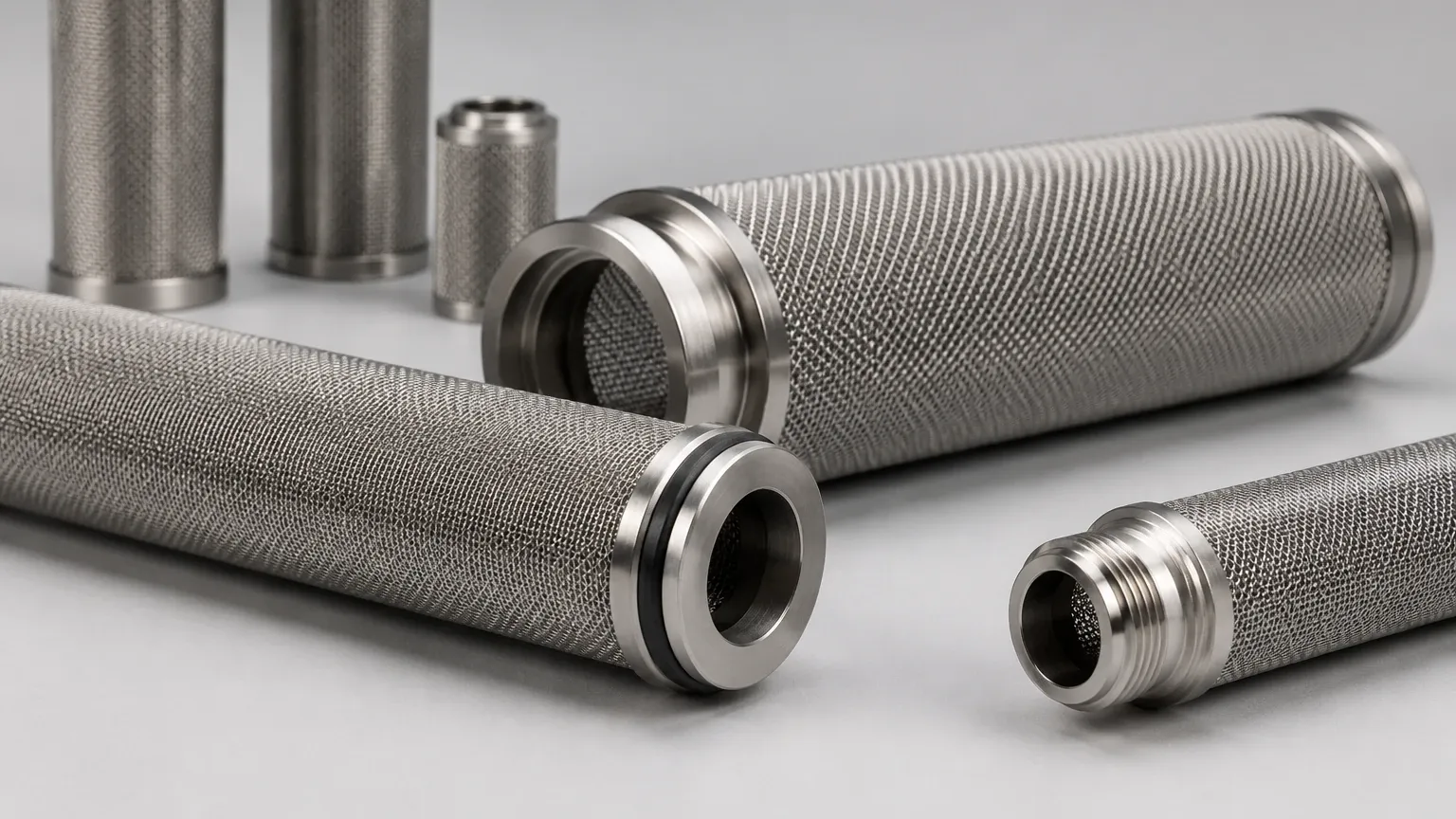
Synthetic cartridges are generally limited to operating temperatures below 60°C (140°F) and may degrade when exposed to aggressive solvents, oils, or high-pH cleaning agents. Stainless steel (specifically AISI 304 or 316L) offers a vastly broader operating window. A stainless steel filter cartridge 59900 can withstand temperatures exceeding 250°C and is nearly inert to most industrial chemicals. This makes it the preferred choice for steam filtration, hot oil systems, and caustic wash cycles in food and beverage processing.
Mechanical Strength and Durability
In hydraulic systems or high-pressure water treatment, the structural integrity of the filter is paramount. Synthetic media can flex or compress under surge pressures, leading to inconsistent filtration. Stainless steel wire mesh, particularly when reinforced with internal support cores or external cages, maintains its pore geometry even under significant pressure differentials. This rigidity ensures that the micron rating remains constant throughout the service life of the cartridge.
Engineering Considerations for Industrial Filtration
When integrating a filter cartridge 59900 into a professional system, several engineering factors must be addressed to ensure the filtration system does not become a bottleneck or a point of failure.
Surface vs. Depth Filtration
Most standard 59900 cartridges are surface filters, meaning they trap contaminants on the outermost layer of the media. Once the surface is blinded, the filter must be replaced. In contrast, advanced industrial cartridges may utilize multi-layered sintered mesh to provide a degree of depth filtration. This allows for higher dirt-holding capacity and longer intervals between maintenance cycles. For engineers, the choice depends on the particle size distribution of the influent; high concentrations of fine particulates may favor a depth-style media to prevent rapid surface blinding.
Seal Integrity and End-Cap Configurations
The 59900 specification often utilizes simple friction-fit or gasket seals. In critical B2B applications, the seal is the most common point of bypass. Upgrading to cartridges with DOE (Double Open End) gaskets made of EPDM, Viton, or PTFE ensures a leak-proof interface with the housing. For high-purity applications, SOE (Single Open End) configurations with 222 or 226 O-ring fittings provide a mechanical lock that prevents the cartridge from shifting during pressure spikes.
Evaluating Replacement Cycles and Total Cost of Ownership (TCO)
A common pitfall in procurement is focusing solely on the initial purchase price of a filter cartridge 59900. A comprehensive Total Cost of Ownership (TCO) analysis often reveals that disposable cartridges are more expensive in the long run than permanent, cleanable stainless steel alternatives.
1. Disposal Costs: In many regions, used filter cartridges contaminated with industrial oils or chemicals are classified as hazardous waste, carrying high disposal fees.
2. Downtime: Frequent cartridge changes require system shutdowns. In a 24/7 manufacturing environment, the labor cost and lost production time during a filter swap can far exceed the cost of the filter itself.
3. Cleanability: Stainless steel Filter Cartridges can be cleaned via backwashing, ultrasonic baths, or chemical cleaning. A single high-quality metal cartridge can often replace hundreds of disposable units over its service life, significantly reducing the environmental footprint and logistical burden of the facility.
Customization Options for Demanding Applications
Because the 59900 part number is so widely used, many facilities find themselves "locked in" to a housing that may not perfectly suit their evolving process needs. Custom manufacturing allows for the 59900 form factor to be adapted with specialized features:
* Reinforced Cores: For high-viscosity fluids like resins or heavy oils, an extra-thick perforated inner core prevents the cartridge from buckling under high ΔP.
* Pleat Density Optimization: Depending on the nature of the contaminant (e.g., gelatinous vs. hard crystalline), the number and depth of pleats can be adjusted to balance flow rate and dirt-holding capacity.
1. Multi-Stage Filtration: A single cartridge can be engineered with a coarse outer mesh for pre-filtration and a fine inner sintered layer for final polishing, effectively combining two filtration stages into the 59900 footprint.
Common Risks and Selection Pitfalls
Selecting a replacement filter cartridge 59900 without verifying technical compatibility can lead to several operational risks:
* Media Migration: Low-quality fibrous filters can shed bits of material into the downstream flow, which is unacceptable in pharmaceutical or food-grade applications. Metal mesh eliminates this risk.
* Inaccurate Micron Ratings: Not all "10-micron" filters are equal. Without a validated Beta Ratio (the ratio of particles upstream vs. downstream), the micron rating is merely an estimate. Professionals should look for cartridges with documented filtration efficiency.
* Bypass via Poor Fit: Even a 1mm discrepancy in length or gasket thickness can allow unfiltered fluid to bypass the cartridge. When sourcing replacements, especially for older housings, verifying the exact physical dimensions and compression requirements is essential.
Conclusion: Making Informed Procurement Decisions
The filter cartridge 59900 serves as a versatile component in many fluid management systems. However, for industrial users, the standard off-the-shelf options may not provide the reliability or cost-efficiency required for modern manufacturing. By understanding the underlying engineering principles—from material compatibility to flow dynamics—purchasing teams can make informed decisions that optimize system performance.
Whether the goal is to reduce maintenance frequency, handle higher temperatures, or ensure absolute filtration accuracy, moving toward high-quality, customized Filter Cartridges is a strategic investment. Before selecting a replacement, engineers should confirm the chemical nature of the fluid, the maximum operating temperature, the required absolute micron rating, and the potential for utilizing cleanable stainless steel media to improve the facility's overall TCO.
