


Filter Cartridge 852 519 Mic
In the landscape of industrial fluid management, the precision of filtration components determines the longevity and efficiency of complex machinery. Among the specialized components used in hydraulic and process systems, the specification for a filter cartridge 852 519 mic represents a critical intersection of dimensional accuracy and filtration performance. For engineers and procurement specialists, understanding the technical nuances of this specific cartridge type is essential for maintaining system integrity, especially in high-pressure or chemically aggressive environments.
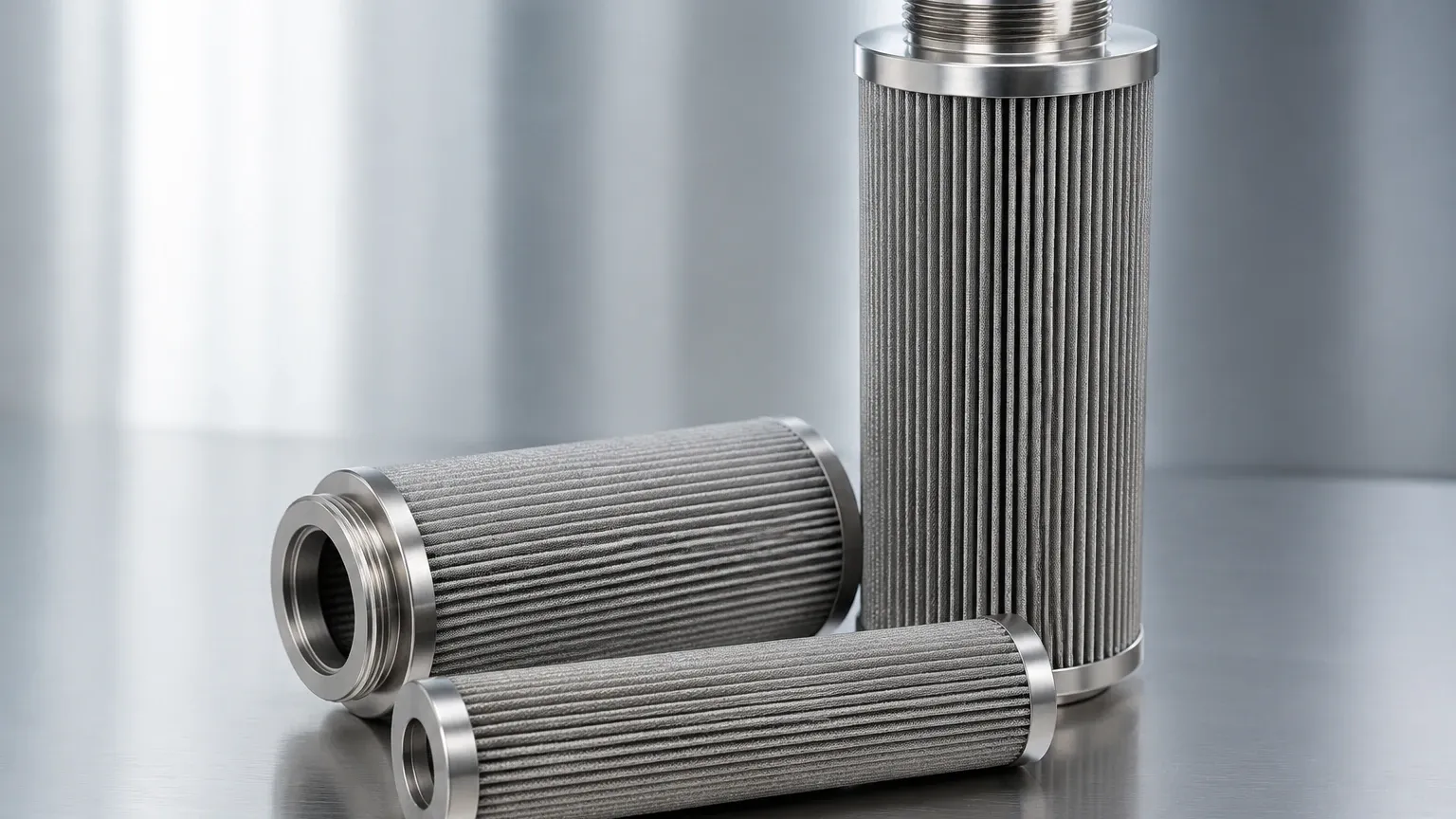
Industrial Filter Cartridges are not merely consumables; they are engineered barriers designed to protect sensitive components like valves, pumps, and actuators from particulate contamination. Whether utilized in a hydraulic return line or a specialized chemical processing loop, the 852 519 series of elements must meet stringent standards for structural stability and particle retention. This guide examines the technical parameters, material considerations, and engineering evaluations necessary when selecting or replacing these high-performance filtration components.
Technical Breakdown of the 852 519 Specification
The designation "852 519" typically refers to a specific series of industrial filter elements often found in hydraulic systems and lubrication circuits. These cartridges are characterized by their standardized dimensions, which ensure a leak-proof fit within compatible filter housings. In the context of industrial engineering, a "mic" or micron rating appended to this part number indicates the filtration fineness—the size of the smallest particle the filter is designed to intercept.
When evaluating a filter cartridge 852 519 mic, technical teams must focus on three primary physical attributes:
1. Dimensional Envelope: The outer diameter (OD), inner diameter (ID), and overall length must be precise. Even a millimeter of variance can lead to bypass, where unfiltered fluid escapes around the seal, rendering the filtration process ineffective.
2. End Cap Configuration: These cartridges often feature specialized end caps (such as O-ring seals or flat gaskets) designed to withstand specific differential pressures. The material of these end caps—often stainless steel or high-strength polymers—must be compatible with the system fluid.
3. Structural Reinforcement: High-pressure applications require an internal support core, usually a perforated metal tube, to prevent the filter media from collapsing under the force of the fluid flow.
Material Selection: Stainless Steel vs. Synthetic Media
One of the most significant decisions in specifying Filter Cartridges involves the choice of filtration media. While many standard 852 519 elements use glass fiber or paper, industrial applications often demand the superior properties of stainless steel wire mesh or sintered metal.
Stainless Steel Wire Mesh
For applications requiring durability and reusability, stainless steel wire mesh is the preferred choice. These filters are constructed using precision-woven wire, providing a consistent pore size. The primary advantage of stainless steel is its resistance to high temperatures and corrosive chemicals. Furthermore, unlike disposable synthetic media, stainless steel mesh cartridges can often be cleaned through ultrasonic baths or backflushing, reducing the long-term total cost of ownership (TCO).
Sintered Metal Media
In environments where extreme pressure stability is required, sintered metal powder or multi-layer sintered mesh provides a rigid porous structure. This material is virtually immune to media migration—a common failure in lower-quality filters where fibers from the filter itself break off and enter the downstream fluid.
Synthetic and Glass Fiber
While cost-effective for single-use applications, synthetic media like borosilicate glass fiber offer high dirt-holding capacity through depth filtration. However, they lack the structural resilience of metal and cannot be cleaned once the maximum differential pressure is reached.
Evaluating Filtration Accuracy and Micron Ratings
The "mic" rating of a filter cartridge 852 519 mic is perhaps its most vital performance metric. However, engineers must distinguish between "nominal" and "absolute" micron ratings to ensure the protection of downstream equipment.
* Nominal Rating: This is an indicative value, representing the filter's ability to retain a majority of particles at a certain size (e.g., 90% or 95%). It does not guarantee that larger particles will not pass through.
* Absolute Rating: This is a more rigorous standard, typically determined through the Beta Ratio (β) test. An absolute rating implies that 99.9% or more of particles at the specified micron size are captured. For critical hydraulic components with tight tolerances, an absolute-rated filter is often mandatory.
When specifying the micron rating for an 852 519 element, the fluid's viscosity and the system's sensitivity must be considered. A finer micron rating (e.g., 3-5 microns) provides better protection but results in a higher initial pressure drop and a shorter service life before the element becomes clogged. Conversely, a coarser rating (e.g., 25-60 microns) allows for higher flow rates but may permit damaging contaminants to circulate.
Engineering Considerations for High-Pressure Applications
In industrial systems, the filter cartridge 852 519 mic often operates under significant stress. Engineers must calculate the "Clean Pressure Drop" (ΔP) and the "Collapse Pressure" to ensure safe operation.
Differential Pressure (ΔP)
As fluid passes through the filter media, resistance creates a pressure drop. This drop increases as the filter accumulates contaminants. If the ΔP exceeds the structural limit of the cartridge, the media may rupture (burst) or the support core may buckle (collapse). For the 852 519 series, it is common to see collapse pressure ratings ranging from 20 bar to over 210 bar, depending on whether the application is a low-pressure return line or a high-pressure pressure line.
Flow Fatigue
In systems with frequent start-stops or pulsating flows (such as those powered by piston pumps), the filter media is subjected to cyclic stress. High-quality Filter Cartridges utilize pleat support layers—often a coarse wire mesh placed on both sides of the fine filtration media—to prevent pleat bunching and fatigue failure. This ensures that the effective filtration area remains constant throughout the service life of the element.
Maintenance, Cleaning, and Service Life
Determining the replacement cycle for a filter cartridge 852 519 mic is a balance between risk management and cost control. Most modern systems utilize differential pressure indicators (clogging indicators) to signal when a cartridge has reached its terminal ΔP.
For stainless steel cartridges, the maintenance protocol differs significantly from disposable types:
1. Monitoring: Tracking the rate of pressure increase can provide insights into system health. A sudden spike in ΔP may indicate a component failure upstream producing excessive wear debris.
2. Cleaning Procedures: If the cartridge is designed to be reusable, it must be cleaned according to manufacturer specifications. This typically involves solvent degreasing followed by ultrasonic cleaning. It is critical to verify the integrity of the mesh after cleaning to ensure no pores have been enlarged or damaged.
3. Seal Inspection: Every time a cartridge is removed, the O-rings or gaskets must be inspected for swelling, hardening, or cracking. Using the wrong seal material (e.g., using NBR in a system with phosphate ester fluids) will lead to immediate leakage and bypass.
Selecting the Right Filter Cartridges for OEM Systems
For original equipment manufacturers (OEMs) and maintenance teams, sourcing the correct filter cartridge 852 519 mic involves more than just matching a part number. It requires a verification of the manufacturer's capabilities and quality control processes.
When evaluating a supplier for these components, consider the following checklist:
* Material Certification: Can the manufacturer provide 3.1 or 3.2 material certificates for the stainless steel used?
* Testing Standards: Are the cartridges tested according to ISO 2941 (collapse/burst resistance), ISO 2942 (bubble point test for fabrication integrity), and ISO 16889 (multi-pass test for filtration performance)?
* Customization Options: Does the application require non-standard dimensions or specialized mesh weaves (such as Dutch weave or twill weave) to handle specific particle shapes?
By focusing on these technical boundaries, engineers can ensure that the Filter Cartridges they install will perform reliably under the most demanding industrial conditions. Whether the goal is to protect a multi-million dollar hydraulic press or to ensure the purity of a chemical batch, the 852 519 specification remains a cornerstone of precision filtration engineering. Selecting a partner with deep manufacturing expertise in custom stainless steel solutions allows for the optimization of these components, moving beyond off-the-shelf limitations to achieve superior system performance and durability.
