


Filter Cartridge Housing
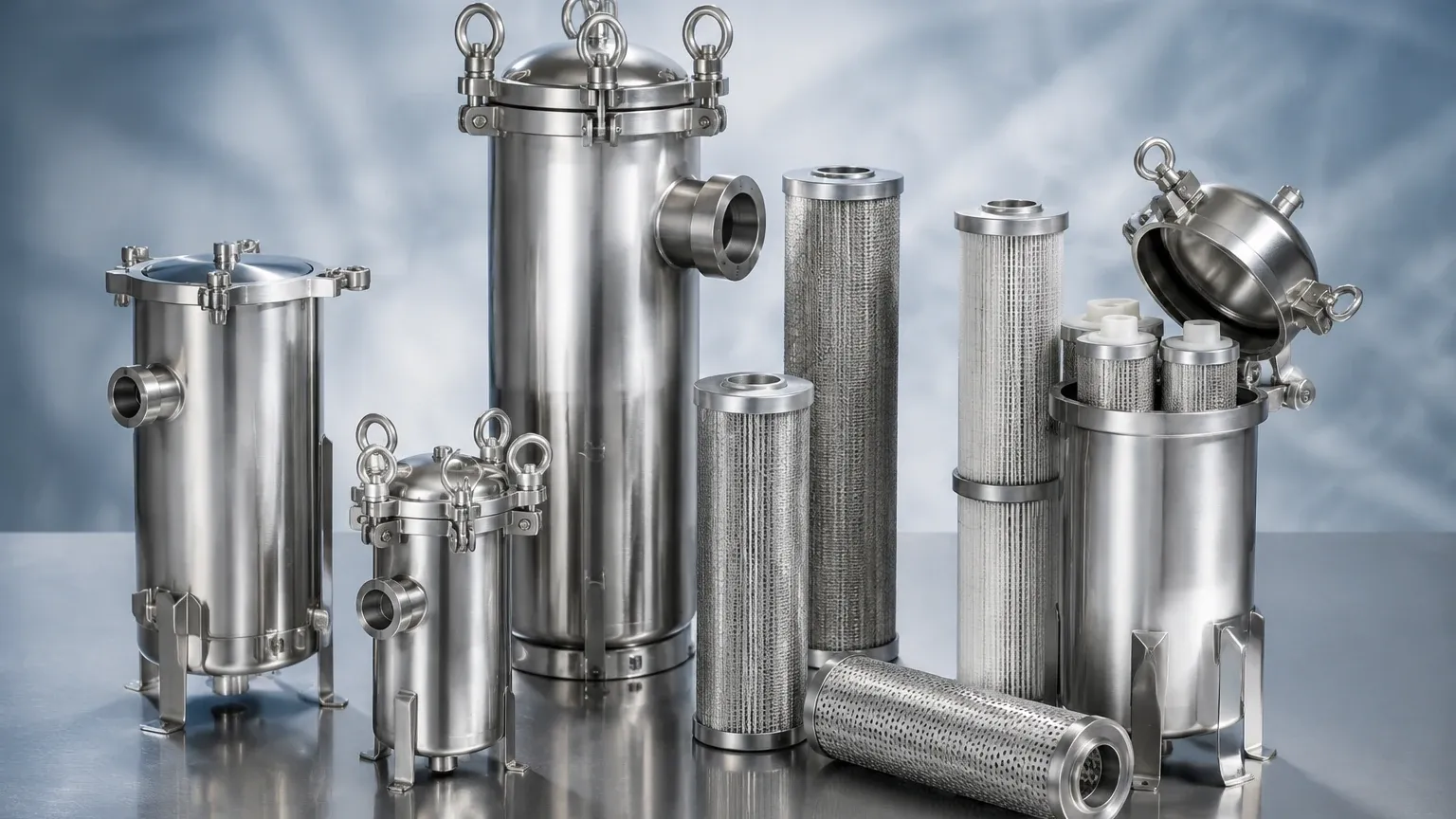
In industrial filtration, the efficiency of a system is defined not only by the media used but also by the integrity of the vessel that contains it. A filter cartridge housing serves as the critical interface between the process fluid and the filtration media. It is a pressure vessel designed to hold one or more filter elements, ensuring that all fluid passes through the media without bypass. For engineers and procurement teams, selecting the correct housing involves a complex evaluation of material compatibility, pressure ratings, flow dynamics, and sealing mechanisms.
As a specialized manufacturer of stainless steel filtration solutions, Kaifil emphasizes that the housing must be engineered to match the specific performance characteristics of the Filter Cartridges it houses. Failure to align these components can lead to structural failure, fluid contamination, or significant operational downtime.
The Role of the Housing in Industrial Filtration Systems
The primary function of a filter cartridge housing is to provide a secure, leak-proof environment for the filtration process. While the cartridge performs the actual separation of particles, the housing manages the mechanical stresses of the system. This includes handling the inlet and outlet pressures, directing the flow path, and providing the necessary seal to prevent untreated fluid from mixing with the filtrate.
In heavy-duty industrial applications, such as chemical processing or hydraulic systems, the housing must withstand constant pressure fluctuations and potential surges. Beyond containment, the housing design influences the ease of maintenance. A well-designed vessel allows for rapid cartridge change-outs, which is essential for minimizing downtime in continuous production environments. Furthermore, the internal geometry of the housing must be optimized to prevent "dead zones" where bacteria can grow or solids can accumulate, which is particularly vital in food, beverage, and pharmaceutical sectors.
Engineering Specifications and Material Selection
The choice of material for a filter cartridge housing is dictated by the chemical nature of the fluid, the operating temperature, and the required hygiene standards. Stainless steel is the industry standard for high-performance applications due to its durability and resistance to corrosion.
1. Stainless Steel 304: This is the most common material for general industrial use. It offers excellent strength and good corrosion resistance for water treatment, cooling systems, and non-corrosive chemical applications.
2. Stainless Steel 316L: For more demanding environments, 316L (low carbon) is preferred. The addition of molybdenum enhances resistance to pitting and crevice corrosion, especially in chloride-rich environments. It is the standard for pharmaceutical, biotech, and aggressive chemical processing.
3. Surface Finish: In sanitary applications, the internal surface roughness (measured in Ra) is critical. Housings are often electropolished to achieve a smooth finish that prevents microbial adhesion and facilitates effective Cleaning-in-Place (CIP) or Steam-in-Place (SIP) procedures.
Engineers must also consider the pressure rating. Most industrial housings are designed according to ASME Section VIII standards or equivalent international codes to ensure they can safely operate at the system’s maximum design pressure, including a safety margin for pressure spikes.
Matching Housing Design to Filter Cartridge Configurations
A common point of failure in filtration systems is a mismatch between the filter cartridge housing and the internal cartridge adapters. The housing must be configured to accommodate specific end-cap styles to ensure a positive seal.
* Double Open End (DOE): These cartridges require a housing with a tie-rod and a seal plate. The seal is achieved by compressing the cartridge gaskets against the housing's internal surfaces. While cost-effective, DOE configurations are more prone to bypass if not installed with precise tension.
* Single Open End (SOE) with O-Rings: High-purity applications typically use SOE cartridges with 222 or 226 O-ring adapters. The filter cartridge housing for these elements features a machined seat or a locking "bayonet" style fitting. The 226 configuration, in particular, provides a locking tab that prevents the cartridge from unseating during backpressure events, ensuring 100% filtration integrity.
When selecting a housing, it is also necessary to decide between single-round and multi-round designs. Single-round housings are used for lower flow rates or point-of-use filtration, while multi-round housings can hold dozens of Filter Cartridges to accommodate high-volume industrial flows.
Critical Performance Factors: Flow Rate and Pressure Drop
Sizing a filter cartridge housing is not merely about matching the pipe size. It requires a detailed calculation of the total pressure drop (Delta P) across the system. The total pressure drop is the sum of the clean pressure drop of the housing and the clean pressure drop of the filter cartridge.
If a housing is undersized for the required flow rate, the fluid velocity increases, leading to excessive turbulence and a high initial pressure drop. This reduces the available dirt-holding capacity of the filter elements and forces more frequent replacements. Ideally, a system should be sized so that the initial pressure drop does not exceed 2-3 PSI (0.14-0.21 bar).
Factors influencing flow dynamics within the housing include:
* Inlet/Outlet Port Size: Larger ports reduce velocity and friction loss.
* Internal Clearance: Sufficient space between the housing wall and the cartridges is necessary to ensure even flow distribution across all filter surfaces.
* Viscosity: High-viscosity fluids require significantly larger housings to maintain manageable pressure levels.
Common Risks and Prevention of Filtration Bypass
Filtration bypass occurs when fluid finds a path around the filter media rather than through it. This is often caused by issues within the filter cartridge housing. Common causes include:
* Worn or Incorrect O-Rings: If the O-rings are not compatible with the process fluid, they may swell, shrink, or degrade, compromising the seal. It is essential to confirm material compatibility (e.g., EPDM, Viton, Silicone, or PTFE) before installation.
* Improper Seating: In multi-round housings, ensuring that every cartridge is perfectly seated can be challenging. Spring-loaded hold-down plates are often used to maintain constant pressure on the cartridges, compensating for any thermal expansion or vibration.
* Structural Deformation: If the housing is subjected to pressures beyond its rating, the internal sealing surfaces may warp, allowing fluid to leak past the cartridge ends.
To mitigate these risks, regular integrity testing and visual inspections of the internal sealing seats are recommended. Engineers should also ensure that the housing includes a vent valve at the highest point to bleed off trapped air, which can cause erratic pressure readings and mechanical stress.
Maintenance and Operational Best Practices
To maximize the lifespan of both the filter cartridge housing and the Filter Cartridges, a strict maintenance protocol must be followed.
1. Venting and Draining: Before opening the housing for a cartridge change, the vessel must be completely depressurized and drained. Most industrial housings feature dedicated drain ports at the bottom to allow for the safe removal of hazardous or valuable fluids.
2. Gasket Replacement: Every time the housing is opened, the main cover gasket or O-ring should be inspected. Even minor nicks can lead to external leaks under high pressure. Keeping a stock of replacement seals is a standard industrial best practice.
3. Cleaning: For stainless steel housings, periodic cleaning is required to remove accumulated scale or biofilm. In the food and beverage industry, this involves caustic or acid washes. It is vital to ensure that the cleaning agents used are compatible with the specific grade of stainless steel and the seal materials.
4. Differential Pressure Monitoring: Installing pressure gauges on both the inlet and outlet of the housing is the only reliable way to monitor filter loading. Cartridges should be replaced when the differential pressure reaches the manufacturer's recommended limit (typically 20-30 PSI) to prevent media migration or cartridge collapse.
Customization and OEM Considerations for Industrial Applications
Standard off-the-shelf housings may not always meet the specific spatial or functional requirements of a complex industrial plant. Customization is often necessary to integrate the filtration system into existing piping or to handle unique fluid characteristics.
Customization options for a filter cartridge housing include:
* Connection Types: Beyond standard NPT threads, housings can be fitted with ANSI flanges, DIN flanges, or sanitary Tri-clamp connections to match facility standards.
* Heating Jackets: For fluids that must be maintained at a specific temperature to remain pumpable (such as resins or certain food products), steam or electric heating jackets can be integrated into the housing design.
* Advanced Materials: For extremely corrosive environments, specialty alloys or internal coatings may be applied to the stainless steel structure.
Kaifil works closely with engineering teams to develop these customized solutions, ensuring that the housing geometry, material selection, and filtration accuracy are perfectly balanced for the intended application. By confirming technical requirements—such as maximum operating temperature, chemical concentration, and desired flow rate—purchasing teams can ensure they receive a filtration solution that offers the lowest total cost of ownership through durability and efficiency.
