


Lifespan of Pool Filter Cartridges
In industrial and commercial water management, the efficiency of a filtration system is directly tied to the integrity of its internal components. For facilities operating large-scale aquatic centers, commercial pools, or industrial water loops, understanding the lifespan of pool filter cartridges is essential for maintaining water quality and controlling operational costs. Unlike residential applications where maintenance might be reactive, professional environments require a data-driven approach to cartridge replacement and maintenance cycles.
The service life of a filter is not a static number; it is a variable influenced by hydraulic load, chemical exposure, and the physical properties of the filter media. By analyzing these factors through an engineering lens, facility managers can optimize their filtration systems and ensure consistent performance.
Factors Influencing the Lifespan of Pool Filter Cartridges
The longevity of Filter Cartridges depends on several intersecting variables. While manufacturers often provide a general estimate—typically ranging from one to three years for standard synthetic media—the actual performance window in a B2B or commercial context is often shorter due to higher bather loads and continuous pump operation.
1. Hydraulic Loading and Flow Rates
Every filter cartridge is designed with a specific maximum flow rate, usually measured in gallons per minute (GPM) per square foot of filter area. Operating a system at or near its maximum capacity accelerates the embedding of particulates deep within the media fibers. Over time, this leads to "bridging," where debris becomes permanently trapped, reducing the effective surface area and increasing the pressure differential across the element.
2. Water Chemistry and Mineral Scaling
Inconsistent water chemistry is one of the primary drivers of premature failure. High calcium hardness levels can lead to calcium carbonate scaling on the filter media, effectively petrifying the fabric. Similarly, improper pH balance can degrade the structural integrity of the end caps and the internal core of the cartridge. In industrial water treatment, chemical compatibility between the filtered fluid and the cartridge material is the first checkpoint for determining expected service life.
3. Debris Type and Organic Load
In commercial pool environments, the "lifespan of pool filter cartridges" is heavily impacted by organic contaminants such as body oils, sunscreens, and environmental proteins. Unlike inorganic sand or silt, which can often be rinsed away, oils penetrate the media and create a hydrophobic layer. This layer resists standard water cleaning and requires specialized chemical degreasers to remove. If these oils are allowed to remain, they provide a substrate for biofilm growth, which can permanently foul the cartridge.
Engineering Considerations: Pressure Differential (PSID)
From a technical perspective, the most reliable indicator of a cartridge’s remaining life is the pressure differential (the difference between the influent and effluent pressure).
* Clean Start Pressure: The baseline pressure when a new or freshly cleaned cartridge is installed.
* Cleaning Threshold: Generally, a cartridge should be cleaned when the pressure rises 8 to 10 PSI above the clean start pressure.
* Replacement Threshold: If, after a thorough cleaning, the baseline pressure remains 5 to 7 PSI higher than the original "new" baseline, the media is likely saturated with deep-seated contaminants. At this point, the cartridge has reached the end of its functional lifespan.
High differential pressure doesn't just indicate a dirty filter; it places significant mechanical stress on the pump motor and can lead to "channeling." Channeling occurs when the pressure forces the filter media to part, creating a path of least resistance where unfiltered water bypasses the media entirely.
Material Science: Synthetic vs. Stainless Steel Media
When discussing the lifespan of pool filter cartridges, it is important to distinguish between common pleated polyester media and high-performance industrial alternatives like stainless steel wire mesh.
Polyester Pleated Media
Most commercial pool systems utilize pleated polyester. This material offers a high surface area-to-volume ratio, making it excellent for fine particulate removal (down to 10-20 microns). However, polyester is a consumable. The fibers eventually lose their "memory" and flatten, or they become brittle due to constant exposure to chlorine or bromine. In high-demand commercial settings, these cartridges may need replacement every 12 to 18 months to maintain water clarity standards.
Stainless Steel Filter Elements
For industrial-grade water loops or specialized aquatic applications where durability is paramount, stainless steel filter cartridges offer a different lifecycle model. Manufactured from 304 or 316L stainless steel wire mesh, these components are designed for permanence. They can withstand significantly higher temperatures, aggressive chemical cleaning agents, and higher pressure differentials without structural failure. While the initial capital expenditure is higher, the total cost of ownership is often lower because the "lifespan" is measured in years or even decades, provided they are cleaned correctly.
Maintenance Protocols to Extend Service Life
To maximize the lifespan of pool filter cartridges, a rigorous maintenance schedule is required. Simply hosing off the pleats is rarely sufficient for commercial-grade filtration.
1. Degreasing Soaks: Because oils are the primary cause of pleat failure, cartridges should be soaked in a specialized filter cleaner or a TSP (Trisodium Phosphate) solution. This breaks down the organic bonds that water alone cannot reach.
2. Acid Bathing (When Necessary): If mineral scale is present (evidenced by a white, crusty residue), a mild muriatic acid solution can be used. Caution: Always degrease the filter before acid bathing. If oil is present during an acid wash, the acid can bake the oil into the media, effectively ruining the cartridge.
3. Drying Cycles: Allowing a cartridge to dry completely after cleaning can help kill any remaining microorganisms and allows the polyester fibers to "reset," though this requires having a second set of cartridges to swap in to prevent system downtime.
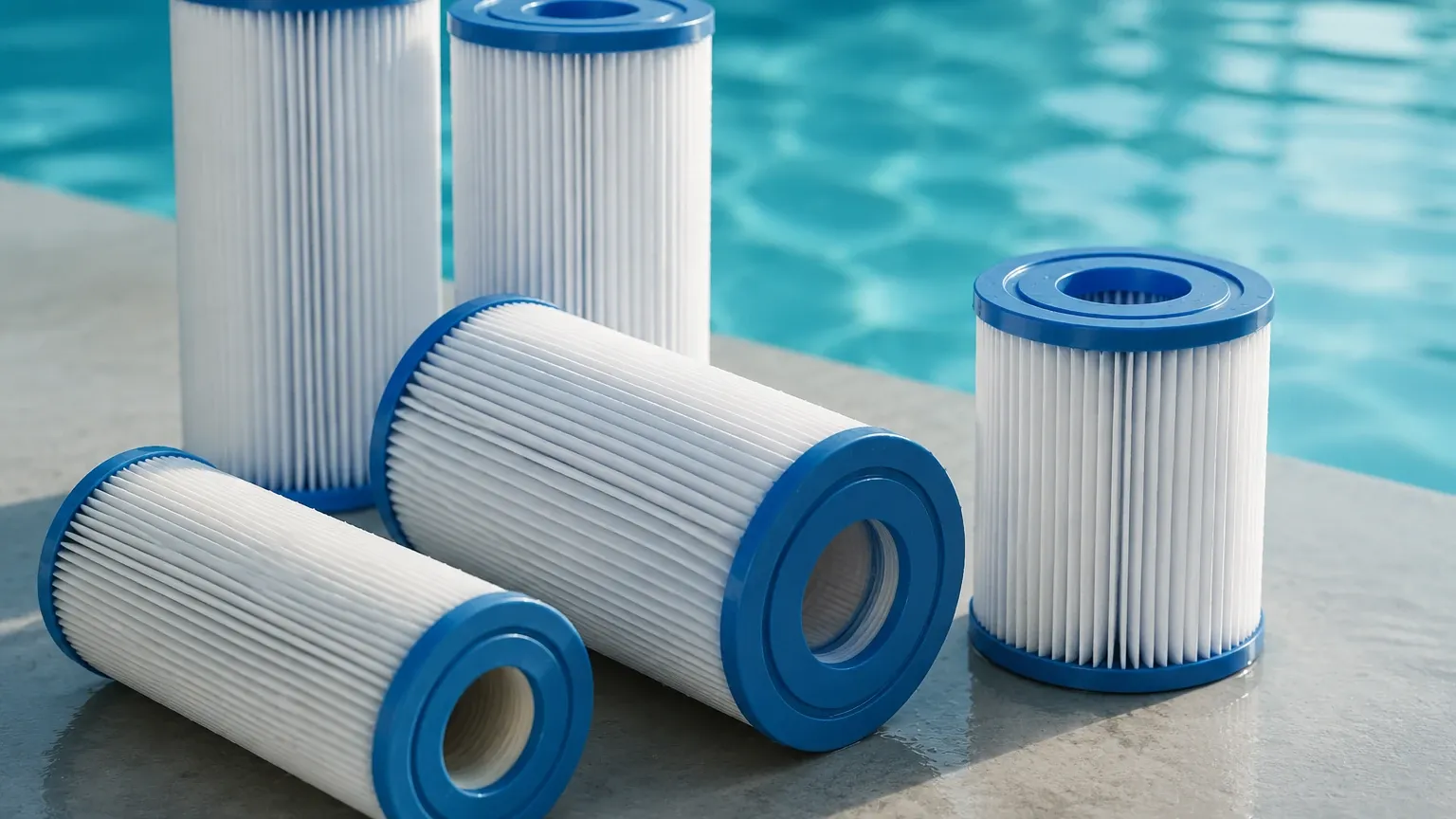
Identifying Signs of Structural Failure
Beyond pressure readings, physical inspection is vital. Engineers and maintenance teams should look for the following signs that a cartridge must be decommissioned:
* End Cap Cracking: The polyurethane or plastisol end caps provide the seal. If they crack, unfiltered water will bypass the filter.
* Band Failure: The bands that wrap around the pleats keep them evenly spaced. If these snap, the pleats collapse against each other, drastically reducing the effective filtration area.
* Inner Core Collapse: If the central support core is warped or cracked, the cartridge can no longer withstand the inward pressure of the water flow.
* Fuzzy Media: If the polyester fabric begins to look "furry" or pilled, the fibers have broken down. This reduces the micron rating and can lead to fiber migration into the water stream.
The B2B Perspective: Total Cost of Ownership (TCO)
In a professional procurement context, the decision to replace a cartridge should be based on Total Cost of Ownership rather than just the unit price. A cartridge that is kept in service beyond its effective lifespan increases energy costs (due to the pump working harder against high backpressure) and increases chemical costs (as the filter fails to remove the organic precursors that consume chlorine).
When evaluating the lifespan of pool filter cartridges for a facility, consider the following data points:
* Labor Costs: How many man-hours are spent cleaning a degraded cartridge versus the cost of a new one?
* Energy Consumption: What is the amperage draw on the pump when the filter is at 10 PSI over baseline?
* Water Quality Standards: Is the turbidity of the water meeting local health department or industrial process requirements?
Customization and OEM Solutions
For many industrial water applications, off-the-shelf cartridges may not provide the necessary durability. Custom-engineered Filter Cartridges allow for the selection of specific micron ratings, pleat densities, and reinforcement materials tailored to the specific debris profile of the facility. For example, a facility dealing with high levels of abrasive sand may benefit from a cartridge with a reinforced outer cage to prevent media abrasion.
Kaifil specializes in these types of high-performance filtration solutions, providing the technical expertise required to move beyond disposable consumer-grade products. By focusing on material compatibility and structural integrity, industrial filtration components can be designed to survive in environments where standard pool cartridges would fail within weeks.
Conclusion
The lifespan of pool filter cartridges is a critical metric for any water-intensive operation. While the media type and bather load set the baseline, it is the maintenance protocol and the monitoring of pressure differentials that ultimately determine the return on investment. By moving toward high-quality, technically specified filtration components and adhering to professional cleaning standards, facilities can ensure crystal-clear water while minimizing long-term operational overhead. Whether utilizing standard pleated media or transitioning to durable stainless steel solutions, understanding the engineering limits of your filtration hardware is the key to system longevity.
