


Centrifuge Tube Filters
In the landscape of industrial separation and laboratory analysis, centrifuge tube filters represent a critical intersection of mechanical force and material science. These components are designed to facilitate the rapid separation of solids from liquids or the fractionation of particles based on density and size within a centrifugal field. While standard laboratory disposables are common, industrial-grade centrifuge tube filters—often constructed from stainless steel or specialized alloys—are essential for applications involving aggressive chemicals, high temperatures, or the need for reusable, high-precision components.
For engineers and procurement professionals, selecting the appropriate filtration media for centrifuge applications requires a deep understanding of fluid dynamics, material compatibility, and structural integrity. This guide explores the technical nuances of centrifuge tube filters, focusing on the engineering considerations that ensure reliable performance in demanding industrial environments.
Understanding the Role of Centrifuge Tube Filters in Industrial Processes
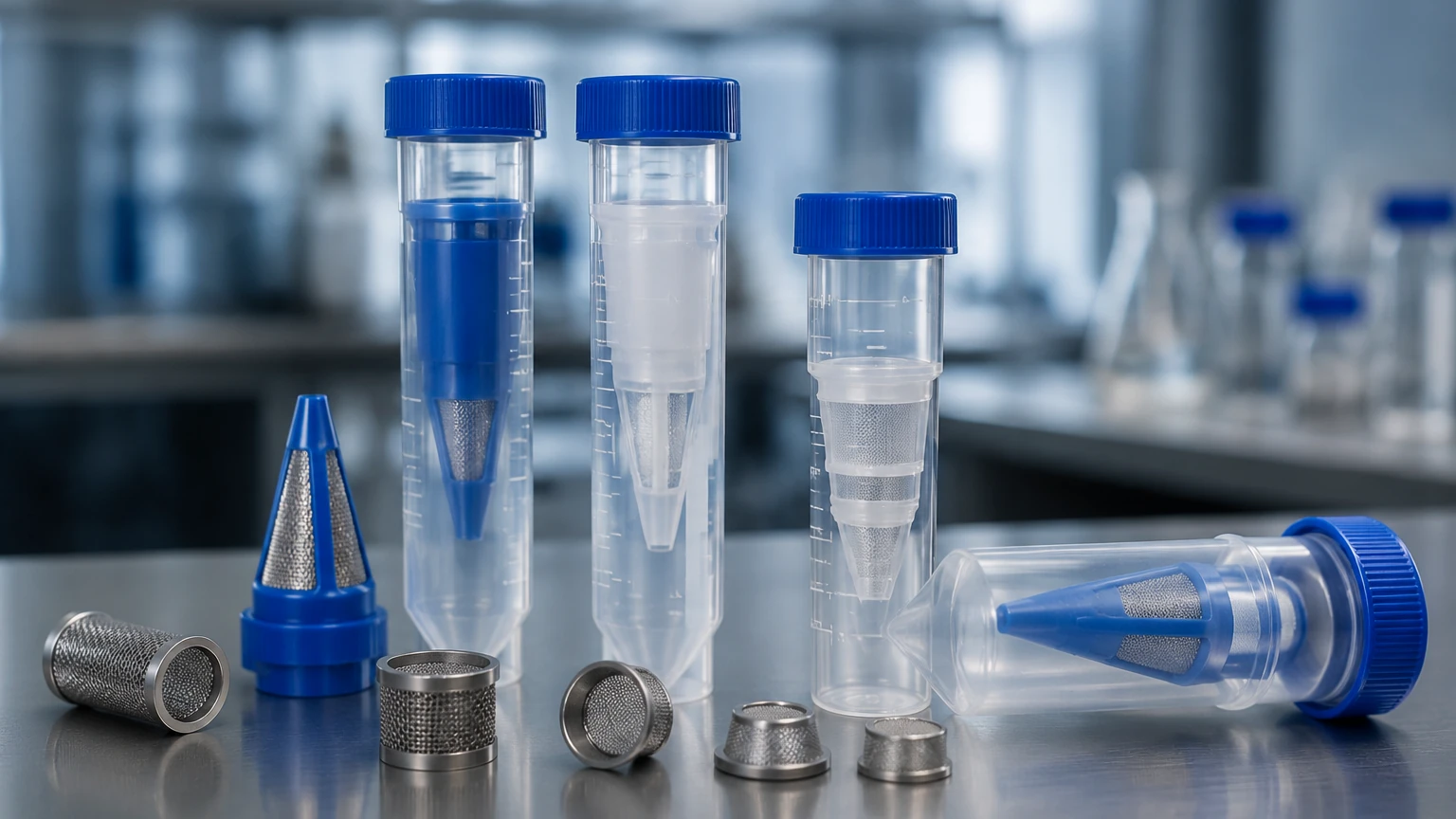
Centrifugation utilizes centrifugal force to accelerate the natural process of sedimentation. When a filter is integrated into this process, it transforms the centrifuge from a simple sedimentation tool into a high-speed filtration system. Centrifuge tube filters are typically inserts or integrated mesh components that hold the sample while allowing the filtrate (the liquid) to pass through into a collection area, retaining the retentate (the solids) on the filter surface.
In industrial R&D and pilot-scale production, these filters are used for:
* Catalyst Recovery: Separating expensive metal catalysts from chemical reaction mixtures.
* Protein Purification: Removing cellular debris from biological samples in pharmaceutical manufacturing.
* Fine Chemical Processing: Clarifying high-purity solvents where polymer leaching from plastic filters is unacceptable.
* Sample Preparation: Ensuring particulate-free samples for downstream analytical techniques like HPLC or GC-MS.
The efficiency of these processes is dictated by the interaction between the centrifugal force (measured in G-force or Relative Centrifugal Force, RCF) and the resistance of the filter media. As the centrifuge spins, the pressure across the filter membrane increases significantly, requiring a filter that can maintain its pore structure without deforming.
Material Engineering: Why Stainless Steel is Critical for High-Performance Filtration
While polymer-based centrifuge tube filters are suitable for routine aqueous separations, many industrial applications demand the robustness of stainless steel. Kaifil specializes in manufacturing these high-performance metal components, emphasizing the following material advantages:
Chemical Compatibility
Industrial processes often involve solvents, acids, or bases that would degrade or dissolve nylon, PES, or PTFE membranes. Stainless steel (specifically 316L grade) offers superior resistance to a wide range of corrosive agents. This ensures that the filter does not introduce contaminants into the filtrate and maintains its structural integrity over repeated use.
Thermal Stability
Filtration often occurs at elevated temperatures to reduce the viscosity of the fluid and increase flow rates. Unlike plastic filters that may soften or lose their pore accuracy at temperatures exceeding 60°C, stainless steel centrifuge tube filters can operate reliably at several hundred degrees Celsius, making them ideal for hot oil filtration or high-temperature chemical synthesis.
Durability and Reusability
In a B2B context, the total cost of ownership is a primary concern. Stainless steel filters are cleanable and reusable. Techniques such as ultrasonic cleaning, backwashing, or chemical sterilization allow these filters to be used for hundreds of cycles, significantly reducing the waste and recurring costs associated with single-use plastic filters.
Key Technical Specifications for Filter Selection
When specifying centrifuge tube filters for a project, engineers must define several critical parameters to ensure the component meets the application's requirements. For more detailed technical support and to Review product options and application support, visiting the Kaifil Main Page is recommended for engineers seeking custom configurations.
1. Pore Size and Micron Rating
The micron rating determines the size of the particles that will be retained. In centrifuge applications, this is particularly complex because the high G-force can sometimes force "soft" or deformable particles through pores that are technically smaller than the particle itself. Stainless steel wire mesh provides a rigid pore structure that minimizes this risk compared to flexible polymer membranes. Common ratings range from 1 micron for fine clarification to 100+ microns for coarse primary separations.
2. Open Area Ratio
The open area is the percentage of the filter surface that consists of holes. A higher open area results in higher flow rates and lower processing times but may compromise the mechanical strength of the mesh. Engineering the balance between flow efficiency and structural support is a hallmark of precision filter design.
3. Effective Filtration Area (EFA)
The EFA is the actual surface area available for filtration within the centrifuge tube. Maximizing this area can prevent premature clogging (blinding) of the filter, especially when dealing with samples that have a high solids content.
Performance Under Pressure: G-Force and Structural Integrity
One of the most common failure points in centrifuge tube filters is structural collapse under high RCF. When a centrifuge operates at 10,000 x g or higher, the weight of the fluid column exerts immense pressure on the filter media.
Preventing Media Migration and Deformation
In low-quality filters, high pressure can cause "media migration," where bits of the filter material break off and contaminate the filtrate. In stainless steel filters, this is prevented through advanced manufacturing techniques such as sintering. Sintered wire mesh involves bonding multiple layers of mesh together using heat and pressure without the use of adhesives. This creates a monolithic structure that is incredibly strong and incapable of shedding fibers, even under extreme centrifugal loads.
Support Structures
For larger centrifuge inserts, the filter mesh is often supported by a perforated metal plate or a coarser backup mesh. This multi-layer approach ensures that the fine filtration layer remains flat and functional, preventing the "bowing" effect that can lead to bypass—where unfiltered liquid leaks around the edges of the filter.
Customization Options for Specialized Filtration Requirements
Industrial applications rarely fit a "one-size-fits-all" model. Customization is often necessary to optimize the filtration process. As a professional manufacturer, Kaifil provides tailored solutions that address specific engineering challenges.
Bespoke Geometry
Centrifuge tubes come in various shapes—conical, round-bottom, or flat-bottom. A filter insert must fit the internal geometry of the tube perfectly to prevent bypass. Custom CNC machining and precision forming allow for the creation of filter baskets and inserts that match the exact contours of the centrifuge vessel.
Surface Treatments
In some cases, the surface of the stainless steel can be treated to alter its properties. For example, electro-polishing can be used to create an ultra-smooth surface that reduces particle adhesion, making the filter easier to clean and improving the recovery of the retentate. Other treatments can enhance hydrophobicity or hydrophilicity depending on the nature of the fluid being processed.
Multi-Stage Filtration
For samples with a wide distribution of particle sizes, custom centrifuge tube filters can be designed with multiple stages. A coarse upper mesh removes larger debris, while a finer lower mesh performs the final clarification. This prevents the fine mesh from clogging instantly and extends the service life of the filter assembly.
Total Cost of Ownership and Replacement Cycles
From a purchasing perspective, the initial cost of a stainless steel centrifuge tube filter is higher than that of a plastic disposable. However, the long-term value is realized through several factors:
1. Reduced Downtime: High-quality metal filters are less likely to fail mid-run, preventing the loss of expensive samples or production batches.
2. Consistency: Metal filters provide highly reproducible results because their pore size does not change with pressure or temperature, which is critical for validated pharmaceutical processes.
3. Waste Mitigation: For companies with strict ESG (Environmental, Social, and Governance) targets, moving away from single-use plastics in the lab and production floor is a significant advantage.
Replacement Cycles:
The lifespan of a reusable centrifuge filter depends on the cleaning protocol and the abrasiveness of the particles being filtered. In non-abrasive environments, a stainless steel filter can last for years. Engineers should monitor the "clean pressure drop" or the time required for a standard separation. When processing times increase by 20-30% despite thorough cleaning, it is usually an indication of irreversible blinding or mechanical fatigue, signaling that a replacement is required.
Conclusion: Optimizing Filtration Efficiency
Centrifuge tube filters are small but pivotal components in the success of industrial separation tasks. Whether the goal is to recover a precious catalyst, ensure the purity of a pharmaceutical intermediate, or analyze a chemical sample, the choice of filter media directly impacts the accuracy and efficiency of the outcome.
By prioritizing material integrity, precise micron ratings, and structural robustess, engineers can overcome the limitations of standard filtration products. For those managing complex industrial applications, transitioning to customized stainless steel filtration solutions offers a path toward greater process control and cost-effectiveness. For further technical specifications, material data sheets, or to discuss custom engineering requirements, professionals are encouraged to consult with experienced manufacturers to ensure their filtration hardware is perfectly aligned with their operational demands.
