


Cartridge Filter Pp
In the landscape of industrial liquid processing, the selection of filtration media is a critical decision that impacts product purity, equipment longevity, and overall operational costs. Among the most widely utilized solutions is the cartridge filter pp (polypropylene). Known for its broad chemical compatibility and cost-effectiveness, the polypropylene cartridge serves as a staple in sectors ranging from chemical processing to food and beverage production. For engineers and procurement specialists, understanding the technical nuances of these filters is essential for optimizing filtration systems and ensuring process reliability.
While Kaifil specializes in high-performance stainless steel filtration components, we recognize that many industrial systems utilize a multi-stage approach where polypropylene cartridges act as critical pre-filters or secondary stages. This guide provides a technical overview of polypropylene filtration technology, engineering considerations for selection, and how these components integrate into broader industrial filtration strategies.
Understanding the Fundamentals of Polypropylene Cartridge Filters
Polypropylene is a thermoplastic polymer used extensively in filtration due to its hydrophobic nature and resistance to a wide array of chemical solvents, acids, and bases. When manufactured into a filter cartridge, it typically takes one of two primary forms: melt-blown depth filters or pleated surface filters. Each construction method offers distinct advantages depending on the nature of the contaminants and the required flow dynamics.
Melt-Blown Depth Filtration
Melt-blown cartridges are produced by extruding molten polypropylene resin through high-velocity air, creating a dense web of microfibers. These fibers are thermally bonded onto a central core without the use of binders or surfactants, ensuring high purity. The hallmark of a high-quality melt-blown cartridge filter pp is its graded density structure. The outer layers have a coarser porosity to capture larger particles, while the inner layers become progressively denser to trap finer solids. This "depth" allows the filter to hold a significant volume of contaminants before the pressure drop becomes prohibitive.
Pleated Polypropylene Filters
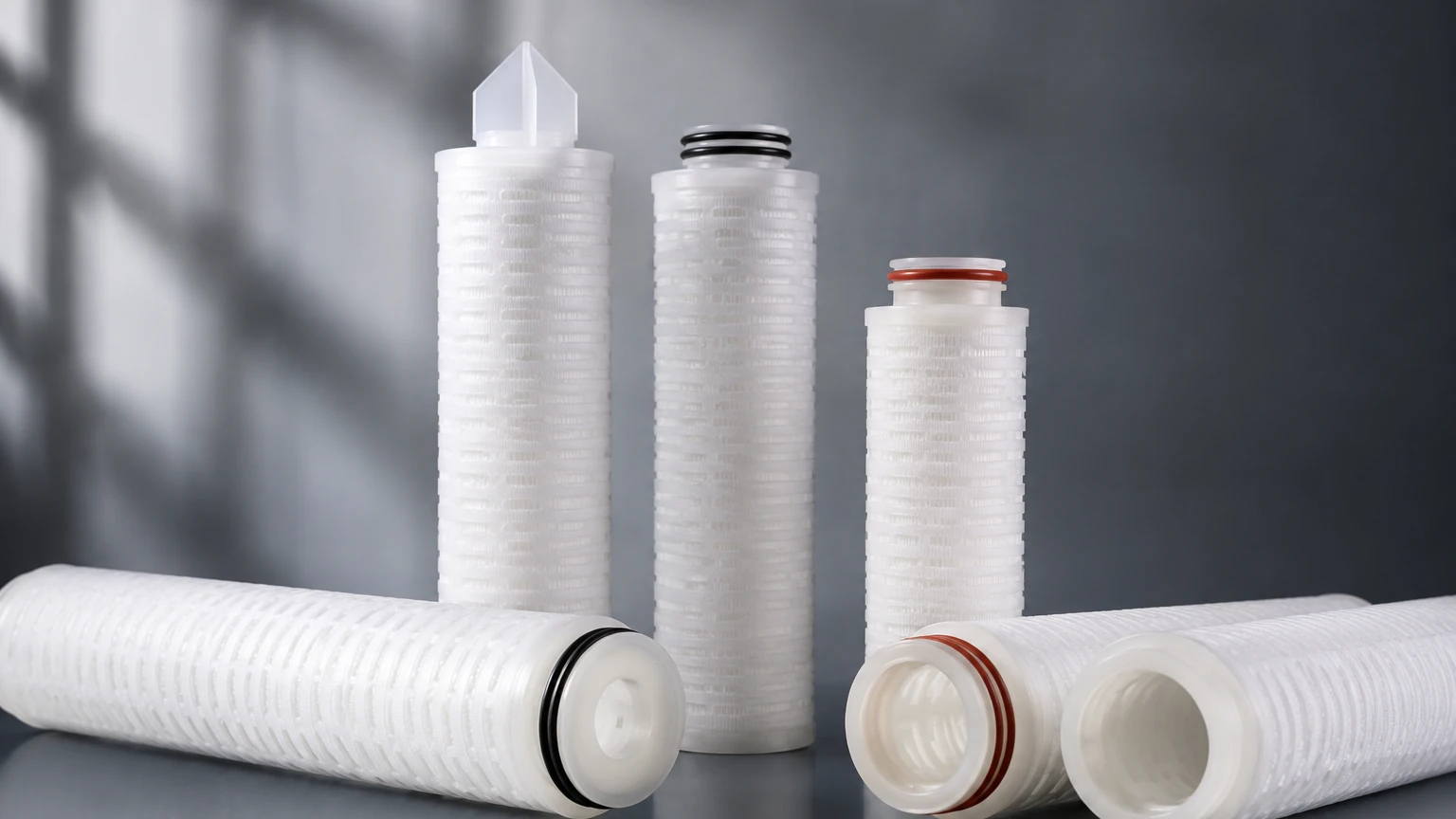
In contrast to depth filters, pleated cartridges utilize a thin sheet of polypropylene media that is folded to maximize surface area. This design is engineered for high-efficiency filtration and higher flow rates. Because the surface area is significantly larger than that of a cylindrical depth filter of the same dimensions, pleated filters exhibit a lower initial pressure drop and a longer service life in applications with a consistent particle size distribution. They are often preferred for final filtration or as a protective stage for expensive downstream equipment like reverse osmosis (RO) membranes.
Key Performance Indicators for Industrial PP Filters
Selecting the right cartridge filter pp requires an analysis of performance metrics that go beyond simple dimensions. Engineers must evaluate how the filter will behave under specific process conditions.
Micron Ratings: Absolute vs. Nominal
One of the most common points of confusion in filter procurement is the distinction between nominal and absolute micron ratings. A nominal rating is an empirical value indicating the filter's ability to retain a majority of particles of a specific size (usually 60% to 90%). An absolute rating, however, implies a retention efficiency of 99.9% (often expressed as a Beta ratio of 5000) for particles of that size. In critical pharmaceutical or microelectronics applications, absolute-rated pleated PP filters are standard, whereas nominal melt-blown filters are typically sufficient for general water treatment or pre-filtration.
Chemical Compatibility and Temperature Limits
Polypropylene is celebrated for its inertness. It is highly resistant to most organic solvents and inorganic acids. However, it has clear thermal limitations. Most standard cartridge filter pp units are rated for continuous operation only up to 60°C (140°F) or 80°C (176°F) depending on the reinforcement of the internal core. If a process involves high-temperature fluids or aggressive oxidizing agents, engineers should consult the technical resources on the Main Page to explore stainless steel alternatives that can withstand extreme thermal and chemical environments.
Engineering Considerations: Flow Velocity and Pressure Differential
The efficiency of a filtration system is not just about what the filter catches, but how much energy is required to push fluid through it. The clean pressure drop ($Δ$P) is the initial resistance the filter offers to the fluid flow. As the filter accumulates debris, the $Δ$P increases.
1. Flow Rate vs. Surface Area: To extend the life of a cartridge filter pp, it is advisable to size the housing to accommodate more cartridges than the bare minimum required. Lowering the flux (flow per unit of surface area) reduces the velocity at which particles strike the media, often improving retention efficiency and significantly increasing the dirt-holding capacity.
2. Terminal Pressure Drop: This is the point at which the filter is considered "blinded" or full, and must be replaced. For most polypropylene cartridges, the terminal $Δ$P is between 2.0 and 2.5 bar (30-35 psi). Exceeding this limit can lead to structural bypass, where the pressure forces contaminants through the media or causes the cartridge to collapse.
Integrating PP Cartridges into Multi-Stage Filtration Systems
Rarely is a single filter sufficient for a complex industrial process. Most efficient systems utilize a graduated approach to filtration. In these configurations, the cartridge filter pp often serves as a sacrificial layer to protect more expensive components.
Pre-filtration for Stainless Steel Systems
In heavy industrial applications where stainless steel mesh or sintered metal filters are used for final product recovery, a coarse polypropylene melt-blown filter can be placed upstream. This removes the bulk of the suspended solids, allowing the precision-engineered stainless steel components to focus on the fine, high-value separation. This strategy reduces the frequency of cleaning cycles for the permanent metal filters and lowers the total cost of ownership.
Protection of RO and Ultrafiltration Membranes
Membrane systems are highly sensitive to fouling. A 1-micron or 5-micron cartridge filter pp is almost always installed immediately before an RO unit to capture any silt, sand, or precipitated solids that could scratch or clog the membrane surface. Given the high cost of membrane replacement, the relatively low cost of a PP cartridge makes it an indispensable insurance policy.
Operational Maintenance and Replacement Cycles
Unlike the cleanable stainless steel filters manufactured by Kaifil, most polypropylene cartridges are designed for single-use or limited-cycle operation. This disposal-based model necessitates a clear maintenance strategy.
* Monitoring: Continuous monitoring of differential pressure is the most reliable way to determine replacement timing. Automated systems can trigger an alarm when the terminal $Δ$P is reached.
* Sanitization: In food and beverage applications, PP filters may need to be sanitized. While some pleated PP filters can withstand hot water sanitization or low-pressure steam, repetitive thermal cycling will eventually degrade the polymer structure, leading to fiber migration or seal failure.
* Storage: Spare cartridges should be stored in their original packaging in a cool, dry environment away from direct UV light, which can cause the polypropylene to become brittle over time.
Custom OEM Solutions and Material Selection
Every industrial environment presents unique challenges. While standard 10-inch or 20-inch cartridge filter pp units are common, many specialized machines require custom lengths, diameters, or end-cap configurations (such as Code 7, 222, or 226 O-rings) to ensure a bypass-free seal.
At Kaifil, our engineering team works closely with clients to determine the optimal material for their specific housing and fluid chemistry. While we are leaders in the production of durable metal filtration media, we provide the technical guidance necessary to integrate various media types into a cohesive system. Choosing between a standard PP cartridge and a custom-engineered metal solution depends on the required filtration accuracy, the operating temperature, and the physical properties of the fluid being processed.
Conclusion: Making an Informed Selection
The cartridge filter pp remains one of the most versatile tools in the industrial filtration toolkit. Its ability to provide reliable depth or surface filtration across a wide range of chemical applications makes it a go-to choice for many process engineers. However, the success of a filtration system depends on matching the cartridge specifications—micron rating, construction type, and thermal limits—to the specific demands of the application.
By evaluating the total cost of filtration, including replacement frequency and the protection of downstream assets, purchasing teams can make decisions that enhance process efficiency. For applications that exceed the capabilities of polymer-based media, such as high-pressure hydraulic systems or high-temperature chemical reactors, exploring the custom stainless steel solutions available on the Main Page ensures that your facility maintains the highest standards of filtration performance and durability.
