


A Type of Heat Transfer By Direct Contact
In the realm of industrial engineering and fluid dynamics, the management of thermal energy is as critical as the management of pressure and flow rates. For technical professionals designing filtration systems, understanding conduction—defined fundamentally as a type of heat transfer by direct contact—is essential for maintaining process stability, ensuring structural integrity, and optimizing the performance of stainless steel filter elements. Whether a system is operating at cryogenic temperatures or handling molten polymers, the way heat moves through the solid components of a filter determines the efficiency and safety of the entire operation.
At Kaifil, our engineering approach to manufacturing custom stainless steel filtration solutions incorporates a deep understanding of how thermal energy interacts with metal media. This article explores the technical nuances of conduction within industrial filtration, providing engineers with the data needed to make informed decisions regarding material selection, system design, and maintenance cycles.
Understanding Conduction in Industrial Filtration Systems
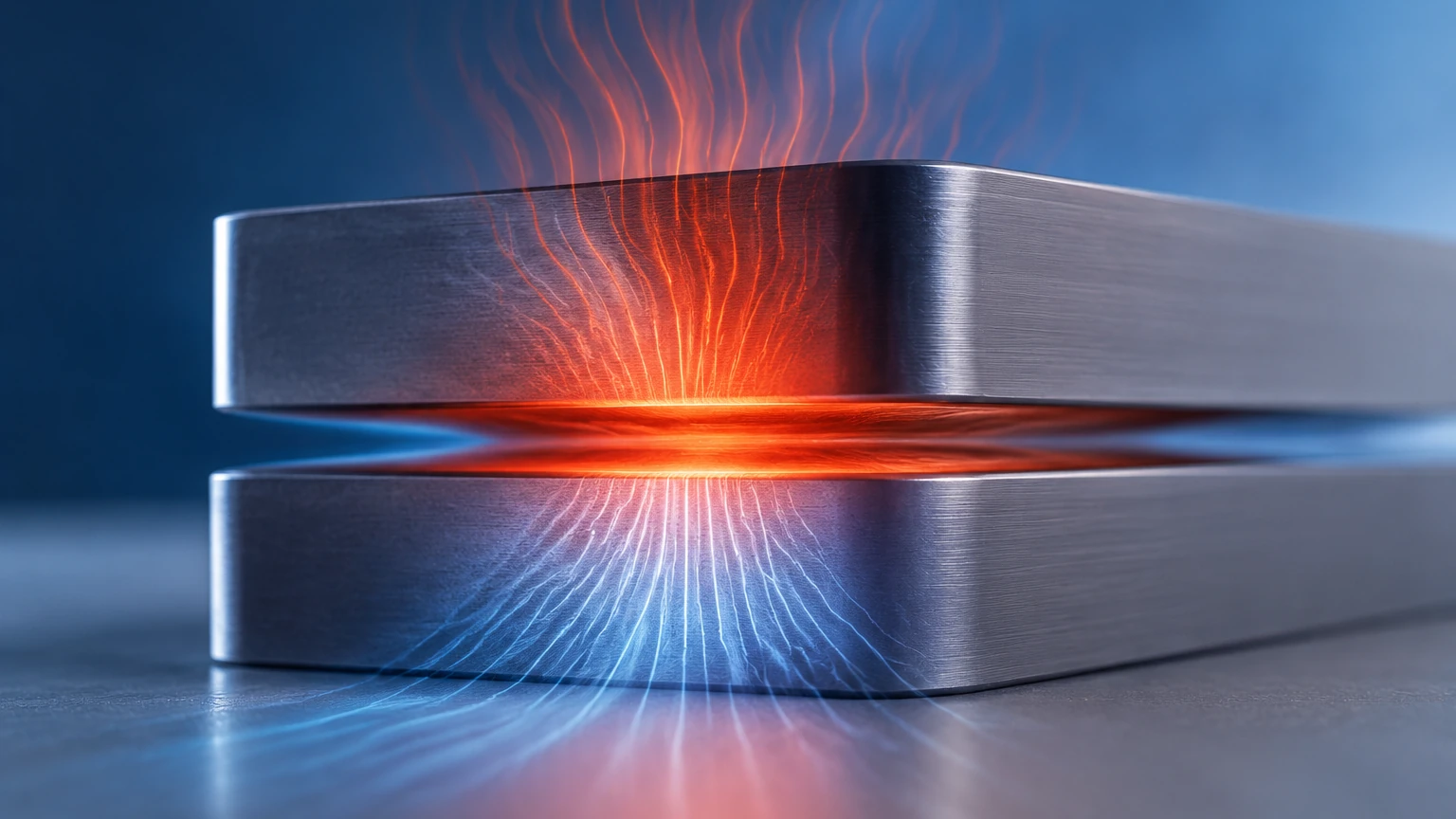
Conduction is the process by which thermal energy is transmitted through a medium via the collisions of atoms and the movement of electrons. In the context of a stainless steel filter, this is a type of heat transfer by direct contact that occurs between the fluid and the filter media, as well as between the individual wires of a mesh or the particles of a sintered metal element.
When a high-temperature fluid enters a filtration housing, the heat is transferred from the fluid to the surface of the filter element. Because metals like stainless steel possess high molecular density, the kinetic energy from the hot fluid quickly excites the atoms at the surface of the metal. This energy is then passed through the thickness of the filter wall to the cooler regions. In industrial applications, this direct contact transfer is the primary mechanism for reaching thermal equilibrium. If the conduction rate is not properly accounted for, localized "hot spots" can occur, potentially degrading the fluid or causing uneven thermal expansion in the filter assembly.
For engineers, the rate of conduction is governed by Fourier’s Law, which states that the heat transfer rate is proportional to the temperature gradient and the cross-sectional area through which the heat flows. In complex filtration geometries, such as pleated wire mesh or multi-layer sintered cartridges, calculating this transfer requires an understanding of the effective thermal conductivity of the porous structure, which differs significantly from that of a solid block of metal.
Material Properties: Thermal Conductivity of Stainless Steel
Selecting the correct alloy for a filtration application requires balancing corrosion resistance with thermal performance. Stainless steel is the industry standard for demanding environments, but its thermal conductivity is lower than that of carbon steel or copper. This characteristic must be factored into the design of systems where rapid heating or cooling is required.
1. Grade 304 Stainless Steel: Often used for general industrial filtration, 304 stainless steel has a thermal conductivity of approximately 16.2 W/m·K at room temperature. It provides a reliable baseline for applications where moderate heat transfer is acceptable.
2. Grade 316/316L Stainless Steel: Preferred for chemical processing and marine environments due to its molybdenum content, 316 stainless steel has a slightly lower thermal conductivity of about 15.0 W/m·K. While the difference is small, in precision thermal management systems, this reduction in the rate of a type of heat transfer by direct contact must be compensated for through increased surface area or adjusted flow rates.
At Kaifil, we evaluate these material properties during the design phase. For instance, if a filter is intended for use in a heat exchanger bypass, the conduction rate through the filter mesh will influence how much heat the fluid loses before it returns to the main process loop. By selecting the appropriate wire diameter and weave density, we can influence the "thermal mass" of the filter element, helping to stabilize temperature fluctuations.
Thermal Management in High-Temperature Chemical Processing
In chemical manufacturing, fluids are often processed at temperatures exceeding 300°C. In these environments, the filter element acts as a thermal bridge between the process fluid and the housing. Because conduction is a type of heat transfer by direct contact, the physical interface between the filter’s end caps and the housing’s sealing surface becomes a critical point of thermal exchange.
If a filter element is significantly cooler than the fluid (for example, during system startup), the initial contact can cause a "thermal shock." This sudden conduction of heat into the metal can lead to micro-cracking or warping of fine wire meshes. To mitigate this, engineers often specify pre-heating cycles or utilize sintered metal fiber media, which offers a more robust structure to handle the rapid influx of thermal energy.
Furthermore, in high-viscosity applications like polymer filtration, the temperature of the filter media must be maintained to prevent the fluid from "freezing" or increasing in viscosity within the pores of the mesh. Effective conduction from an external heating jacket through the housing and into the filter element ensures that the mesh remains at the target temperature, preventing clogs and maintaining a consistent pressure drop across the Main Page of the filtration system's operational parameters.
The Role of Direct Contact Heat Transfer in CIP and SIP Protocols
For the pharmaceutical and food and beverage industries, cleanliness is non-negotiable. Cleaning-in-Place (CIP) and Sterilization-in-Place (SIP) protocols rely heavily on conduction to ensure that every surface of the filtration system reaches the required temperature for pathogens to be neutralized.
During SIP, saturated steam is introduced into the system. The steam transfers its latent heat to the stainless steel filter element through a type of heat transfer by direct contact. Because the filter mesh has a high surface-area-to-volume ratio, it typically reaches sterilization temperatures quickly. However, the thicker components, such as the support cores and end caps, take longer to heat up via conduction.
Engineers must validate that the "coldest point" of the filter assembly—usually the center of a thick end cap or a heavy-duty flange—has reached the target temperature for the required duration. If the conduction path is interrupted by air pockets or poor material contact, sterilization may be incomplete. Kaifil designs filter components with optimized geometries to ensure uniform thermal distribution during these critical cleaning cycles, reducing the risk of bio-burden accumulation.
Engineering Challenges: Thermal Expansion and Structural Integrity
One of the most significant challenges associated with a type of heat transfer by direct contact in filtration is differential thermal expansion. When heat is conducted into a filter element, the metal expands. If the filter element is made of a different alloy than the housing, or if there is a significant temperature gradient across the assembly, the components will expand at different rates.
This discrepancy can lead to several mechanical failures:
* Seal Bypass: If the filter element expands less than the housing, the tension on gaskets or O-rings may decrease, allowing unfiltered fluid to bypass the media.
* Mesh Buckling: In pleated filters, if the inner support core expands faster than the outer mesh layer, the pleats can buckle or flatten, reducing the effective filtration area.
* Fatigue: Repeated cycles of heating and cooling (thermal cycling) create a continuous loop of expansion and contraction. This stresses the weld points and the contact points between woven wires, eventually leading to mechanical fatigue.
To address these issues, Kaifil utilizes advanced welding techniques and stress-relief processes during manufacturing. By ensuring that the filter element and its support structures are thermally compatible, we provide solutions that maintain their micron rating and structural integrity even under rigorous thermal loads.
Selecting the Right Filter for Thermally Sensitive Applications
When purchasing industrial filters for applications where heat transfer is a factor, engineers should look beyond simple filtration accuracy. The total cost of ownership is often dictated by how well the filter handles the thermal environment. Before selecting a filtration solution, consider the following technical criteria:
* Operating Temperature Range: Confirm both the steady-state operating temperature and the maximum excursion temperatures. This determines the necessary alloy grade and the type of seals required.
* Thermal Cycling Frequency: How often will the system be heated and cooled? High-frequency cycling requires more robust mechanical designs to withstand the effects of conduction-driven expansion.
* Fluid Compatibility at Temperature: Some chemicals become significantly more aggressive at higher temperatures. The rate of corrosion can be accelerated by the very conduction that helps maintain process heat.
* Customization Requirements: Standard off-the-shelf filters may not have the thermal mass or the structural reinforcement needed for specific high-heat applications. Custom-engineered solutions allow for the adjustment of wire gauges, pleat depths, and reinforcement layers to match the thermal profile of the process.
At Kaifil, we work closely with our global customers to develop filtration components that are not only precise in their separation capabilities but also resilient in the face of thermal challenges. Our manufacturing expertise in stainless steel wire mesh and sintered metal allows us to create products that optimize a type of heat transfer by direct contact, ensuring that your process remains efficient and your equipment remains durable.
Conclusion
Conduction is an ever-present force in industrial filtration. As a type of heat transfer by direct contact, it influences everything from the viscosity of the fluid passing through the mesh to the mechanical longevity of the filter housing. By understanding the thermal conductivity of materials like 304 and 316 stainless steel and accounting for the mechanical stresses of thermal expansion, engineers can design more reliable and cost-effective systems.
Whether you are managing a high-pressure hydraulic system, a sterile pharmaceutical line, or a complex chemical reactor, the choice of filter media is paramount. Kaifil provides the technical expertise and manufacturing precision needed to support these demanding applications. For more information on our custom stainless steel filtration solutions and to discuss your specific thermal management needs, visit our Main Page to review product options and application support.
