


Bar Screens Wastewater Treatment
In the hierarchy of industrial and municipal water processing, bar screens wastewater treatment represents the essential first line of defense. As a preliminary treatment step, bar screens are engineered to remove large objects—such as plastics, rags, wood, and stones—from the influent stream before they can reach and potentially damage downstream equipment. For engineers and facility managers, selecting the correct screening technology is not merely a matter of debris removal; it is a strategic decision that impacts the operational lifespan of pumps, the efficiency of biological treatments, and the overall maintenance costs of the facility.
From a manufacturing perspective, the efficacy of bar screens wastewater treatment depends heavily on the precision of the filter components and the durability of the materials used. High-performance filtration solutions, such as those found on the Kaifil Main Page, provide the structural integrity required to withstand the hydraulic loads and corrosive environments typical of wastewater infrastructure.
Fundamental Principles of Bar Screens in Wastewater Treatment
The primary objective of bar screens wastewater treatment is the protection of the entire treatment plant. By intercepting large solids, these screens prevent clogging in pipes and mechanical failure in sensitive components like centrifugal pumps and fine-bubble diffusers. The screening process is categorized under preliminary treatment, where physical separation occurs based on the size of the particles relative to the clear openings between the bars.
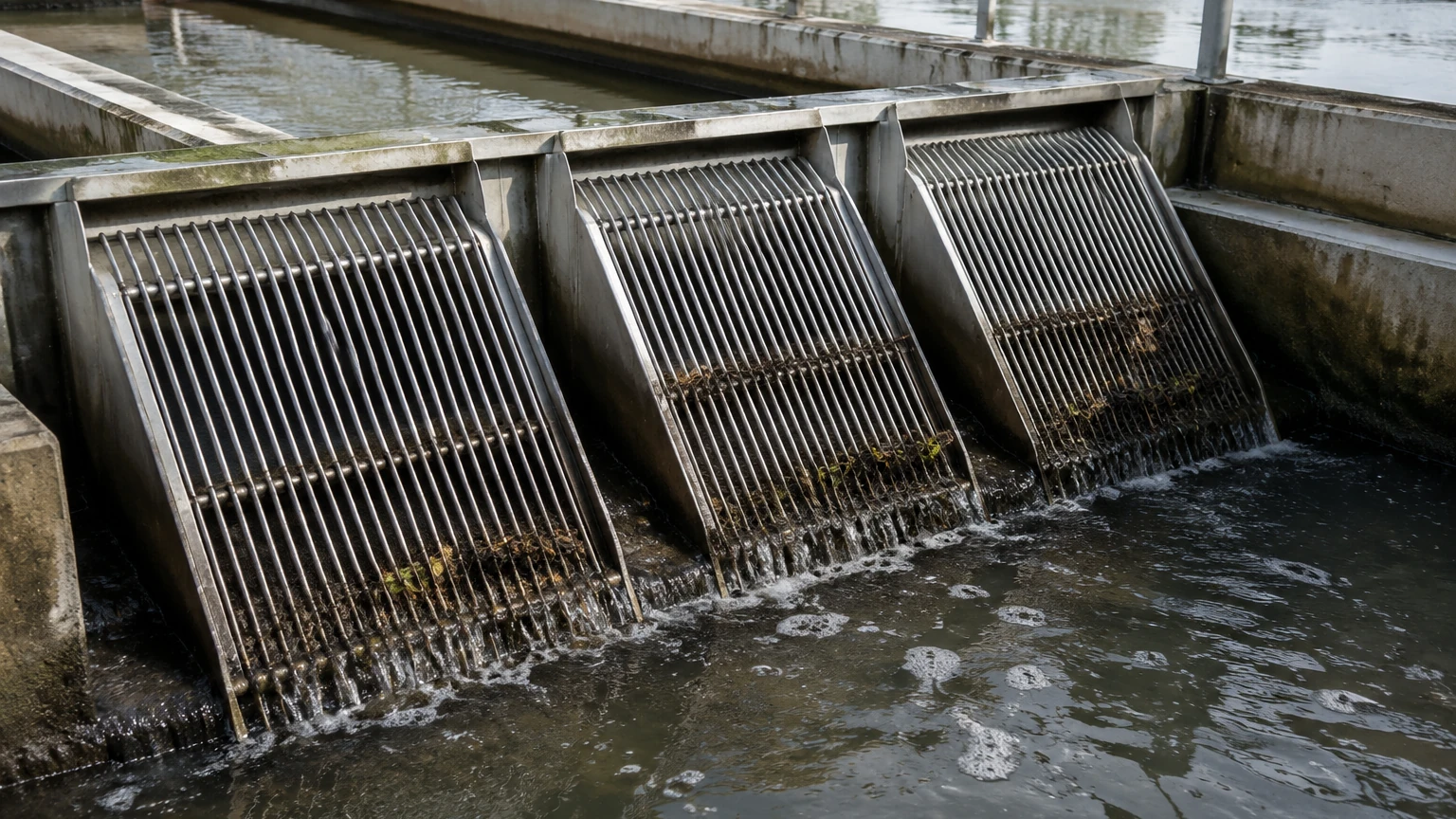
In a typical configuration, a bar screen consists of a series of parallel vertical or inclined steel bars placed across a flow channel. As wastewater passes through the screen, solids larger than the spacing are trapped. The accumulation of these solids creates a "filter cake" which, while increasing filtration efficiency temporarily, also increases head loss. Managing this balance between filtration accuracy and hydraulic flow is a core engineering challenge in wastewater design.
Technical Classification: Coarse vs. Fine Screening
Bar screens are generally classified into two categories based on the size of their openings: coarse screens and fine screens. Each serves a distinct role within the treatment train.
Coarse Screens
Coarse screens typically feature openings ranging from 6 mm (0.25 inches) to 150 mm (6 inches). These are used at the very beginning of the plant to catch massive debris. They are often constructed from heavy-duty stainless steel bars to resist the impact of large objects. Coarse screens can be manually cleaned in small-scale operations, but mechanical cleaning is the standard for industrial and municipal applications to ensure continuous flow.
Fine Screens
Fine screens utilize openings smaller than 6 mm. These are often employed after coarse screening or as a replacement for primary sedimentation in specific industrial processes. Fine screens are highly effective at removing smaller fibrous materials and fats, oils, and grease (FOG) that might otherwise pass through coarse bars. Because fine screens are more prone to blinding (clogging), they almost always incorporate automated cleaning mechanisms, such as brushes or high-pressure water sprays.
Engineering Design Criteria for Optimal Performance
When specifying components for bar screens wastewater treatment, engineers must evaluate several critical hydraulic and mechanical parameters to ensure the system performs under peak flow conditions.
Approach Velocity
The velocity of the wastewater as it approaches the screen (approach velocity) should ideally be maintained between 0.3 m/s and 0.9 m/s. If the velocity is too low, grit and heavy solids will settle in the channel before reaching the screen. If it is too high, flexible solids may be forced through the bars, defeating the purpose of the screen.
Head Loss and Flow Resistance
Head loss refers to the drop in water level across the screen. It is a function of the flow rate, the percentage of the screen that is blocked, and the shape of the bars. Using precision-manufactured bars with aerodynamic profiles (such as teardrop or wedge shapes) can significantly reduce turbulence and head loss compared to standard rectangular bars. Engineers use the Bernoulli equation and specific discharge coefficients to calculate the maximum allowable head loss before a cleaning cycle must be triggered.
Screening Capture Efficiency (SCE)
SCE is a metric used to evaluate how well a screen removes solids of a specific size. For industrial applications, such as food processing or chemical manufacturing, a high SCE is vital to prevent downstream chemical oxygen demand (COD) spikes caused by organic solids breaking down in the liquid phase.
Material Considerations: The Advantage of Stainless Steel
The environment of a wastewater treatment plant is inherently aggressive. Components are subjected to constant moisture, fluctuating pH levels, and corrosive gases like hydrogen sulfide (H2S). Consequently, material selection is the most significant factor in determining the total cost of ownership for bar screens.
Stainless steel 304 and 316L are the industry standards for these applications. 304 stainless steel offers excellent strength and basic corrosion resistance suitable for many municipal settings. However, in industrial wastewater—particularly in chemical processing or coastal regions with high chloride concentrations—316L stainless steel is preferred due to its molybdenum content, which provides superior resistance to pitting and crevice corrosion.
At Kaifil, the focus is on providing precision metal filter components that leverage these material properties. Custom-manufactured wire mesh and bar assemblies ensure that the screens do not just meet the dimensional requirements but also the metallurgical demands of the specific effluent being treated.
Operational Challenges and Maintenance Strategies
Even the best-designed bar screens wastewater treatment system faces operational hurdles. Understanding these risks is essential for maintaining plant uptime.
1. Blinding and Clogging: This occurs when grease or fibrous materials wrap around the bars. Automated raking systems must be timed correctly or triggered by differential pressure sensors to clear the debris before the head loss exceeds the channel's freeboard.
2. Mechanical Wear: The moving parts of a mechanically cleaned screen—chains, sprockets, and bearings—are submerged in abrasive grit. Using hardened stainless steel components and robust seals can extend the replacement cycle of these parts.
3. Disposal of Screenings: Removed solids are often wet and odorous. Modern systems include screenings washers and compactors to reduce the volume and weight of the waste, lowering disposal costs and improving site hygiene.
Customization and Selection for Industrial Applications
Industrial wastewater often requires more specialized screening than municipal sewage. For instance, in the food and beverage industry, bar screens must handle high volumes of organic skins, seeds, or fats. In these cases, the geometry of the screen is often customized. Wedge wire screens are frequently used in these sectors because their V-shaped profile provides a non-clogging surface that is easier to clean than traditional flat bars.
When purchasing or designing a system, engineers should confirm the following with their manufacturer:
* Flow Variation: Can the screen handle peak storm flows or industrial batch discharges?
* Solids Loading: What is the expected volume of screenings per million gallons of flow?
* Integration: How will the screen interface with existing SCADA (Supervisory Control and Data Acquisition) systems for automated monitoring?
The Role of Precision Manufacturing in Filtration
The effectiveness of any bar screen is only as good as the precision of its narrowest opening. Inconsistent spacing between bars leads to "short-circuiting," where large debris bypasses the screen through wider gaps. This emphasizes the need for OEM-quality components manufactured to tight tolerances.
By focusing on high-performance stainless steel filtration solutions, manufacturers like Kaifil support the demanding requirements of modern industrial sectors. Whether it is a custom wire mesh for a fine screen or a heavy-duty bar assembly for a coarse intake, the engineering behind the component determines the reliability of the entire treatment process.
In conclusion, bar screens wastewater treatment is a critical engineering discipline that requires a deep understanding of hydraulics, material science, and mechanical design. By selecting the right screening technology and insisting on high-quality stainless steel components, facilities can ensure long-term operational efficiency and protect their downstream investments. For those seeking detailed specifications on custom filtration components or technical support for industrial applications, reviewing the available options and engineering resources on the Main Page is a recommended next step in the procurement process.
