


Air Sparger
In industrial process engineering, the efficient introduction of gas into a liquid medium is a critical requirement for various chemical, biological, and mechanical operations. An air sparger is a specialized component designed to inject air or other gases into a liquid, creating a high-surface-area interface that facilitates rapid mass transfer. Unlike simple open-pipe injectors, high-performance spargers utilize porous materials—specifically sintered stainless steel—to produce millions of tiny, uniform bubbles. This engineering approach significantly enhances the efficiency of processes such as aeration, carbonation, and oxygenation.
For engineers and procurement professionals, selecting an air sparger involves more than simply choosing a nozzle. It requires an understanding of gas-liquid dynamics, material compatibility, and the specific requirements of the application environment. As a specialist in custom stainless steel filtration and fluid control solutions, Kaifil provides precision-engineered components that meet these rigorous industrial standards.
Understanding the Fundamentals of Air Sparging
The primary objective of an air sparger is to maximize the gas-liquid contact area. According to the principles of mass transfer, the rate at which a gas dissolves into a liquid is directly proportional to the total surface area of the gas bubbles. Small bubbles have a much higher surface-area-to-volume ratio than large bubbles. Furthermore, smaller bubbles rise more slowly through the liquid column, increasing the "residence time" during which gas transfer can occur.
In a typical industrial setup, the sparger is located at the bottom of a vessel or integrated into a pipeline. As pressurized gas is forced through the porous media of the sparger, it is broken down into fine bubbles. The size of these bubbles is determined by the pore size of the material, the surface tension of the liquid, and the velocity of the gas flow. By utilizing sintered metal media, engineers can achieve bubble sizes in the micron range, which is essential for high-efficiency applications like bioreactor aeration or delicate chemical stripping.
The Role of Sintered Metal in Sparging Efficiency
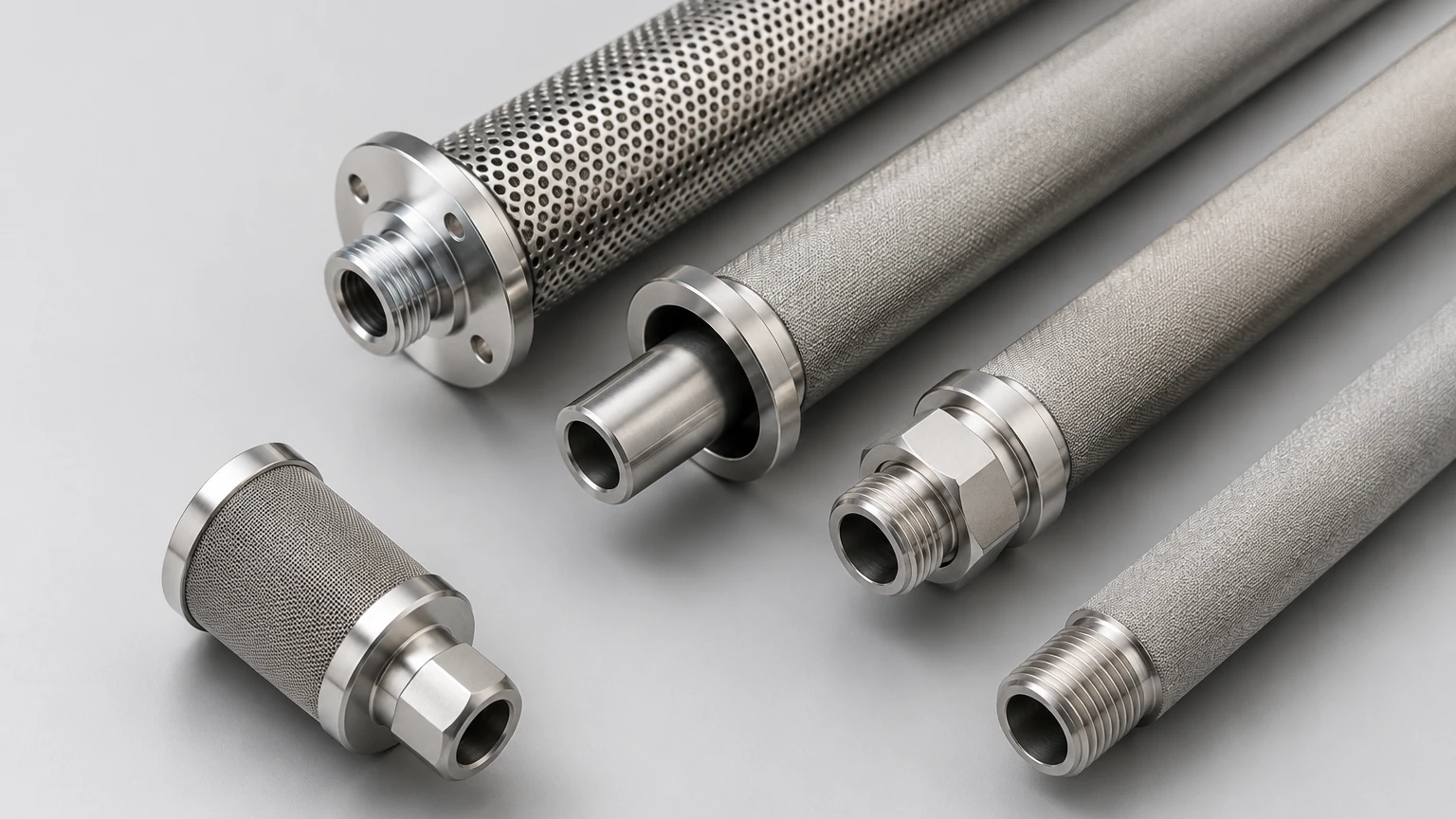
While air spargers can be manufactured from various materials, sintered stainless steel is the industry standard for demanding industrial environments. Sintered metal media is created by compacting stainless steel powder and heating it until the particles bond without melting. This process creates a rigid, porous structure with highly controlled pore distributions.
Advantages of Sintered Stainless Steel Spargers
1. Uniform Pore Distribution: Unlike drilled pipes or ceramic diffusers, sintered metal provides a consistent pore structure. This ensures that gas is distributed evenly across the entire surface of the sparger, preventing "channeling" where gas escapes through a single large opening.
2. Mechanical Strength: Industrial tanks often involve high pressures, turbulent flows, and mechanical agitation. Sintered stainless steel can withstand significant structural stress and pressure differentials without deforming or breaking.
3. Thermal and Chemical Resistance: Stainless steel (typically 316L) offers excellent resistance to corrosion and high temperatures. This is vital in chemical processing where the liquid medium may be acidic or where the process occurs at elevated temperatures.
4. Cleanability: In pharmaceutical and food industries, hygiene is paramount. Sintered metal spargers can be cleaned in place (CIP) or sterilized in place (SIP) using steam or chemical agents, ensuring they meet strict sanitary standards.
Key Engineering Parameters for Air Sparger Design
When specifying an air sparger for a new or existing system, several technical parameters must be evaluated to ensure performance and longevity.
Micron Rating and Bubble Size
The micron rating of the porous media is the most critical factor influencing bubble size. Common ratings range from 0.5 microns to 100 microns. A smaller micron rating produces finer bubbles but requires a higher "bubble point" pressure to overcome the resistance of the media. Engineers must balance the desire for maximum surface area with the available gas pressure in the facility.
Gas Flow Rate and Flux
The flux refers to the volume of gas passing through a specific area of the sparger surface over time (e.g., SCFM/ft²). If the flux is too high, small bubbles may coalesce into larger bubbles immediately upon leaving the sparger surface, defeating the purpose of using fine-pore media. Proper sizing ensures the gas velocity remains within a range that maintains bubble integrity.
Pressure Drop ($ΔP$)
The pressure drop across the sparger is the difference between the gas supply pressure and the hydrostatic pressure of the liquid in the tank. A well-designed sparger minimizes unnecessary pressure loss while providing enough resistance to ensure even distribution. Calculating the required supply pressure involves adding the sparger's resistance to the liquid head pressure.
Mounting and Configuration
Spargers can be designed in various configurations to suit the vessel geometry:
* Static Spargers: Fixed at the bottom of a tank, often in a ring or "spider" configuration to cover a large area.
* In-line Spargers: Integrated into a pipe to inject gas into a flowing liquid stream, common in water treatment or carbonation.
* Intrusive Spargers: A single probe inserted through a nozzle on the side of a vessel, often used in pilot plants or smaller bioreactors.
Industrial Applications and Process Optimization
The versatility of the air sparger makes it a staple in diverse sectors. Each application has unique requirements regarding gas type and liquid characteristics.
Bioprocessing and Fermentation
In bioreactors, microorganisms or mammalian cells require a constant supply of dissolved oxygen to survive and produce the desired product. An air sparger (or O2 sparger) must deliver oxygen efficiently without creating excessive shear stress that could damage sensitive cells. Sintered spargers are preferred here because they provide the high $k_La$ (mass transfer coefficient) values required for high-density cultures.
Chemical Processing
Spargers are used for gas-liquid reactions, such as hydrogenation or oxidation. They are also used for "stripping," where a gas like nitrogen is bubbled through a liquid to remove unwanted volatile components or dissolved oxygen. The chemical resistance of stainless steel is essential in these often-aggressive environments.
Food and Beverage
Carbonation is a primary application for spargers in the beverage industry. Injecting CO2 into water, beer, or soft drinks requires precise control to ensure the gas is fully dissolved and not wasted. Similarly, nitrogen sparging is used to remove oxygen from edible oils to prevent oxidation and extend shelf life.
Water and Wastewater Treatment
Aeration is a fundamental step in aerobic wastewater treatment. Spargers introduce air into treatment tanks to support the bacteria that break down organic waste. In these large-scale applications, durability and resistance to fouling are the primary concerns for maintenance teams.
Maintenance and Longevity of Stainless Steel Spargers
To maintain optimal performance, an air sparger must be kept free of contaminants. Over time, the porous structure can become clogged by mineral scales, biological growth, or particulate matter from the liquid or the gas supply.
Cleaning Protocols
* Ultrasonic Cleaning: This is the most effective method for removing fine particles trapped within the pores. The high-frequency sound waves create cavitation bubbles that dislodge debris.
* Chemical Cleaning: Depending on the contaminant, acid or alkaline washes can be used. For example, citric acid is effective for removing scale, while caustic soda can remove organic buildup.
* Backpulsing: In some systems, gas or liquid can be forced backward through the sparger to blow out surface contaminants. This is often integrated into the process cycle to extend the time between deep cleanings.
Preventing Clogging
Proper filtration of the incoming gas is essential. If the air supply contains oil droplets or dust, these will quickly plug the fine pores of the sparger from the inside. Using a high-quality pre-filter on the gas line is a cost-effective way to protect the sparger investment.
Selecting the Right Sparger for Your Application
Choosing the correct air sparger requires a collaborative approach between the process engineer and the manufacturer. At Main Page, we emphasize the importance of technical validation before production. When consulting with a supplier, be prepared to provide the following information:
1. Liquid Properties: Viscosity, surface tension, and chemical composition.
2. Gas Type: Air, O2, CO2, N2, or corrosive gases.
3. Operating Conditions: Temperature, tank pressure, and liquid height.
4. Target Performance: Desired dissolved gas concentration or flow rate.
5. Connection Requirements: NPT, flange, or sanitary Tri-clamp fittings.
By focusing on these factual engineering requirements, purchasing teams can ensure they receive a component that not only fits their system but also optimizes the entire process. Whether the goal is to increase the yield of a fermentation batch or to improve the efficiency of a chemical reactor, the precision of a sintered stainless steel air sparger is a critical factor in achieving industrial success.
Kaifil's expertise in manufacturing custom stainless steel filtration solutions allows us to design spargers that meet specific micron ratings and structural requirements. Our commitment to quality ensures that each component provides reliable, repeatable performance in the most demanding industrial environments. For more information on our capabilities and to discuss your specific filtration or sparging needs, visit our Main Page.
