


Bolsas Filtrantes
Industrial liquid filtration is a critical process across a wide range of sectors, from chemical processing to food and beverage production. Among the various technologies available, bolsas filtrantes (filter bags) remain one of the most versatile and cost-effective solutions for removing contaminants from process fluids. These components are designed to capture solid particles while allowing the liquid to pass through, ensuring product purity and protecting downstream equipment from wear and clogging.
For engineers and procurement professionals, selecting the right filtration media involves a deep understanding of material properties, particle size distribution, and the specific demands of the operating environment. While many industrial applications rely on disposable synthetic bags, there is an increasing shift toward high-precision stainless steel mesh bags for demanding environments where durability and chemical resistance are paramount. This guide examines the technical aspects of bolsas filtrantes to help technical teams optimize their filtration efficiency.
Technical Overview of Bolsas Filtrantes in Industrial Systems
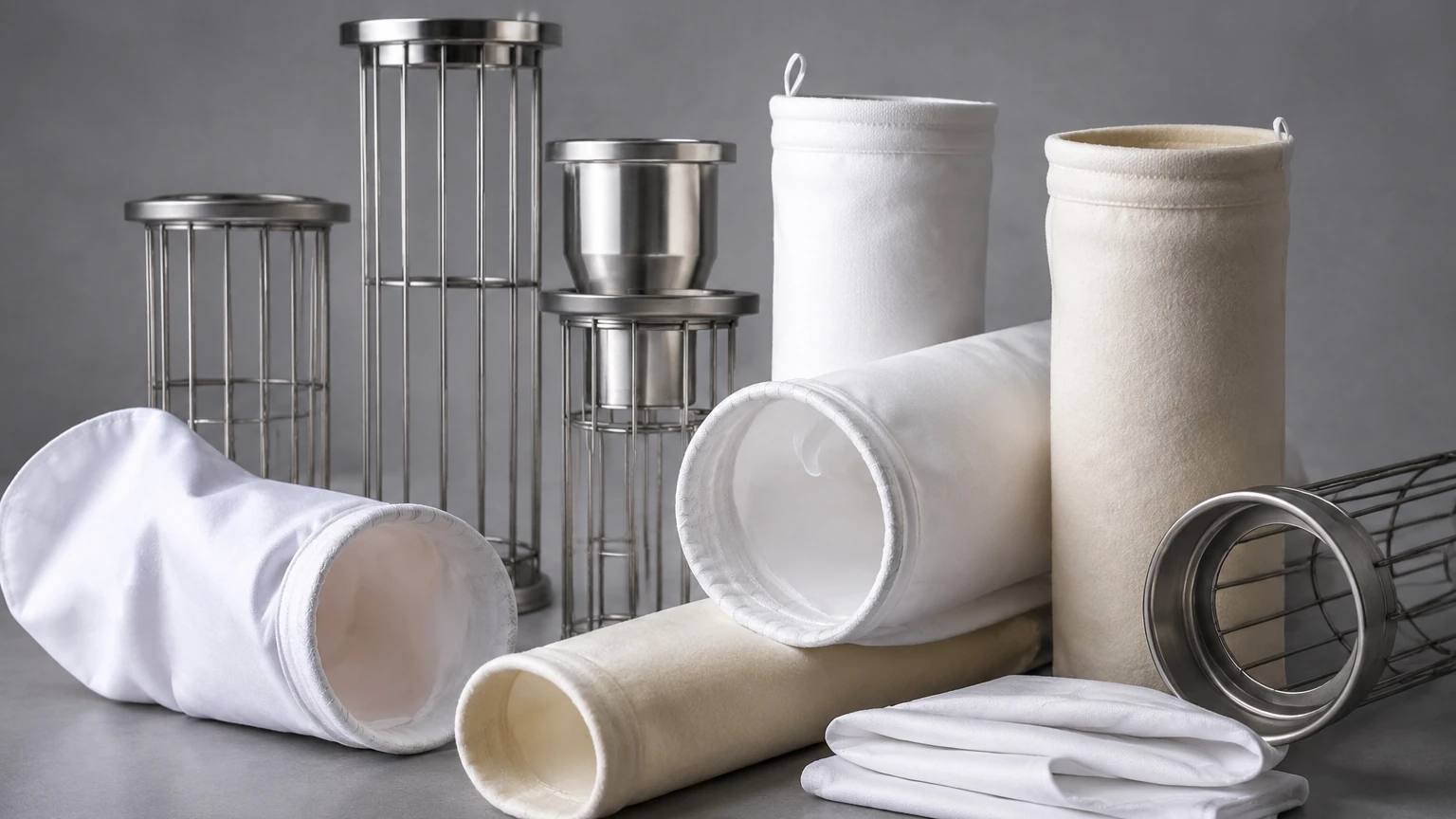
Bolsas filtrantes function as a pressure-driven filtration method. The process liquid enters the bag from the top or side, passes through the filter media, and exits through the perforated metal basket that supports the bag within the housing. The solids are trapped inside the bag, making disposal or cleaning a straightforward process that minimizes downtime.
In an industrial B2B context, the choice of filter bag is rarely just about the price per unit. It is about the "dirt-holding capacity," the compatibility with the fluid’s chemistry, and the ability to withstand the system’s operating pressure. Engineers must evaluate whether the application requires surface filtration—where particles are caught on the surface of the media—or depth filtration, where particles are trapped within the tortuous path of a felt material.
High-performance systems often integrate stainless steel components to provide structural support or as the primary filtration media itself. For those seeking detailed specifications on precision metal filtration, the Main Page of specialized manufacturers like Kaifil offers a technical look at how these materials are engineered for industrial use.
Material Engineering: From Synthetic Polymers to Stainless Steel Mesh
The performance of bolsas filtrantes is primarily dictated by the material of construction. The choice of material affects not only the filtration accuracy but also the bag’s lifespan and its resistance to thermal and chemical degradation.
Synthetic Media
1. Polypropylene (PP): One of the most common materials due to its excellent chemical resistance to acids and alkalis. It is typically used in needle felt form for depth filtration, though it has a relatively low temperature limit (approx. 90°C).
2. Polyester (PE): Preferred for higher temperature applications (up to 150°C) and applications where high tensile strength is required. It offers good resistance to most oxidizing agents but is susceptible to hydrolysis in the presence of steam.
3. Nylon Monofilament: Used for surface filtration. It features a precise, square-weave pattern that provides consistent micron ratings. It is often used in the food and beverage industry due to its fiber-free construction.
Stainless Steel Wire Mesh
In heavy-duty industrial environments, synthetic bags may fail due to extreme temperatures, high pressure, or abrasive particles. Stainless steel wire mesh bolsas filtrantes, often manufactured from 304 or 316L grades, provide a permanent or semi-permanent solution. These mesh bags offer:
* High Temperature Resistance: Capable of operating in environments exceeding 250°C.
* Mechanical Strength: Resistant to pressure surges that would rupture synthetic bags.
* Cleanability: Unlike felt bags, which are typically disposable, stainless steel mesh can be ultrasonically cleaned or backwashed and reused, significantly reducing the long-term waste stream.
Determining Filtration Efficiency: Micron Ratings and Particle Retention
One of the most misunderstood concepts in the procurement of bolsas filtrantes is the difference between nominal and absolute micron ratings. Selecting the wrong rating can lead to either poor product quality (if the rating is too coarse) or frequent, costly bag changes (if the rating is too fine).
Nominal vs. Absolute Ratings
* Nominal Rating: This refers to the ability of the filter to retain a majority of particles (typically 60% to 80%) of a specific size. Needle felt bags are usually nominally rated because their depth-loading nature allows some smaller or elongated particles to pass through under pressure.
* Absolute Rating: This indicates that 99.9% or more of particles at a specific micron size will be retained. This is usually achieved through high-precision monofilament meshes or multi-layered stainless steel media. For critical pharmaceutical or chemical processes, absolute ratings are often a regulatory or technical requirement.
When specifying bolsas filtrantes, engineers must analyze the particle size distribution (PSD) of the contaminant. If the goal is to protect a high-pressure pump, a nominal bag may suffice. However, if the goal is final product clarity, a more precise mesh or an absolute-rated bag is necessary.
Operational Parameters: Flow Rates, Pressure Drop, and Viscosity
The efficiency of a filtration system is not static; it changes as the bag fills with contaminants. Understanding the relationship between flow rate and pressure drop (Delta P) is essential for maintaining system stability.
The Impact of Viscosity
Flow rate calculations must account for the viscosity of the fluid. A filter bag that handles 20 m³/h of water will have a significantly lower capacity when filtering honey or heavy resins. High-viscosity fluids increase the initial pressure drop, meaning the bag will reach its terminal pressure (the point where it must be changed) much faster. In these cases, oversized housings or specialized high-surface-area bags are recommended.
Terminal Pressure Drop
Most industrial filter housings are equipped with differential pressure gauges. A clean bag typically shows a pressure drop of 1 to 2 psi. It is generally recommended to replace or clean bolsas filtrantes when the pressure drop reaches 15 to 25 psi. Operating beyond this point risks "blow-through," where the pressure forces contaminants through the media, or even bag rupture, which can contaminate the entire downstream line.
Structural Integrity and Sealing Mechanisms
A filter bag is only as effective as its seal. If the fluid can bypass the bag at the mounting point, the filtration efficiency drops to zero, regardless of the quality of the media. There are three primary sealing mechanisms used in industrial bolsas filtrantes:
1. Steel or Stainless Steel Rings: A metal ring is sewn into the top of the bag. This ring rests on the housing’s internal ledge. While common, this method relies on the weight of the liquid to maintain the seal and can be prone to minor bypass.
2. Plastic Flanges (V-Rings): These are molded plastic tops that snap into the housing. They often feature a "V" shape that uses the differential pressure to press the seal tighter against the housing wall, providing a more reliable, bypass-free seal.
3. Drawstring Tops: Generally used in non-critical, low-pressure applications where the bag is simply tied over a pipe or outlet. This is rarely used in high-precision industrial B2B processes.
For custom applications, manufacturers can produce precision-engineered metal rings or flanges that ensure a perfect fit within existing OEM housings. This level of customization is a hallmark of high-end filtration suppliers who focus on durability and performance.
Industrial Applications and Compatibility Standards
Bolsas filtrantes are used in a diverse array of industries, each with its own set of standards and challenges:
* Chemical Industry: Requires high compatibility with aggressive solvents. Stainless steel mesh or PTFE bags are often the only viable options for handling corrosive fluids at elevated temperatures.
* Food and Beverage: Must adhere to FDA and EC standards. Materials must be migration-free and often require monofilament construction to prevent fiber shedding into the product.
* Water Treatment: Often uses large-scale bags for pre-filtration before reverse osmosis (RO) membranes. Here, the focus is on high flow rates and low cost-per-gallon.
* Paints and Coatings: Requires the removal of "fish-eyes" and agglomerates. Silicone-free construction is mandatory in these environments to prevent surface tension defects in the final coating.
When selecting a supplier, it is important to confirm that the materials used in the bolsas filtrantes are certified for the specific industry. For example, in pharmaceutical applications, USP Class VI plastics or high-grade 316L stainless steel are standard requirements.
Maintenance Strategies and Cost-Efficiency Analysis
The Total Cost of Ownership (TCO) of a filtration system involves more than just the purchase price of the bags. It includes:
* Disposal Costs: Synthetic bags are often classified as hazardous waste if they are used to filter toxic chemicals, leading to high disposal fees.
* Labor Costs: Frequent bag changes require manual intervention, increasing labor costs and production downtime.
* Product Loss: Every time a bag is changed, the fluid contained within the bag is often lost.
To optimize these costs, many facilities are moving toward larger filter housings that can accommodate multiple bags, or switching to cleanable stainless steel mesh bags. While the initial investment in a stainless steel bag is higher, the ability to clean and reuse the media hundreds of times can result in a payback period of less than six months in high-volume applications.
Custom OEM Solutions for Complex Filtration Requirements
In many specialized industrial machines, standard off-the-shelf bolsas filtrantes do not provide the necessary performance. This is where custom manufacturing becomes essential. Engineers often require specific dimensions, unique mounting hardware, or multi-layered media to handle complex slurry types.
Manufacturers like Kaifil specialize in these customized solutions, providing the engineering support needed to develop filtration components that meet exact micron requirements and mechanical tolerances. Whether it is a unique wire mesh weave or a reinforced structural support for a filter bag, custom OEM capabilities ensure that the filtration system is an asset rather than a bottleneck.
In conclusion, while bolsas filtrantes may appear to be simple components, their selection involves a complex balance of material science, fluid dynamics, and economic strategy. By focusing on high-quality materials, precise sealing, and appropriate micron ratings, industrial operators can significantly improve their process reliability. For more information on high-performance stainless steel filtration components and customized solutions, technical teams are encouraged to explore the resources available on the Main Page.
