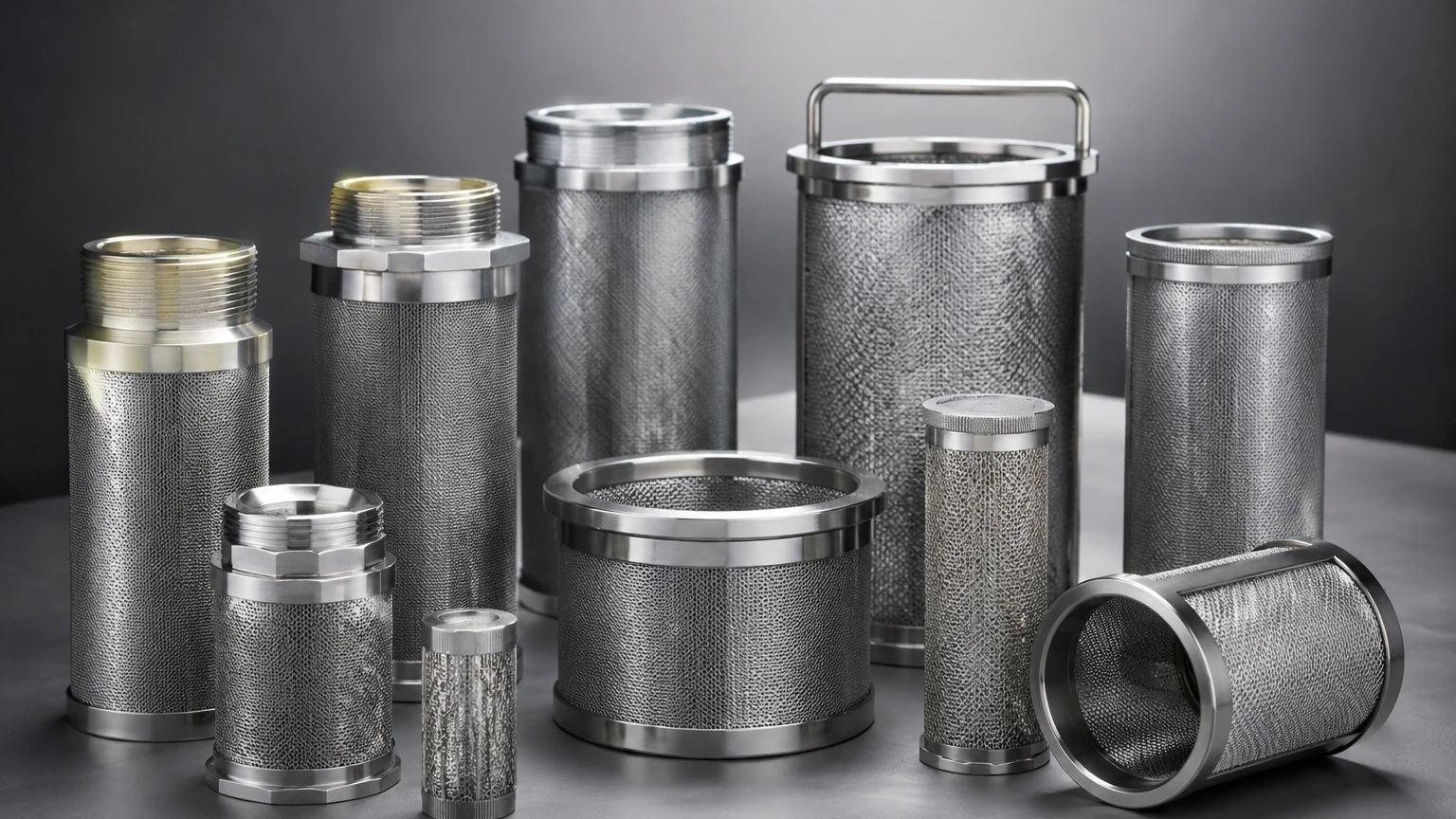
Backwash Filters
In industrial liquid processing, maintaining continuous operation while ensuring high-purity output is a significant engineering challenge. Manual filtration systems, while effective for low-solids applications, often lead to costly downtime and increased labor requirements when processing fluids with high particulate loads. Backwash filters, also known as self-cleaning filters, provide a robust solution to these challenges by automating the cleaning cycle without interrupting the flow of the process fluid. For engineers and procurement teams, understanding the technical nuances of these systems—from material selection to pressure differential management—is essential for optimizing system longevity and performance.
Understanding the Mechanism of Backwash Filtration
The core function of backwash filters is to remove suspended solids from a liquid stream and subsequently clear the accumulated debris from the filter media through a reversal of flow or a mechanical cleaning action. Unlike standard cartridge filters that require manual replacement once saturated, backwash systems utilize the system's own pressure or an external fluid source to flush the filter element.
Typically, the process is triggered by a pressure differential (ΔP) sensor. As contaminants build up on the surface of the filter element—often a stainless steel wire mesh or wedge wire screen—the resistance to flow increases. Once the ΔP reaches a pre-set threshold, the control system initiates the backwash cycle. During this cycle, a valve opens to a drain or a bypass line, creating a pressure drop that forces a portion of the filtered fluid (or an external cleaning agent) backward through the filter media. This high-velocity reverse flow dislodges the "filter cake" and carries it out of the system.
For more information on the specific configurations available for industrial applications, technical teams can refer to the Main Page for detailed component specifications and engineering data.
Key Engineering Considerations for Filter Selection
Selecting the appropriate backwash filter requires a deep dive into the specific parameters of the application. A mismatch between the filter design and the process conditions can lead to frequent clogging, premature wear of the filter media, or insufficient filtration accuracy.
1. Filtration Accuracy and Micron Rating
Filtration accuracy is determined by the pore size of the filter media. In backwash systems, surface filtration is preferred over depth filtration. Stainless steel wire mesh is particularly effective because it provides a precise, two-dimensional barrier that is easier to clean during the backwash cycle. Engineers must balance the need for fine filtration with the risk of rapid blinding; a micron rating that is too small for the particle size distribution will cause the system to backwash too frequently, leading to excessive fluid loss and mechanical wear.
2. Flow Rate and Pressure Drop
The nominal flow rate of the system dictates the size of the filter housing and the total surface area of the filter media. It is critical to calculate the "clean" pressure drop and ensure that the system has enough head pressure to facilitate an effective backwash. If the system pressure is too low, the reverse flow may not have sufficient velocity to dislodge sticky or heavy contaminants.
3. Solids Loading and Particle Characteristics
The nature of the contaminants—whether they are hard, abrasive, fibrous, or gelatinous—influences the choice of filter media. For example, wedge wire elements are often preferred for fibrous materials because their V-shaped profile reduces the risk of particles becoming wedged in the openings. Conversely, fine stainless steel woven mesh is better suited for removing granular particulates in high-precision applications.
Material Selection: The Role of Stainless Steel
In demanding industrial environments such as chemical processing, pharmaceutical manufacturing, and food production, the material of construction for backwash filters is non-negotiable. Stainless steel, specifically 304 and 316L grades, is the industry standard due to its mechanical strength and chemical resistance.
* Corrosion Resistance: 316L stainless steel, with its molybdenum content, offers superior resistance to chlorides and acidic environments, making it ideal for water treatment and marine applications.
* Thermal Stability: Industrial processes often involve high temperatures that would degrade polymer-based filter cartridges. Stainless steel maintains its structural integrity across a wide temperature range.
* Durability and Reusability: The mechanical stresses of repeated backwashing can cause fatigue in lesser materials. Stainless steel wire mesh is designed to withstand the rapid pressure changes inherent in self-cleaning cycles without deforming or losing its filtration precision.
Common Industrial Applications
Backwash filters are employed across diverse sectors where process continuity is a priority. Their ability to handle high flow rates and high solids loading makes them indispensable in the following areas:
* Cooling Water Systems: Protecting heat exchangers and cooling towers from scaling and organic debris. By removing particles that contribute to fouling, backwash filters improve heat transfer efficiency and reduce chemical treatment costs.
* Water Treatment and Desalination: Serving as pre-filtration for membrane systems (such as Reverse Osmosis). Removing larger suspended solids prevents the premature fouling of expensive membranes.
* Oil and Gas: Filtering injection water or produced water to protect downhole equipment and ensure environmental compliance.
* Chemical and Petrochemical: Handling aggressive solvents and process fluids where manual handling of filters would pose safety risks to operators.
Customization and OEM Solutions
Standard off-the-shelf filtration units often fail to meet the specific spatial or performance requirements of complex industrial plants. Customization is a critical factor for engineers looking to integrate backwash filters into existing infrastructure.
OEM capabilities allow for the modification of housing dimensions, flange types (such as ANSI, DIN, or JIS), and the internal configuration of the filter elements. For instance, a system might require a multi-element design to maximize surface area within a compact footprint. Furthermore, the selection of the filter media itself—whether it be single-layer mesh, sintered multi-layer mesh, or wedge wire—can be tailored to the specific rheological properties of the fluid and the morphology of the contaminants.
Total Cost of Ownership (TCO) and ROI
While the initial capital expenditure for automated backwash filters is higher than that for manual bag or cartridge housings, the Total Cost of Ownership (TCO) is significantly lower in the long run.
1. Reduced Labor Costs: Manual filter changes require operator time, system shutdown, and often the disposal of contaminated filter media. Automated systems operate autonomously for months or years with minimal intervention.
2. Minimized Product Loss: Modern backwash designs are engineered to use the minimum amount of fluid for the cleaning cycle. This is particularly important when the process fluid is high-value or when waste disposal costs are high.
3. Extended Media Life: Because stainless steel elements are cleaned rather than replaced, the recurring cost of purchasing and stocking disposable cartridges is eliminated.
4. Process Consistency: By maintaining a stable pressure drop across the filter, backwash systems ensure that downstream equipment receives a consistent flow and pressure, which is vital for the stability of many chemical reactions and mechanical processes.
Maintenance and Performance Expectations
Even though backwash filters are "self-cleaning," they are not "maintenance-free." To ensure a service life of 10-15 years or more, a regular inspection schedule should be implemented. Engineers should monitor the frequency of backwash cycles; an unexplained increase in frequency may indicate a change in the incoming fluid quality or the gradual accumulation of "permanent" fouling that requires ultrasonic cleaning or chemical soaking of the elements.
Furthermore, the seals and moving parts of the backwash valve mechanism should be inspected annually. Using high-quality components and ensuring compatibility with the process fluid will prevent leaks and mechanical failures. When properly specified and maintained, these filters provide a reliable barrier that protects sensitive downstream equipment and ensures product quality.
Conclusion for Engineering and Purchasing Teams
Implementing backwash filters is a strategic decision that impacts the efficiency and reliability of an entire production line. By focusing on the technical requirements—such as the specific grade of stainless steel, the appropriate micron rating, and the mechanical design of the cleaning mechanism—technical professionals can select a solution that offers the best balance of performance and cost.
For those seeking to develop customized filtration components or looking for high-performance OEM manufacturing, exploring the capabilities of a dedicated manufacturer is the next logical step. Detailed engineering support and product ranges can be found on the Main Page, providing the necessary data to move from the design phase to implementation.