


Depth Filter Capsules
In industrial liquid processing, the transition from laboratory-scale development to full-scale production requires filtration solutions that are both scalable and reliable. Depth filter capsules represent a critical component in this transition, offering a self-contained, disposable format for clarifying liquids containing a high load of deformable or colloidal particles. Unlike surface filtration, which relies on a thin membrane to intercept particles on a single plane, depth filtration utilizes a thick, three-dimensional matrix to trap contaminants throughout the entire volume of the media. This guide explores the technical engineering considerations, selection criteria, and operational performance metrics essential for integrating depth filter capsules into industrial workflows.
Fundamentals of Depth Filtration Technology
To understand the utility of depth filter capsules, one must first analyze the physical mechanisms that govern their performance. Depth filters typically consist of a matrix of fibers—often cellulose, glass fiber, or synthetic polymers—intertwined with inorganic filter aids such as diatomaceous earth or perlite. These components are held together by a resin binder that provides structural integrity and, in many cases, a positive electrokinetic charge (zeta potential).
The Tortuous Path
Contaminants are removed through a combination of mechanical sieving and adsorption. As the fluid passes through the matrix, particles are forced through a "tortuous path" of interconnected pores. Larger particles are trapped mechanically within the upper layers of the media, while smaller particles penetrate deeper until they are intercepted by narrower channels or adsorbed onto the fiber surfaces. This volumetric trapping allows depth filter capsules to handle significantly higher solids loading than membrane filters before experiencing a critical pressure drop.
Adsorption and Zeta Potential
Many industrial depth filter capsules are engineered to exhibit a positive charge. Since many biological contaminants, such as endotoxins, nucleic acids, and certain proteins, carry a negative charge in specific pH ranges, they are removed via electrokinetic adsorption. This allows the filter to capture particles much smaller than the physical pore size of the matrix, enhancing the clarity of the filtrate beyond simple mechanical exclusion.
Key Design Features of Depth Filter Capsules
Depth filter capsules are designed to eliminate the need for stainless steel filter housings in small-to-medium scale operations or in processes where cleaning validation is prohibitively expensive. The capsule format integrates the filter media and the housing into a single, pre-sterilized or clean-room-packed unit.
Self-Contained Housing
The outer shell of the capsule is typically constructed from high-grade polypropylene, which offers broad chemical compatibility and thermal resistance. The encapsulated design minimizes the risk of operator exposure to hazardous fluids and reduces the time required for setup and teardown. For engineers managing complex systems, reviewing professional product information on the Main Page of a specialized manufacturer can provide insights into how these components interface with broader stainless steel filtration infrastructures.
Scalability and Format
Capsules are available in various sizes, ranging from small laboratory discs with a few square centimeters of surface area to large-scale multi-layer capsules suitable for pilot plants. The internal geometry is designed to ensure uniform flow distribution across the media, preventing "channeling" where the fluid takes the path of least resistance, thereby bypassing the bulk of the filtration matrix.
Technical Selection Criteria for Industrial Applications
Selecting the appropriate depth filter capsules requires a rigorous evaluation of the process fluid and the desired effluent quality. Engineers must look beyond nominal pore size ratings to ensure the filter meets the specific demands of the application.
Chemical Compatibility
While the filter media itself (cellulose or glass fiber) is relatively inert, the resins and the polypropylene housing must be compatible with the process fluid. Factors such as pH, temperature, and the presence of organic solvents can affect the structural integrity of the capsule. In pharmaceutical and food and beverage applications, it is mandatory to confirm that the materials meet USP Class VI plastics tests and FDA requirements for food contact to prevent the leaching of extractables into the product stream.
Retention Efficiency and Throughput
Depth filters are generally rated "nominally," meaning they are designed to retain a high percentage (typically 90-98%) of particles at a specific micron rating. Because the matrix is compressible, the retention efficiency can fluctuate with changes in flow rate and differential pressure. Engineers must balance the need for high retention with the requirement for throughput. A filter that is too "tight" will clog prematurely, leading to increased downtime and higher consumable costs.
Total Solids Loading
The concentration and nature of the contaminants (e.g., rigid vs. deformable particles) dictate the required depth of the filter. If the fluid contains a high concentration of lipids or cellular debris, a multi-stage depth filter capsule—featuring a coarse pre-filter layer followed by a finer polishing layer—may be necessary to optimize the total volume processed per capsule.
Managing Operational Risks and Performance Expectations
Implementing depth filter capsules involves managing several operational variables to ensure consistent performance and protect downstream equipment, such as expensive sterile-grade membranes.
Differential Pressure and Flux
Monitoring the differential pressure ($ΔP$) across the capsule is the primary method for determining the end of the filter's life. As the internal matrix fills with contaminants, the resistance to flow increases. Operating at a constant flux (flow rate per unit area) is often preferred in industrial settings, as it allows for predictable processing times. However, as $ΔP$ approaches the manufacturer’s recommended limit (often 1.5 to 2.5 bar), the risk of particle breakthrough increases due to the compression of the media.
Extractables and Leachables (E&L)
One of the primary risks associated with polymer-based capsules is the potential for extractables—chemicals that can be pulled out of the filter materials under aggressive conditions. In sensitive biopharmaceutical processes, pre-flushing the capsule with a specified volume of water or buffer is a standard protocol to mitigate this risk. Documentation regarding E&L profiles should be confirmed with the supplier during the procurement phase.
Air Venting and Priming
Properly priming the capsule is essential to utilize the full surface area of the media. Trapped air can create "dead zones," reducing the effective filtration area and causing localized high-velocity zones that can lead to premature clogging or reduced retention efficiency. Most industrial capsules include integrated vent valves to facilitate the removal of air during the initial filling process.
The Role of Customization in Specialized Filtration Systems
While standard depth filter capsules serve a wide range of needs, many industrial applications require customized configurations to integrate seamlessly with existing hardware. This is particularly true in heavy industrial or chemical processing environments where standard plastic connectors may not suffice.
Connection Interfaces
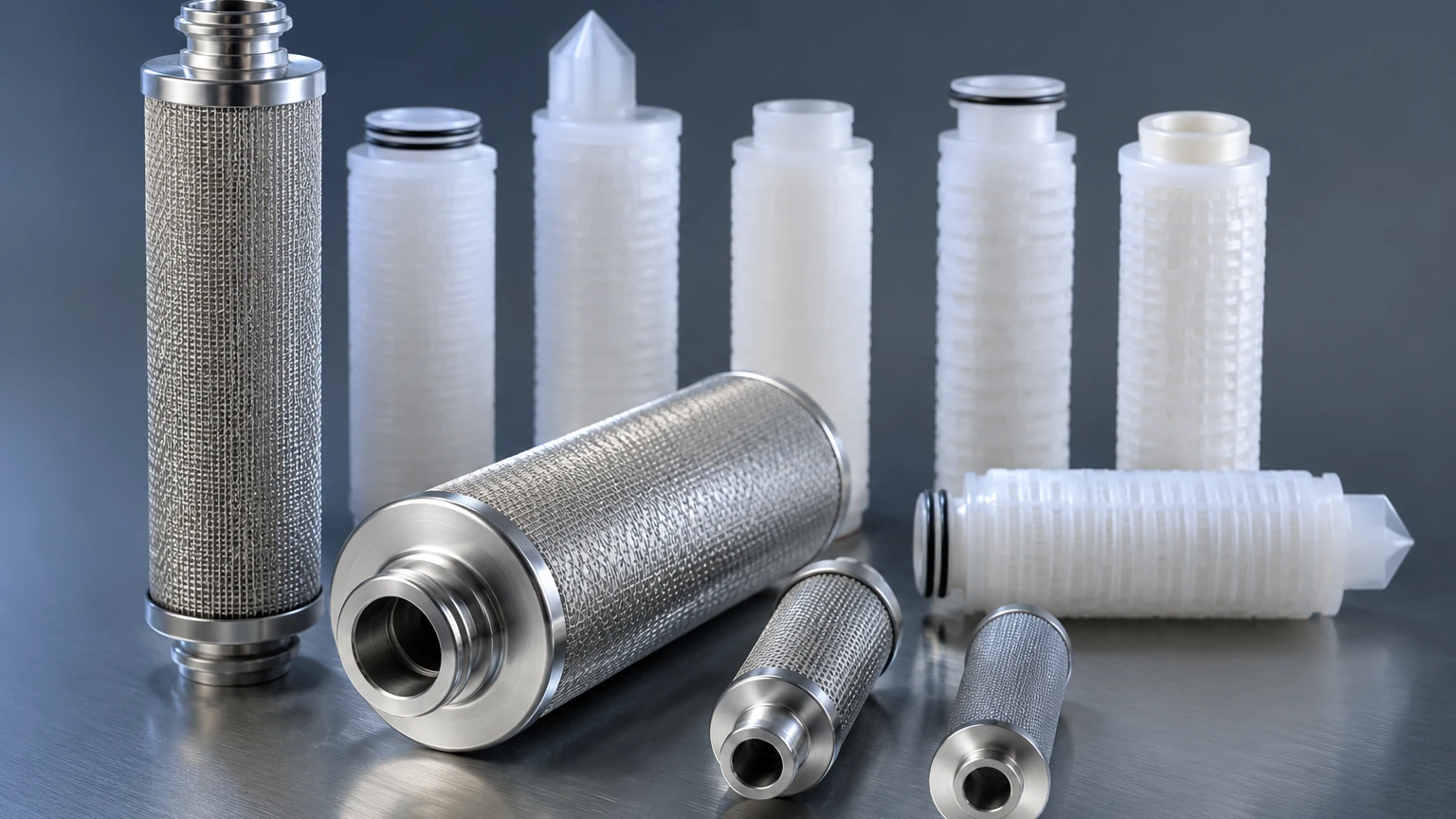
Standard capsules often utilize sanitary flange (Tri-Clamp) connections or hose barbs. However, in high-pressure hydraulic or specialized chemical applications, custom adapters may be required. Manufacturers like Kaifil specialize in bridging the gap between standard disposable components and robust stainless steel systems. By providing custom stainless steel filtration solutions, they ensure that the transition from a disposable capsule to a permanent filtration housing is engineered for maximum durability.
Multi-Stage Systems
In many high-volume processes, depth filter capsules are used as pre-filters for stainless steel filter cartridges. This hybrid approach combines the high dirt-holding capacity of depth media with the precision and cleanability of metal mesh or sintered metal filters. Engineers should evaluate the total filtration train to ensure that each stage is optimized for the particle size distribution of the specific process fluid.
Economic Impact and Total Cost Considerations
When evaluating depth filter capsules, the initial purchase price is only one component of the total cost of ownership (TCO). A comprehensive economic analysis must include:
1. Labor Costs: The time required for installation, venting, and disposal. Disposable capsules significantly reduce labor compared to cleaning and validating permanent stainless steel housings.
2. Waste Disposal: Unlike metal filters that can be cleaned and reused, depth filter capsules are single-use. The cost of disposing of contaminated plastic and media must be factored into the operational budget.
3. Product Yield: The "hold-up volume" (the amount of fluid remaining in the capsule after processing) can be significant. In high-value applications, such as pharmaceutical manufacturing, minimizing hold-up volume through optimized capsule design is essential for maximizing yield.
4. Downstream Protection: By effectively removing the bulk of contaminants, depth filter capsules extend the life of more expensive downstream filters. The savings realized from reduced membrane replacement often outweigh the cost of the depth filter capsules themselves.
Conclusion
Depth filter capsules are indispensable tools for modern industrial filtration, providing a balance of high dirt-holding capacity, ease of use, and scalability. By understanding the underlying mechanisms of depth filtration and carefully evaluating technical specifications—such as zeta potential, chemical compatibility, and differential pressure limits—engineers can optimize their processes for both performance and cost-effectiveness. For organizations seeking to enhance their filtration infrastructure with high-performance components, exploring the customized OEM capabilities and technical resources available on the Main Page of industry experts is a vital step in ensuring long-term operational success.
