


Slotted Pipe
In the landscape of industrial filtration and fluid management, the slotted pipe serves as a fundamental component for solid-liquid separation, sand control, and structural fluid intake. Unlike standard perforated tubes, a precision-engineered slotted pipe is designed to balance mechanical strength with specific hydraulic requirements. For engineers and procurement specialists, selecting the correct slotted pipe involves a detailed analysis of slot geometry, material properties, and the environmental stressors of the application site.
Industrial applications—ranging from deep-water wells and chemical processing to food production and hydraulic systems—rely on these components to maintain system integrity while ensuring efficient flow. Understanding the technical nuances of slotted pipe design is essential for optimizing filtration performance and extending the service life of industrial equipment.
Engineering Fundamentals of Slotted Pipe Design
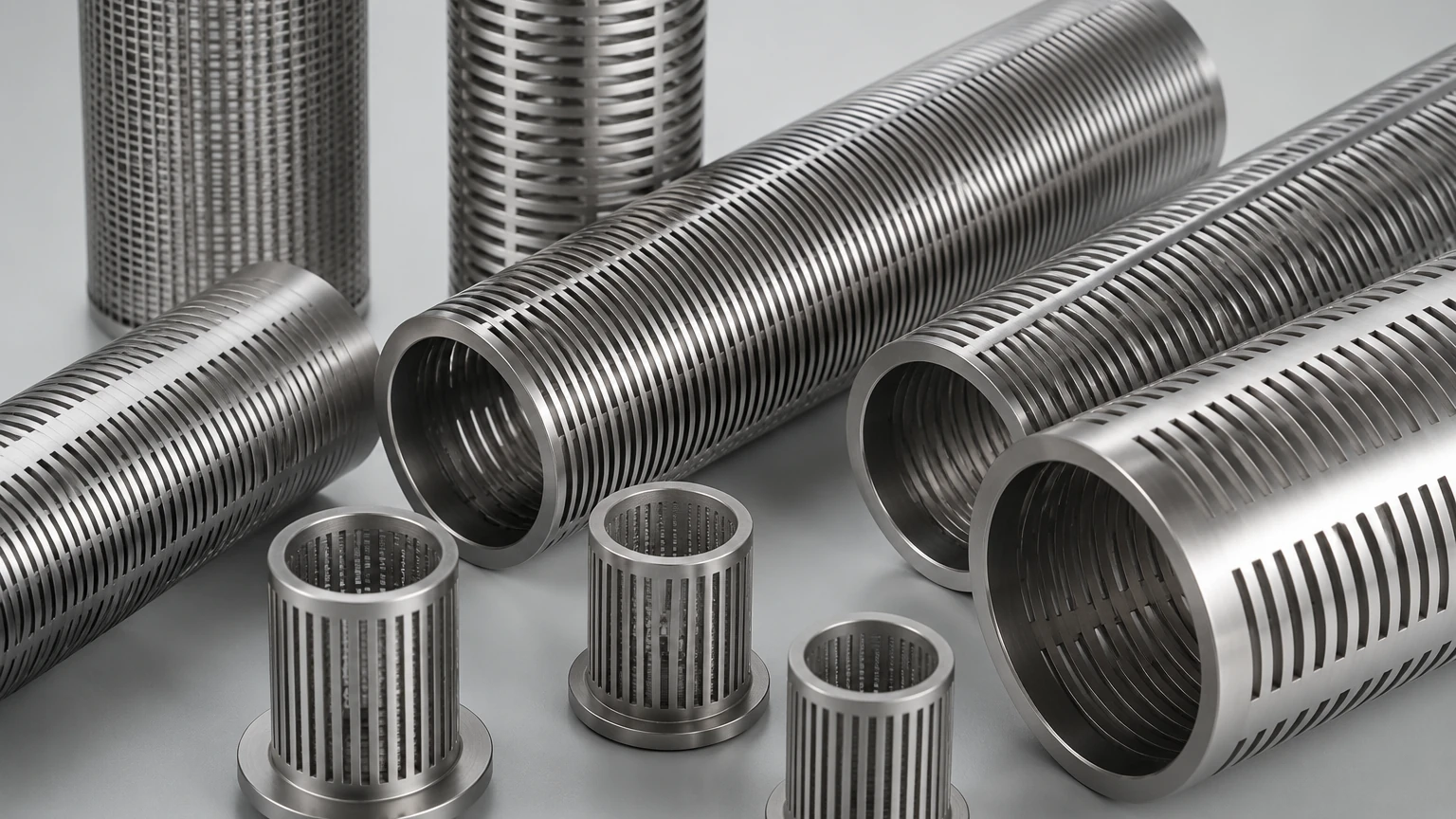
The performance of a slotted pipe is primarily dictated by its slot configuration. Unlike simple holes, slots provide a higher degree of control over the filtration barrier, particularly when dealing with elongated or irregularly shaped particulates. There are several common slot patterns utilized in industrial manufacturing:
1. Longitudinal Slots: Slots are cut parallel to the axis of the pipe. This is often used in applications where the pipe is subjected to high axial tension.
2. Transverse Slots: Slots are cut perpendicular to the pipe axis. This configuration is frequently selected for its resistance to collapse under external pressure.
3. Staggered Patterns: By offsetting the slots, manufacturers can maintain a higher percentage of the pipe's original structural integrity while achieving the necessary open area for fluid flow.
4. Bridge Slots: These involve a raised "bridge" over the slot, creating a three-dimensional opening that is particularly effective in preventing the migration of fine sands and silts in water well applications.
The precision of the slot width is a critical engineering specification. In high-performance filtration, slot widths are often measured in microns or thousandths of an inch. Achieving this level of precision requires advanced manufacturing techniques, such as laser cutting or specialized CNC milling, to ensure that the filtration threshold remains consistent across the entire length of the pipe.
Material Selection and Corrosion Resistance
The environment in which a slotted pipe operates determines the choice of material. Because these components are often submerged in corrosive fluids or exposed to high-temperature chemical reactions, stainless steel is the industry standard.
* Grade 304 Stainless Steel: Suitable for general industrial use and applications where corrosion risk is moderate, such as in standard water treatment or food processing environments.
* Grade 316L Stainless Steel: The preferred choice for marine environments, pharmaceutical production, and chemical processing. The addition of molybdenum and a lower carbon content provides superior resistance to pitting and crevice corrosion, particularly in the presence of chlorides.
* Duplex and Super Duplex Alloys: For extreme environments, such as offshore oil and gas extraction or highly acidic chemical reactors, duplex steels offer higher mechanical strength and exceptional resistance to stress corrosion cracking.
When selecting materials, engineers must also consider the potential for galvanic corrosion if the slotted pipe is to be joined with dissimilar metals. Proper material matching ensures that the filtration system does not become the weak point in a larger industrial infrastructure.
Key Performance Metrics in Industrial Filtration
To evaluate the suitability of a slotted pipe for a specific project, technical teams must analyze several performance metrics:
Open Area Percentage
The "open area" refers to the total surface area of the slots relative to the total surface area of the pipe. While a higher open area reduces the pressure drop across the filter and increases flow capacity, it can also compromise the structural strength of the pipe. Engineering a slotted pipe involves finding the "sweet spot" where the flow velocity remains low enough to prevent erosion but the pipe remains strong enough to withstand burial depths or internal hydraulic surges.
Collapse and Tensile Strength
In deep-well or high-pressure hydraulic applications, the slotted pipe must resist external collapse pressures. The geometry of the slots and the thickness of the base pipe wall are the primary factors here. Engineers use finite element analysis (FEA) to predict how a specific slot pattern will affect the pipe's ability to handle mechanical loads.
Flow Velocity and Pressure Drop
Excessive flow velocity through the slots can lead to "sand blasting" effects, where abrasive particles wear down the edges of the slots, eventually widening them and allowing larger contaminants to pass through. By calculating the expected flow rate, engineers can specify a slot density that keeps entrance velocities within safe limits, typically below 0.1 feet per second in water well applications.
Applications Across Industrial Sectors
Slotted pipes are versatile components used across a wide spectrum of industries. Their primary role is to act as a primary or secondary filter media in complex systems.
Water Treatment and Well Completion
In the water industry, slotted pipes are used as well screens. They allow water to enter the wellbore from the surrounding aquifer while keeping out sand and gravel. This prevents pump damage and ensures the longevity of the well. The choice between a standard slotted pipe and a more complex wedge wire screen often depends on the grain size distribution of the aquifer material.
Chemical and Petrochemical Processing
Within chemical reactors, slotted pipes serve as internals for catalyst support or as distributor laterals. They must withstand aggressive chemical environments and high temperatures while ensuring that the catalyst remains contained within the reaction chamber. Precision-cut slots are vital here to prevent "fines" from escaping and contaminating downstream processes.
Food and Beverage Industry
In the processing of liquids, such as juices or oils, slotted pipes are used for coarse filtration and drainage. Stainless steel construction is mandatory to meet hygiene standards, and the smooth internal and external surfaces of the slotted pipe allow for easier cleaning and sterilization (CIP/SIP processes).
Customization and OEM Manufacturing Capabilities
Standard off-the-shelf piping rarely meets the exacting requirements of specialized industrial processes. This is where custom manufacturing becomes essential. A professional manufacturer like Kaifil provides the engineering expertise required to develop bespoke filtration solutions.
Customization options typically include:
* Variable Slot Widths: Designing a single pipe with different slot widths along its length to accommodate varying pressure zones or fluid consistencies.
* Custom End Fittings: Integrating flanges, threaded couplings, or weld rings directly onto the slotted pipe for seamless installation into existing systems.
* Surface Treatments: Electropolishing or passivating the stainless steel to enhance corrosion resistance and reduce the adhesion of organic materials.
For engineers looking to integrate high-performance filtration components into their systems, reviewing the technical capabilities available on the Main Page can provide insights into how custom designs can solve specific site challenges.
Installation, Maintenance, and Replacement Cycles
The longevity of a slotted pipe is heavily influenced by how it is installed and maintained. In many industrial settings, these pipes are "set and forget" components, but this can lead to catastrophic system failure if the pipes become blinded or corroded over time.
Prevention of Clogging and Fouling
In water and wastewater applications, biofouling (the growth of microorganisms) and chemical scaling (the buildup of minerals like calcium carbonate) are the primary causes of reduced flow. Regular monitoring of the pressure differential across the filter can indicate when cleaning is required. Techniques such as backwashing, chemical treatment, or mechanical brushing are used to restore flow capacity.
Replacement Considerations
While stainless steel slotted pipes are highly durable, they are not permanent. Erosion from abrasive particles or gradual corrosion in harsh environments will eventually necessitate replacement. Purchasing teams should establish a replacement cycle based on the criticality of the application. For instance, in a chemical reactor where a pipe failure could result in the loss of expensive catalyst, a more frequent inspection and replacement schedule is economically justified.
Evaluating Total Cost of Ownership (TCO)
When procuring slotted pipes, it is a common mistake to focus solely on the initial purchase price. A lower-quality pipe may have inconsistent slot widths, poor-quality welds, or inferior material grades, leading to several long-term costs:
1. Increased Energy Costs: A poorly designed pipe with a high pressure drop requires pumps to work harder, increasing electricity consumption.
2. Unscheduled Downtime: If a slotted pipe fails or clogs prematurely, the cost of stopping production to replace the component often far exceeds the cost of the pipe itself.
3. Downstream Damage: If a filter fails to catch particulates, it can cause significant damage to expensive downstream equipment like high-pressure pumps, valves, and precision nozzles.
By investing in a precision-manufactured slotted pipe made from high-grade materials, industrial operators can achieve a lower total cost of ownership through reduced maintenance, improved process efficiency, and extended equipment life.
For more information on selecting the right filtration components for your specific industrial application, you can explore the technical resources and product options available at the Main Page. Understanding the intersection of material science and mechanical engineering is the key to selecting a slotted pipe that will perform reliably in the most demanding environments.
