


Bag Filter Vessel
In industrial liquid processing, the bag filter vessel serves as a critical component for the removal of particulate matter from process streams. As a pressure-rated housing designed to contain a filter bag and a supporting internal basket, these vessels are engineered to handle high flow rates while maintaining structural integrity under varying thermal and chemical conditions. For engineers and procurement specialists, selecting the correct bag filter vessel requires a deep understanding of fluid dynamics, material compatibility, and the specific mechanical requirements of the application.
At its core, the bag filter vessel operates on a simple yet effective principle: contaminated fluid enters the vessel, passes through a fabric or mesh filter bag from the inside out, and exits the vessel as clarified filtrate. However, the engineering nuances—ranging from seal integrity to pressure drop management—determine the long-term efficiency and cost-effectiveness of the filtration system.
Engineering Fundamentals of Bag Filter Vessels
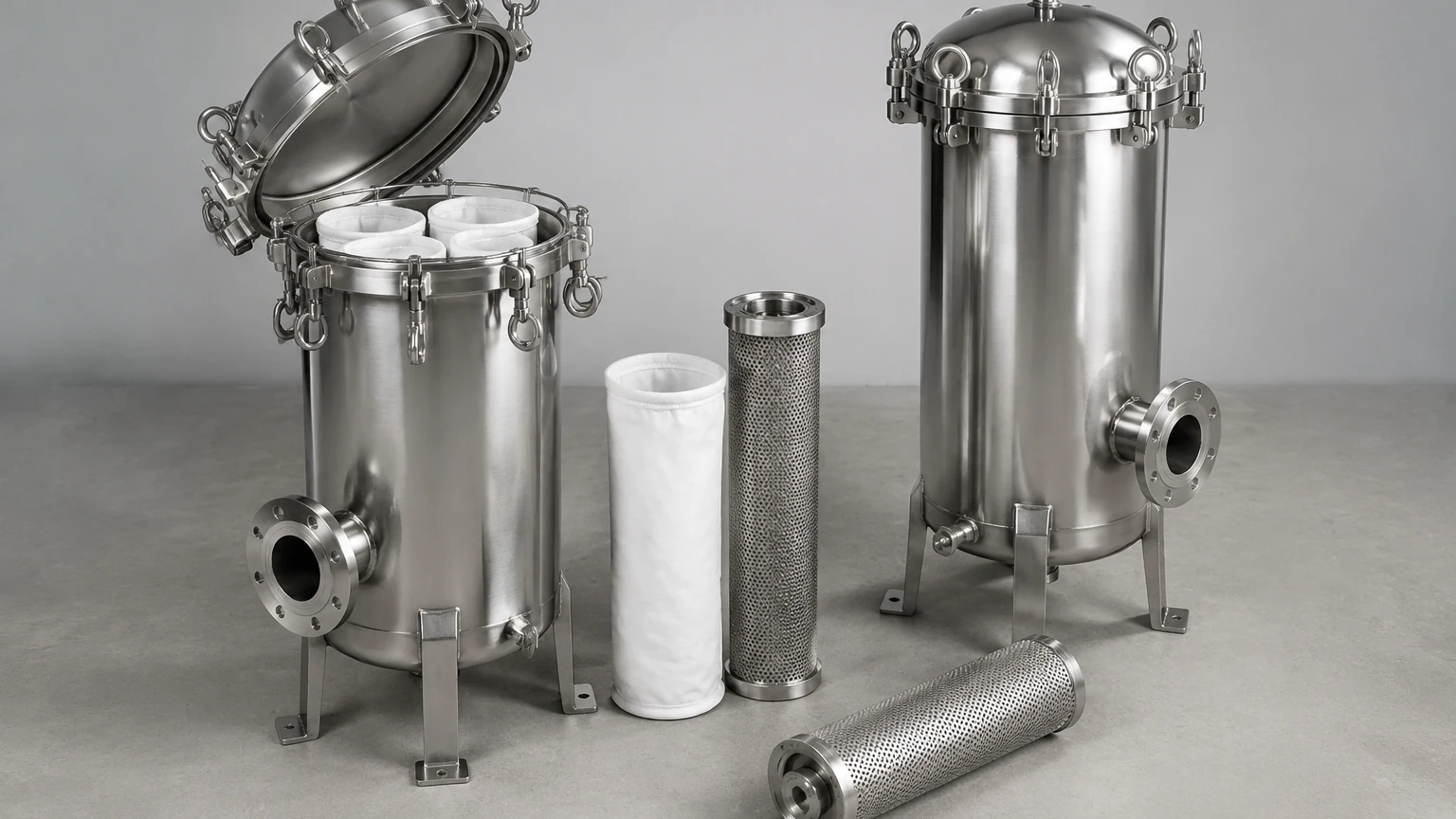
A standard bag filter vessel consists of several primary components: the outer pressure shell, the inlet and outlet ports, a removable lid, and an internal perforated support basket. The support basket is essential because it prevents the filter bag from bursting under the force of the fluid's differential pressure.
Material Selection and Construction
For industrial applications, stainless steel is the benchmark material due to its mechanical strength and resistance to oxidation. Most high-quality vessels are constructed from either SS304 or SS316L.
* SS304: Suitable for general industrial water treatment, hydraulic oils, and non-corrosive chemical applications.
* SS316L: Preferred for pharmaceutical, food and beverage, and highly corrosive chemical environments due to its superior resistance to pitting and crevice corrosion.
The interior surface finish of the vessel is equally important. In sanitary applications, such as those found in the pharmaceutical industry, the vessel must be electropolished to a specific Ra (Roughness Average) to prevent bacterial growth and ensure ease of cleaning. For broader industrial use, bead-blasted or pickled finishes are often sufficient to provide a durable, cleanable surface.
Closure Mechanisms and Safety
The method used to secure the vessel lid is a primary consideration for operational safety and maintenance speed. Common designs include:
1. Swing Bolt Closures: These are the most robust for high-pressure applications. They allow for secure sealing and are durable enough for frequent opening and closing during bag changes.
2. V-Band Clamps: Often used in lower-pressure or smaller-diameter vessels, these offer a quicker opening mechanism but may have lower pressure ratings compared to swing bolts.
3. Threaded Lids: Typically found on smaller, single-bag units, providing a compact footprint for low-flow systems.
Performance Criteria: Flow Rates and Pressure Drop
When sizing a bag filter vessel, engineers must balance the desired flow rate with the allowable pressure drop ($ΔP$). The total pressure drop in a filtration system is the sum of the pressure drop across the clean vessel and the pressure drop across the filter media itself.
Understanding Fluid Velocity
High fluid velocity can lead to turbulence, which may cause "strike-through"—where particles are forced through the filter media—or premature wear on the internal components. It is generally recommended to maintain a fluid velocity that keeps the initial clean pressure drop below 2 psi (0.14 bar). As the filter bag captures contaminants, the differential pressure will increase. Most industrial systems are designed for a bag change-out when the $ΔP$ reaches 15–25 psi.
Single vs. Multi-Bag Configurations
The choice between a single-bag and a multi-bag vessel is primarily driven by the required flow volume and the solids loading of the fluid.
* Single-Bag Vessels: Ideal for batch processing or systems with lower flow rates (typically up to 200 GPM depending on the fluid viscosity and bag size). They are compact and cost-effective for localized filtration.
* Multi-Bag Vessels: Designed for high-volume continuous processes. By housing multiple bags (ranging from 2 to 24 or more) in a single large vessel, these units can handle flow rates exceeding several thousand gallons per minute. Multi-bag designs also offer the advantage of longer intervals between maintenance cycles due to the increased total surface area.
For more detailed technical specifications on various vessel configurations, engineers can refer to the Main Page for comprehensive product data and application support.
Critical Sealing and Bypass Prevention
The most common failure point in a bag filter vessel is not the vessel itself, but the seal between the bag and the housing. If the seal is compromised, fluid will bypass the filter media, leading to downstream contamination.
Sealing Interfaces
There are two primary methods for sealing a filter bag within the vessel:
1. Ring-Type Bags: The bag features a metal or plastic ring sewn into the top. The weight of the fluid and the pressure of the lid compress this ring against a machined seat in the vessel.
2. Flange-Type (Plastic Top) Bags: These bags feature a molded plastic flange with an integrated handle. This design provides a more positive, "zero-bypass" seal because the flange is mechanically compressed by the vessel lid, ensuring a tighter fit than traditional ring bags.
O-Ring Material Compatibility
The O-ring that seals the vessel lid must be compatible with the process fluid and the operating temperature. Common materials include:
* Buna-N (Nitrile): Standard for water and oils.
* EPDM: Excellent for steam and polar solvents, but poor for petroleum-based fluids.
* Viton (FKM): High-temperature resistance and broad chemical compatibility.
* PTFE Encapsulated: Used for the most aggressive chemical environments where elastomeric seals might fail.
Industrial Applications and Selection Logic
Selecting a bag filter vessel requires a systematic approach to the application's specific variables. Engineers must confirm the following before finalizing a design:
Chemical Processing
In chemical manufacturing, the primary concern is corrosion resistance and pressure ratings. Vessels must often comply with ASME Section VIII, Division 1 standards to ensure they can safely handle hazardous fluids under pressure. The use of SS316L and specialized gaskets is standard in these environments.
Food and Beverage
For food-grade applications, the bag filter vessel must meet stringent sanitary standards. This includes the use of FDA-approved materials for all wetted parts and a design that eliminates "dead legs" where bacteria could proliferate. Easy disassembly for Clean-in-Place (CIP) or manual cleaning is essential.
Pharmaceutical and Biotech
These applications require the highest level of precision. Vessels are often custom-engineered with specific inlet/outlet configurations (such as Tri-Clamp fittings) and high-grade surface finishes. The focus here is on absolute particulate removal and batch-to-batch consistency.
Water Treatment and Desalination
In large-scale water treatment, multi-bag vessels are used as pre-filtration for Reverse Osmosis (RO) membranes. The goal is to remove larger suspended solids that would otherwise foul the expensive membranes. Durability and high flow capacity are the driving factors in this sector.
Maintenance and Operational Efficiency
The total cost of ownership (TCO) of a bag filter vessel is influenced more by operational labor and downtime than by the initial purchase price. Efficient vessel design facilitates faster bag changes and reduces fluid loss during maintenance.
Change-Out Procedures
A well-designed vessel will include a vent port on the lid and a drain port at the bottom. Before opening the vessel, the operator must vent the internal pressure and drain the fluid to the level of the support basket. This prevents spills and ensures operator safety. Some advanced vessels include specialized "low-profile" designs that allow the operator to reach the filter bags more easily, reducing the physical strain of maintenance.
Monitoring Systems
To optimize bag life, it is highly recommended to install differential pressure gauges across the inlet and outlet. Automated systems can trigger an alarm or a bypass valve when the bag reaches its maximum loading capacity. This prevents the risk of bag rupture and ensures that filtration performance remains within the required parameters.
Customization and OEM Solutions
While standard bag filter vessels meet many needs, complex industrial systems often require customized solutions. Customization can involve:
* Custom Porting: Aligning inlet and outlet ports to fit existing piping footprints, including tangential or offset configurations.
* Heating Jackets: For high-viscosity fluids (like resins or waxes) that must be kept at a specific temperature to maintain flow.
* Skid-Mounted Systems: Integrating the vessel with pumps, valves, and controllers into a single, portable unit.
As a manufacturer, Kaifil specializes in providing these tailored engineering solutions. By working closely with clients during the design phase, it is possible to develop filtration components that meet specific micron ratings, flow requirements, and space constraints.
Conclusion
The bag filter vessel is a foundational element of industrial filtration. Its reliability depends on the synergy between mechanical design, material science, and operational protocols. By prioritizing high-quality stainless steel construction, ensuring proper seal integrity, and accurately sizing the vessel for the expected flow and pressure, engineers can achieve consistent filtration performance and long-term durability. Whether for a single batch process or a continuous high-volume industrial line, the correct vessel selection is the first step toward process optimization and equipment protection.
