


Filtered Oil
In industrial environments, the quality of filtered oil is a primary determinant of machinery longevity, operational efficiency, and process reliability. Whether in hydraulic systems, lubricating circuits, or food processing lines, oil serves as the lifeblood of mechanical components. However, oil is also a carrier for contaminants—ranging from microscopic metal shavings and silica dust to moisture and chemical degradation products. Achieving high-purity filtered oil requires a deep understanding of filtration mechanics, material science, and the specific demands of the application environment.
For engineers and procurement professionals, selecting the right filtration solution is not merely about choosing a consumable part; it is about protecting capital-intensive assets. This guide explores the technical considerations involved in producing high-quality filtered oil and the engineering factors that influence filter selection and performance.
The Critical Role of Oil Filtration in Industrial Systems
Contamination is the leading cause of failure in oil-dependent systems. In hydraulic applications, for instance, nearly 80% of component failures are attributed to fluid contamination. When oil is not properly filtered, abrasive particles circulate through the system, leading to accelerated wear on pumps, valves, and actuators. This process, known as the "wear chain," creates more debris, which further degrades the oil and the hardware.
High-quality filtered oil ensures that the fluid maintains its lubricating properties and heat-transfer capabilities. In sectors like chemical processing and food production, the purity of the oil is also a matter of compliance and product safety. Utilizing precision-engineered components from a reliable Main Page allows operators to maintain strict ISO cleanliness codes, ensuring that the filtered oil meets the specific requirements of the machinery it serves.
Engineering Principles of Achieving Clean Filtered Oil
To achieve the desired level of cleanliness, engineers must look beyond simple micron ratings. The process of generating filtered oil involves several complex physical phenomena, including intercept, diffusion, and inertial impaction.
Micron Ratings: Absolute vs. Nominal
When evaluating filters for oil, it is essential to distinguish between nominal and absolute ratings. A nominal rating is an industry-standardized commercial expression of the filter's ability to retain particles of a certain size, often based on weight percentage. In contrast, an absolute rating refers to the diameter of the largest hard spherical particle that will pass through the filter under specified test conditions. For critical industrial applications, absolute-rated stainless steel mesh is often preferred to ensure consistent filtered oil quality.
Viscosity and Flow Rate
Oil viscosity significantly impacts filtration efficiency. Highly viscous oils (such as heavy gear oils) require more pressure to force through a fine filter medium than thinner hydraulic fluids. If the pressure drop (differential pressure) across the filter is too high, it can trigger bypass valves, allowing unfiltered oil to circulate, or even cause structural failure of the filter element. Engineering a solution for filtered oil requires balancing the filtration fineness with the flow requirements and operating temperature of the system.
Material Selection: Why Stainless Steel is Essential for Industrial Oil Filters
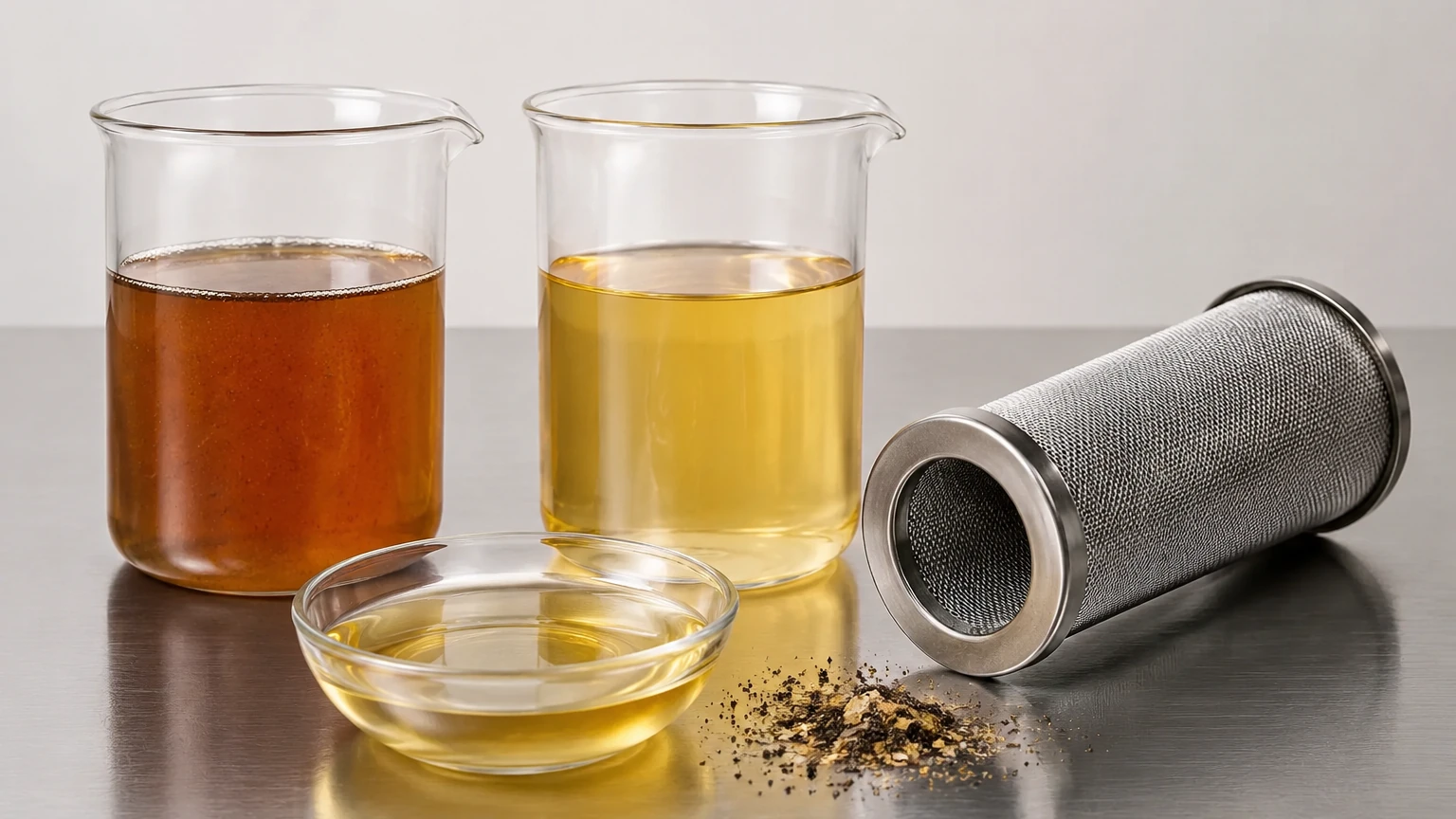
While polymer or cellulose filters are common in light-duty applications, industrial-grade filtered oil often necessitates the use of stainless steel filtration media. Stainless steel, particularly grades 304 and 316L, offers several advantages that are critical for demanding environments.
1. Chemical Compatibility: Industrial oils often contain additives or may be subjected to chemical contamination. Stainless steel is inert to most hydrocarbons and synthetic lubricants, ensuring the filter does not degrade or leach contaminants into the filtered oil.
2. Thermal Stability: Many oil systems operate at elevated temperatures. Unlike synthetic fibers that may soften or lose structural integrity, stainless steel maintains its mechanical properties, ensuring consistent filtration performance even in high-heat scenarios.
3. Cleanability and Reusability: One of the most significant advantages of stainless steel wire mesh filters is that they can often be cleaned and reused. This is particularly beneficial in systems where the cost of downtime and replacement filters is high. Proper cleaning restores the pressure drop characteristics, allowing for the continuous production of filtered oil without the waste associated with disposable cartridges.
4. Structural Integrity: Under high-pressure pulses or cold-start conditions, oil filters experience significant mechanical stress. Stainless steel mesh, often reinforced with perforated metal cores or outer shrouds, provides the necessary strength to prevent media migration and collapse.
Evaluating Filter Performance: Beta Ratios and Pressure Drop
To objectively measure the quality of filtered oil, engineers use the Beta Ratio (β), derived from the Multi-Pass Test (ISO 16889). The Beta Ratio is the ratio of particles of a given size in the upstream fluid to the particles of the same size in the downstream fluid. For example, a Beta Ratio of 1000 at 10 microns (β10 = 1000) means that for every 1000 particles of 10 microns entering the filter, only one passes through, indicating 99.9% efficiency.
When designing a system for filtered oil, the goal is to achieve the target Beta Ratio while minimizing the "clean pressure drop." A high initial pressure drop reduces the dirt-holding capacity of the filter, leading to shorter service intervals. Precision-manufactured wire mesh allows for a high open-area ratio, which optimizes flow and extends the life of the filter element before it reaches its terminal pressure drop.
Customization Options for Specialized Oil Applications
No two industrial oil systems are identical, and "off-the-shelf" solutions often fall short of specific performance requirements. Customization is key to optimizing the production of filtered oil across different sectors.
Hydraulic and Lubrication Systems
In these systems, the focus is on removing hard, abrasive particles. Custom filter cartridges may utilize pleated stainless steel wire mesh to maximize surface area, allowing for high flow rates and long service lives in compact housings.
Food and Beverage Grade Oil
For oils used in food processing, the filtration components must meet stringent sanitary standards. This includes using FDA-compliant materials and ensuring the filter design eliminates "dead zones" where bacteria could proliferate. The resulting filtered oil must be free of both particulate matter and biological contaminants.
Chemical and Petrochemical Processing
In these environments, the oil may be highly corrosive or contain volatile compounds. Custom-engineered metal filter elements, often featuring sintered metal powder or multi-layered mesh, provide the durability needed to handle aggressive fluids while maintaining the purity of the filtered oil.
Maintenance Strategies and Total Cost of Ownership
Maintaining the quality of filtered oil is an ongoing process that requires a proactive maintenance strategy. Monitoring the differential pressure across the filter is the most common method for determining when a filter change or cleaning is required. However, relying solely on pressure indicators can be misleading if the oil temperature varies significantly.
Total Cost of Ownership (TCO)
When evaluating the cost of producing filtered oil, purchasing teams should look beyond the initial price of the filter element. The TCO includes:
* Purchase Price: The upfront cost of the filter.
* Replacement Frequency: How often the filter must be changed.
* Labor Costs: The time required for maintenance personnel to swap or clean filters.
* Disposal Costs: The cost of disposing of contaminated, non-reusable filter media.
* System Downtime: The lost production value during filter maintenance.
By investing in high-quality, cleanable stainless steel filters, many industrial facilities find that the TCO is significantly lower over the long term compared to cheaper, disposable alternatives. The reliability of the filtration system directly impacts the uptime of the entire plant, making the choice of filter a strategic business decision.
Achieving Optimal Filtration Performance
Selecting the appropriate filtration technology is a balance of science and practical engineering. To ensure the highest quality filtered oil, it is recommended to work closely with manufacturers who understand the nuances of metal filtration media. Factors such as weave type (plain, twill, or dutch weave), wire diameter, and support structures must be tailored to the specific viscosity, flow rate, and contamination profile of the application.
For those seeking to optimize their industrial processes, reviewing technical specifications and application support is a vital step. You can Review product options and application support to find customized solutions that meet the rigorous demands of modern industrial oil systems. By prioritizing precision and durability in filtration components, engineers can ensure that their systems operate at peak performance, protected by the highest standard of filtered oil.
